


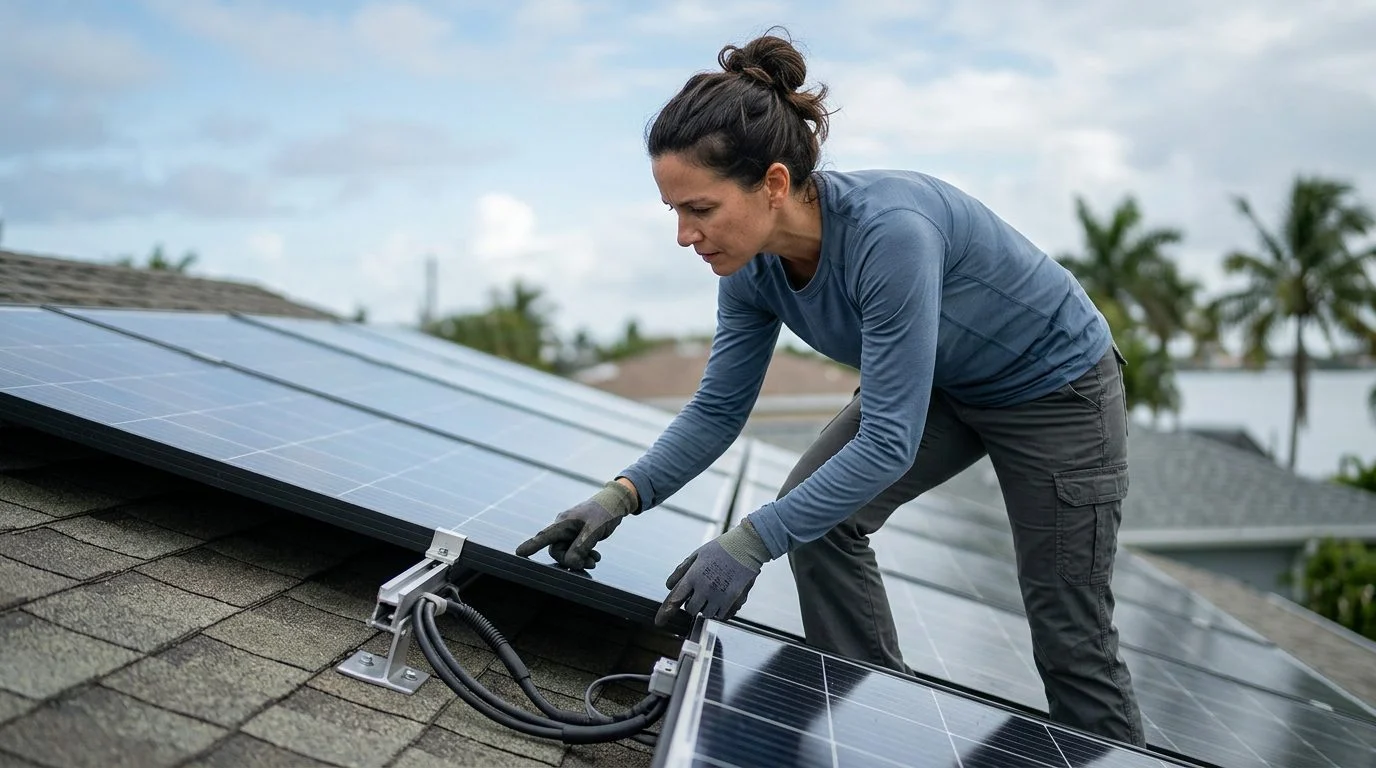
Solar Battery Backup · Miami-Dade
Plan Your Solar Battery Permit With Confidence
A clear, step-by-step guide to the permits and approvals that can come up when adding battery backup to your solar system in Miami-Dade.
By Jonathan Rodriguez · Published October 30, 2026
Solar battery work in Miami-Dade County is generally subject to a permit requirement, unless otherwise provided by law. The battery’s electrical work usually goes through the local building department. This guide explains which approvals a battery project typically involves, why each one exists, and what to gather first. For an overview of battery systems, read our solar battery backup guide for South Florida.
Do you need a solar battery permit in Miami-Dade?
Usually, yes. Florida law generally requires a permit before anyone alters, modifies, or repairs a building, unless another law says otherwise. Fla. Stat. § 553.79 sets that rule. A battery tied into your home’s wiring is the kind of work that usually needs one.
The Florida Building Code sets the statewide standard, and local Miami-Dade offices apply it. The 2026 edition renamed its battery section from “Stationary Storage Battery Systems” to “Energy Storage Systems” in Section R328, according to the Florida Building Commission’s residential analysis.
The exact permit set depends on the facts of your project. Whether the battery joins new panels, and how it connects to your main panel, both shape the paperwork. Don’t count on a small-job exemption. The 2026 Florida Building Code update states that electrical work on property containing a single-family dwelling is not eligible for the permit-free treatment applied to small projects, per the 2026 update text.
If you're weighing a battery for your Miami-Dade home, our team can review your panel, mounting spot, and approvals with you before you commit. Talk it through with our team — the first consultation is free, confidential, and carries no obligation.
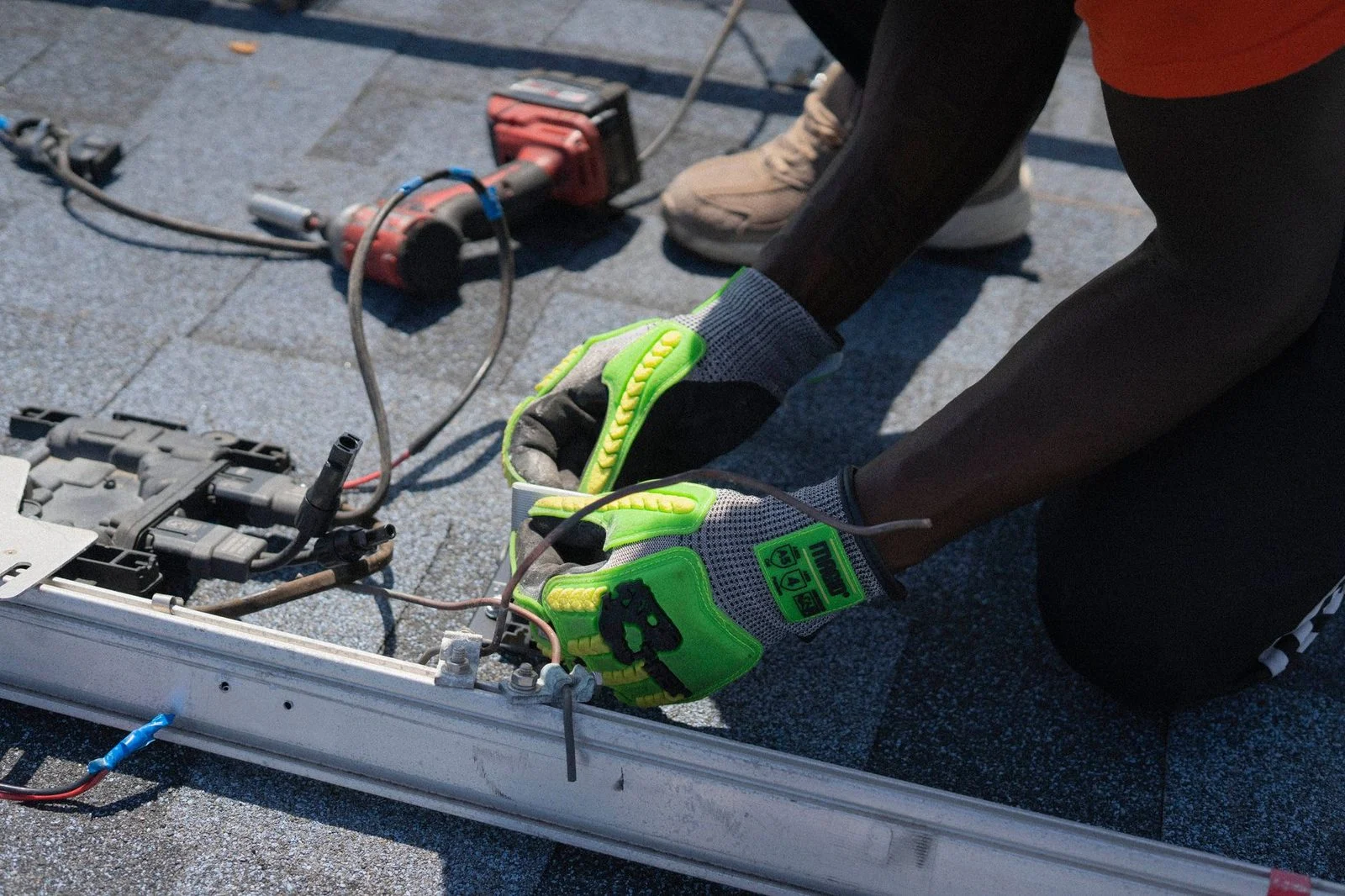
Which approvals does a battery project usually involve?
Each one covers a different part of the job.
- Electrical permit: the battery, inverter or charger connections, breakers, and wiring to the main service panel.
- Building review: mounting hardware, wall or garage attachments, or a new equipment pad.
- Utility approval: needed when the battery works with grid-tied solar panels.
A battery added to an existing solar array can need a different review than a standalone battery. The building department decides which review applies to your project. Contact our team to confirm the full list of requirements before any work begins.
Why do Miami-Dade wind rules affect the permit?
South Florida’s hurricane exposure is why wind rules matter here. Mounting location and anchorage can become part of the permit file.
A battery mount may need similar engineering. The details vary by home and by mounting spot.
Placement matters too. The 2026 edition adds specific protection rules for energy storage that could be struck by vehicles, according to the Commission’s residential analysis. For more on wind-load detail, see our wind-load guide for Miami-Dade.
How do net metering and utility rules fit in?
Florida’s rule for customer-owned renewable generation covers this step.
The same rule requires you to notify the utility at least 10 days before you place equipment and protective apparatus in service.
The utility may have personnel present on the in-service date.
A typical order runs like this: design, building permit application, inspections, utility approval, then energizing the system. For how these arrangements work, read our net metering in Florida guide.
What inspections come before the battery turns on?
Inspectors check the electrical work in stages. The battery should run only after final approval. Contact our team for the inspection schedule at the start.
Expect a rough-in electrical inspection before the walls close, then a final inspection. Inspectors review the electrical scope, including the transfer switch or backup circuit wiring. For how backup circuits are wired, read our transfer switch guide.
Room placement can add door rules. If the battery sits in a room that opens into the home, the 2026 code sets door requirements. Openings into the dwelling need solid wood doors at least 1 3/8 inches thick, solid or honeycomb-core steel doors at that thickness, or a door with a 20-minute fire protection rating. According to the Florida Building Commission’s analysis of residential code changes, where energy storage systems are located in spaces within dwelling units, new language requires the doors on openings into the dwelling to be self-latching and self-closing.
Preparing for the permit process
Gather your property address, existing panel details, battery and inverter specifications, and a site plan showing where the battery will sit. Your installer usually prepares the drawings and files the application. Under Fla. Stat. § 553.79, local enforcement agencies must let applicants send finished permit packages through digital channels, such as email in Portable Document Format or an online form, while officials may still take paperwork over the counter at their own option.
How long does review take?
Florida law sets the timeframes for local government action on a complete and sufficient residential electrical permit application. Those timeframes vary by the type of work, the value of the work, and the size of the structure, unless the applicant waives them in writing (Fla. Stat. § 553.792). This applies when you use the local government’s plans reviewer, under Fla. Stat. § 553.792.
Who can pull the permit?
A building department cannot issue a permit to a contractor who lacks a valid active certificate or registration in the appropriate category when the work requires state licensure under that part, though locally licensed contractors may still get permits for work that does not, under Fla. Stat. § 489.13. Contact our team with any questions about licensing before you sign.
Not sure what your next step is?
Talk it through with our team — the first consultation is free, confidential, and carries no obligation.
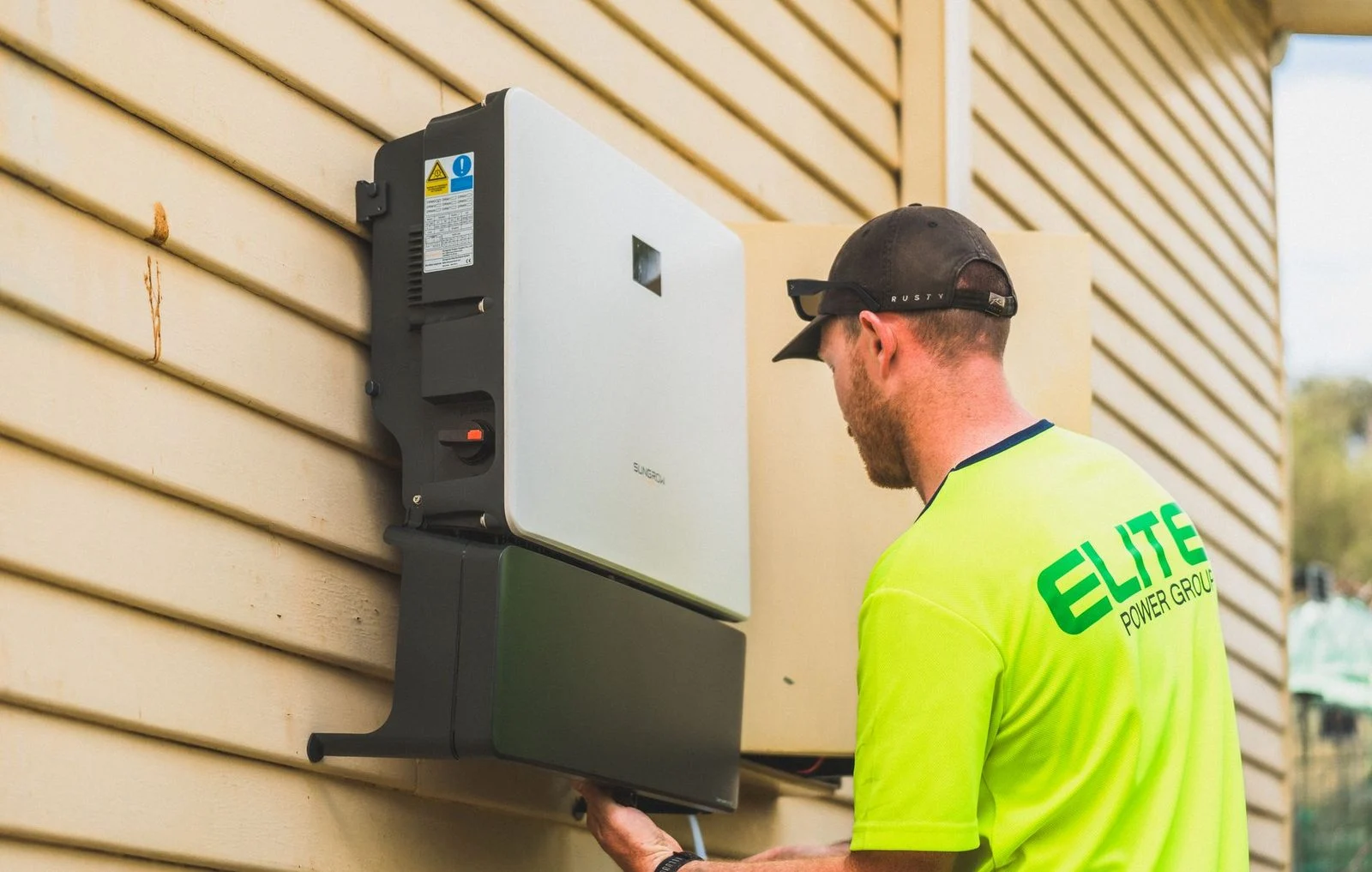
Talk with our team about your battery project
Our team can review your electrical panel, mounting spot, and transfer-switch plan before you commit to a permit. If you’re weighing a battery for a home in Miami or Kendall, that review is a useful first step. Your panel and wall space shape much of the paperwork.
Your first consultation is free, confidential, and comes with no obligation to continue (consulta inicial gratuita, confidencial y sin compromiso). Request a quote for your battery project, and we’ll walk through the approvals that apply to your home.
The Permit Process at a Glance
1. Review the System Design
Confirm the battery size, location, electrical connections, and how it ties into your existing solar panels before any paperwork is prepared.
2. Prepare the Application
Permit packages typically include system drawings, equipment specifications, and electrical details that show the installation meets local code.
3. Submit for Review
The application goes to the local building or permitting office. Reviewers may ask for clarifications or revised drawings before approval.
4. Inspection and Approval
After installation, an inspector confirms the work matches the approved plans. Final approval closes out the permit process.
Important: Wait for Approval Before Installing
Starting installation before a permit is issued can lead to delays, required rework, or inspection problems. Requirements differ by municipality and property, so confirm the details with your local permitting office.
How We Can Help
Permit-Ready Planning
We help organize the information local reviewers commonly request so your application starts on solid footing.
Solar and Battery Experience
Our team focuses on solar panels and solar battery backup, so the system design and the permit paperwork stay aligned.
Clear Communication
We explain each step in plain language, from first review through final inspection.
Free First Consultation
Your initial consultation is free, confidential, and comes with no obligation to continue.


