


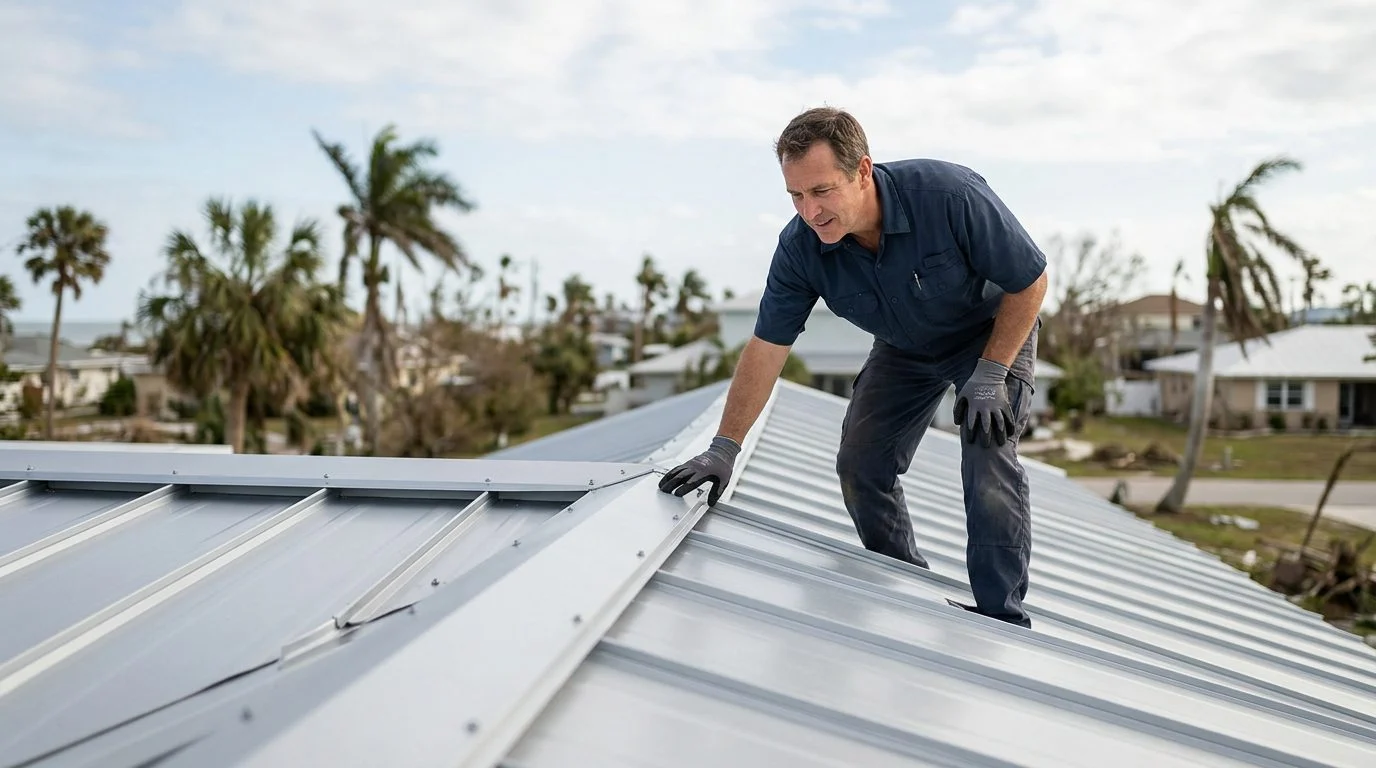
Solar & Roof Repair | South Florida
Storm Damaged Your Roof? Protect Your Solar Panels Right Away
Hurricane winds and flying debris can damage roofs and the solar equipment mounted on them. Learn what to do safely, and how ASP Superhome can help you assess the damage.
By Jonathan Rodriguez · Published October 30, 2026
Solar panels after roof damage from a storm in Florida need to be checked together with the roof. The panels are fastened to the roof, so both can be hurt in the same storm. Stay off the roof, avoid electrical hazards, and document the damage before repairs begin.
This guide covers what to check first, how wind affects the system, and how repairs are usually ordered. It’s written for homeowners in South Florida.
Why a Storm-Damaged Roof Affects Your Solar System
Solar panels are fastened to the roof, so roof damage and array damage often happen together. Mounts, rails and clamps pass through the roofing and attach to the roof structure. A storm that tears off shingles or cracks tile can loosen the hardware that holds the array. A storm that moves panels can break the roof underneath them.
The panels also cover part of the roof. Once they are in place, the roofing under and around them is hard to see from the ground. A cracked tile or lifted flashing can stay hidden until the array is lifted.
That is why an inspection of only the panels, or only the roof, can miss problems in the other. Our team can review your project details with you during your free initial consultation, which is confidential and carries no obligation to continue. The 2026 Florida Building Code added a rule that flashing for solar panels must meet the code and the manufacturer’s installation instructions (Florida Building Commission analysis of 2026 residential changes).
If a storm hit both your roof and the panels above it, you don't have to sort out the damage alone. Our team can talk it through with you. Talk it through with our team — the first consultation is free, confidential, and carries no obligation.
Safety First: What to Do Before Anyone Goes on the Roof
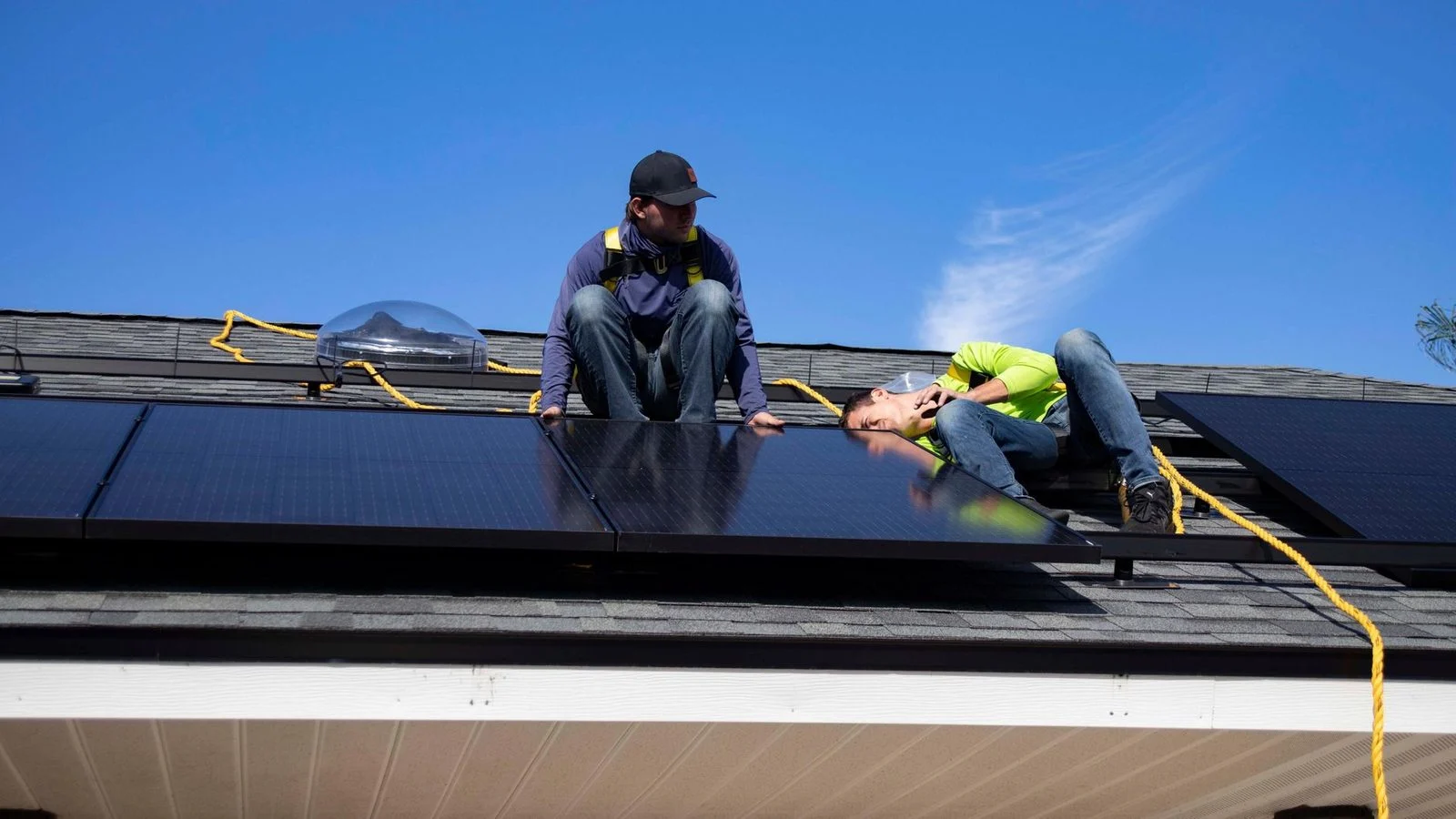
Stay off a damaged roof. Keep clear of any panel that is lifted, cracked, hanging or resting at an odd angle. Safety comes before every other step.
Treat every loose cable, exposed wire and damaged battery enclosure as live. Don’t touch them, and don’t try to repair them yourself. If a power line is down near the house or the array, stay back and call your utility or emergency services.
Use the system’s monitoring app or disconnect controls only if you can reach them safely from the ground or from inside the home. If you can’t, leave them alone.
Wet ground, broken glass and fallen limbs add risk on a storm-damaged roof. Keep those hazards in mind before anyone climbs a ladder.
What Strong Wind Can Do to Solar Panels and Their Mounts
Strong wind can lift, shift or remove panels. It can take the mounting hardware with them. Panels that look fine may still have loose parts.
Wind can bend rails and loosen clamps. A panel that comes off can strike gutters, the roof surface or neighboring panels as it moves. Missing panels leave gaps in the array. Bent rails show the mount took hard stress.
Roof type matters too. A Hurricane Ian study by the Insurance Institute for Business & Home Safety examined roof cover performance in southwest Florida (IBHS Hurricane Ian roof cover assessment). Tile roofs need a different check. Concrete and clay tile can crack or shift, and the underlayment beneath matters as much as the tile.
From the ground, look for missing panels, bent rails, gaps where the array used to sit, and debris in the gutters.
Can Solar Panels Cause or Hide Roof Leaks?
Yes. Each mount is a roof penetration, so a failed seal at a mount can let water in. The array can also hide a leak until the panels are lifted.
Each attachment point is a hole in the roof covering. Flashing and sealant around those points keep water out. If they fail, water can run down the framing. It may show up later as a stain or drip inside the home.
A leak after a storm may come from the array, the roofing material or both. Trace the source before sealing anything. Sealing over the wrong spot can trap water and hide the real problem.
Roof repair and solar reinstallation are usually planned together. The roof surface should be sealed and checked before the panels go back on.
What Storm Damage Can Mean for Your Solar Battery Backup
A storm can damage a battery’s enclosure, cabling, mounting or inverter. Water near that equipment is a safety issue. Handle it before the system restarts.
Stop using the battery if you see cracks, water inside the enclosure, swelling, heat marks or a strong odor. Have it inspected before you restart it. Don’t open the equipment or try to reset it yourself.
Battery performance after a storm depends on what was damaged and how the system was wired. That has to be checked on site. The U.S. Department of Energy’s Solar Energy Technologies Office offers background on battery backup fundamentals.
Battery location rules have also changed. The 2026 Florida Building Code added requirements for energy storage systems inside a home. These include solid or fire-rated doors into the dwelling, self-latching and self-closing doors, and protected penetrations (Florida Building Commission analysis of 2026 residential energy storage changes).
Documenting Storm Damage for Your Insurance Claim
Photograph and date the damage before anything is moved or repaired. Keep a written record of each step. Keep receipts for emergency work.
Start with the roof, the panels, the mounts, the battery and any water inside the home. Take wide shots and close-ups. Write down when you noticed each problem. Note any tarps or temporary protection you put in place.
Florida law sets notice deadlines. Under Fla. Stat. § 627.70132, a claim is generally barred unless notice is given within one year after the date of loss. A supplemental claim must be noticed within 18 months. For hurricanes, the date of loss is the date the hurricane made landfall. For tornadoes, windstorms, severe rain, or other weather-related events, the date of loss is the date the event is verified by the National Oceanic and Atmospheric Administration.
Coverage depends on your policy and the cause of the damage. Some policies include law and ordinance coverage for code upgrades. Fla. Stat. § 627.7011 explains how that coverage is offered. Good records help any claim discussion.
Not sure what your next step is?
Talk it through with our team — the first consultation is free, confidential, and carries no obligation.
How Roof and Solar Repairs Are Usually Sequenced
Repairs usually follow this order: protect the roof, remove the array where needed, repair the roof, then reinstall the panels and test the battery. This order keeps the home dry and the electrical work safe.
First, temporary protection limits further water entry. Next, panels and rails come off where the work requires it. The roof deck, underlayment and flashing are then repaired or replaced.
For tile roofs, the Tile Roofing Industry Alliance post-storm guidance covers inspecting underlayment and weighing repair against replacement. Last, the roof is inspected and sealed. Then the array goes back up, and the battery is reconnected and tested.
Talk With Our Team About Your Roof and Solar System
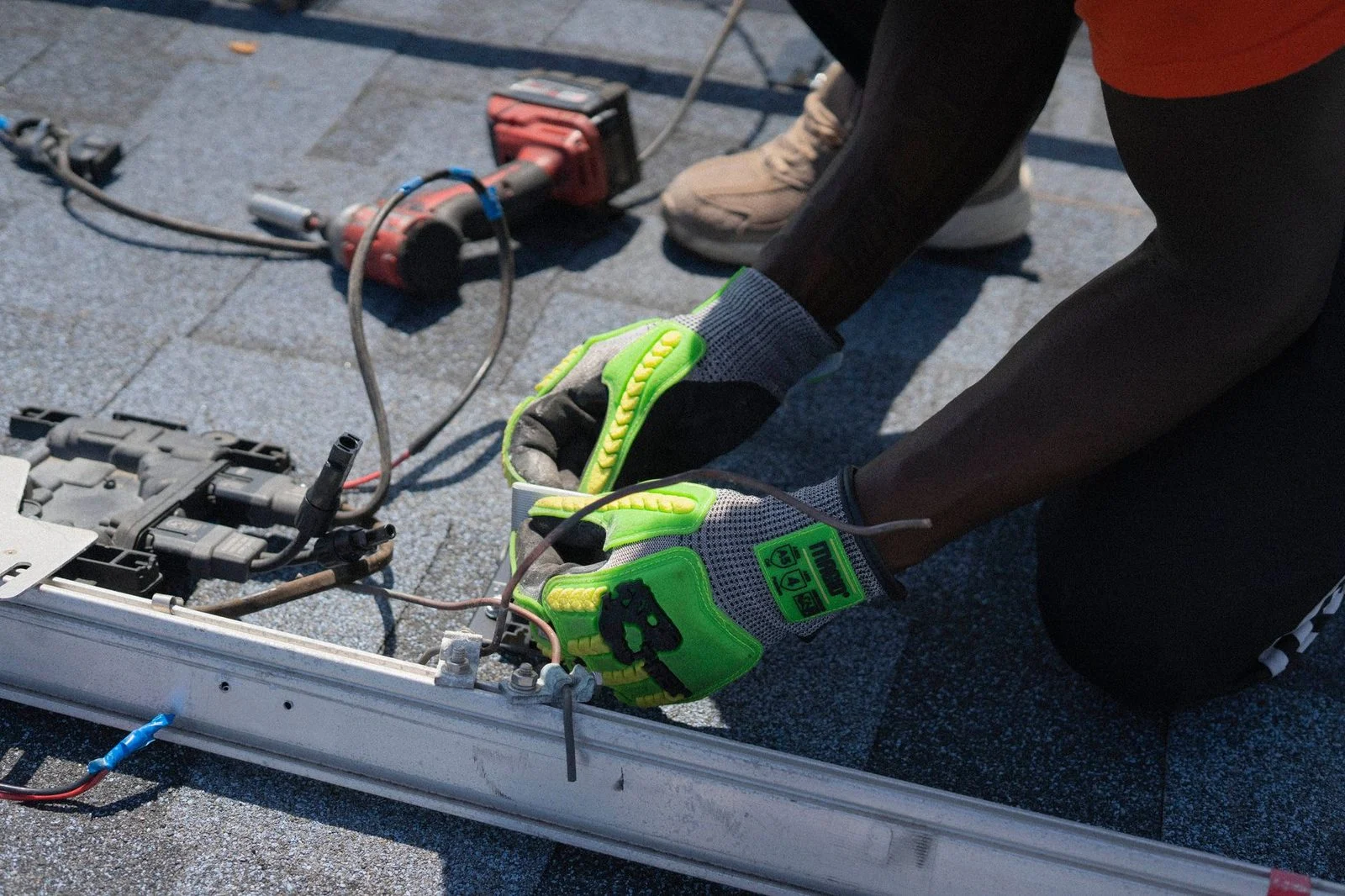
If a storm damaged your roof and the panels above it, the roof and the solar system need one shared plan. Our team can look at both together.
Should I move my solar panels before a storm?
No. Don’t climb onto the roof to move or cover panels. Leave the hardware and electrical parts alone.
Is solar battery backup safe to use after a storm?
Not if it shows cracks, water, swelling or a strong odor. Stop using it and have it inspected first.
How long do I have to report storm damage in Florida?
Florida law generally requires notice of a claim within one year after the date of loss. A supplemental claim has 18 months.
Does a solar array have to come off for roof repair?
Often it does, because the roof under the panels has to be reached. The panels usually go back on after the roof is sealed.
If your roof and solar array were both hit, talk with us about what to check first. Reach out to our team for a free, confidential initial consultation with no obligation to continue.
Why Homeowners Start with ASP Superhome
Free First Consultation
Your initial consultation is free, confidential, and comes with no obligation to continue.
Storm-Ready Solutions
We work across roofing, impact windows and doors, and solar systems, so your home is assessed as one connected system.
A Coordinated Team
Our team helps you sort out roof, solar panel, and battery backup needs in one place.
Serving South Florida
We serve homeowners in Miami, Fort Lauderdale, West Palm Beach, Kendall, Boca Raton, Naples, and Fort Myers.
Safety First
Do not climb onto a damaged roof to move, cover, or repair solar panels. Stay off the roof and keep clear of loose wiring. If you smell burning or see sparks, shut off power at the main breaker if it is safe to reach it, and stay away from the equipment.
What to Do After a Storm
1. Check Safety Before Anything Else
Keep people and pets away from damaged areas. Do not touch exposed wiring, and do not work on the roof yourself.
2. Document the Damage
Take photos and notes of the roof, panels, mounting hardware, and any battery units from a safe distance. Clear records make the next steps easier.
3. Do Not Use a Damaged Battery
If a battery backup shows cracks, water, swelling, or a strong odor, stop using it and have it inspected before it is used again.
4. Get a Professional Inspection
A qualified inspection of the roof and solar system shows what needs repair, what needs replacement, and what can be safely reused.
Storm damage can affect your roof and your solar system. Talk with ASP Superhome about a free, confidential first consultation with no obligation.
Related practice areas
- Solar Battery Backup for South Florida Homes: Whole-Home Power Through Storms and Outages
- Solar Battery Backup in Boca Raton
- Transfer Switch for Solar Battery in South Florida


