


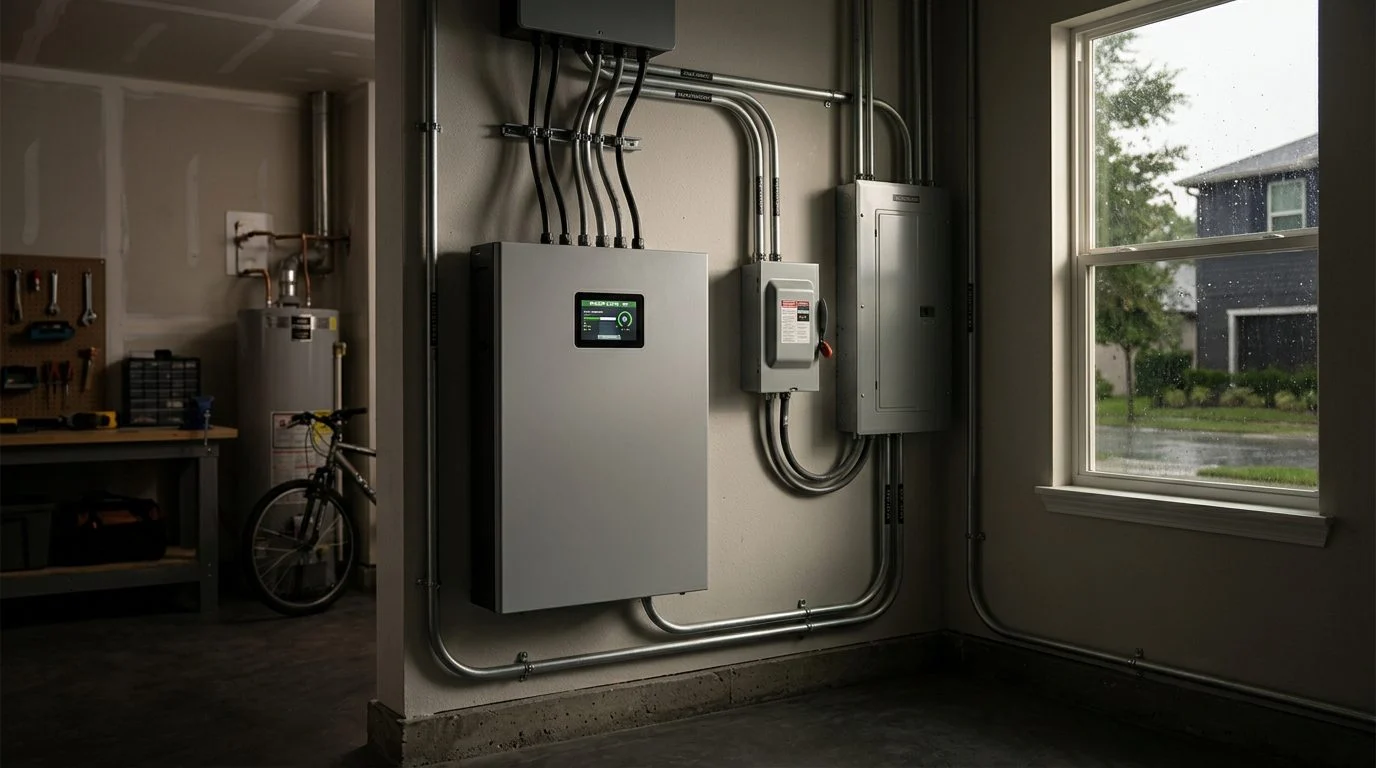
Solar Battery Backup | South Florida
Plan Your Home Battery Installation with Safety First
Battery placement, fire-safety spacing and permit planning all shape a sound installation. Here is how to think them through before you commit.
By Jonathan Rodriguez · Published November 9, 2026
Considering battery backup for your South Florida home? The fire-safety rules for installing fixed energy storage systems are set out in NFPA 855. Whether it governs your home battery turns on the building code your local office enforces. Here’s what that means for a home solar battery installation in Florida, and where the rules come from.
What NFPA 855 Is and Why Homeowners Hear About It
NFPA 855 is a standard covering the installation of stationary energy storage systems. A home solar battery sits in that group, so the standard often comes up during quoting, permitting, and inspection.
NFPA stands for the National Fire Protection Association. A standard is a set of recommended rules. What your permit office actually enforces comes from the building code it uses.
The terms also shift between documents. The 2026 Florida residential code retitled chapter R328 from “Stationary Storage Battery Systems” to “Energy Storage Systems.” A quote may use one name while your permit uses another. Florida Building Commission analysis of changes lists that change.
If an NFPA 855 question came up in your battery quote or permit paperwork, our team can talk it through. Ask about our free first consultation, which is confidential with no obligation to continue. Talk it through with our team — the first consultation is free, confidential, and carries no obligation.
Does NFPA 855 Apply to a Home Solar Battery in Florida?
Florida law makes the state building code the main rulebook. The statute says the code must contain or incorporate by reference the laws and rules that govern construction, alteration, and repair of buildings. Florida Statutes 553.73 sets that framework.
So the real question isn’t only what NFPA 855 says. It’s what your adopted code requires for your project. Many homeowners treat a quote’s mention of the standard as the final word. It’s better to confirm with the permit office before the design is locked.
Ask two things. Which code edition applies to my address? Does it reference NFPA 855 for energy storage?
How the Energy Storage Permit Process Works
Florida law requires a permit before most building alterations start. The enforcing agency reviews the plan before work begins.
Under Florida Statutes 553.79, it is unlawful to alter or repair a building without first getting a permit, unless another law provides otherwise. The agency charges reasonable fees it adopts.
If a permit is denied or revoked for non-compliance, the agency must identify the specific plan or project features that do not comply with the applicable codes, identify the specific code chapters and sections upon which the finding is based, and provide this information to the permit applicant. It must identify the plan features that fall short, the code chapters and sections involved, and give that information to you.
Under Florida Statutes 553.792, the local government must send written notice within 5 business days if it needs more information. If it sends no notice, your application is deemed complete and accepted.
Watch your mail and email after you file. A missing document can slow the whole project.
Garage, Exterior Wall, Utility Room, or Covered Porch: Comparing Locations
The best spot meets the adopted code first. Then it follows the battery maker’s instructions, and then it fits how you use the home.
A garage is a common choice, but vehicles create a real risk. The 2026 code identifies garage locations where a battery can be damaged by a vehicle. Those locations need protection under the code’s impact rules. Florida Building Commission analysis of changes describes these rules.
In its summary of residential code changes, the Florida Building Commission notes that new sections provide criteria for the construction of protection methods for energy storage systems (ESS), including bollards and wheel barriers constructed as specified. This document summarizes what changed and is not the code text (Analysis of Changes, 9th Edition).
An exterior wall or covered porch avoids the vehicle issue. It brings more sun and rain exposure instead. A utility room keeps the unit indoors but adds door requirements.
For a wider view of battery backup options, read our solar battery backup guide.
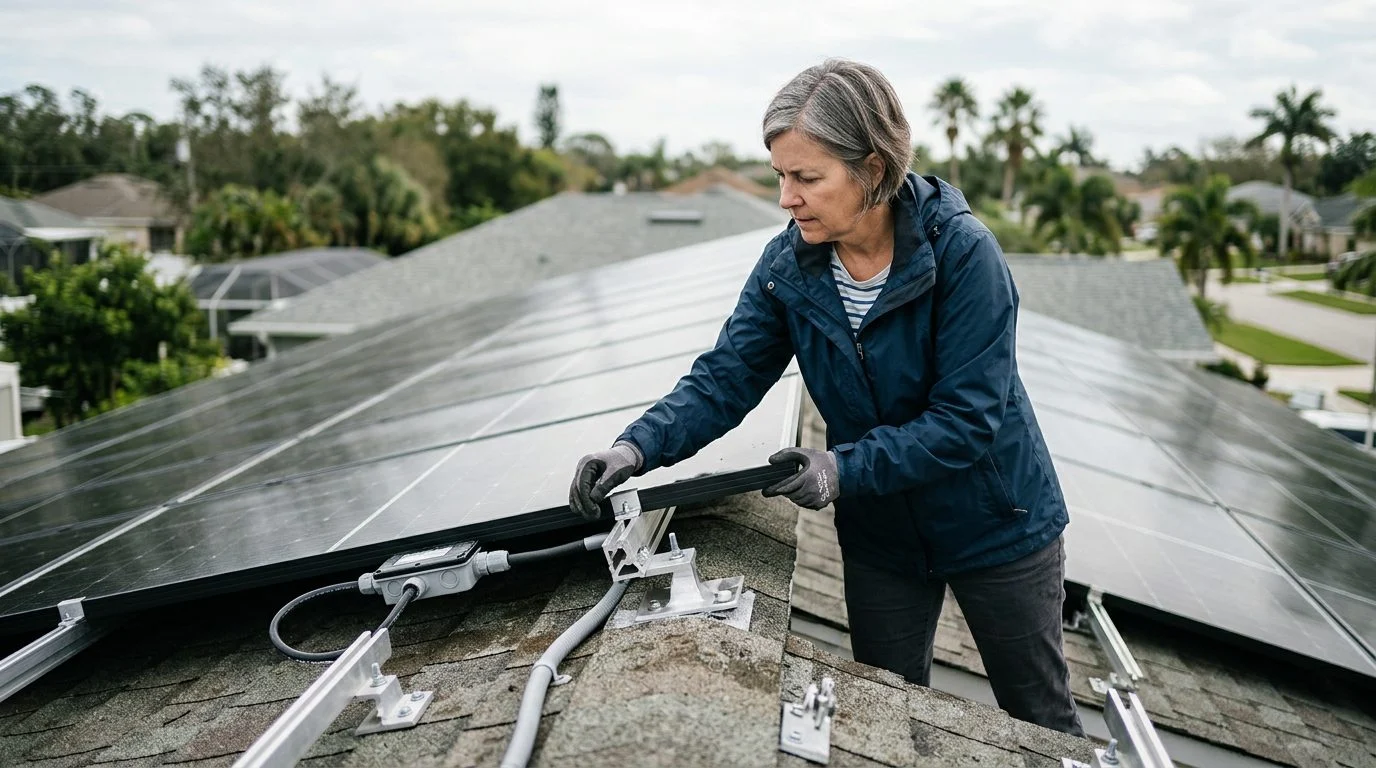
How Heat and Humidity Shape Battery Placement in South Florida
In South Florida, heat and humidity make shade, airflow, and clearance matter more during design.
Miami, Fort Lauderdale, Boca Raton, and Naples all see long hot stretches and high humidity. A unit on a sun-baked wall or in a closed space gets more heat stress than one in shade with airflow.
Clearance numbers come from the manufacturer’s installation instructions and the adopted code. Your installer should follow both.
Ask the installer how the chosen spot handles afternoon sun and air movement. Good answers are specific to that wall or garage, not general.
Ventilation and Fire Suppression in Home ESS Safety
No single rule covers every home.
When a battery sits in a space inside the home, the code controls the doors.
Your permit drawings should show how ventilation and fire protection are handled for your unit and location.
Safety data has limits. UL Solutions incident reporting discusses reported lithium-ion battery incidents and the limits of available safety data.
Not sure what your next step is?
Talk it through with our team — the first consultation is free, confidential, and carries no obligation.
System Design, Inspection, Testing, and Commissioning
A battery project moves through design, permit review, installation, inspection, and commissioning. Each step creates records worth keeping.
The 2026 Florida Building Code allows the building official to require construction documents in digital form. Florida Building Commission analysis of changes covers this change.
If you’re adding solar panels, check the roof first. The U.S. Department of Energy homeowners guide says rooftop solar suitability is shaped by climate, roof age, tree cover, size, shape, and slope. A tile or metal roof nearing the end of its life is worth reviewing before panels go on.
Frequently Asked Questions
NFPA 855 and home solar battery backup Ask your permit office which code edition governs your address.
Can a solar battery go in a garage in Florida?
A garage can work, but the code requires impact protection where a vehicle could hit the unit.
Do I need a permit for a home battery?
Florida law generally requires a permit before building alterations begin, unless another law says otherwise.
Talk Through Your Battery Installation Questions with ASP Superhome
If an NFPA 855 question came up in your quote or permit paperwork, you don’t have to sort it out alone.
You may be reading this for a family member. A contractor, inspector, or HOA may have raised the standard. Those questions are hard to settle while a permit is waiting.
ASP Superhome can talk through your home, your battery options, and how the local code applies to your address. Our free first consultation is confidential, with no obligation to continue. Contact ASP Superhome to start that conversation.
Placement Comes First
Where a battery sits affects both safety and code compliance. Before you choose a location, especially a garage where a vehicle could reach the unit, get the layout reviewed.
How We Approach Your Battery Project
Safety-Focused Planning
We look at location, clearances and impact protection so the system is planned around your home and its surroundings.
Permit-Aware Steps
We walk you through the permit considerations that apply to your project so you know what to expect before work begins.
Backup Designed Around You
We discuss the loads you want to keep running during an outage and size the battery plan to match those goals.
Confidential, No-Obligation Start
Your first consultation is free, confidential and comes with no obligation to continue.
Key Questions to Settle Early
Where Will the Battery Go?
Indoor, garage and exterior locations each raise different questions about access, protection and spacing.
What Permits Apply?
Permit requirements depend on your property and project scope. We help you identify what applies to your home.
How Will Impact Be Handled?
Protection from vehicles and other impacts is part of the layout, not an afterthought.
What Do You Need Backed Up?
Defining essential circuits early helps set the right battery capacity and installation plan.


