


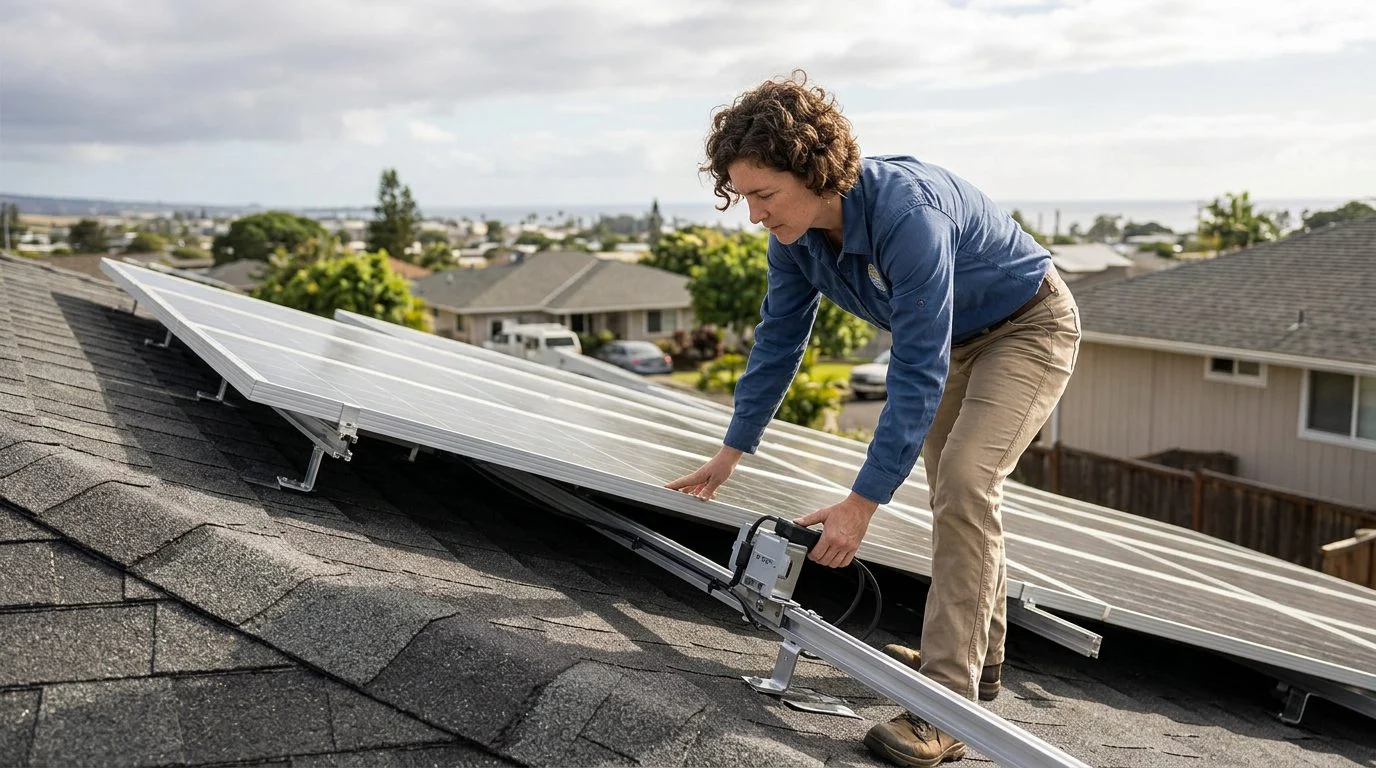
Solar Battery Backup · South Florida
Can a Solar Battery Run Your Air Conditioning in Florida?
Yes, often, but only if the battery is wired to the right circuits and sized to your AC's draw. Here is how to tell what your home needs.
What decides whether a battery can run your AC
Circuit wiring
The battery backup has to be connected to the circuit that powers your AC. Without that connection, the system cannot supply it during an outage.
AC power draw
Central AC draws far more power than lights or a refrigerator. Its average draw and startup surge set how much battery capacity you need.
Hours of coverage
How long you want cooling to last, such as through one night or a longer outage, determines how many batteries the system needs.
Solar panel output
Panels recharge the battery during daylight. Their output needs to match the battery size and your daily energy use.
By Jonathan Rodriguez · Published October 23, 2026
Yes, a solar battery can run air conditioning, including central AC. It works when the battery, inverter, and solar panels are sized around the AC’s power needs. A system built only for lights and a refrigerator may not carry a central unit for long. This guide explains why, and what decides how long a battery can keep cool air running in a Florida home.
The Short Answer: Yes, When the System Is Sized for It
A solar battery can power central air when the whole system is designed around that load. Central AC needs more planning than almost any other appliance in the house.
You may have seen claims that a small solar panel can run a fridge. That result doesn’t carry over to central air. A fridge draws modest power and cycles on and off. A central AC compressor pulls far more power, and it runs for long stretches on hot afternoons.
Central AC is one of the largest loads in a typical Florida home. Lights, phone chargers, and a refrigerator each draw much less. That’s why the AC needs its own math before you commit to a battery.
Four things set the result: the AC’s load, the battery’s capacity, the type of system, and the conditions at your home.
If an outage or a quote has you wondering whether your AC can run on a battery, our team can talk it through with you. Talk it through with our team — the first consultation is free, confidential, and carries no obligation.
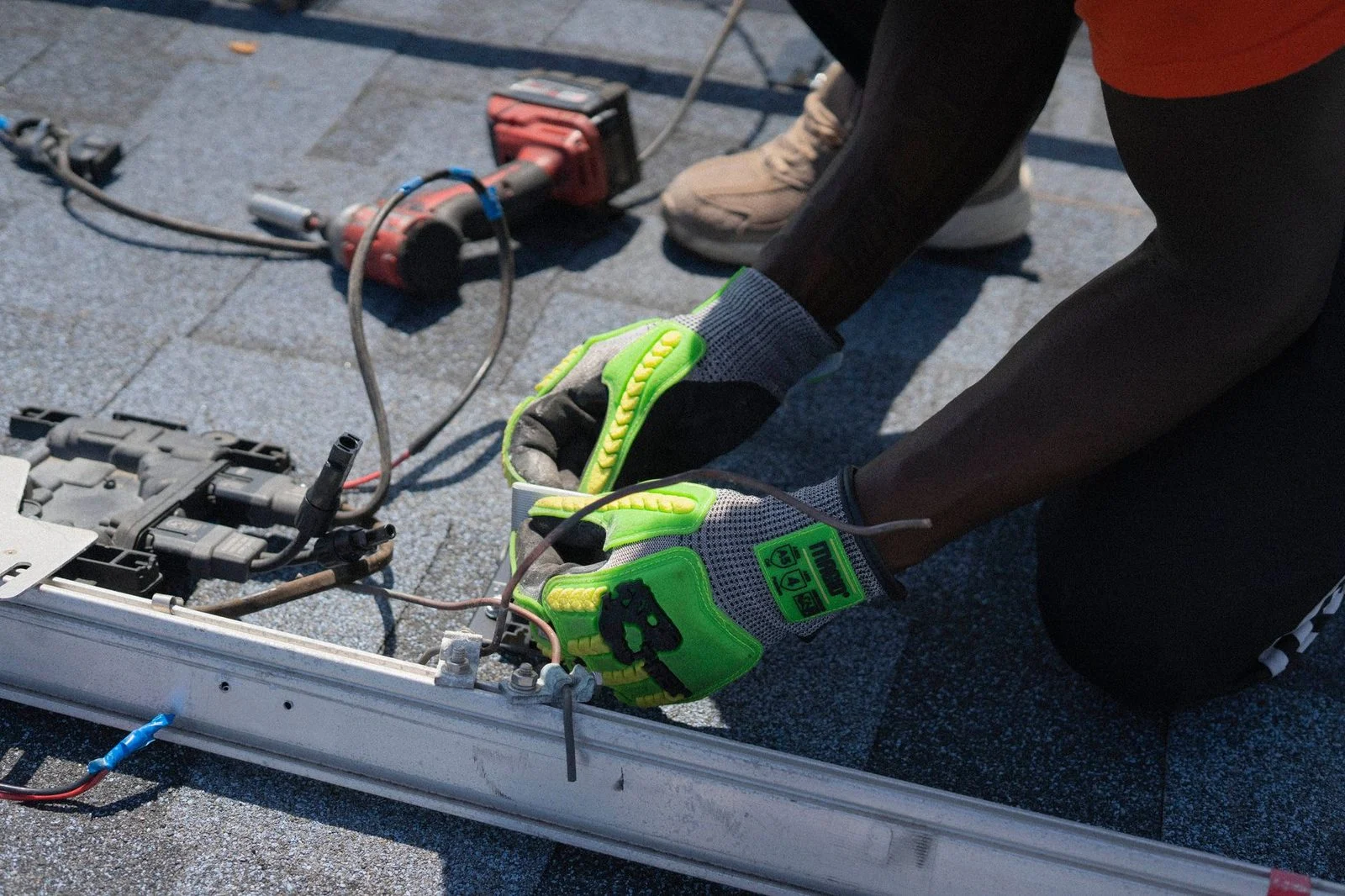
Why Central Air Is the Hardest Load for a Battery
Central air is hard on a battery because it draws a large burst of power at startup. Then it draws a steady load while it runs.
That startup burst is called starting surge. When the compressor kicks on, it can pull several times its normal running power for a moment. The inverter, the device that turns battery power into household AC power, must handle that spike. If it can’t, the system may shut down even when the battery still has charge.
Two measurements matter. Running wattage is the power the AC draws at one moment, measured in watts or kilowatts. Energy is power used over time, measured in kilowatt-hours (kWh). A battery stores kWh. An inverter must deliver watts. You need both numbers.
Cycling changes the total. An AC doesn’t run flat out all day. It runs, rests, and runs again. A lower thermostat setting usually means longer run time and more energy used.
Your starting points are the rating label on the outdoor unit and your past utility bills. The label lists electrical ratings. Your bills show how many kWh you actually use each month.
Off-Grid and On-Grid Systems: How the AC Gets Power
An off-grid system runs your home from solar and battery alone. A grid-tied system with battery backup relies on the utility until an outage hits.
An off-grid system has no utility connection. The battery and panels supply everything. The battery must carry the AC through every hour it’s needed, including cloudy days and nights. This setup needs the most storage.
An on-grid system with battery backup draws from the grid under normal conditions. When the grid goes down, the battery can take over. That only works if the system and its backup circuits are wired for it.
Backup scope matters. Whole-home backup covers the entire panel. Partial backup covers selected circuits. Central AC may not be on a circuit the battery feeds, so check which circuits are included.
Florida’s rule for investor-owned utilities also shapes grid-tied systems. Utility disconnect requirements for customer-owned solar systems depend on the specifics of each installation, and our team can walk you through them during your free first consultation. See Fla. Admin. Code R. 25-6.065.
A grid-tied system without battery backup does not keep central AC running during an outage.
How Long Can a Battery Run Central AC?
A battery runs central AC for about as long as its usable energy, after losses, divided by the AC’s average draw. The math is simple. The inputs are the hard part.
Here’s a worked example. Every number below is an assumption, not a measurement from any home.
- Assumed battery: 13.5 kWh, with 90% usable capacity
- Assumed inverter losses: 10%
- Assumed AC average draw while running: 3.5 kW
Usable energy is 13.5 × 0.90 = 12.15 kWh. After inverter losses, that’s 12.15 × 0.90 ≈ 10.9 kWh. Runtime is 10.9 ÷ 3.5 ≈ 3.1 hours.
Under those assumptions, the AC runs about three hours. Real results change with the AC size, the home’s heat load, and the other circuits drawing power.
Daylight changes the picture. Solar panels can recharge the battery while the AC runs. On a sunny day, the array may replace much of what the AC used. A cloudy day or heavy use leaves less to recharge.
Panel count depends on three things: AC size, the daily run time you want, and how much sun your roof gets. Our team can run those numbers for a specific home.
Running AC at Night and During a Florida Outage
At night, the AC runs only on stored battery energy. Overnight capacity sets how long it can keep going.
Solar panels stop producing after sunset. Florida evenings stay hot and humid, so cooling demand often continues into the night. A battery sized only for daytime top-ups can drain before morning.
Storm season adds another strain. During an outage, a closed-up house holds heat longer, so the AC may run more. The battery feeds the AC at the same time the home needs it most.
Planning should start with the outage you expect, not the average day. Decide how many hours of AC you want covered at night. Then size the battery to that target. Weather, flooding, and access to the electrical panel also affect hurricane-season planning, so review them for the specific site.
Factors That Change How Well a Battery Runs Central AC
Your home’s heat gain and equipment condition change how hard the AC works. That changes how long a battery can carry it.
The U.S. EPA’s cool roof guidance covers how cool roofs can help reduce heat islands.
Impact windows and impact doors also help limit heat entering the home. Less heat gain means the AC has less work to do. Roof surface and condition, including tile and metal roofing, affect how much heat reaches the attic and living space.
Ductwork matters too. Leaks or poor airflow force the AC to run longer to reach the same temperature. An older or less efficient AC unit also draws more energy for the same cooling.
Other loads add up. A water heater, pool pump, EV charger, or electric range running at the same time draws from the same battery. Load management, covered next, helps keep the AC supplied.
Not sure what your next step is?
Talk it through with our team — the first consultation is free, confidential, and carries no obligation.
Making Solar, Battery, and AC Work Together
The three parts work together when the inverter, battery, and panels are matched to the AC and to each other. Each part has its own limit.
Inverter sizing comes first. Florida’s interconnection rule defines gross power rating for inverter-based systems. Inverter sizing depends on the specifics of your panel array, and our team can review those details with you during your free first consultation. Size the inverter to handle the AC’s starting surge, not just its running wattage.
Load management is the next step. Give the AC and essential circuits priority. Keep low-priority loads off the backup circuits, so they don’t drain the battery.
Florida’s PV System Certification Program covers systems that the regulation requires the Seller to submit to the Center for evaluation and approval. Its approval certificate includes, but is not limited to, the system’s primary and alternate major components and a diagram of the system. See Fla. Admin. Code R. 6C7-8.010.
Battery safety also matters. That is why installation planning deserves care: Florida’s PV System Certification Program applies to systems the rule requires the Seller to submit to the Center for evaluation and approval, and approval follows the requirements in FSEC Standard 203-17, “Procedures for Photovoltaic System Design Review and Approval” (July 2017).
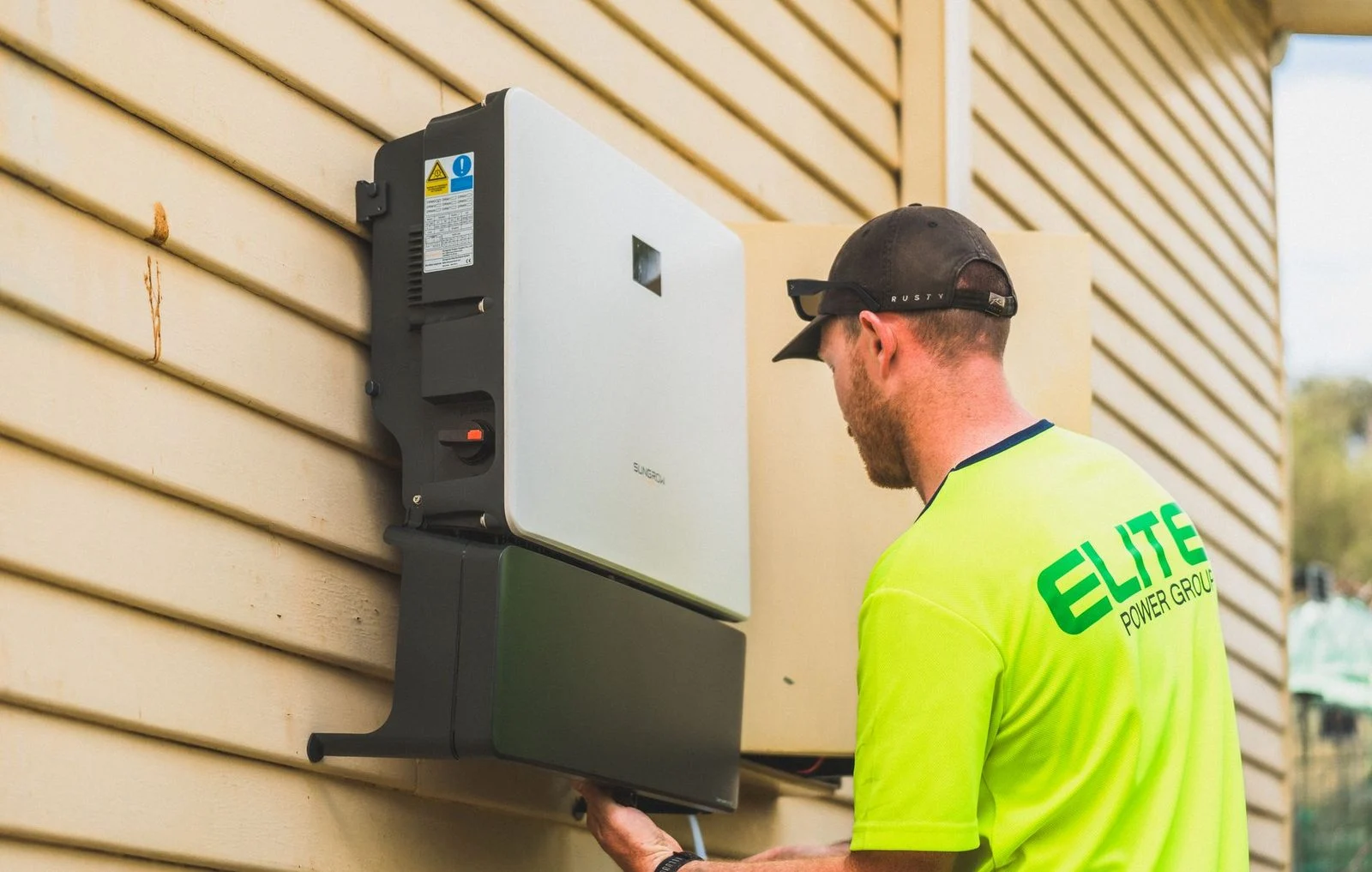
Talk Through Your Home’s Numbers
The honest answer for any home depends on its AC size, electrical panel, roof and window exposure, and daily use. Those facts set the battery and inverter you need.
You may be dealing with a recent outage, a heat wave, or a parent’s home that needs backup power. Or a quote raised questions about whether the AC can run on the battery. Those questions deserve a straight answer with real numbers.
Common Questions
Can a solar battery run central AC during a power outage?
Yes, if the battery backup is wired to the AC’s circuit. A grid-tied system without backup will not.
How many batteries do I need to run AC overnight?
The count follows the AC’s average draw and the hours you want covered.
Will a 400W solar panel run a fridge?
It may run a fridge in some setups. One panel does not size a system for central AC.
Can you get solar-powered air conditioning?
Yes. A solar system with a battery can power central AC when it’s sized for that load.
If you’re weighing this for your own home, contact our team for a free first consultation. It’s confidential and carries no obligation to continue. We’ll look at your home’s numbers with you.
Important: a grid-tied system alone will not run AC in an outage
Solar panels that are grid-tied without a battery backup shut off when the grid goes down. Confirm with a professional assessment whether your battery is wired to your AC before you count on it.
Common questions about solar batteries and AC
How many batteries do I need?
The count follows your AC's average draw and the hours you want covered. A home assessment gives you a precise number.
Will a 400W panel run a fridge?
A single 400W panel produces modest power. Whether it can run a refrigerator depends on the appliance's draw and how much battery storage is installed.
Can I add a battery later?
In many homes, battery backup can be added to an existing solar system. Your roof, electrical panel, and wiring all affect the setup.


