


Solar Battery Backup | South Florida
Can Your Solar Battery Overheat in Florida Heat?
Learn how heat affects battery performance, what to watch for during long summer stretches, and how to plan your setup for South Florida's climate.
By Jonathan Rodriguez · Published November 8, 2026
Short Answer: Yes, a Solar Battery Can Run Hot in Florida Summers
Can solar battery overheat in Florida heat? Yes. A battery can run warm and reach its temperature limits during long, hot stretches of Florida sun. Most batteries are built to stay inside a set operating range. When they reach the edge of that range, many pause or slow down to protect themselves.
Overheating isn’t the same as failure. A shutdown during a heat spell is a protective step. Lasting damage is a separate question. It usually comes from heat that stays high for a long time.
Is it bad for batteries to be in heat? Generally, yes. Sustained heat speeds up battery aging and can shrink the usable capacity you rely on during an outage. This page explains why South Florida homes face this risk, how panels and batteries differ, what affects heat exposure, and what warning signs to watch for.
If a heat warning or unexpected shutdown has you worried about your battery, our team is ready to talk through your options with you. Talk it through with our team — the first consultation is free, confidential, and carries no obligation.
Why South Florida Summer Heat Stresses Battery Systems
Heat stress builds when high air temperature, humidity, and intense sun combine over many days. South Florida gets that mix from late spring into early fall. A battery may face heat for months, not just one hot afternoon.
Location changes the picture. A battery on a shaded, ventilated wall runs cooler than one in a closed garage or a hot utility closet. Enclosed spaces can trap heat. Batteries also give off heat while they charge and discharge, so that heat has nowhere to go in a tight space.
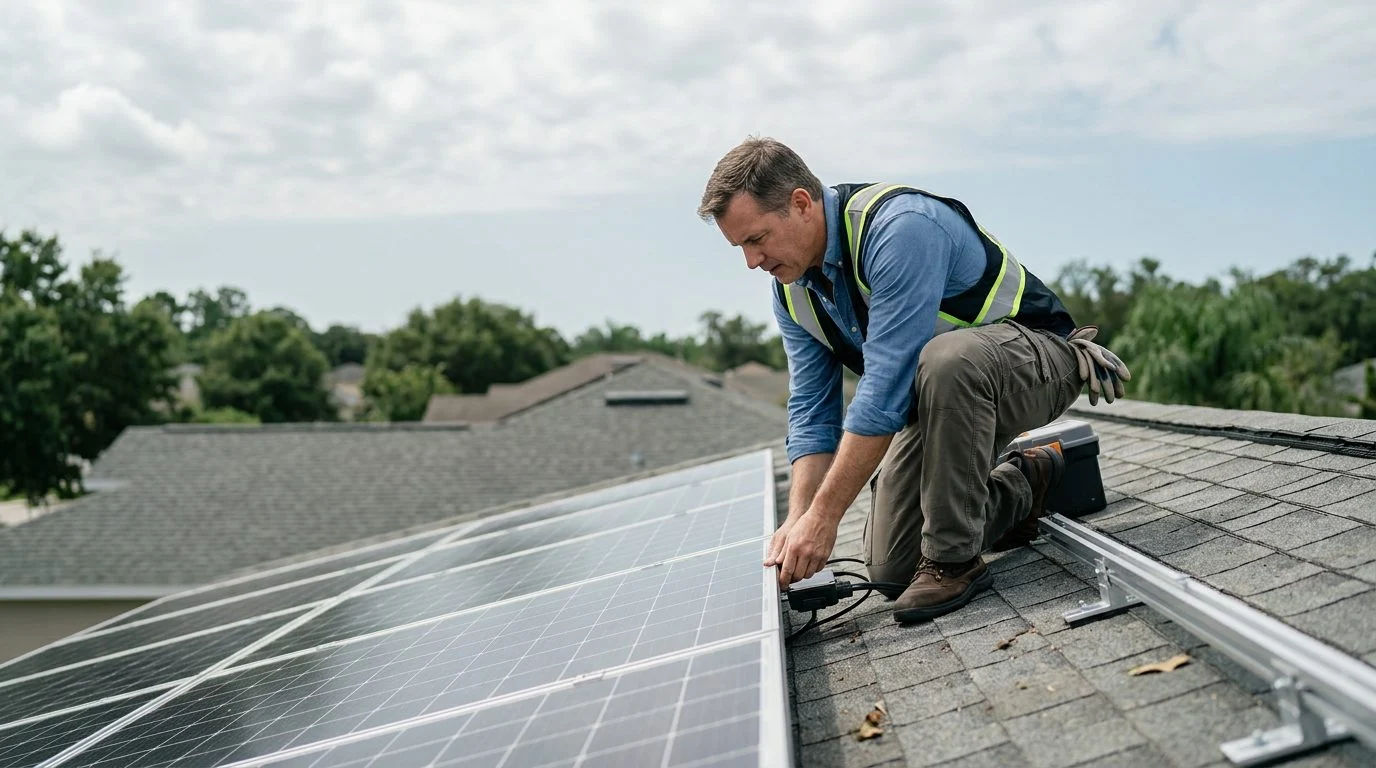
Do solar panels make your house hot? Panels mostly sit above the roof surface. They can change how heat moves at the roofline, but the battery’s own heat is a separate question. For broader context on battery backup in this region, read our solar battery backup guide for South Florida.
At What Temperature Do Solar Panels Become Inefficient?
Solar panels lose output as their cells get hotter, even on bright days. Output usually falls as cell temperature rises above standard test conditions. That’s why a hot roof can cut power generation even when the sun is strong.
Each panel’s datasheet lists a temperature coefficient. It shows how much output drops for each degree above the test standard. Installers use that number when they size a system for a specific roof. Roof color matters too. ENERGY STAR says lighter or more reflective metal roof colors generally stay cooler and can improve energy savings in hot, sunny climates such as Florida, and the EPA cool roof guidance notes that reflective metal roofing can reduce solar heat transfer in warm climates.
Lower panel output on a hot day is a generation issue. It isn’t the same as a battery overheating. Mixing up the two can lead to the wrong fix.
How Heat Affects Battery Performance, Charging, and Lifespan
A battery may not charge fully on a hot afternoon. Many systems cut the charge or discharge rate, or pause, when internal temperature climbs past a safe window. The system resumes when temperatures drop.
Sustained heat does more harm over time. It can speed up degradation and gradually reduce the capacity you can count on during an outage. Your battery may still run, but for less time than it did when it was new. For a general look at battery technologies, their lifespan, and their safety traits, see UL Solutions’ microgrid overview.
Each battery model publishes its own operating temperature range in its specifications. Your installer reviews that range during the site assessment. A temporary shutdown is different from permanent damage. A battery that pauses to protect itself and restarts later has done its job.
Installation Factors That Influence Battery Heat Exposure
Where the battery sits affects how hot it runs. A shaded wall location with clear space for airflow usually beats direct afternoon sun. Keep equipment away from surfaces that trap heat.
Garages and enclosed utility spaces can run much hotter than the outdoor air. Many homes keep battery equipment in a garage, so ask about the exact spot before installation. Our team can walk you through placement options during a free initial consultation.
Roof condition matters too. An aging roof or one that needs repair can affect how the system is mounted and how heat moves through the home. Read our guide on roof planning before solar and battery. Orientation, roof type, and open space all shape the right spot, and an installer checks them on site.
Warning Signs to Watch For and Next Steps for Your Home
Watch for warmth at the battery enclosure, a heat-related alert on the system, shorter runtime on hot days, or repeated temporary shutdowns. Report any alert or unexpected shutdown to your installer or system provider. A heat problem is easier to evaluate early.
Maybe you’re the one watching the battery warning. Maybe you’re helping a parent or a client sort out a heat problem nobody expected. Either way, you may still be deciding what to do next. That’s a normal place to be.
Can solar battery overheat in Florida heat?
Yes, a battery can reach its temperature limits during long, hot spells. Many systems pause to protect themselves.
Does a solar battery shut down when it gets too hot?
Many systems pause or slow charging when temperatures climb too high. They may restart once things cool down.
Why won’t my battery charge fully on hot days?
Heat can trigger a protective limit on charging. Panel output also drops as roofs get hotter.
Our first consultation is free, confidential, and comes with no obligation to continue (consulta inicial gratuita, confidencial y sin compromiso). If heat is affecting a home you care about, request a free estimate and we’ll look at battery placement with you.
Four Heat Factors That Affect Your Battery
Outdoor Temperature
Long stretches of high heat raise the temperature of the equipment around your battery, not just the air outside.
Direct Sun Exposure
A battery in full sun can run warmer than one placed in shade or a well-ventilated area.
Airflow and Enclosure
Limited ventilation, tight spaces, and stored items can trap heat around the battery and the components near it.
Charging and Discharging Load
Heavy use during peak sun or during evening hours can add heat, especially on the hottest days of the year.
What to Review Before You Install or Upgrade
Placement
Where the battery sits on your property affects sun exposure, shade, and how easily air moves around it.
Ventilation
We discuss clearances and airflow so the equipment has room to operate in Florida's heat and humidity.
System Sizing
The size of your solar panels and battery should match how your household actually uses power.
Ongoing Care
Routine checks help you notice changes in performance early, before a hot spell becomes a bigger problem.
Quick Tip: Give Your Battery Room to Breathe
Keep the area around your battery clear of stored items, and avoid blocking vents or airflow paths. Ask about shade and ventilation options during your visit.
Plan Your Solar Battery for South Florida's Heat
Related practice areas
- Solar Battery Backup in Boca Raton
- Solar Battery Warranty Florida: Heat and Hurricane Terms


