


Solar Battery Backup | South Florida
A quick structural review helps you plan a battery installation with confidence.
By Jonathan Rodriguez · Published November 8, 2026
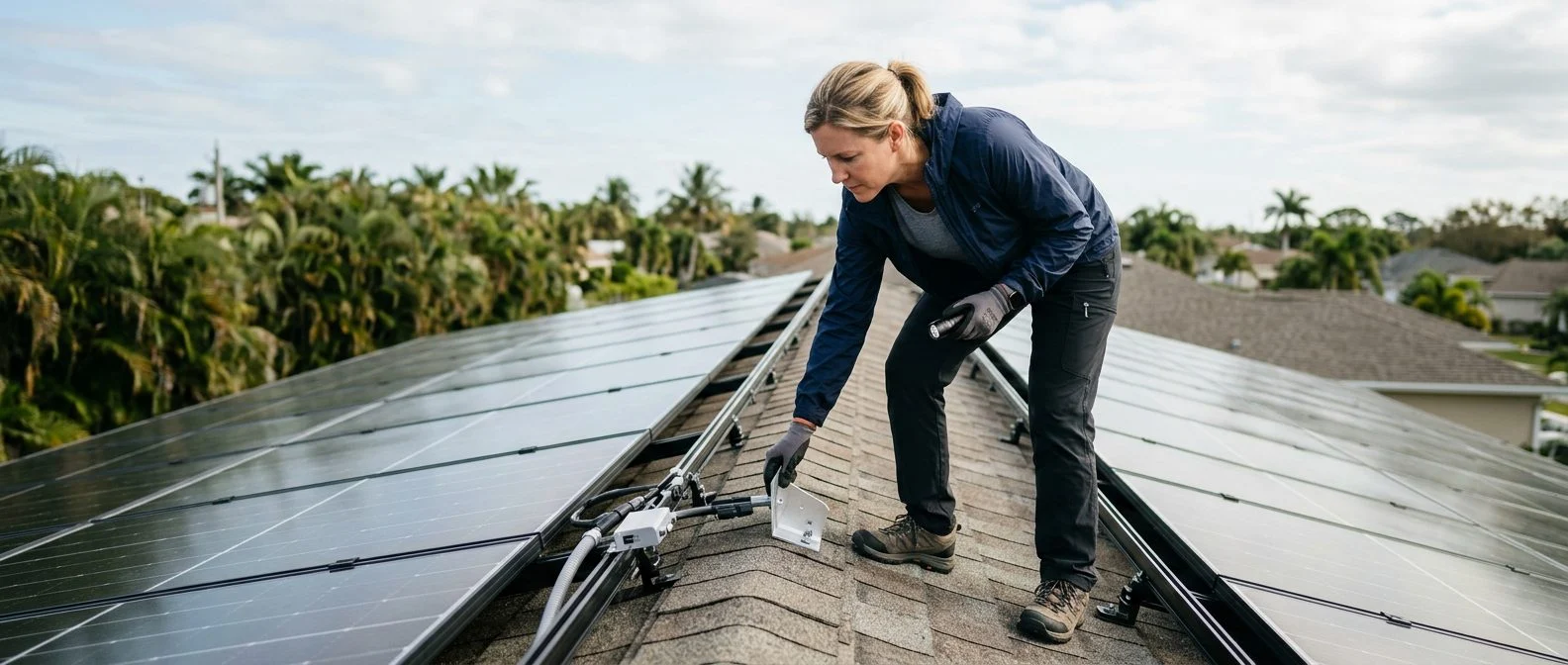
Thinking about adding a solar battery to your South Florida home? You probably want to know if your roof can handle the extra equipment. A roof structural check for a solar battery in Florida is worth requesting when the roof is aging, damaged, or will carry a new array. The battery itself usually sits indoors or on the ground, so the roof question centers on the panels and their mounts.
Florida treats roof wind resistance as a core requirement. Because solar panels are installed on the roof, its condition is part of any solar plan, not an afterthought.
Why the Roof Question Comes Up When You Add a Solar Battery
The roof question comes up because a battery works best with panels, and panels attach to the roof.
A solar battery backup system stores electricity from your panels so you can use it later, such as during an outage or in the evening. Most battery units are installed indoors, in a garage, or on a ground-level pad. That keeps the battery itself away from the roof.
That shifts the roof focus to the panel array. The panels, their mounts, and the roof under them carry the weight and wind forces. Every mount is also a point where water can enter.
If you already have panels, adding a battery changes the electrical system more than the roof. If you’re planning both at once, get the roof checked before the array layout is fixed. Changes are much harder after the panels are on.
For the full battery overview across South Florida, see our solar battery backup guide. This page covers the roof side of that plan.
Not sure what your next step is?
Talk it through with our team — the first consultation is free, confidential, and carries no obligation.
Does Adding a Battery Change the Load on Your Roof?
The battery adds some weight, but the larger roof load usually comes from the panel array.
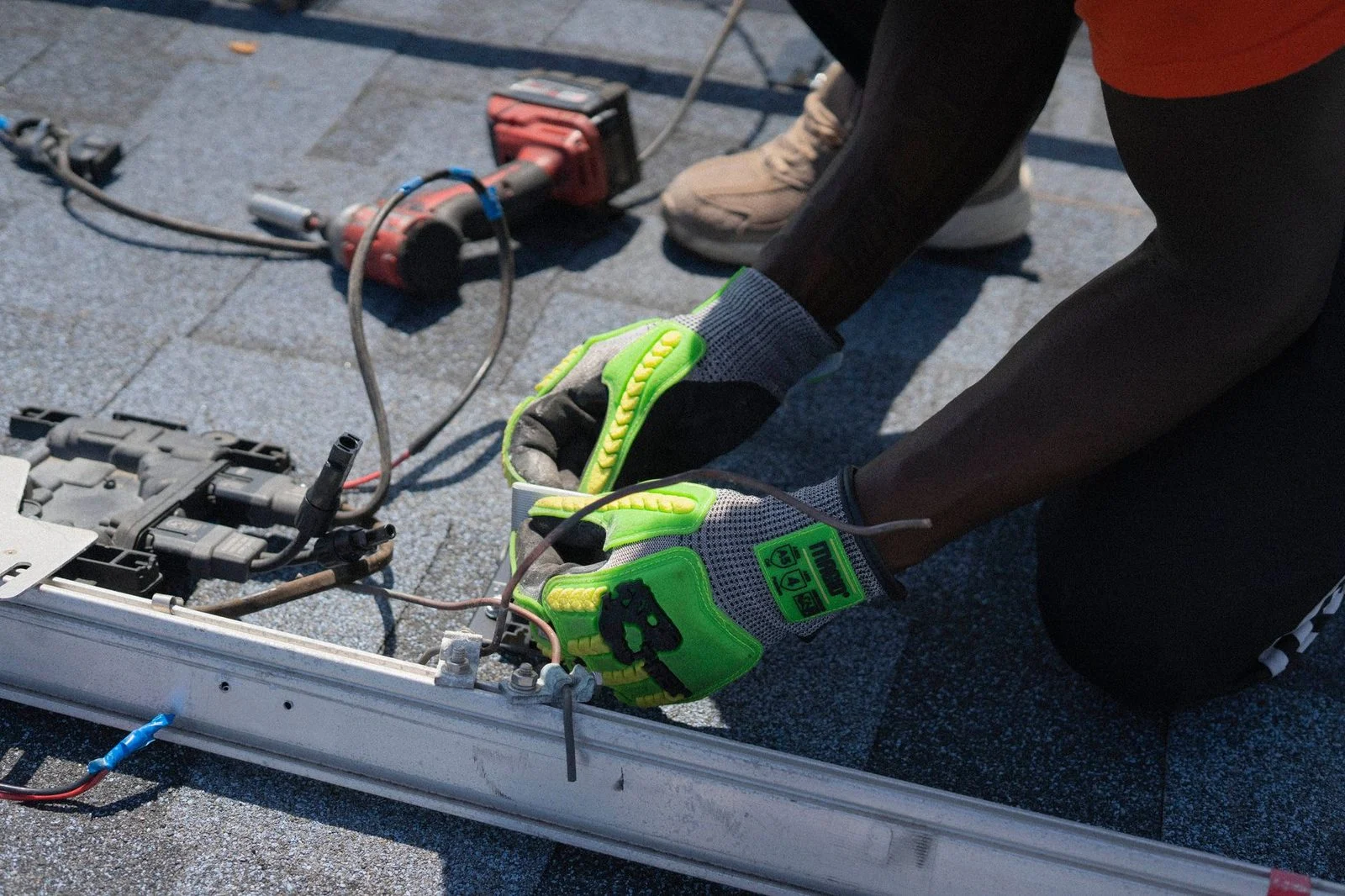
Roof load is the weight a roof must carry, including panels, mounts, and equipment. It also includes the wind forces that push and pull on them. Whether a roof can carry that load depends on its framing: rafters or trusses, the roof decking, and how those parts connect.
The 2026 code change analysis for floor joists, rafters, and ceiling joists adds limits on cutting, notching, and boring those members. A mount that needs a notched rafter calls for a closer review before anyone goes ahead.
Battery placement matters too. If the battery sits inside the home, the 2026 residential code analysis says openings into that space must use specific doors that are self-latching and self-closing.
Backup planning also depends on which circuits the battery powers. For that side of the plan, see our essential circuits guide.
Warning Signs That a Roof Should Be Checked First
Cracked or lifted tiles, curled metal edges, damaged flashing, and stains on ceilings or soffits are signs the roof needs a check first.
Here’s what each sign tells you. Cracked or slipped tiles let water get under the roof covering. Curled or lifting metal at the edges can point to fastener or panel problems. Flashing around vents, chimneys, and skylights is a common leak point, and it’s also where many mounts land.
Stains on a ceiling or soffit mean water is already getting through. Soft or sagging decking is more serious. You may notice it as a spongy spot in the attic.
Roof age and past repairs matter as well. Patches, mismatched materials, and repeated fixes around one spot suggest the roof has been working hard. Those are good reasons to ask for a check before adding weight.
Many homeowners assume a roof that doesn’t leak is sound. A roof can stay dry while its decking softens underneath. A look from the ground can’t confirm framing condition, so a closer assessment is the right next step.
Florida Wind Loads and Roof Attachment
In South Florida, how a solar system holds up in storm-prone weather often depends on the overall condition of the roof, including the structure beneath the racking and the connection points.
Wind pulls upward on panels, and those forces can concentrate at mounting points.
Older construction raises a separate concern. The windstorm loss mitigation statute, Fla. Stat. § 553.844, says recent hurricanes exposed a vulnerability in some construction built before the Florida Building Code. The statute directs the Florida Building Commission to address secondary water barriers for roofs. Its criteria can look at roof shape, slope, and the composition of the roof system.
That’s why an older roof may need review before a new array goes on. An attachment method that worked in the past may need a closer look against current requirements.
Repair or Replace the Roof Before the Solar Work?
Fix active leaks and failing sections before panels go up, and replace the roof when the base itself is worn.
Repairs come first when the problem is local, like a few cracked tiles or one bad flashing. Replacement is the more practical path when the decking or structure is compromised or the covering is near the end of its life.
Florida law generally requires a permit before anyone repairs a building. Plan the permit into your schedule.
Recovering a roof, which means installing a new covering over the old one, has its own rule. The 2026 residential code analysis for recovering versus replacement allows that only when the existing or repaired substrate is adequate for the new covering.
Material matters too. The National Roofing Contractors Association says the structural load capacity must be verified when replacing another roof covering with tile. Miami-Dade County’s product approval notices describe approval procedures that affect roofing systems, including non-structural metal roofing. ASP Superhome offers both roof repair and roof replacement, so the sequencing question can be planned in one place.
What a Structural Check Typically Covers
A structural check reviews the framing, decking, flashing, fasteners, and past repairs. It then ties those findings to the planned panel layout.
- Rafters or trusses: size, spacing, condition, and any cuts or notches.
- Roof decking: soundness, moisture, and soft spots.
- Flashing and penetrations: vents, chimneys, skylights, and mount points. The 2026 flashing analysis for photovoltaic panels requires that flashing follow the manufacturer’s installation instructions.
- Fasteners and attachment: whether they hold firmly to the framing.
- Existing repairs: patches and past work.
The layout step matters. Mount points need to land on sound framing, and the array has to avoid weak areas. The 2026 analysis for PV panels over a roof assembly added criteria for that setup.
For Boca Raton homeowners, our Boca Raton battery guide covers local context.
Common Questions
Does a solar battery add weight to a roof?
The battery adds some weight, but panels and mounts usually drive the roof load question.
Can a tile roof support solar panels?
A tile roof’s structural load capacity should be verified before a new array goes on.
Not sure what your next step is?
Talk it through with our team — the first consultation is free, confidential, and carries no obligation.
Talk With ASP Superhome About Your Roof and Battery Plans
If your roof shows warning signs while you plan a battery, a structural check is a sensible first step.
Picture a homeowner in Fort Myers with aging tiles, metal lifting at the eaves, and a leak from last season, now weighing a battery. That roof question should come before the equipment order.
ASP Superhome offers a consulta inicial gratuita, confidencial y sin compromiso, which means a free first consultation, confidential, with no obligation to continue. Request a free estimate to start the roof conversation.
Why a Structural Check Comes First
Planning That Fits Your System
Knowing your roof's condition early helps you decide where the battery goes and how it works with your solar panels.
One Team for the Whole Project
ASP Superhome handles solar, roofing, windows, and doors, so the roof and the energy system can be planned together.
Don't Assume Your Roof Can Handle It
Have the roof's structural capacity verified first, especially if you are also planning new panels or a roof repair.
How the Process Works
1. Tell Us About Your Home
Share your roof type, its age, and the solar setup you are considering, whether tile, metal, or another roof covering.
3. Plan Your Options
We walk you through the findings, along with the roof repair or replacement options that may be needed to support your system.


