


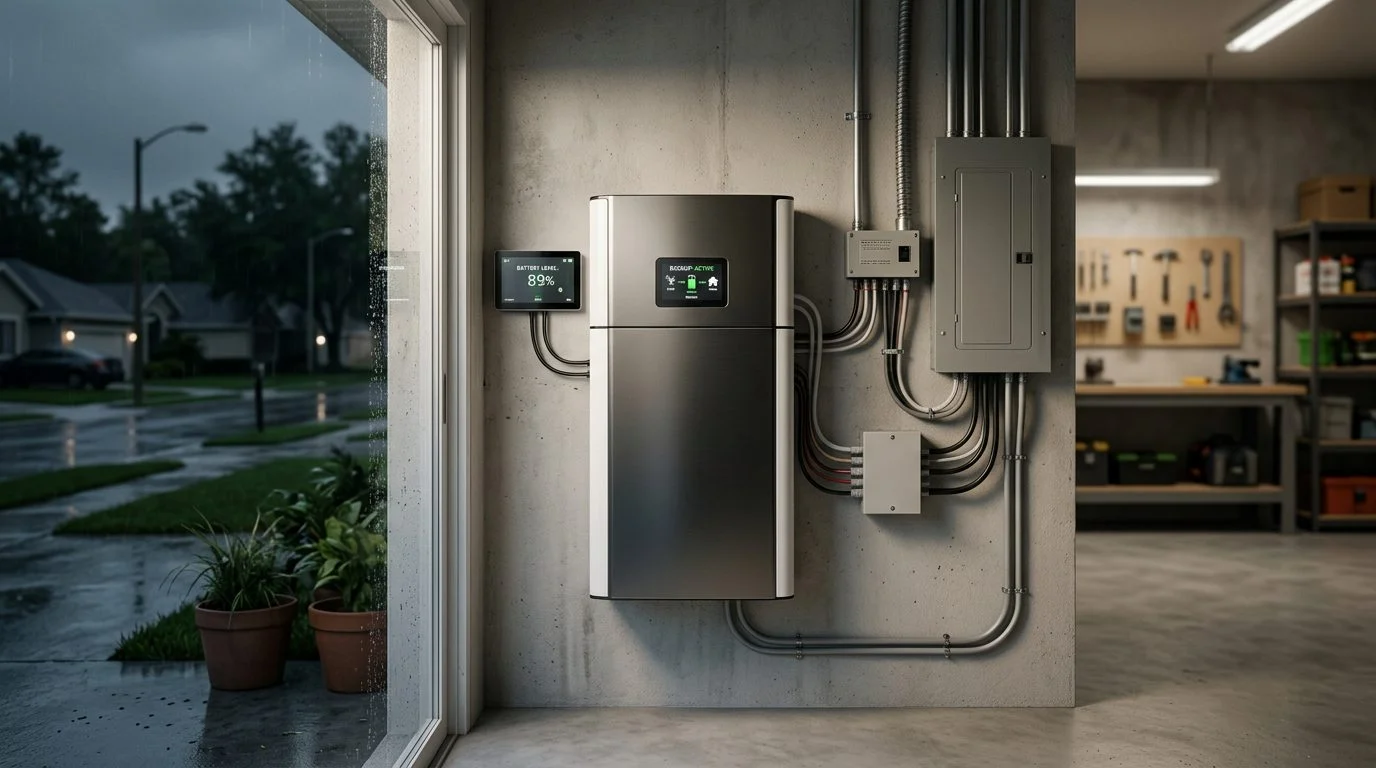
Solar battery backup | South Florida homes
Keep the Lights On When Storm Season Hits
Here is how a solar battery backup can keep your home running through outages and what to plan before the next storm.
By Jonathan Rodriguez · Published November 9, 2026
Solar Battery or Generator for Hurricane Florida Homes
A hurricane can knock out power for days, and many families only think about backup once a storm is close. If you’re weighing a solar battery or generator for hurricane Florida homes, here’s the short answer. A solar battery runs on stored sunshine and starts on its own. A gas generator makes more power on demand, but only while it has fuel, and it must run outdoors. For most South Florida homes, the right pick comes down to the roof, the loads you need to keep running, and how long you need to last.
This guide compares the two side by side. It’s written for homeowners who may be researching for someone else or after a recent storm, and who aren’t ready to decide yet.
If you're sorting out storm power for a family member or right after a storm, we'd be glad to talk through your roof, your loads, and your plan with you. Talk it through with our team — the first consultation is free, confidential, and carries no obligation.
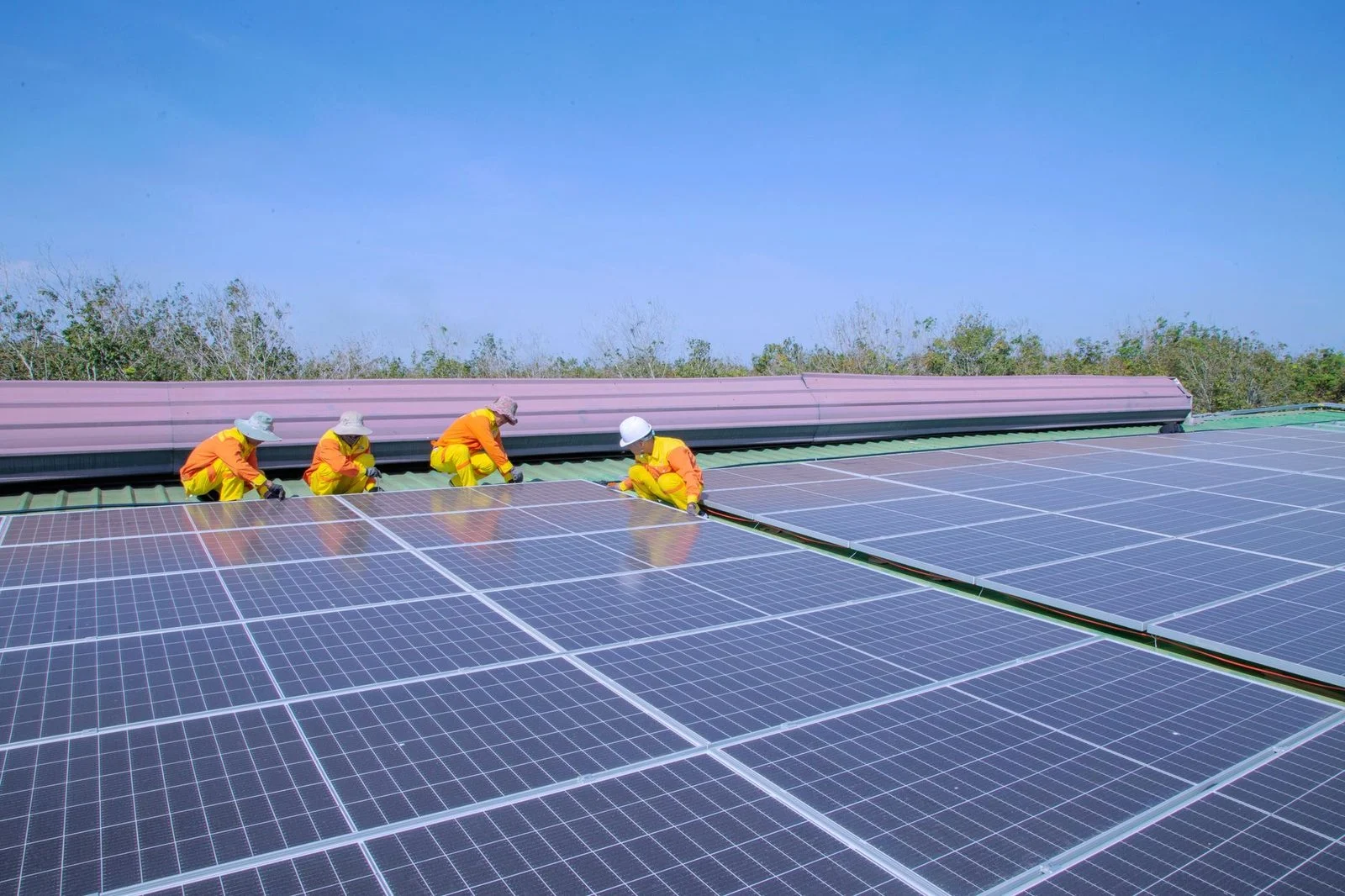
Why Florida Homes Are Weighing Backup Power Before Storm Season
Backup power matters most in the days after a storm, when the grid may still be down and daily life stalls. Many people make this choice in a rush. Once a storm forms, there’s little time to shop, and fuel and equipment can run short.
Planning before the season lets you think it through calmly. This page compares two main approaches for South Florida homes: a solar battery system and a gas generator. We cover what each can power, fuel and upkeep, safety, and how each fits your roof and home. For the broader picture, read our solar battery backup guide for South Florida.
How Does a Solar Battery Backup System Work During an Outage?
A solar battery stores power that your panels make during the day, then feeds it to your home when the grid goes down. In daylight, the panels charge the battery. When power fails, the battery supplies your home.
The system needs no fuel tank, no pull cord, and no delivery truck. Once it’s charged and installed, there’s no refueling to plan around. The U.S. Department of Energy’s Solar Energy Technologies Office covers the basics of energy storage and battery backup.
How long a battery lasts depends on two things: how much energy it holds and how much your home draws. A battery that powers a refrigerator, lights, and fans can last far longer than one asked to run central air. That’s why sizing matters.
The main limit is sunshine. After a multi-day storm with heavy clouds, the panels may refill the battery only a little. Then it lasts only as long as its stored charge.
Planning helps. Decide which circuits must stay on, such as the refrigerator, a few lights, and a well pump if you have one. Our guide to essential circuits and well pumps walks through that step.
How Does a Gas Generator Work, and What Does It Take to Run One?
A gas generator can start on demand, day or night, without waiting for sunlight.
Fuel is the first hurdle. Gasoline needs safe storage in approved containers, and it goes stale over time. After a storm, fuel can be hard to find.
Upkeep is the second. Engines need regular service, including oil changes and filter checks. A generator that sits unused for months may not start when you need it, so test it before storm season.
Safety matters most. Engine exhaust contains carbon monoxide, a gas you can’t see or smell. Generators must run outdoors and well away from doors, windows, and vents. Never run one in a garage, carport, or enclosed space, even with the door open.
Noise and exhaust also affect neighbors and the land around your home. A loud engine running through the night is hard on your household and the people next door.
Solar Battery vs. Gas Generator: Side-by-Side for Florida Hurricanes
A solar battery wins on fuel and hands-off operation. A gas generator wins on raw output and a lower purchase price.
- Fuel: A battery relies on sunlight and its stored charge. A generator relies on a steady fuel supply.
- Run time: A battery lasts as long as its stored energy allows, so sizing matters. A generator runs as long as it has fuel.
- Operation: Many battery systems switch over on their own when the grid fails. A generator usually must be started and connected by hand.
- Upkeep: A battery needs far less routine engine care. A generator needs oil, filters, and periodic test runs.
- Noise and exhaust: A battery is much quieter and makes no exhaust. A generator is loud and must stay away from living spaces.
- Upfront cost: A battery is usually a larger installed investment. A generator costs less to buy, but adds ongoing fuel and maintenance costs.
A battery covers essentials well. A generator can add power for long outages, if you have fuel and a safe place to run it.
Can You Run Plug-In Solar in Florida, and Is a Solar Generator Enough for a House?
Yes, you can use a portable solar generator in Florida. Most are sized for a few appliances, not a whole house.
A portable unit charges from panels you plug in, then powers devices through its own outlets. These units work well for phones, lights, a small fan, and sometimes a refrigerator for a limited time. They’re useful for a short outage, but their output is limited.
Is a solar generator enough to power a whole house? It depends on the home’s loads and the portable unit’s capacity. A whole-home plan usually calls for a permanently installed battery, wired to chosen circuits.
Central air conditioning draws far more power than a refrigerator, lights, and fans together. It strains a portable unit quickly. A well pump is another common load. List the loads you must keep running first, then choose the unit that fits that list.
Not sure what your next step is?
Talk it through with our team — the first consultation is free, confidential, and carries no obligation.
What Are the Biggest Risks of Solar Panels in a Hurricane?
The biggest risk is the roof and how the system attaches to it. Wind and flying debris test every connection. Roof condition and mounting decide much of how a system holds up.
Florida law sets roof rules that matter here. Under § 553.844 windstorm loss mitigation, for site-built, single-family residential structures, a roof replacement must include the techniques specified in subparagraphs (2)(b)2. and 4. Where the building is located in the wind-borne debris region and its insured value is $300,000 or more, or, if the building is uninsured or documentation of insured value is not presented, its just valuation for ad valorem taxation is $300,000 or more, the roof replacement must include the techniques specified in subparagraph (2)(b)3. The statute’s list also includes reinforcing or fixing how the roof decking is attached and fastened while the roof is being redone.
Metal roofing has data behind it. The Insurance Institute for Business & Home Safety found that IBHS Hurricane Ian roof review showed metal roofing systems held up well in winds below 130 mph in Southwest Florida.
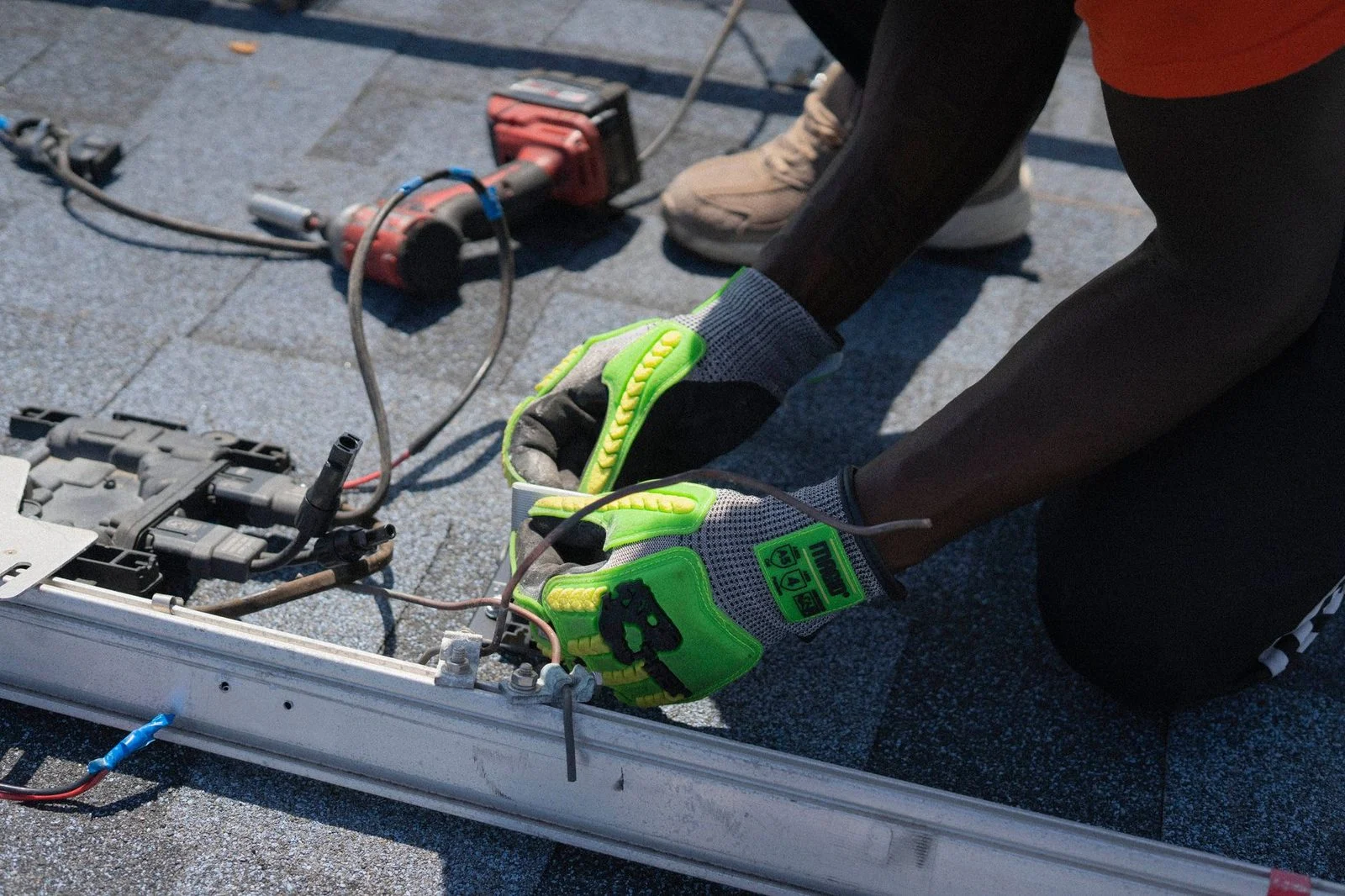
Installation quality matters too. Panels need flashing that follows the manufacturer’s instructions, as the 2026 Florida Building Code analysis for section 1507.18.2 explains.
Battery placement is a separate question. The Florida Building Commission’s analysis of changes to the Florida Building Code, Residential addresses code-development changes for energy storage systems located in a space inside a dwelling unit, and our team can review how current placement requirements apply to a battery backup system in your home.
Permits add another step.
Choosing the Right Fit for Your Home and Talking Through Your Options
A solar battery fits a home that wants automatic, fuel-free backup and has room for panels. A gas generator fits a home that needs high output for a short run and has a safe outdoor spot to run it.
Some homes use both. A battery covers the essentials, and a generator adds power for long, cloudy stretches when you have fuel and a safe place to run it.
If you’re sorting this out for a parent’s house or right after a storm, you don’t have to map it alone. Reach out to our team through our contact page, and we’ll talk through your roof, your loads, and your storm plan. Your first consultation is free, confidential, and comes with no obligation to continue.
Quick Answers
Can you do plug-in solar in Florida?
Yes, portable solar units can be used in Florida. Most power a few devices rather than a whole house.
Is a solar battery better than a gas generator for hurricanes?
A battery is quieter and needs no fuel. A generator gives more output for a short run.
Is a solar generator enough to power a house?
For most homes, a portable unit covers only select appliances. A whole-home plan usually uses a permanently installed battery.
What is the biggest risk of solar panels?
Roof condition and how the panels are mounted during high winds.
Why homeowners add solar battery backup
Power when the grid goes down
A battery stores energy from your solar panels so essential circuits can keep running during an outage.
Quiet, fuel-free operation
There is no fuel to store or refill and no engine noise running through the night.
Designed around your home
We size the system to the circuits and appliances you most need to keep running.
Ready when you are
Our team can walk you through options and answer your questions before storm season begins.
Safety first
Never run a gasoline or propane generator inside a home, garage, or enclosed porch. Carbon monoxide can build up quickly and is hard to detect. A battery system produces no exhaust.
Planning your storm-season backup
List your essentials
Start with refrigeration, medical equipment, internet, lighting, and fans or air conditioning. Knowing what you need to run shapes the right system.
Pair the battery with solar
Solar panels recharge the battery during the day, which helps extend how long your backup lasts once the sun is up.
Plan for cloudy stretches
Tropical weather can bring several days of rain and clouds. Discuss how your system will perform through extended low-sun periods.
Start with a free first consultation: confidential and with no obligation to continue. Request a quote for your home today.
More of our services
- Can You Charge an Electric Car From a Solar Battery in Florida?
- Does My Roof Need Structural Checks Before Adding a Solar Battery in Florida?
- Metal Roofing vs Shingles Cost in South Florida


