


Solar Battery Backup | South Florida
Power Your Electric Car From the Sun, Even After Dark
Plan a home charging setup that stores your solar energy and puts it to work for your daily drive.
By Jonathan Rodriguez · Published November 8, 2026
Electric cars and solar batteries often come up together. Many South Florida homeowners ask the same thing: can the battery fill the car? The short answer is yes, but only up to what the battery, inverter, and charger can deliver together.
A battery covers part of a day’s driving, not all of it. Battery size, inverter output, panel production, and the circuits the battery powers all set the limit. This page walks through each one with a simple worked example.
The Short Answer: Yes, Within Limits
Yes. A solar battery can supply a home EV charger, so the car can charge from stored solar energy instead of only from the grid. How much it adds depends on three things: the battery’s usable capacity, the inverter’s output, and the charger’s rate.
Think of the battery as a partial source. It stores what your panels make, and once it runs low, the car needs another source. Before you plan around it, answer three questions. How much energy does your car use in a day? How many panels replace that energy? What can your home system safely supply at the same time?
Those three questions shape every step below. Together, they show whether a battery can carry your car’s charging or only a share of it.
If you're weighing a solar battery against your car's charging needs, reach out and we'll review your roof, panels, and electrical service with you. Talk it through with our team — the first consultation is free, confidential, and carries no obligation.

How a Solar Battery Feeds an EV Charger
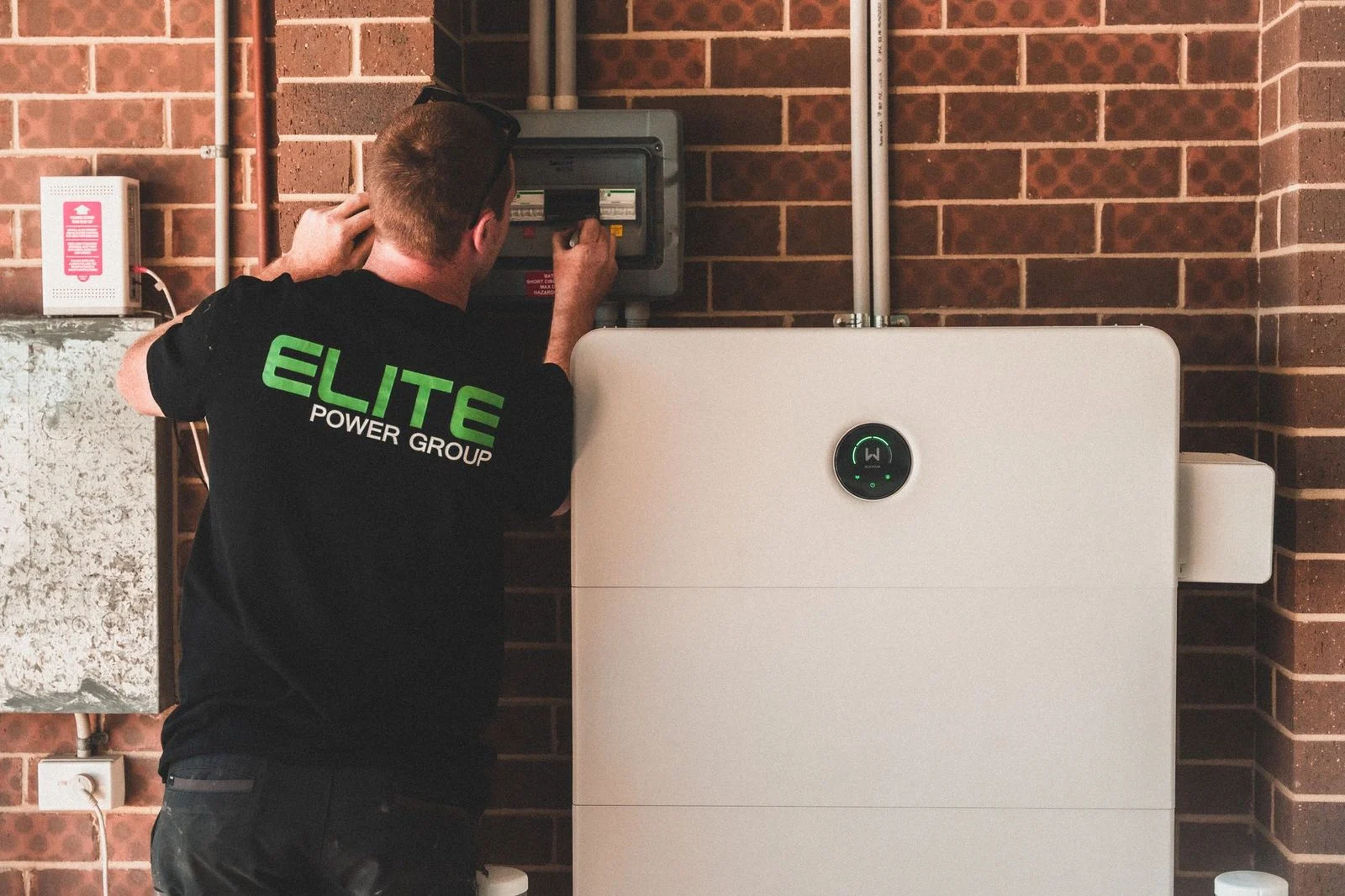
A solar battery feeds the car through the same home wiring that runs the rest of the house. Panels make DC power, an inverter converts it to AC power for the home, and the battery stores extra energy for later use.
A Level 2 home charger draws AC power from your electrical system. If the battery and inverter can supply that load, the car charges from stored solar. If they can’t, the rest of the power comes from the grid.
Charging speed is capped by the weakest link: the charger rating, the inverter output, or how fast the battery can discharge. A strong charger paired with a small inverter still charges only as fast as the inverter allows.
Ask your installer one question first. Is the battery set up to power the EV charger at all? Not every system is configured for it.
How Much Range a Battery Charge Adds
A battery adds range by covering a set amount of daily driving energy. Start with one formula: daily miles times energy use per mile equals the kilowatt-hours (kWh) you need each day.
For this example, assume the car uses 0.3 kWh per mile. Swap in your own vehicle’s figure before you plan anything.
A 20-mile commute needs 20 × 0.3 = 6 kWh. A 60-mile day needs 60 × 0.3 = 18 kWh.
Now compare those numbers with usable capacity. That is the energy you can actually draw from the battery, not just the size on the label. Assume a battery with 10 kWh of usable capacity.
The 6 kWh commute uses 60% of that battery. The 60-mile day needs 18 kWh, so the battery covers only about 10 of those 18 kWh, a little over half.
That is why many owners pair a battery with panels. Daytime sunshine refills the battery, so stored energy can carry more of the next day’s driving.
How Many Solar Panels Are Needed to Charge an Electric Car
You need enough panels to make the car’s daily kWh, plus the energy the house uses. Divide the daily kWh you need by one panel’s average daily output, then round up.
Rule 25-6.065 of the Florida Administrative Code applies to small customer-owned renewable generation, such as solar energy systems, operating in parallel with investor-owned utilities. The rule’s stated purpose is to promote small customer-owned renewable generation, particularly solar and wind energy systems, and it applies to all investor-owned utilities, except as otherwise stated in subsection (10) (Florida Rule 25-6.065).
Take 10 panels rated at 400 watts each. That is 4 kW of DC capacity, and 4 × 0.85 = 3.4 kW of AC. Assume 5 peak sun hours a day for this example. That yields about 17 kWh a day, close to the 60-mile day’s 18 kWh before the house’s own use.
Real output changes with roof direction, shading, and local sun hours. Treat the result as a starting estimate to check on site. The house needs power too, so add its daily use to the car’s kWh before you size the array.
For a broader look at sizing, read our solar battery backup guide.
Backup Priorities: Essential Circuits and the EV Charger
During an outage, a battery usually powers a chosen set of circuits. An EV charger is a large load, and it can drain the battery quickly.
Decide ahead of time what the battery powers first: refrigeration, lighting, medical equipment, or the car. Each choice changes how long the battery runs.
A dedicated circuit plan keeps the car from using the battery before household essentials are covered. Put the charger on its own circuit, and tell your installer which circuits sit on backup.
Plan for the worst-case use, not the best day. Ask what the battery does at night, when panels make no power and the car may still need charging.
For one common case, see the essential circuits guide for well pumps.
Roof and Electrical Capacity Checks Before Adding a Charger
Before you add panels for the car, check the roof and the electrical service. Either one can limit the system more than the battery does.
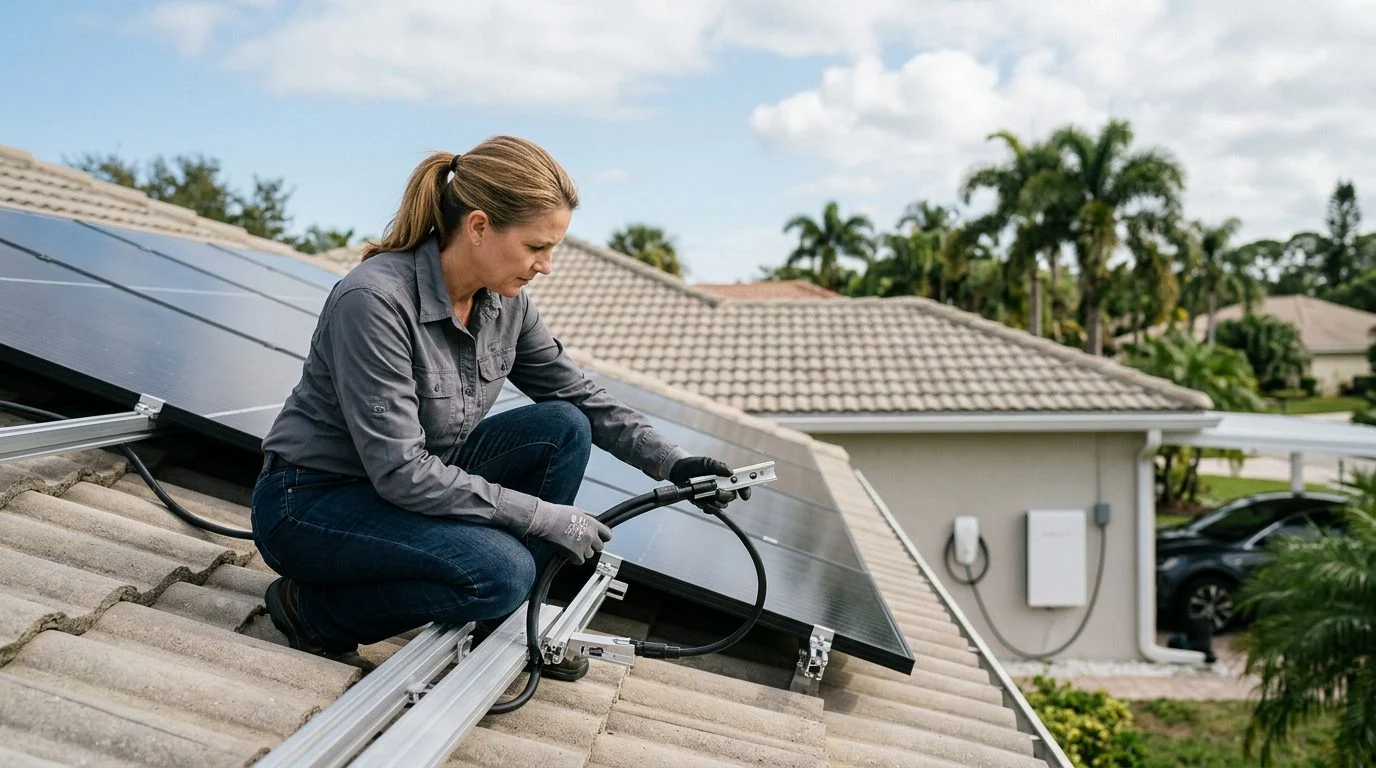
Usable roof area limits how many panels fit. Roof condition matters too, because mounting hardware and roofing must stay sound for the life of the system. A roof near the end of its life may need work before new panels go on, whether it’s tile or metal.
Federal tax law says a solar panel installed as a roof, or part of one, is not disqualified just because it is a structural part of the building, but the credit does not apply to any expenditures made after December 31, 2025 (IRC § 25D).
The main service must support the battery, inverter, and EV charger together.
Not sure what your next step is?
Talk it through with our team — the first consultation is free, confidential, and carries no obligation.
Comparing the Cost of Solar Charging With Grid Charging
Solar charging lowers grid use only for the kilowatt-hours the battery and panels actually supply. Everything else still comes from your utility at its normal rate.
Florida’s interconnection rule sets the billing ground rules for investor-owned utilities. You keep paying the customer charge and the demand charge for the maximum measured demand in the billing period, even if excess energy goes back to the grid. Electricity you use beyond what your renewable system supplies is billed at the utility’s otherwise applicable rate (Fla. Admin. Code R. 25-6.065).
Use this method. Multiply the kWh the car pulls from the grid by your rate. Then compare that cost with the value of the solar energy the battery stores for the car.
Your rate plan decides the result, so run the numbers with your own bill. Add installed cost and expected savings over time, since a battery is a long-term purchase.
Planning a Solar Battery and EV Setup for Your Home
A workable plan follows four steps: estimate daily driving energy, size panels and battery to cover it, confirm charger and inverter ratings, and set backup priorities.
Maybe you already have a solar battery, or you’re reviewing a quote, and you drive an electric car. You want to know whether the battery can carry the charging load on a normal week or during an outage.
Can a solar battery charge an electric car at home?
Yes, but only up to the battery’s usable capacity and the inverter’s output. Your daily driving and roof output set how much it can cover.
How many solar panels do I need to charge an EV?
Divide your daily kWh need by one panel’s average daily output, round up, and add the house’s own use. Check the result on site.
Does the charger need special equipment?
Can the battery power the car during an outage?
Only if your installer set the battery to power the charger. Ask which circuits the system backs up before you plan around it.
Our first consultation is free, confidential, and comes with no obligation to continue. Bring your daily miles, battery details, and roof age, and we’ll review your roof, electrical service, battery setup, and driving needs together through our contact page.
How We Can Help You Plan
Solar and battery planning
We look at how your solar panels and battery backup can work together to supply your home and your vehicle.
Roof-ready assessment
Your roof supports your solar array, so we review its condition alongside your energy goals.
Confidential first consultation
Your free first consultation is confidential and comes with no obligation to continue.
Serving South Florida
We work with homeowners in Miami, Fort Lauderdale, West Palm Beach, Kendall, Boca Raton, and across Southwest Florida.
Check Before You Charge
A battery can only deliver what it stores and what its inverter can output. Confirm both before you plan overnight charging, so your vehicle gets the energy you expect.
What to Review Before You Start
Your daily driving
Think about how far you drive and when you usually plug in. These habits shape how much energy your system needs to provide.
Solar panel output
Your roof's orientation, shading, and panel count determine how much energy you can collect during the day.
Battery capacity
Usable capacity and inverter output set how much charging your battery can support at one time.
Electrical and roof condition
Your home's electrical system and roof should be ready to support the added load and the solar equipment.


