


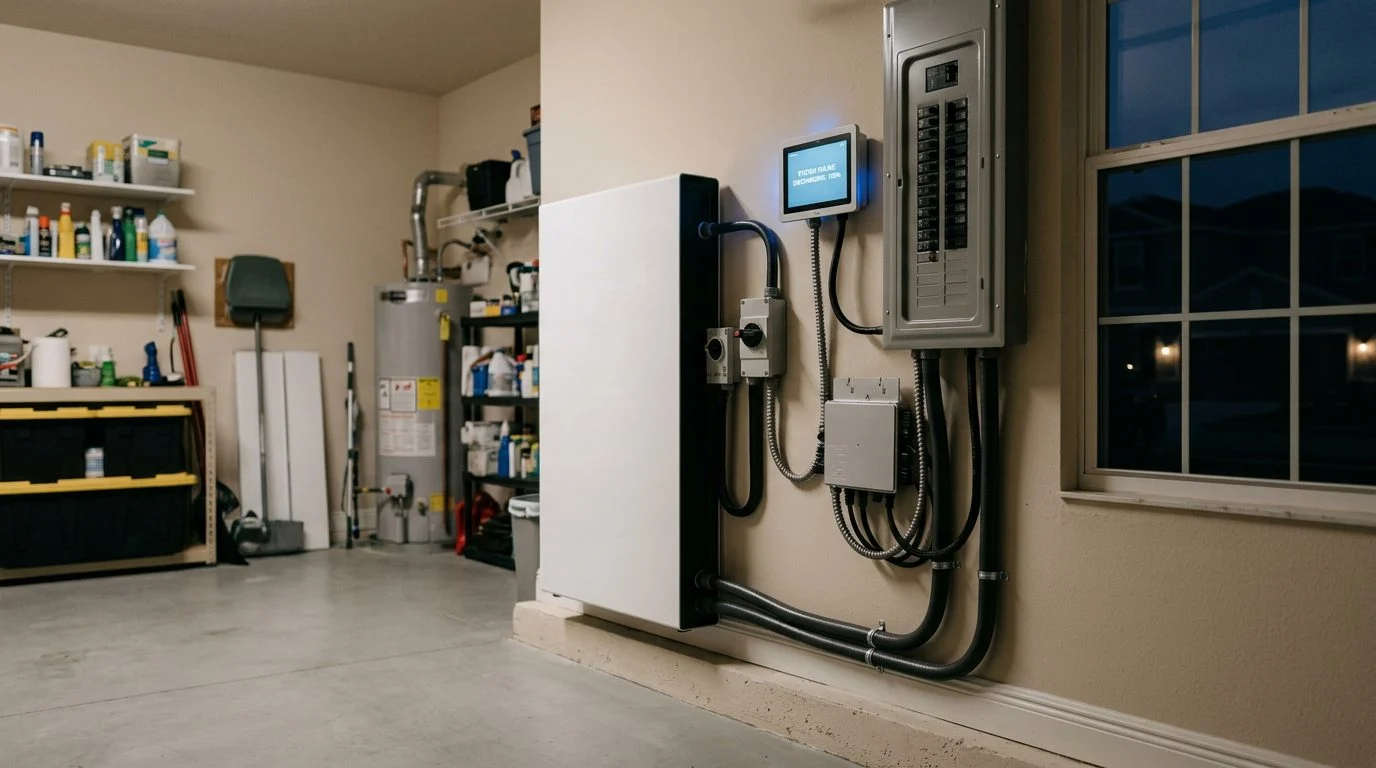
Solar battery backup | South Florida homes
Sizing a Solar Battery for Your 2,000 Sq Ft Florida Home
Storm-season outages, summer cooling loads, and the appliances you need to keep running all shape the right battery for your household.
By Jonathan Rodriguez · Published November 8, 2026
If a storm left your home dark, or you’re planning backup for a parent’s house, you want a battery size you can justify. Short answer: square footage alone won’t tell you how big a solar battery a 2,000 sq ft house in Florida needs. Your daily kWh use, the loads you want running during an outage, and the backup days you want decide the number.
This guide walks through that method step by step. It also covers the Florida construction rules that affect where a battery can go.
Why Square Footage Alone Won’t Size Your Battery
Square footage alone can’t set your battery size, because two homes of the same size can use very different amounts of power.
Air conditioning is usually the biggest driver in a South Florida home. Water heating, pool pumps, and the number of people living there also push the number up or down. A 2,000 sq ft house with a family of six and central air running all summer can need far more storage than a quiet two-person home of the same size.
That’s why this method uses four inputs instead: daily energy use, essential loads, days of backup, and sun exposure. Each one changes the answer. Square footage only gives you a rough starting point.
If a recent outage has you weighing a battery, or you're planning one for a parent's home, we'd be glad to review your numbers with you. Talk it through with our team — the first consultation is free, confidential, and carries no obligation.
How to Calculate Daily Energy Consumption
To find your daily energy use, divide your monthly kWh total by 30. Your utility bill shows the kWh figure, so start there.
Say your bill shows 1,200 kWh for the month. Divide 1,200 by 30 and you get 40 kWh per day. That’s your whole-house average.
Florida bills often climb in the hot months, so don’t rely on one bill. Pull a summer bill and a winter bill, then compare them. A mild month can make a home look smaller on paper than it really is.
Here’s the key point. A battery target usually counts only the loads the battery must cover during an outage. It doesn’t count the whole house. The 40 kWh figure is a ceiling, not your target.
Determining Your Home’s Essential Loads
Essential loads are the circuits you need during an outage, and they set most of your battery size.
Common essential loads include the refrigerator, lighting, internet and modem, medical devices, a few outlets, and a well pump or ceiling fans if your home needs them. Whole-house backup covers everything, and storing that much energy costs more.
Air conditioning needs its own decision. In a Florida home it is often the largest load. Including it can raise the battery size sharply, so many families leave it out or put it on a smaller circuit.
To estimate essential use, multiply each device’s watts by the hours it runs each day, then divide by 1,000. A 100-watt light running 5 hours uses 500 watt-hours, or 0.5 kWh. Add up every item on your list.
A shorter list means a smaller battery. Trimming the essentials can be the difference between one unit and two.
Estimating Your Days of Autonomy
Days of autonomy is how many days a battery can power your chosen loads with no sun and no grid power.
Use this formula: essential daily kWh, times the backup days you want, divided by usable battery capacity.
Usable capacity is the key term. Batteries are not meant to drain fully, so each battery has depth-of-discharge limits. The usable part is less than the rated number on the spec sheet. Planning on the rated number overstates how long your backup will last.
Worked example: your essentials use 10 kWh per day, and you want two days of backup. You need 20 kWh of usable storage. If one unit can’t deliver that, you need a larger battery or more than one unit.
Exploring Peak Sun Hours and Florida Solar Conditions
Peak sun hours determine how quickly your panels can refill the battery each day.
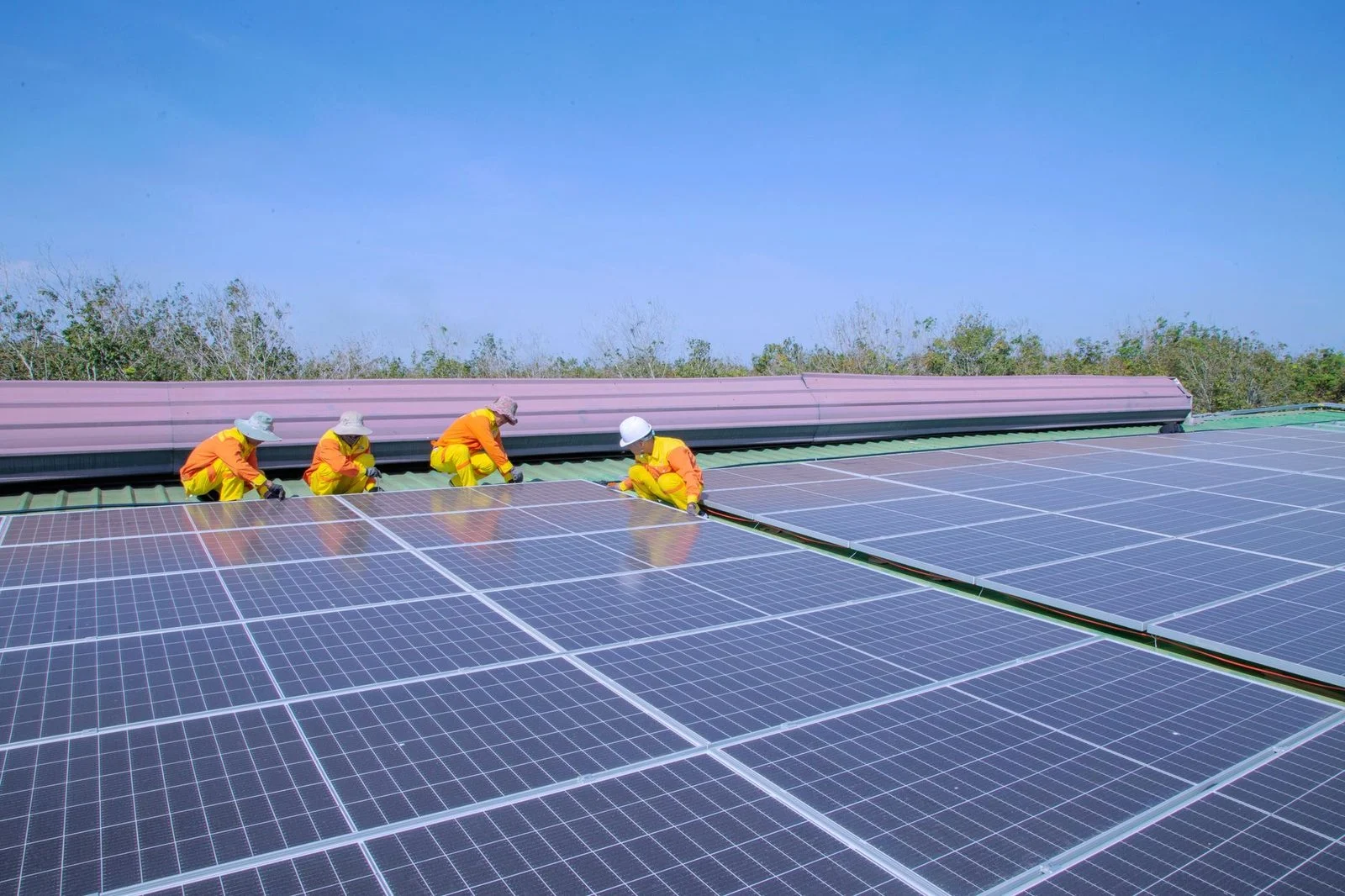
Peak sun hours are the equivalent hours per day when sunlight reaches full strength. More peak sun hours mean the system can recharge storage faster, all else equal. South Florida’s sun exposure supports solar-plus-storage systems when the roof has a good direction and little shade.
Panels have two jobs. They must power the home during the day and leave enough energy to refill the battery. If the array is too small, the battery may never fully recharge, and your backup days shrink.
As an example, a 6.6 kW solar system is one size people often pair with a battery for a home this size. The battery should match that output and your daily load.
How Many Batteries Does Your Home Actually Need?
One battery often covers essential loads, but whole-house backup usually needs more storage than one unit provides.
Batteries come in set capacities. Compare the usable capacity against your daily essential use. Take a 13.5 kWh battery as an example. Even if all 13.5 kWh were usable, it would cover about 1.35 days of a 10 kWh essential load. Real usable capacity is lower, so the number shrinks.
When the math calls for more storage, add modules or stack units. Confirm that the system supports the expansion you plan now or later.
Check the inverter too. The inverter output rating limits how many appliances can run at the same time. A battery with plenty of kWh can still struggle to run an air conditioner if the inverter is too small. Kilowatt-hours tell you how long. The inverter tells you what can run together.
Not sure what your next step is?
Talk it through with our team — the first consultation is free, confidential, and carries no obligation.
Choosing the Right Battery Type for a Florida Home
The right battery balances capacity, warranty terms, expandability, and compatibility with your solar system.
Compare options on those four points. Ask how the battery connects to panels you already have or plan to install. A mismatch can be costly to fix later.
Placement matters in South Florida. Door requirements for battery rooms depend on the applicable code and the details of each project, and our team can review them with you during your free initial consultation, which is confidential and carries no obligation to continue.
Battery placement in a garage can raise questions about vehicle impact, and our team can review your layout with you during your free initial consultation. The analysis lists options such as bollards or wheel barriers built as specified. Garage placement is worth settling early.
If you’re also considering a new roof, the EPA’s guidance on cool roofs covers how reflective roof surfaces can help limit the heat absorbed from sunlight.
Talk Through Your Home’s Numbers With Our Team
If you’re weighing a battery after a recent outage, or deciding this for a parent’s home, you don’t have to work out the math alone.
Maybe a storm just showed you how dark a house gets. Maybe you’re the adult child handling a parent’s solar plans and you aren’t sure what to ask. Either way, the next step is a conversation about your actual home.
Bring a recent utility bill, a list of the appliances you want running during an outage, and any roof details you have. Our team can walk through the sizing steps with your numbers. The first consultation is free, confidential, and comes with no obligation to continue. You can contact ASP Superhome to start.
For more on the full picture, read our solar battery backup guide for South Florida.
Quick Answers
How big a solar battery does a 2,000 sq ft Florida home need?
There’s no single answer. It depends on your daily kWh use, essential loads, and backup days.
How long will a 13.5 kWh battery last?
It depends on usable capacity and your essential use. At 10 kWh per day, even a fully usable 13.5 kWh battery covers about 1.35 days.
What are days of autonomy?
It’s how many days a battery can power your chosen loads with no sun and no grid power.
What Shapes the Right Battery Size
Your daily energy use
Your monthly utility bills and typical household habits show how much energy your home uses each day.
Essential loads for backup
Decide which circuits matter most during an outage, such as refrigeration, lighting, medical equipment, and communications.
How long you want backup to last
A battery that covers a few hours of essentials is sized very differently from one that powers the home through a longer disruption.
Usable capacity versus rated capacity
The energy a battery can actually deliver is often less than its listed capacity, so the sizing math needs to account for that gap.
Avoid sizing from a single number
A battery's listed kWh rating on its own does not tell you how long your home will run. Match the battery to your essential loads and the backup time you need, then confirm the usable capacity before you buy.
Planning Your Battery Setup
Review your energy use
Gather recent utility statements so the sizing starts from how your home actually uses power.
Choose your critical circuits
List the appliances and systems you need during an outage and estimate how much they draw.
Set your backup goal
Decide how many hours or days of backup your household needs, then size the battery and the solar array to match.
Confirm the fit for your home
Review the battery's usable capacity, installation space, and how it pairs with your solar panels.


