


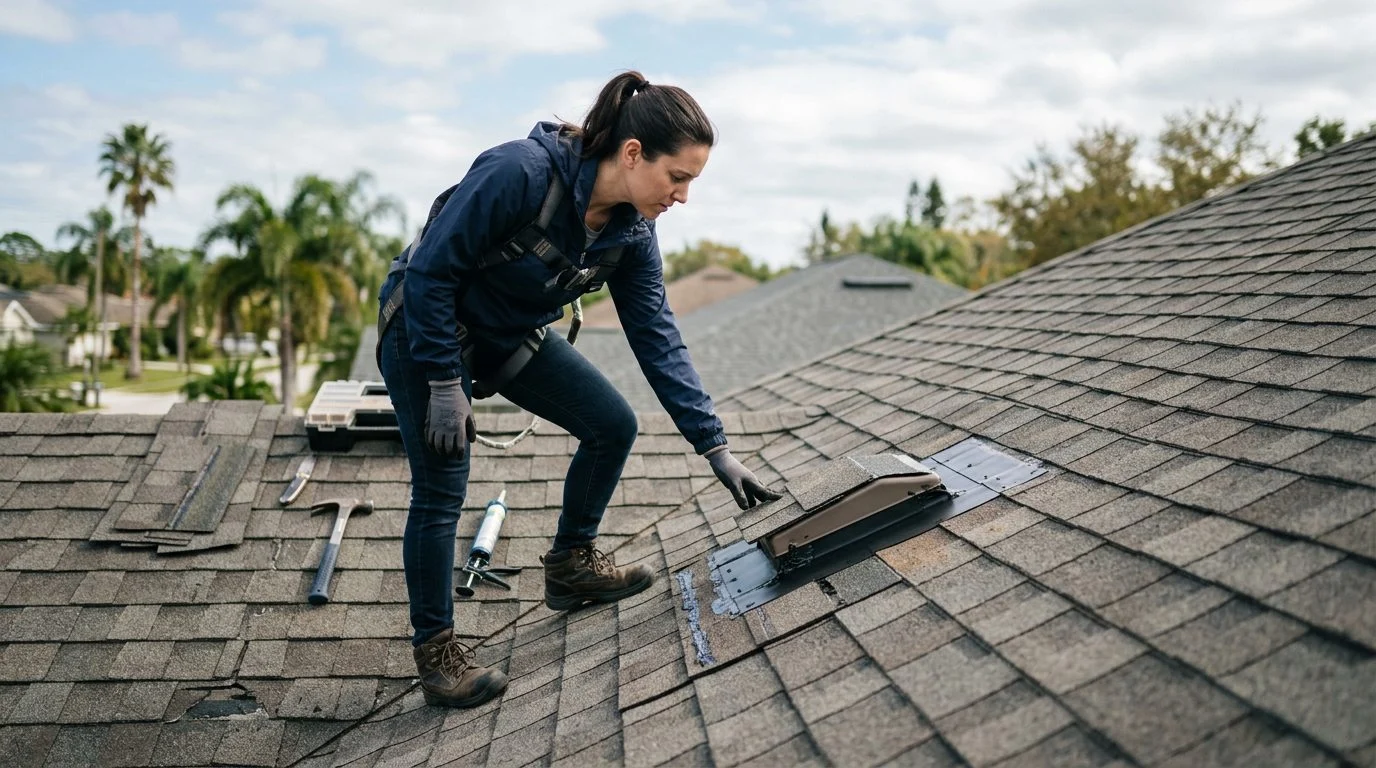
Roofing | South Florida
Should You Replace or Repair Your Roof?
A practical guide for South Florida homeowners weighing roof repair against full roof replacement, from ASP Superhome.
Start with a free first consultation
Free
First consultation
Confidential
Your information stays private
No obligation
No commitment to continue
By Jonathan Rodriguez · Published October 28, 2026
The Short Answer: Replace or Repair?
Replace the roof when repair costs approach a large share of the roof’s value, or when the roof is past its service life for its material. Otherwise, repair is usually the better fit.
Should I replace or repair my roof in Florida? Four factors decide it: roof age and material, how much of the roof is damaged, the condition of the deck underneath, and permit status.
Repair usually makes sense when damage is limited, the deck is sound, and the roof still has useful life for its material. Replacement usually makes sense when damage spreads across the roof or the structure underneath has softened.
South Florida roofs deal with heat, humidity, salt air, and hurricane winds. A leak is a signal to look soon, not a reason to wait. For the full range of options, see our roof replacement and repair guide.
If a leak or storm stain has you torn between patching and re-roofing, our team can look at it with you and put both options in writing. Talk it through with our team — the first consultation is free, confidential, and carries no obligation.
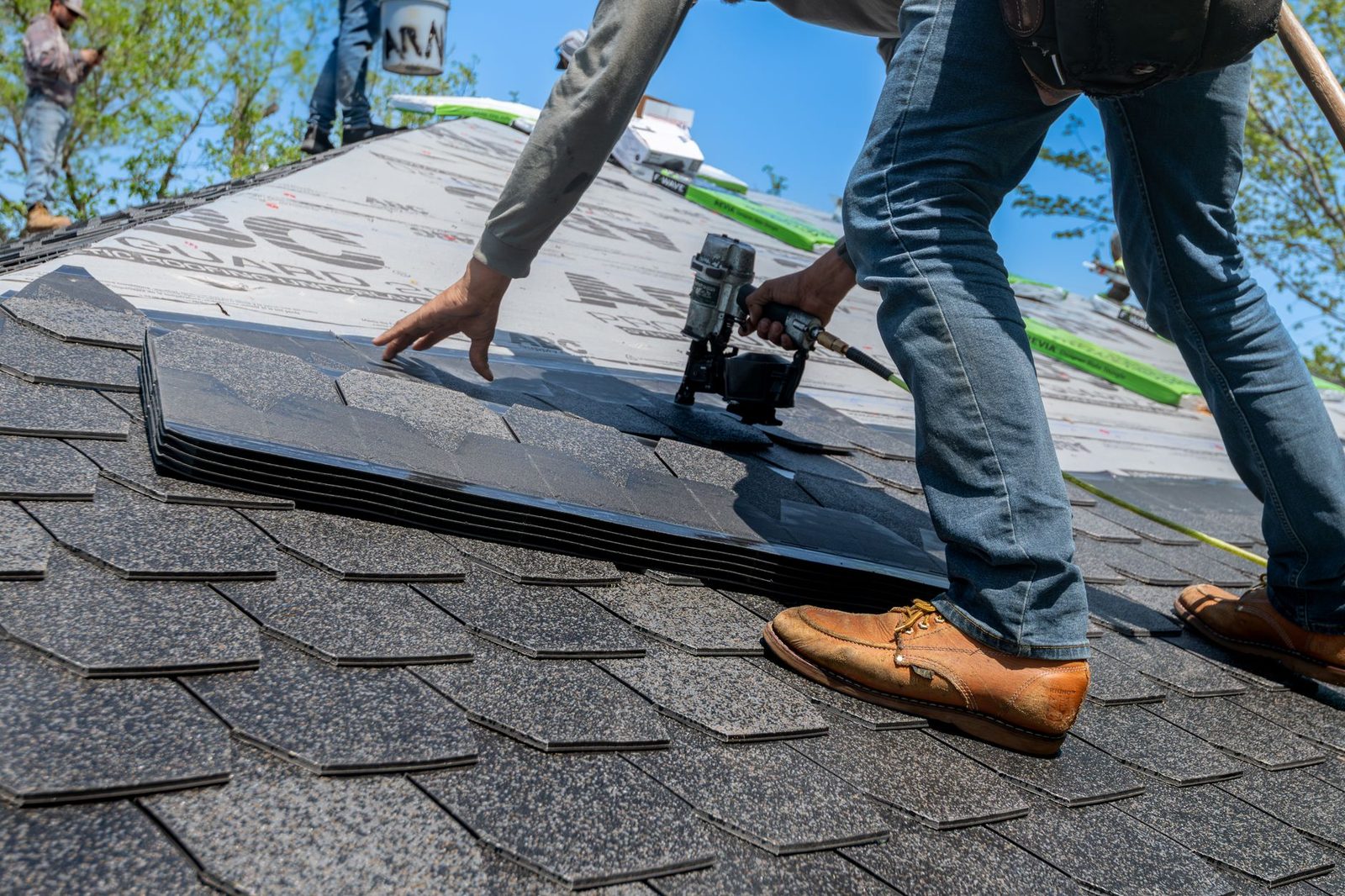
How Roof Age and Material Affect the Decision
Age alone doesn’t settle the question. Service life depends on the material, so a tile roof and a metal roof of the same age can be in very different condition.
Concrete and clay tile, metal, and other roofing types wear in their own ways. Florida’s heat, humidity, and storm exposure speed that wear, so read the roof’s age alongside its material and condition.
Before any inspection, gather the installation date, past permit records, and warranty papers, and write them down. An inspector can then check that record against what they find.
Product approval matters too. Under Fla. Stat. § 553.8425, for local product approval, products or systems of construction must demonstrate compliance with the structural windload requirements of the Florida Building Code through one of the listed methods, such as a certification mark or listing from a commission-approved certification agency or a statewide product approval. Our product approval numbers guide explains what to check on a replacement.
How Much of the Roof Is Damaged?
Scattered damage usually points to repair. Widespread damage across several slopes usually points to replacement.
Count damage by slope, not only where water showed up inside. Water can travel along the roof and deck before it drips, so a leak may start well away from the stain.
Matching also matters. If a tile profile or metal color is no longer made, a spot repair may not blend with the rest of the roof. That look, and the work needed to get it, belongs in your comparison.
Before the inspection, photograph each slope from the ground or another safe spot. Note the approximate number of cracked, lifted, or damaged tiles and panels on each slope. That count is the number you’ll compare against any repair quote.
What Condition Is the Roof Deck In?
The roof deck, also called roof sheathing, is the layer under the roofing material. If it is soft, rotted, or delaminated, a surface repair won’t hold for long.
Look inside the home for warning signs. Stains on ceilings, a musty smell, sagging areas, and water trails along rafters in the attic all suggest water has been getting through.
Deck damage often shows up only after the old roofing is opened. A deck repair can be added to a re-roof, so ask that it appear as its own line in the written estimate. That keeps the total clear before work starts.
If you already see these signs, say so when you request the inspection. Those notes help the inspector focus on the deck from the start.
Repair Cost vs. Replacement Cost in Florida
Compare the cost of repairs needed to keep the roof sound for its expected remaining life with the cost of a replacement. That comparison drives the answer.
Start by listing each repair with its price, then add them up. Divide that total by the replacement quote. A small share usually favors repair. A total that climbs toward a large share points toward replacement.
Repeated repairs add up. A roof that needs patching after every storm season can cost more over a few years than one well-planned replacement. Written estimates for both options keep the comparison on paper.
Price depends on roof size, pitch, access, material, and any deck work. Those factors differ from home to home, so use your own written estimates rather than rough averages.
Permits and Florida Code Requirements
Replacing a roof generally requires a permit. A repair may or may not, depending on its scope.
Florida law says the Florida Building Code covers the design, construction, erection, alteration, modification, repair, and demolition of public and private buildings, structures, and facilities, as set out in Fla. Stat. § 553.73, except as otherwise provided in that section, such as nonresidential farm buildings on farms and certain drone ports and spaceport systems. Local permitting offices apply that code. Local permitting offices apply that code.
Miami-Dade County’s roofing permits page covers forms, checklists, and certain hurricane-mitigation documents. Ask us which forms apply to your address.
Partial work has its own rule.
Permit status matters when you compare options. An unpermitted past repair can complicate a sale, an insurance claim, or new work. Ask that the written comparison list the permits each option needs.
Not sure what your next step is?
Talk it through with our team — the first consultation is free, confidential, and carries no obligation.
Storm Damage, Insurance, and Hurricane Timing
After a storm, document first. Take dated photos, keep notes, and get a written inspection before any repair or replacement work starts.
Insurance follows its own clock. Under Florida’s claim notice statute, a claim is barred unless notice reaches the insurer within 1 year after the date of loss, in line with the policy’s terms. A supplemental claim has an 18-month limit. A hurricane claim’s date of loss is the day the storm made landfall. For tornadoes, windstorms, severe rain, or other weather-related events, the date of loss is the day the National Oceanic and Atmospheric Administration (NOAA) confirms the event.
Fla. Stat. § 627.70132 sets notice deadlines for property insurance claims: a claim or reopened claim must be noticed within 1 year after the date of loss, and a supplemental claim within 18 months. It does not address actual cash value payments or proof of the roof deductible.
Policy terms govern coverage, so read yours early. Florida’s Office of Insurance Regulation explains how a mitigation inspection form can support hurricane-wind premium discounts. For metal roofs, see metal roof insurance discounts, since discounts depend on the policy and insurer.
When Repair Makes Sense and When Replacement Makes Sense
Repair usually makes sense when damage is limited, the deck is sound, the roof has useful life left for its material, and repair costs stay well below replacement.
Replacement usually makes sense when damage spans many slopes, the deck is soft or rotted, the roof is past its material’s service life, or repairs approach a large share of the roof’s value.
Mixed cases are the hard ones: an older roof with moderate damage. A side-by-side comparison helps most there, because each option gets the same inspection notes, slope counts, and permit list.
For example, a few cracked tiles on one slope of a roof with a sound deck point toward repair. Lifted panels across most slopes over a soft deck point toward replacement.
What a Written Comparison Should Include
A written comparison should put both options side by side, using the same inspection notes. That makes the choice easier to explain and easier to revisit.
Include the condition findings by slope and the deck findings. Then list the repair option with its scope and cost, and the replacement option with its materials, scope, and cost. Finish with the permits each option needs.
Metal roofing and tile roofing can both be repaired or replaced, so name the material on each line. Tile repairs often turn on profile matching, and metal repairs often turn on panel profile and color. Note any wind-rated product approvals on the replacement line.
If the roof changes after a later storm, compare the new findings against the old notes instead of starting over.
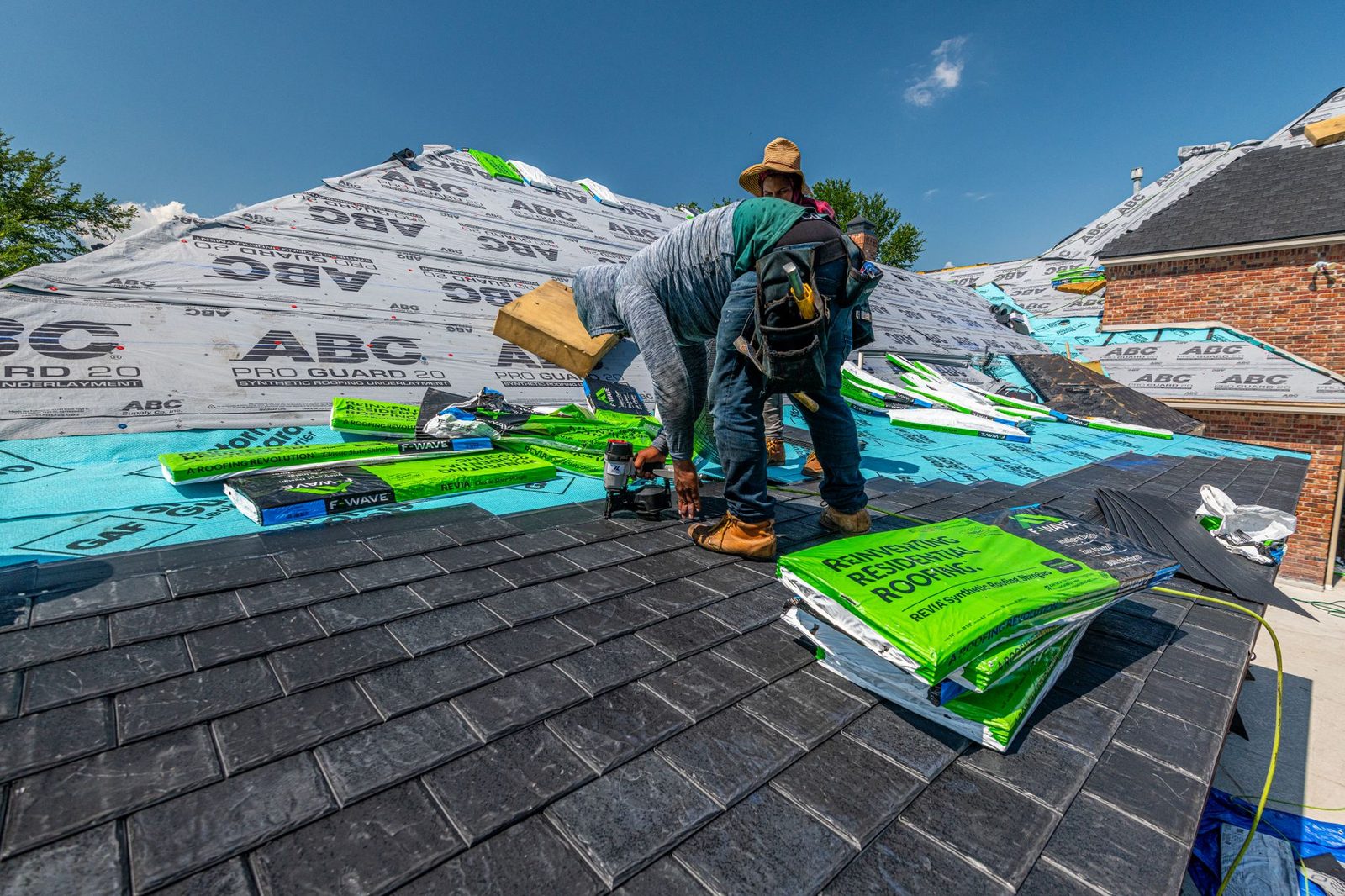
Your Next Step: A Roof Review and Written Comparison
If a leak appeared after the last storm, or a ceiling stain is spreading, you’re facing a repair-or-replace choice with real money on the line. Our team can review the roof, record findings by slope and in the deck, and put both options in one written comparison. Reach out through our contact page. Your first consultation is free, confidential, and carries no obligation to continue (consulta inicial gratuita, confidencial y sin compromiso).
Should I replace or repair my roof Florida if it leaks?
A leak alone does not settle it. The damage count by slope and the deck condition usually decide the answer.
Does a 25 percent repair mean the whole roof must meet current code?
Not always.
How long do I have to file a storm claim in Florida?
Florida law generally requires notice of an initial claim within 1 year after the date of loss, and a supplemental claim within 18 months. Your policy terms control the details.
What the decision usually depends on
Age and condition
The age of your roof and the condition of its shingles or tiles help show whether targeted repairs will hold or whether the system is nearing the end of its service life.
Extent of the damage
A few isolated problems often call for repair. Widespread cracking, lifting, or missing material across several slopes often points toward replacement.
Condition of the roof deck
Soft, rotted, or water-stained decking changes the math. Damage below the surface is one of the most important factors in choosing between repair and replacement.
Repeated leaks and cost over time
If you keep paying for patch jobs and new leaks keep appearing, comparing the total cost of ongoing repairs with a new roof can clarify the better long-term choice.
Don't let a leak sit
Active leaks, stains on ceilings, or missing material after a storm can allow water to reach the roof deck and interior quickly. Have the roof inspected promptly rather than waiting to see whether the problem gets worse.
How we help you decide
A clear assessment
We look at the roof's age, the extent of the damage, and the condition of the deck so you understand your options.
Written quote options
You can request a quote that compares repair and replacement, so you can weigh the choices side by side.
Support for South Florida homes
Our team works with homeowners across Miami, Fort Lauderdale, West Palm Beach, Boca Raton, Naples, Fort Myers, and surrounding communities.
Honest answers
Our team will explain what we find and answer your questions in plain language, with no pressure to commit.
Not sure whether to repair or replace?
Start with a free first consultation, confidential and with no obligation to continue.


