


Roof Repair | Miami, Fort Lauderdale, West Palm Beach, Kendall, Naples, Fort Myers, Boca Raton
Stop the Leak Now. Plan the Rest Within Your Budget.
Roof repair doesn't have to mean a full replacement today. Start with the fixes that protect your home and cost the least, then build a plan you can afford. Our free first consultation is confidential and comes with no obligation to continue.
By Jonathan Rodriguez · Published October 17, 2026
How can I get my roof repaired if I have no money? Start with the steps that stop the damage and cost the least. Then build a plan around what you can afford right now. You may not need to pay for a full new roof today.
If you’re reading this after a leak showed up, you may be worried about your ceiling, your bills, and the decisions you have to make quickly. This guide covers homes in Miami, Fort Lauderdale, West Palm Beach, Kendall, Naples, Fort Myers, and Boca Raton. Florida law sets some deadlines and contract rules, so it helps to know them early.
Start by Stopping the Damage You Can See
The first step is to limit water getting into your home. A small leak that runs for weeks can soak insulation, drywall, and flooring. That turns a small roof repair into a bigger job.
Do these things now:
- Move furniture, rugs, and electronics away from wet spots.
- Set buckets under drips and empty them often.
- Check the attic after each rain. Look for water stains, damp wood, or wet insulation.
- Turn off power to any light fixture near a wet ceiling.
A bucket is not a fix. It does keep water off the floor while you plan. Do not climb onto a wet roof to find the leak. Check from inside, where it is safer.
Before you clean up, take photos and video. Note the date, time, and location of each stain. These records help with insurance questions and with repair estimates.
If a leak has you stretched thin, you don't have to work out every option alone. Our team is ready to talk through your roof with you. Talk it through with our team — the first consultation is free, confidential, and carries no obligation.
Check Whether Your Insurance Policy Covers the Damage
Your homeowners policy may cover roof damage from a covered event. The policy terms and the facts of your loss decide that. Start by finding your declarations page and reading your deductibles.
Timing matters. Under Florida Statutes § 627.70132, notice of a claim must be given in accordance with the terms of the policy, and the policy may require earlier, prompt notice. The 1-year deadline is measured from the date of loss, and the version of the statute in effect at that time can change the deadline. A supplemental claim for added damage from the same event must be noticed within 18 months. For storms, the date of loss is the date the hurricane made landfall, or the date the event is verified by the National Oceanic and Atmospheric Administration.
Look for a separate wind or hurricane deductible on the declarations page. Some policies list one, and it can differ from the standard deductible. Report damage promptly. Keep copies of every notice, photo, and letter.
Decide Between a Repair and a Partial Replacement
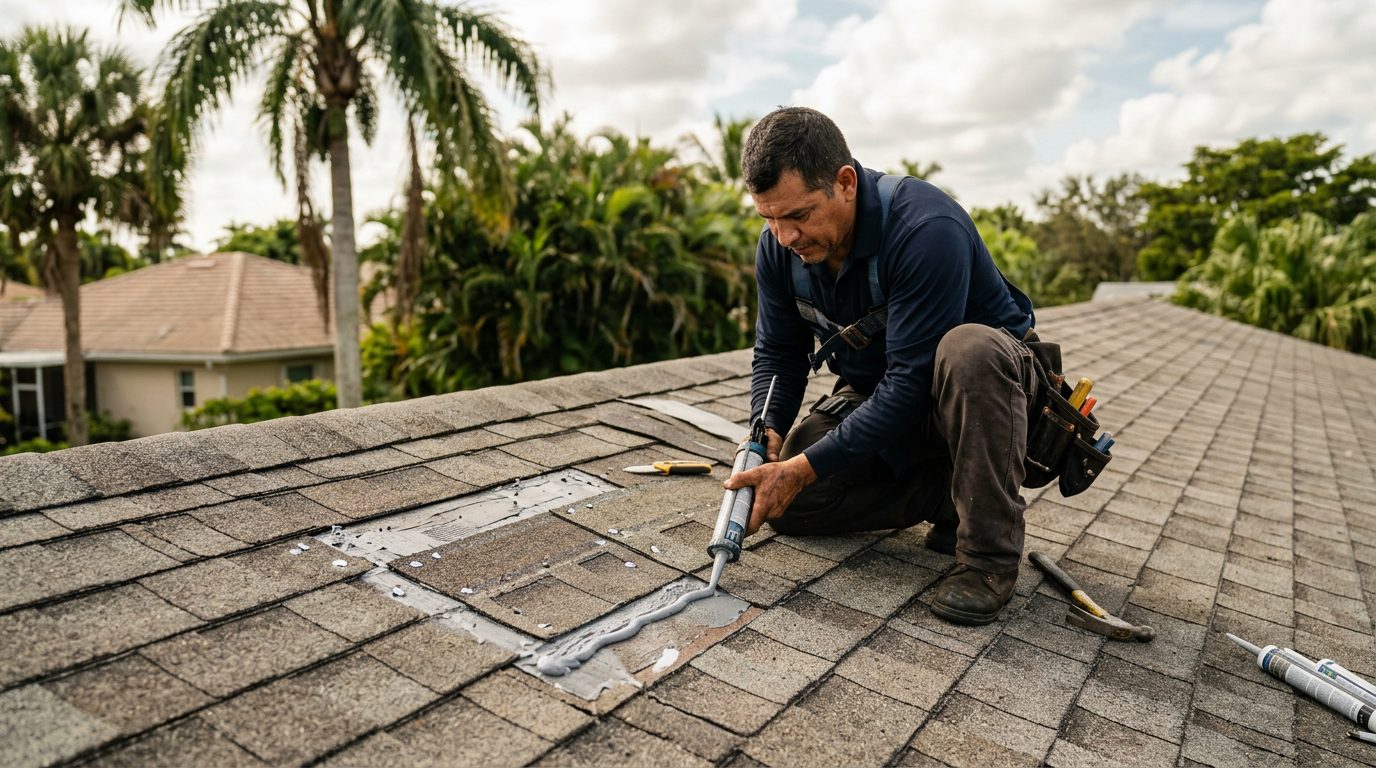
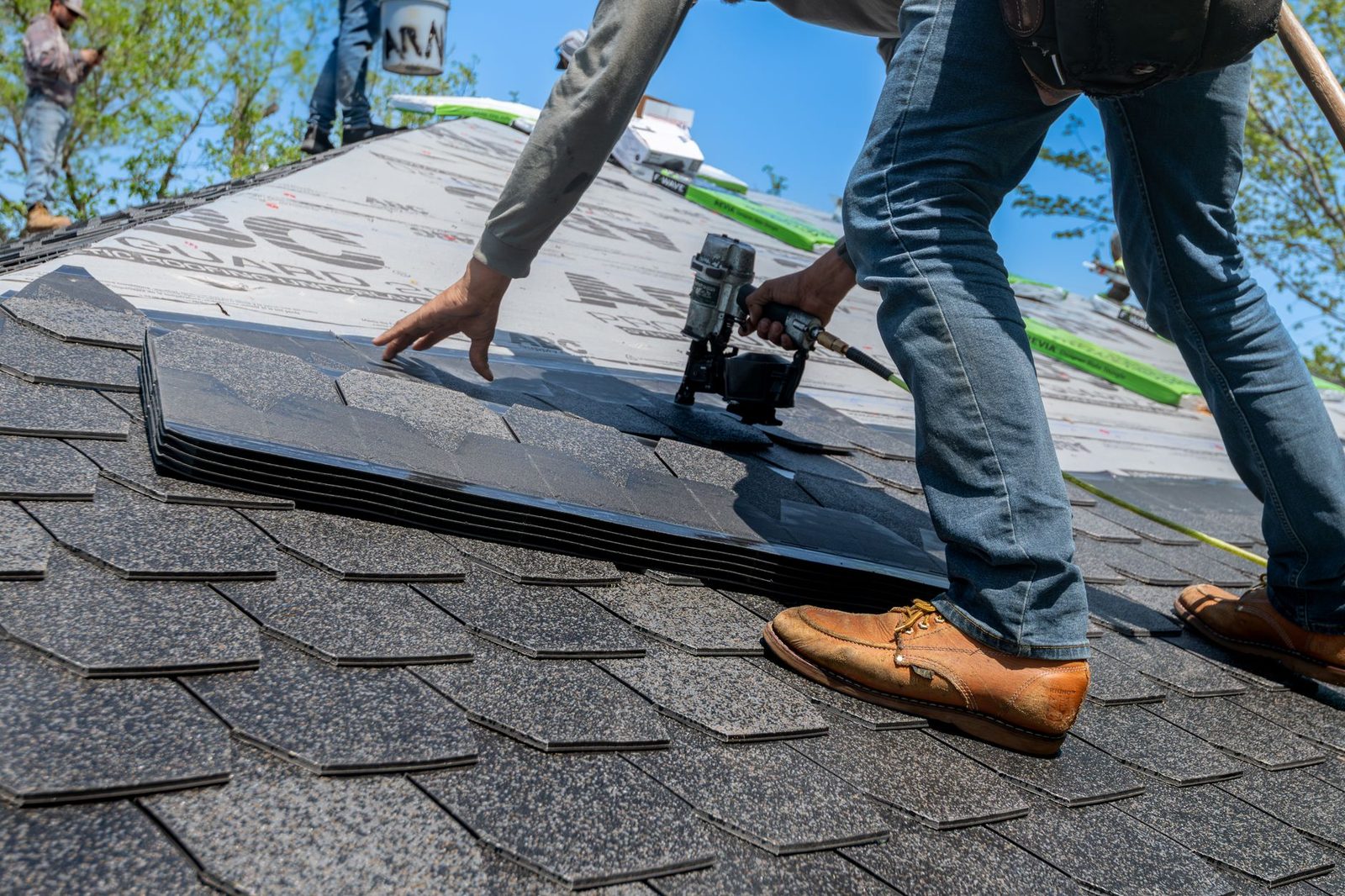
A targeted repair usually costs less up front than a full roof. That’s true when the damage sits in one area. Repairs often fix flashing, a few damaged tiles or panels, or one section of the roof.
A repair may stop working when the problem is spread out. Watch for widespread granule loss on shingles, leaks that show up in different rooms, and aging materials that are brittle or lifted. In those cases, a partial replacement may make more sense than another patch.
Florida law affects partial work. Under Florida Statutes § 553.844, if 25 percent or more of an existing roofing system or roof section is repaired, replaced, or recovered, only that portion must meet the Florida Building Code in effect. That applies when the existing system was built or repaired under the 2007 or later code. Ask our team how this applies to your roof before you choose the scope.
Compare Repair Options Across Materials
The material on your roof shapes which repairs make sense. Tile, metal, and other roofs each need different sealing, fastening, and flashing work. Matching the repair to the material can help you avoid a second repair in a few months.
ASP Superhome offers metal roofing and tile roofing, along with roof repair and roof replacement. Our team can explain how each option would fit your home and your budget.
Metal roofs have a useful track record in one storm study. That finding came from its assessment of Southwest Florida after Hurricane Ian. It is one study of one storm, so it does not predict how your roof will perform. You can read the IBHS Hurricane Ian roof cover assessment directly.
Ask for a line-item estimate. It shows which parts are urgent, which can wait, and what each one costs.
Can You Do Your Own Roof Repair?
Some homeowners try small fixes themselves, but roof work carries real risk. You work at height, on surfaces that can be steep, slick, or unstable. You may also handle heavy or sharp materials. A fall can cost far more than the repair itself.
A tarp can slow water entry until a permanent repair is made. It is a temporary measure. It does not fix bad flashing, reseal a damaged area, or replace a loose fastener.
Permanent repairs depend on correct flashing, sealing, and fastening. Those details decide whether the leak stops. Permit requirements for roof work can vary by municipality, and our team can explain what may apply to your project during your free initial consultation. The City of Miami publishes its own roofing permit requirements on the City of Miami roofing permit page, and those requirements apply to City of Miami projects. Before work begins, contact ASP Superhome to discuss whether your city requires a permit for your project.
Plan Payments Around What You Can Afford Now
Plan payments in steps so you aren’t making big decisions under pressure. Start with active leaks, then defer cosmetic items. Ask in writing how the work will be scheduled and what payment arrangements are available.
Florida law sets rules for larger contractor payments. Under Florida Statutes § 489.126, for residential real property work, a contractor who receives an initial payment of more than 10 percent of the contract price generally must apply for the necessary permits within 30 days after that payment, except where the work does not require a permit, and must begin the work within 90 days after all necessary permits are issued. The person who made the payment may agree in writing to a longer period for applying for permits, for beginning the work, or for both.
Contract rules also protect you. Under Florida Statutes § 713.015, a direct residential contract over $2,500 must include a construction lien notice. That notice advises owners to require written releases of lien from persons who have served a notice to owner, for direct contracts over $2,500 for improving a one-to-four-family residential dwelling.
Not sure what your next step is?
Talk it through with our team — the first consultation is free, confidential, and carries no obligation.
Take the Next Step With a Free Consultation
A consultation makes the most sense once you have the basics in hand. You don’t have to sort out the whole plan alone.
Quick answers
Can I get a roof repaired without paying everything up front? Ask our team about scheduling and payment arrangements in writing before work starts.
How long do I have to report roof damage to my insurer? Florida law sets a 1-year notice limit measured from the date of loss, but the policy’s own notice terms may be shorter, and effective-date limits also apply.
Does a tarp fix a leaking roof? A tarp can slow water entry, but it is a temporary measure, not a permanent repair.
Gather these items before you call:
- Photos and dates of the damage
- Your declarations page and any insurance notices
- A simple budget showing what you can pay now and each month
- Any earlier repair estimates or invoices
ASP Superhome offers a free first consultation that is confidential and comes with no obligation to continue. The team can look at the damage with you and walk through repair, replacement, and budget options. Request your free estimate when you’re ready.
Why Start With the Essentials
Protect the interior first
Stopping water intrusion keeps ceilings, insulation, and belongings from getting worse while you plan the bigger work.
Fix the smallest problem that matters
Targeted repairs such as damaged flashing, cracked tiles, or loose metal panels often cost far less than a full roof replacement.
Spread the cost over time
A phased plan lets you complete urgent repairs now and schedule the rest as your budget allows.
Keep a clear record
Photos and notes of the damage, dated as you go, make it easier to discuss options with us and to compare costs.
Don't Wait on a Small Leak
A small drip in the ceiling often means water has already reached the roof deck, insulation, or drywall. Early repairs are usually the most affordable step you can take.
A Budget-Friendly Roof Repair Plan
1. Assess the damage
We look at the areas most likely to leak, including flashing, penetrations, valleys, and damaged or lifted material.
2. Stabilize the roof
Temporary protection and priority repairs stop water from getting in while you decide on next steps.
3. Rank the repairs
We help you sort work into what must be done now, what can wait a few months, and what can be planned for later.
4. Set a phased schedule
Your plan can match your budget, so you move forward at a pace that works for your household.


