


Roofing | South Florida
Metal Roof or Shingles? Compare the Real Cost Before You Decide
See how metal and shingle roofs compare on installed price, long-term cost, and what to check on a written estimate, with ASP Superhome.
By Jonathan Rodriguez · Published October 17, 2026
How Expensive Is a Metal Roof Compared to Shingles?
A metal roof usually costs more to install than an asphalt shingle roof on the same home. That gap is real, and it is the main reason homeowners hesitate. The gap is easiest to judge when you compare the same roof, the same scope, and the total cost over the years you keep the home.
This guide explains where the price gap comes from. It also shows what can widen or narrow it, and what to check on a written estimate.
If a leaking or aging roof has you weighing metal against shingles, book a free first consultation and we'll look at your deck and pitch with you. Talk it through with our team — the first consultation is free, confidential, and carries no obligation.
The Short Answer: Metal Usually Costs More Up Front
Metal roofing generally carries a higher installed cost than asphalt shingles. When a roof is already leaking, that first number can feel hard to justify. It’s a reasonable concern to raise.
A fair comparison needs matching terms. Compare the same roof area, the same pitch, and the same scope of work. If one estimate includes tear-off and the other does not, the difference reflects missing work, not the material.
Look at total cost, not only the first invoice. A cheaper roof that needs replacing sooner can cost more over the years you stay in the home. The sections below show how to run that math for your own roof.
Why Metal Roofs Cost More to Install
Metal costs more because the materials, parts, and labor differ from shingles. Metal roofs use metal panels or standing seam systems. Shingle roofs use asphalt or architectural shingles, which usually cost less per square foot of material.
Metal also needs its own supporting parts. These include underlayment, fasteners, trim, and flashing made for metal. Each item adds to the bill. The finish matters too. According to the Metal Construction Association, finished steel and aluminum panels typically use a two-coat paint system.
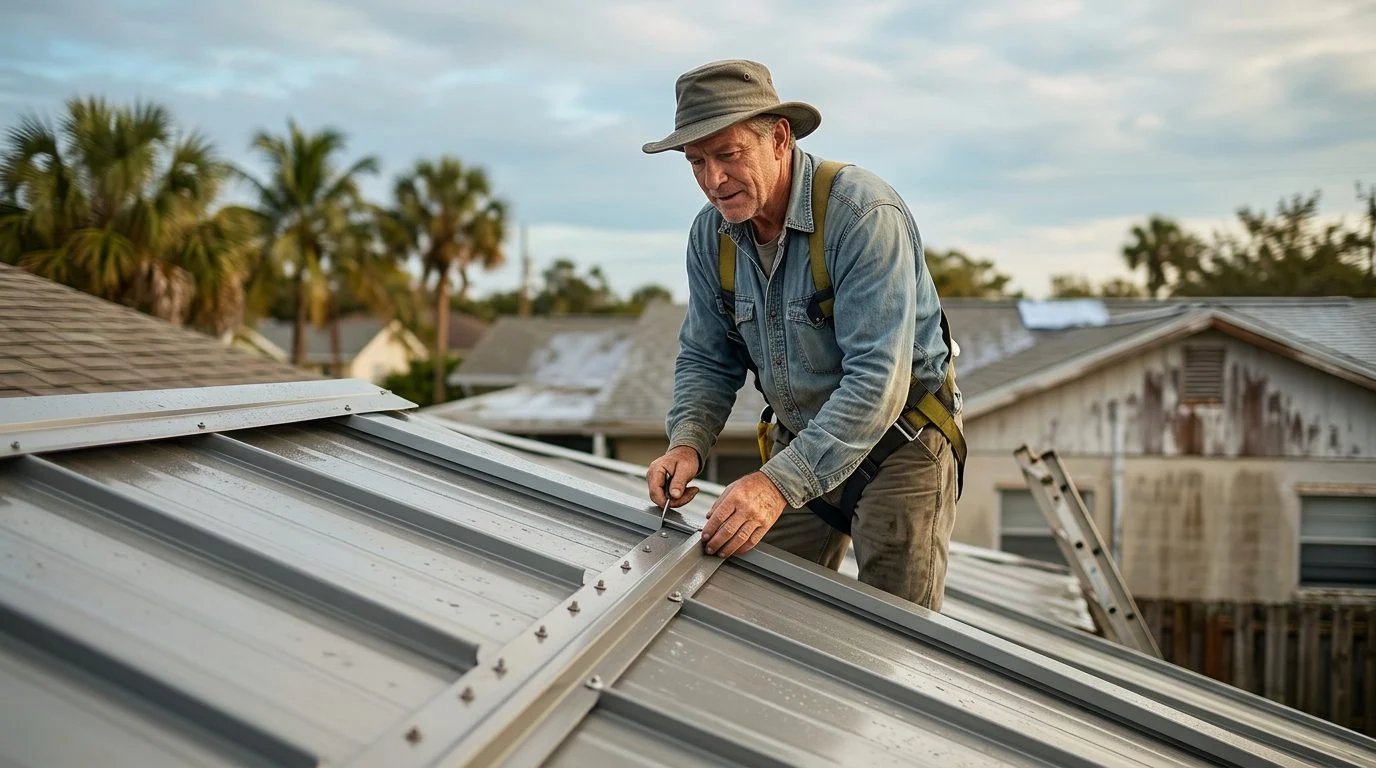
Installation is where many homeowners see the biggest difference. Metal needs careful handling, precise panel layout, and skilled crews. A standing seam system hides its fasteners and locks panels together. That takes more time and more exact work than exposed-fastener panels. Your choice of profile changes the price, so ask which system each estimate uses.
Factors That Widen or Narrow the Price Gap
Roof size and pitch affect both options. Larger or steeper roofs raise material and labor costs for metal and shingles alike.
Roof complexity matters too. Multiple valleys, hips, dormers, and roof penetrations need more trim and flashing. Deck condition can change the total fast. Rotted or damaged decking must be repaired before either material goes on.
Tear-off and disposal add cost. Ask whether the estimate removes the old roof or assumes an overlay. Details for each project can be reviewed during the free initial consultation, which is confidential and carries no obligation to continue.
Florida also has a partial-roof rule. That rule can change the math when only part of a roof needs work.
Permits are part of the cost. Permit requirements can differ by municipality, so the City of Miami permit catalog is one place to look for roofing details.
Cost Over Time: Lifespan, Maintenance, and Replacement Cycles
Shingle roofs are usually replaced sooner than metal roofs. A shingle roof may need a second full replacement during the years a metal roof is still in service. That is the main reason the upfront gap can narrow over time.
Maintenance differs too. Shingles often need repair or replacement of individual damaged areas over the years. Metal roofs need periodic checks of fasteners, seams, and coatings. These checks are simple, but skipping them can allow small problems to grow.
Use a simple framework to compare. Write down the installed price for each option. Then write how many years you expect to stay in the home. Count how many times each roof would likely need replacing in that span.
Treat this as a method, not a promised savings figure. Your roof’s condition, your repair history, and your plans for the home will change the numbers.
Insurance, Resale Value, and the Downsides to Weigh
Florida law sets rules for older roofs. Under Fla. Stat. § 627.7011(5), a homeowner’s policy cannot be declined or nonrenewed based on roof age alone. For roofs 15 years old or older, the homeowner may obtain an inspection, and that protection depends on the roof having at least 5 years of remaining useful life.
Wind mitigation can also affect premiums. The Florida Office of Insurance Regulation describes wind-mitigation inspection resources and premium discounts for qualifying hurricane-loss mitigation measures. Ask your insurer how it rates a new roof.
Buyers and appraisers may view a newer roof favorably. The effect depends on the local market and the home itself.
Metal has real downsides to weigh. The upfront cost is higher. Hail can dent panels, and dent resistance varies with panel gauge and finish. Metal also needs a skilled installer. Underlayment matters for sound and condensation. On the plus side, the Insurance Institute for Business & Home Safety reported that metal systems held up well in winds below 130 mph in its Hurricane Ian roof cover assessment.
Not sure what your next step is?
Talk it through with our team — the first consultation is free, confidential, and carries no obligation.
What to Compare on a Written Estimate
A useful estimate lists the same items for each option. Check square footage, underlayment type, fastener and panel specification, flashing and trim, a deck repair allowance, tear-off, and permits. Confirm both options cover the same roof area and scope.
When both estimates match, the price gap reflects the material choice. When they don’t, you’re comparing different jobs.
Florida has protections for estimates tied to insurance claims. Under Fla. Stat. § 489.147, a contractor may not give an insured an agreement authorizing repairs without a good-faith estimate of itemized costs. Also, under Fla. Stat. § 713.015, a direct contract over $2,500 for improvements to a dwelling of up to four units must carry a construction lien notice.
Ask for warranty terms for both the materials and the installation, in writing. Compare the warranty terms for each system side by side.
Next Steps for Your Home
You may be reading this after a leak, storm damage, or a roof nearing the end of its service life. You might also be gathering facts for a family member or a property you manage. Either way, the numbers only mean something for your roof.
An accurate figure needs a look at the actual roof, deck, and pitch.
Is a metal roof always more expensive than shingles?
Metal usually costs more to install up front. Total cost over the years you keep the home can change that picture.
Does a metal roof need a permit in Miami-Dade?
Paperwork for roofing work can vary, so it helps to ask about the documents your project needs during the free initial consultation. The City of Miami also requires permits for roof repair or replacement.
Do I have to replace my whole roof if only part is damaged?
If your roof is leaking or nearing the end of its life, our team can review your deck, pitch, and existing roof with you. Book a free first consultation at aspsuperhome.com/contact. It is confidential and carries no obligation to continue.
What Shapes the Price Gap
Installed Cost, Not Material Cost
Compare the full installed price, including tear-off, underlayment, flashing, and disposal, rather than material prices alone.
Same Scope, Same Roof
A fair comparison uses the same roof area, pitch, and layout for both materials so the numbers reflect the materials, not different work.
Lifespan Over Time
Consider how many years you plan to keep the home. Longer ownership changes how the up-front difference should be weighed.
Local Conditions Matter
South Florida heat, humidity, wind, and salt air affect both roof choices and the work required to install them.
What to Look for on a Written Estimate
Itemized Materials
Look for the specific panel or shingle type, underlayment, fasteners, and flashing details, not just a single lump sum.
Tear-Off and Disposal
Confirm whether removing the existing roof and hauling away the debris is included in the price.
Warranty Terms
Review what the manufacturer warranty covers and what the installer's workmanship warranty includes, in writing.
Timeline and Crew
Ask how long the job will take and who will be on site, so you can plan around the work.


