


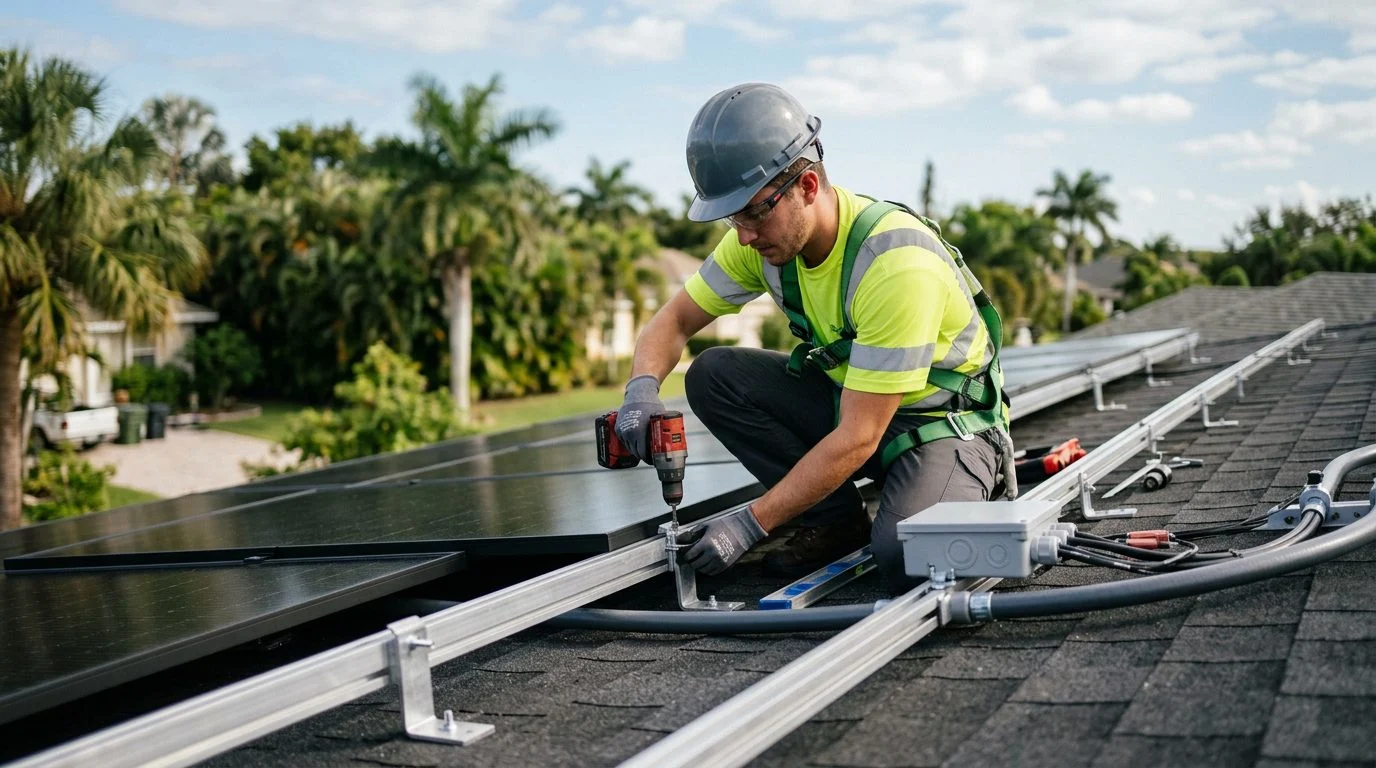
Solar Panels | South Florida
Solar Panel Renovation Costs in South Florida: What Shapes Your Estimate
Learn which factors move solar panel installation costs during a home renovation, from roof condition to battery backup, and how a written estimate is built.
By Jonathan Rodriguez · Published November 6, 2026
Solar panel installation renovation cost depends on how the solar work fits with the rest of your project. Panels on a roof that is being repaired or replaced generally have to come off and go back on, and that labor adds to the total. The clearest way to see the real number is to plan the roof and solar work together.
Quick answer: what solar costs when it is part of a renovation
Solar cost depends on system size, roof type and condition, electrical work, and whether you add battery backup. A renovation can change several of these at once. That’s why it helps to plan the roof and solar as one project.
Some of these factors you can measure today, like your electric bills. Others, like roof condition, need an on-site look.
Key takeaways:
- Roof repair or replacement can decide whether panels come off and go back on.
- Larger systems need more panels, mounting hardware, and wiring.
- Metal roofing and tile roofing each change how panels are mounted and flashed.
- Electrical upgrades and battery backup are separate cost lines.
- Permits and utility notice add steps to the schedule.
If your roof and solar work overlap in one renovation, our team can price the roof, panels, and any battery backup together for your home. Talk it through with our team — the first consultation is free, confidential, and carries no obligation.
Why a renovation changes the price of solar panels
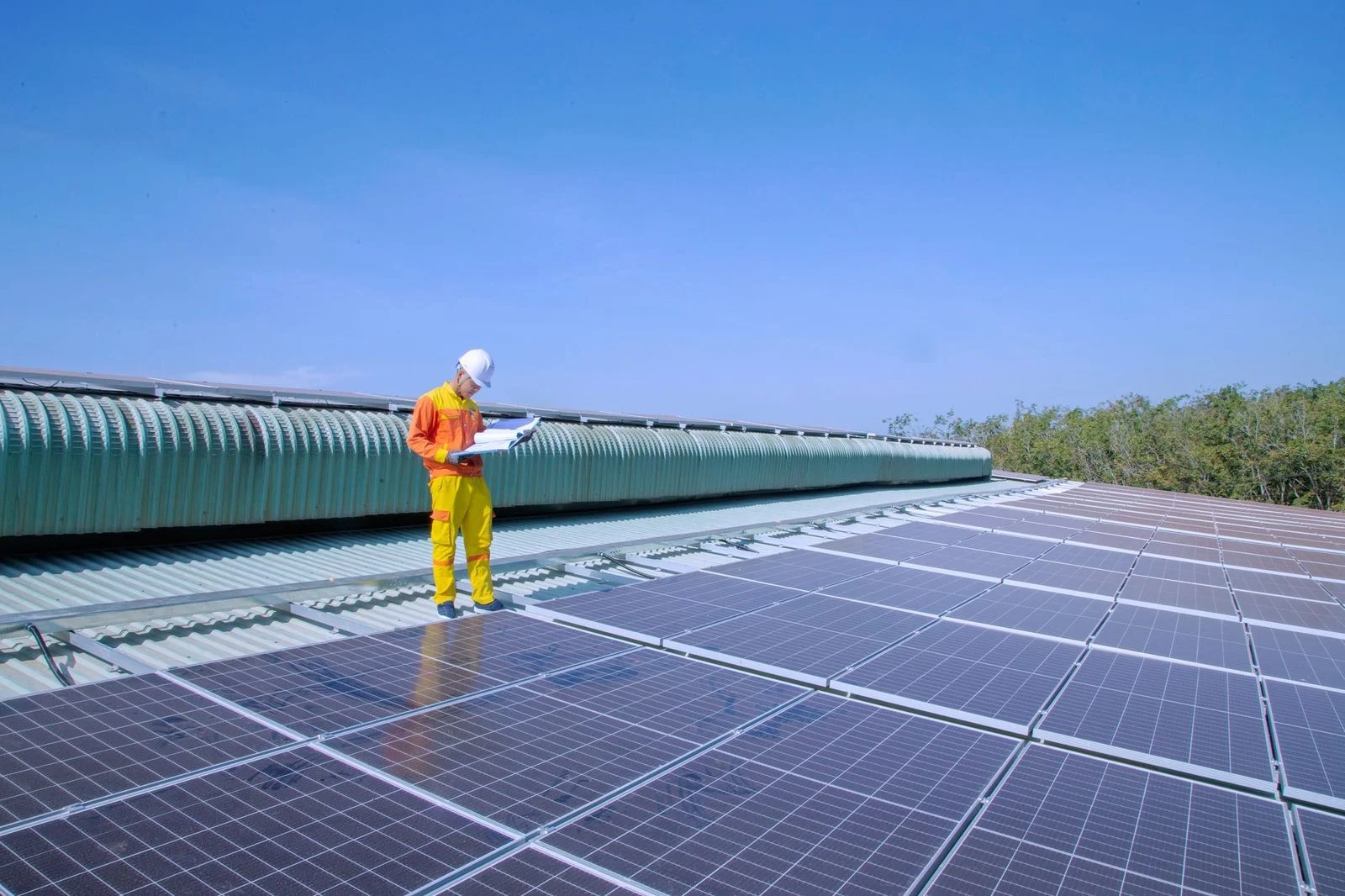
A renovation changes solar cost mostly because roof work and panel work overlap. When the roof is part of the project, the order of work matters.
Roof-mounted panels are the main issue. Roof-mounted solar systems may require roof penetrations and may affect roof warranties and maintenance.
Sequencing is the practical lever. If the roof is replaced before panels go on, you avoid paying to take a finished array down and put it back up. If solar goes on first, the crews have to plan around it.
Access and scheduling add cost too. Roof work may need scaffolding or lifts, and the roofing and solar crews may need to share the same site. Ask how they plan to share access.
Other work can share the schedule. Impact windows, impact doors, and kitchen remodeling all work on the building, and unless otherwise provided by law, Fla. Stat. § 553.79 requires a permit before a building is altered or repaired. Planning permits and inspections together can keep one schedule instead of several.
The cost factors that move the total
Five factors move the total most: system size, roof type, roof condition, electrical work, and permits. Each one can change how much work the project includes.
- System size. More panels mean more equipment, more mounting points, and more labor.
- Roof type. Metal roofing and tile roofing each change how the crew mounts panels and handles flashing.
- Roof condition. A roof with limited life left may be better replaced before solar goes on.
- Electrical work. Main panel upgrades, inverter selection, and wiring runs can add to the total.
- Permits. Building permits and inspections add fees and scheduled steps to the project.
Each of these can move the final number in either direction. Ask how each one is priced.
What size system do most homes need, and how the rules of thumb work
System size is the first input in any solar panel installation renovation cost estimate. It starts with how much electricity the home uses and how much usable roof space it has. Your utility bills show the first part. An on-site roof layout shows the second.
You’ll hear rules of thumb based on roof area or monthly electricity use. Treat them as rough starting points only. They don’t account for shade, roof angle, or how the home actually uses power.
Two homes of the same size can need very different systems. Heavy air conditioning use, shade, or a complex roof layout can change the answer. If you plan to add an air conditioner or an electric vehicle charger later, say so before sizing.
So don’t take a single size figure from a general article as your own answer. Use your bills and your roof measurements. For the broader system overview, read our solar panels and battery backup guide for South Florida.
Adding battery backup during a renovation
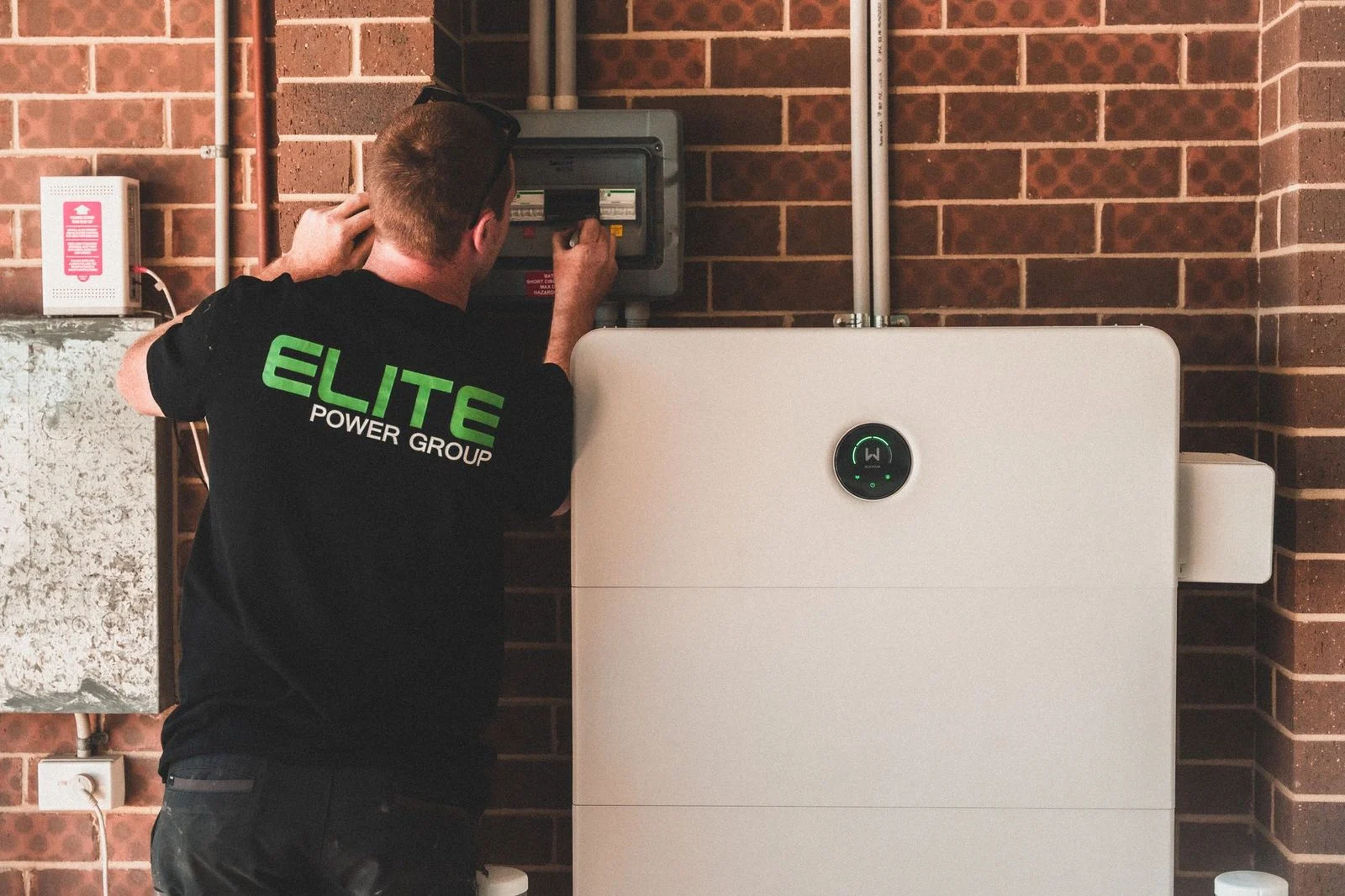
Battery backup stores energy from your panels so you can use it later. It adds equipment, wiring, and a spot for the battery unit.
Adding it during a renovation can mean the electrical work and wall space are planned once. That helps the schedule, but the battery still carries its own cost. Ask how the battery connects to the main panel and who installs the electrical changes.
Federal incentives can change the math. The IRS Residential Clean Energy Credit page lists a 30% rate for the federal credit on qualifying home battery storage. ENERGY STAR federal tax credits lists that battery storage credit through December 31, 2025.
Since that date may have passed, ask for the current credit status in writing before you rely on it. Price the battery as its own line in the estimate. That way you can see its cost apart from the panels and the roof work.
Quoted price vs. installed price, and cash vs. financed
A quoted price is an estimate, and the installed price can move once work starts. Roof findings and electrical surprises can change the scope.
Cash and financed purchases look different on paper. A cash proposal shows equipment and labor totals. A financed proposal shows the amount financed and the payment terms.
Payment timing matters too. Fla. Stat. § 489.126 says a contractor who receives an initial payment above 10 percent of the contract price for repair, restoration, improvement, or construction to residential real property must apply for necessary permits within 30 days after that payment, except where the work does not require a permit under the applicable codes and ordinances. For residential work paid as described above, the contractor must start work within 90 days after the permits are issued, unless the contractor has just cause for delay or the person who made the payment agreed, in writing, to a longer period.
A clear written estimate should show system size, equipment, roof work included, electrical work, battery backup as its own line, permits, warranty terms, and the incentive terms that apply.
Not sure what your next step is?
Talk it through with our team — the first consultation is free, confidential, and carries no obligation.
Is solar still worth it, and how local conditions play in
Whether solar is worth it depends on the facts of your home. The main factors are electricity rates, how much power your home uses, how much life your roof has left, and what the system costs.
South Florida adds strong sun, heat, and storm conditions. Those conditions affect both the panels and the roof they sit on, so roof timing and solar timing are linked.
Interconnection adds steps. For investor-owned utilities, the Fla. Admin. Code R. 25-6.065 rule calls for customers to notify the utility at least 10 days before the system goes into service. The utility may inspect the installation. Under Fla. Admin. Code R. 25-6.065, a utility’s standard interconnection agreement may call for a manual disconnect switch installed at the customer’s cost, but inverter-based Tier 1 customer-owned generation systems are not subject to this requirement unless the utility pays for the switch’s installation.
Local permit steps can vary. Homes in Miami, Fort Lauderdale, West Palm Beach, Kendall, Naples, Fort Myers, and Boca Raton face the same kinds of steps. Each city may have its own process.
Planning your renovation and next step
If you’re mid-renovation and weighing roof timing against solar, you’re deciding the order of work. That’s a hard spot to be in, especially with work already underway. Some readers are researching this for a spouse, parent, or other family member, and the same questions apply.
Gather three things first: recent utility bills, your roof’s age and material, and the full list of renovation work you have planned. With those, a solar panel installation renovation cost estimate can cover the roof, panels, and any battery backup in one plan.
When you’re ready, request a quote, and our team can price the roof, panels, and battery backup as one plan for your home. Your first consultation is free, confidential, and carries no obligation to continue.
Do solar panels have to come off for a roof replacement?
It depends on the roof and how the panels are mounted.
Can battery backup be added during a renovation?
Yes. Planning it with the electrical work can mean fewer separate visits, and the battery should appear as its own line in the estimate.
Is the federal battery credit still available?
Under IRS guidance, the 30% credit for qualifying battery storage applied only through December 31, 2025. ENERGY STAR lists that credit through December 31, 2025, so ask for the current status in writing.
Why Homeowners Plan Solar With Their Renovation
Coordinated scheduling
Installing solar alongside roof work, electrical updates, or other renovations can reduce the number of separate project visits.
A clear, itemized estimate
Panels, mounting, electrical work, and any battery backup can be listed as separate lines so you can see what each part of the project involves.
Questions answered before you commit
Our team will walk through your roof, your goals, and your options so you can decide with the details in front of you.
Ask for a line-item estimate
Before you approve any solar project, ask that the panels, mounting, electrical work, and battery backup each appear as their own line in the estimate. A single lump sum makes it hard to compare options or understand what changes if the scope changes.
Key Factors That Affect Solar Renovation Cost
Roof condition and age
If the roof is near the end of its life, replacing it before or during the solar installation can change the scope and the sequence of work.
System size and panel layout
The number of panels and how they are arranged on your roof affect materials, labor, and the overall size of the project.
Electrical work and panel upgrades
Your home's existing electrical service may need updates to support the new system, which should be identified during the consultation.
Battery backup
Adding solar battery backup is a separate component with its own equipment and installation needs, and it can be planned together with the electrical work.


