


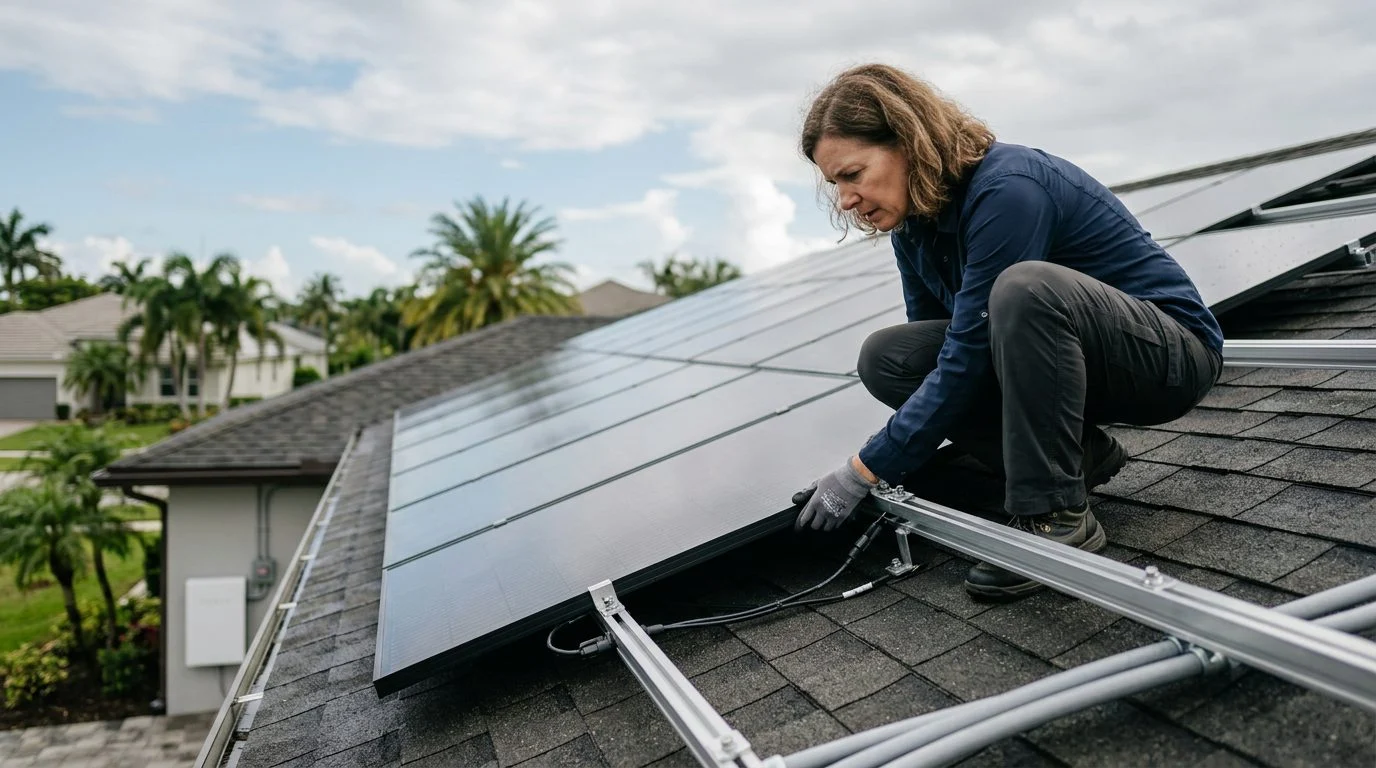
Solar Battery Backup · Boca Raton
Keep Your Boca Raton Home Powered When the Grid Goes Down
A solar battery backup system stores extra solar power for the circuits you choose, so key appliances can keep running during an outage. Here is how it works and what to plan for.
By Jonathan Rodriguez · Published October 17, 2026
A solar battery backup system stores extra solar power so selected circuits can keep running during a grid outage. For Boca Raton homes, that matters most in storm season. This guide explains how the system works, how to size it, what installation involves, and what to check on incentives before you decide.
How Solar Battery Backup Works in a Boca Raton Home
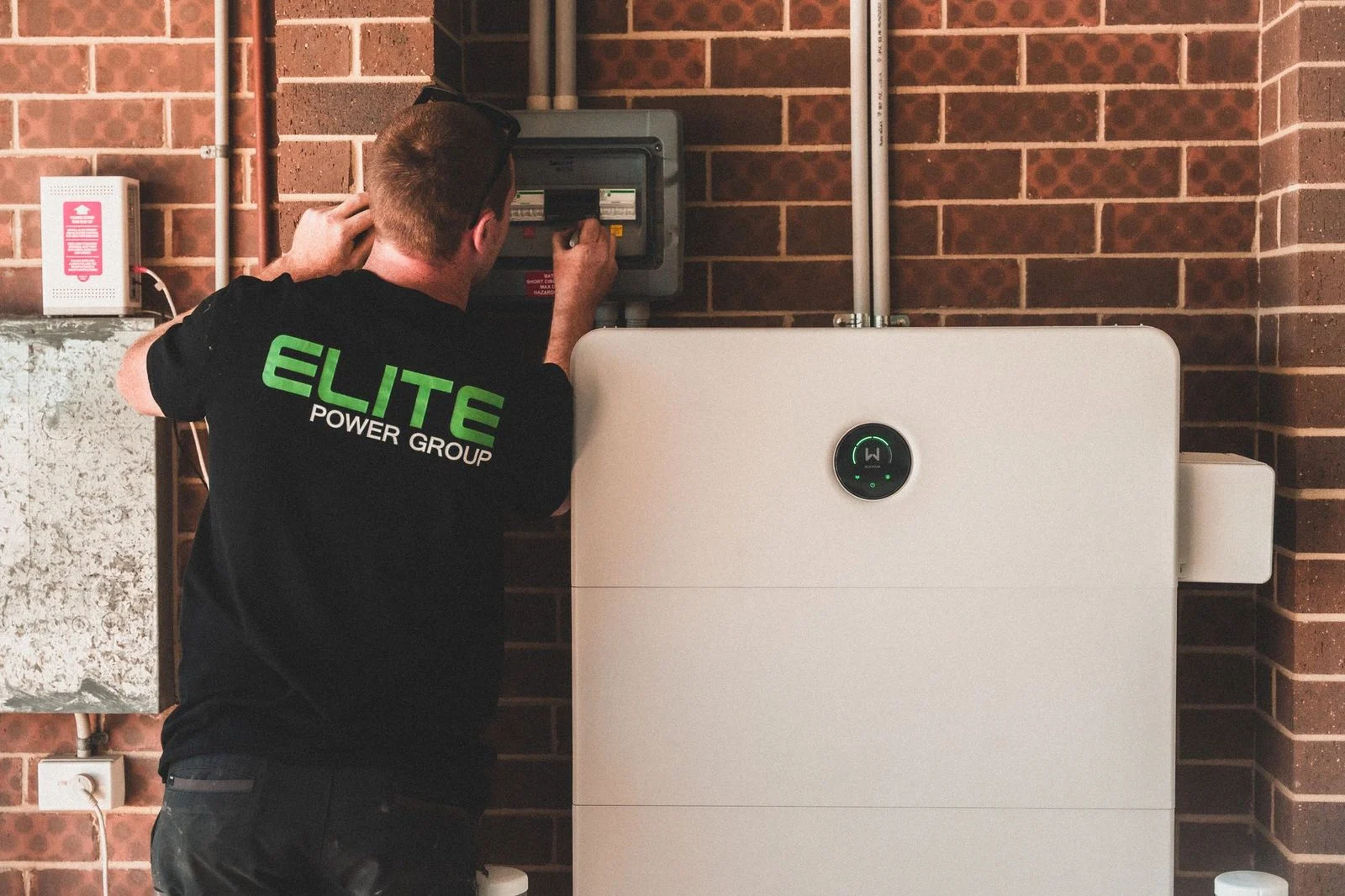
A battery backup system stores solar power so your home can use it when the sun isn’t shining. Solar panels make electricity during the day. Your home uses what it needs first. Any extra power charges the battery, which releases that energy later, such as after sunset.
Grid-tied solar works differently during an outage. Many grid-tied systems shut down when the utility grid fails. A battery adds backup. With the right transfer equipment, it can power the circuits you pick instead of the whole house by default.
Two parts decide how that backup works. The inverter and transfer equipment control how power reaches your circuits, so system design matters. The system size and the loads you select decide how much of the home a battery can power. A larger battery can run more circuits, but only as long as its stored energy lasts. For a Boca Raton home, that means choosing circuits before a storm, not during one.
Weighing battery backup before the next storm season? Tell us about your roof, your electrical panel, and the circuits you need running, and we'll help you plan your estimate. Talk it through with our team — the first consultation is free, confidential, and carries no obligation.
Why Storm Season Makes Battery Backup a Planning Question in Boca Raton
Storm season is the main reason many Boca Raton homeowners plan battery backup ahead of time. Atlantic hurricane season runs from early summer into late fall. A storm can knock out power for much longer than a few hours.
When the power is out, most families first worry about refrigeration, lighting, phones and Wi-Fi, and any medical equipment that runs on electricity. Those needs should shape the battery choice.
Solar panels alone don’t cover these gaps. Panels produce power only when the sun is up. Storm clouds can cut output for stretches of time, and a system without storage can’t hold energy for the night. That’s why storage is the part you add for backup.
A common mistake is sizing a project around the roof and skipping the loads. Start with the power you need. Then check whether the roof is ready for panels and a battery. A roof in poor shape can turn a storage project into a repair project. Reflective metal roofing can also help. The U.S. EPA notes that reflective, light-colored, or cool-colored metal roofing can reduce solar heat transfer, indoor temperatures, and air-conditioning energy use, including in warm climates. ASP Superhome offers metal roofing, tile roofing, roof repair, and roof replacement, so the roof can be reviewed along with the battery plan.
Sizing a Battery for Essential Loads
Size a battery by choosing the circuits to keep running first, then matching capacity to how much power those circuits use each day. Don’t start with the battery’s maximum rating.
Essential loads are the circuits you decide to keep on. For most Boca Raton homes, that list includes the refrigerator, lighting, Wi-Fi and phone charging, selected outlets, and any medical device that needs power.
Follow these steps:
- List each appliance and device on the backup list.
- Check each one’s power rating, usually on its label.
- Estimate how many hours per day each one runs.
- Add up the daily energy total.
- Match battery capacity to that total, with room for cloudy days.
Your electrical panel shows how circuits are wired. Your real usage shows how often each load runs. A refrigerator cycles on and off through the day. Central air conditioning draws far more power than a lamp, so it is a poor fit for a small battery. Usage patterns also affect how long a battery lasts each day and over its life. Have both the panel and the usage reviewed before you choose a size.
What Installation Involves and What the Costs Depend On
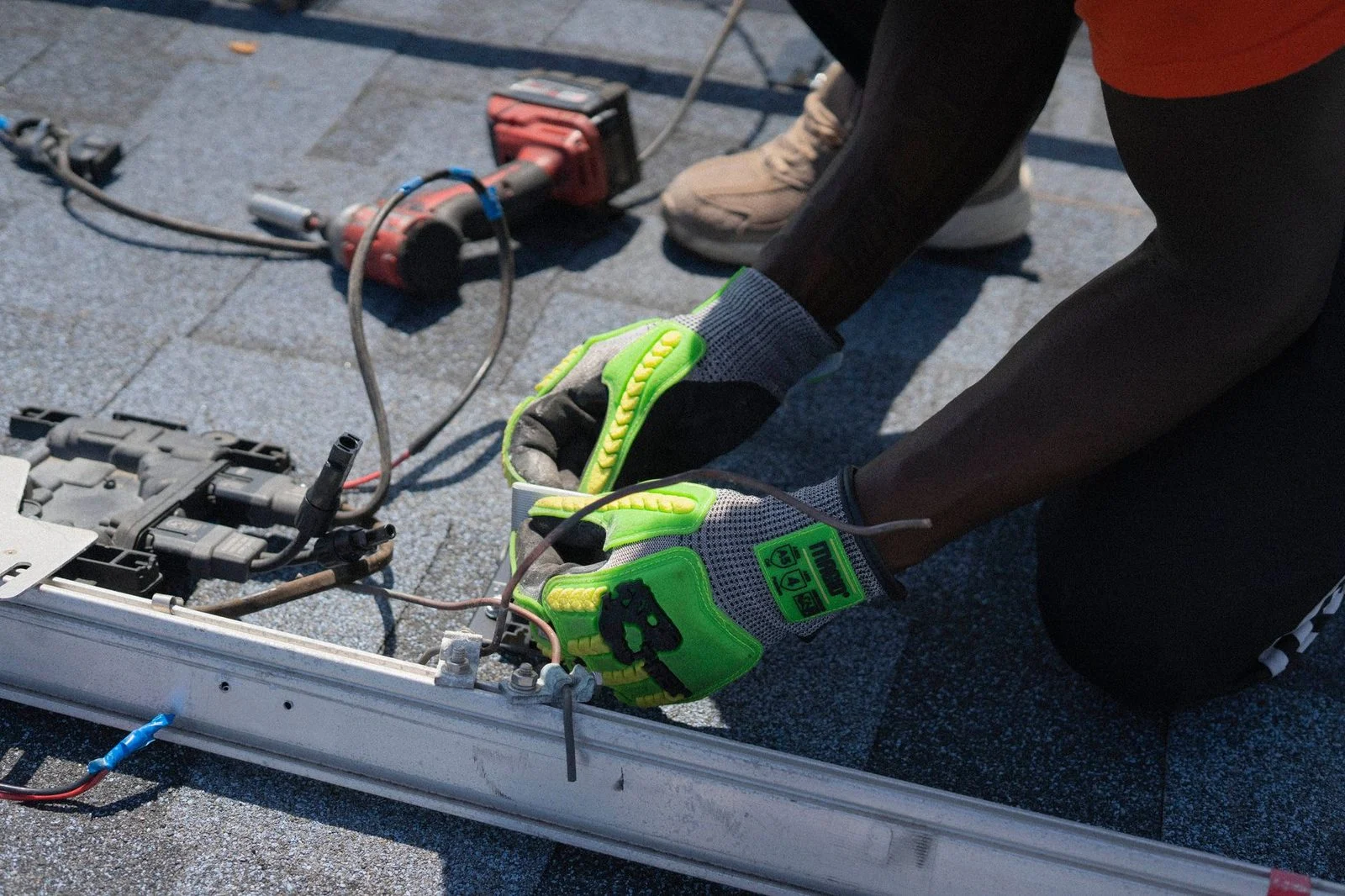
Installation usually includes a site and roof check, an electrical review, a permit, equipment mounting, and inspection. A battery’s price depends on its capacity, the equipment chosen, and the work the home needs.
Permits are required. Florida law makes it unlawful to alter or repair a building without first getting a permit from the enforcing agency (Fla. Stat. § 553.79). The enforcing agency can revoke a permit if the work doesn’t conform to the Florida Building Code. The Florida Building Code sets the rules for building design, construction, and repair (Fla. Stat. § 553.73).
Battery safety deserves attention too. UL Solutions battery incident reports track incidents involving lithium-ion batteries and note the limits of the available safety data.
Federal tax credits are a separate question. IRC § 25D covers qualified battery storage technology, and the battery must have a capacity of at least 3 kilowatt hours. The same statute says the credit does not apply to expenditures made after December 31, 2025. ENERGY STAR reports a 30% federal credit for qualifying residential battery storage through that date. Confirm your eligibility with a tax professional, and check the IRS residential clean energy credit page for current details.
Can solar panels keep my home running during an outage without a battery?
Panels alone generally can’t power your home through a grid outage without storage. A battery is the part that holds power for later use.
Does the federal battery credit still apply?
The statute says the credit does not apply to expenditures made after December 31, 2025. Confirm your situation with a tax professional.
What size battery do I need?
Size comes from the circuits you choose and how much power they use each day.
Request a Free Estimate From ASP Superhome
ASP Superhome is a complete home solutions company serving South Florida. We offer solar panels, solar battery backup, roof repair and replacement, metal and tile roofing, impact windows, impact doors, and kitchen remodeling.
Our first consultation is free, confidential, and comes with no obligation.
If you’re weighing battery backup before the next storm season, our team can review your roof, electrical setup, and power needs. Then we’ll put together an estimate for your home. Request your quote and tell us which circuits you need running when the grid goes down.
Size the system before you buy
A battery sized only for the circuits you actually need will serve you better than one chosen by price alone. Decide which appliances must stay on during an outage, then match the battery capacity and solar output to that load.
Why homeowners work with ASP Superhome
Solar and home upgrades under one roof
We handle solar panels, solar battery backup, roofing, impact windows, impact doors, and kitchen remodeling, so your home's upgrades can be planned together.
Free first consultation
Your initial consultation is free, confidential, and comes with no obligation to continue.
Serving South Florida
We work with homeowners across Boca Raton and throughout South Florida, including Miami, Fort Lauderdale, and West Palm Beach.
Clear, written quotes
Our quote explains the equipment, the scope of work, and what each part of the project includes.
What the process looks like
1. Free consultation
We talk through your goals, your outage concerns, and the appliances you want to keep running.
2. Load review
We review your power needs and identify the circuits that should be backed up.
3. System design
We recommend panel output and battery capacity matched to your home's priorities.
4. Installation
Our team installs the system and reviews how it operates with you before you are finished.


