


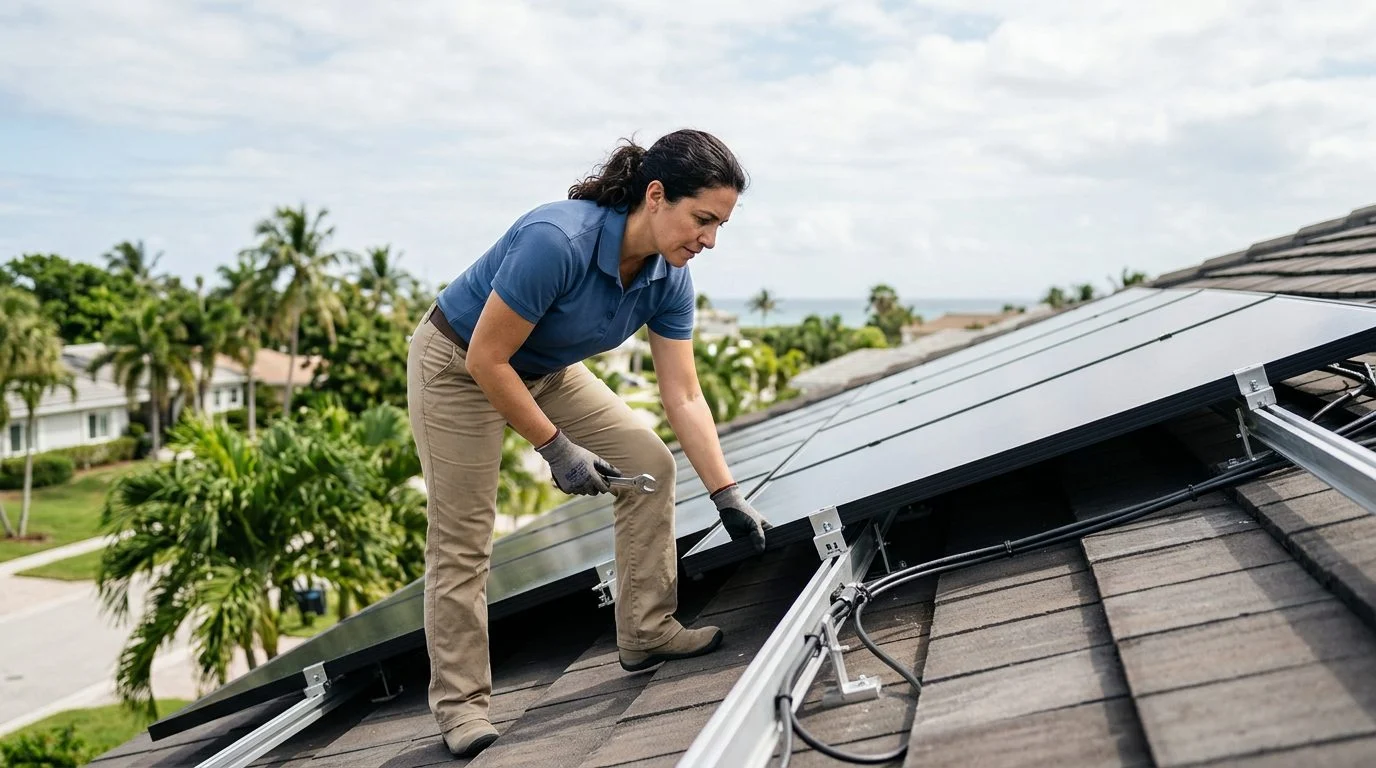
Solar Panels | Fort Lauderdale, FL
Solar Panels in Fort Lauderdale: Know the Costs Before You Commit
See what drives solar pricing, how a system works on a South Florida home, and what to expect from your first consultation with ASP Superhome.
Your First Consultation
Free
Initial consultation
Confidential
Your details stay private
No obligation
No commitment to continue
By Jonathan Rodriguez · Published November 5, 2026
Solar panels in Fort Lauderdale FL turn sunlight into electricity for your home. An inverter converts that power into the form your appliances use. A battery adds storage, so you can use some of that energy later, including during an outage. Whether a system fits depends on your roof, your electrical service, and your goals. This guide covers what’s included, how the process works, what drives cost, and what to ask before you decide.
What Solar Panels Are and Who They Suit
A residential solar panel system makes electricity from sunlight that hits your roof. The panels create direct current. An inverter changes it into the alternating current your home uses.
Solar tends to suit homeowners who:
- Have a roof in workable condition
- Plan to stay in the home for years
- Want to rely less on power from the grid
Broward’s strong sun and long, warm season make solar worth a close look. Still, roof age, roof direction, shade from trees or nearby buildings, and the structure below all affect fit. The team checks these during your consultation.
If you're weighing panels and battery backup for your Fort Lauderdale roof, we can review your roof and electrical service and send you a written estimate. Talk it through with our team — the first consultation is free, confidential, and carries no obligation.
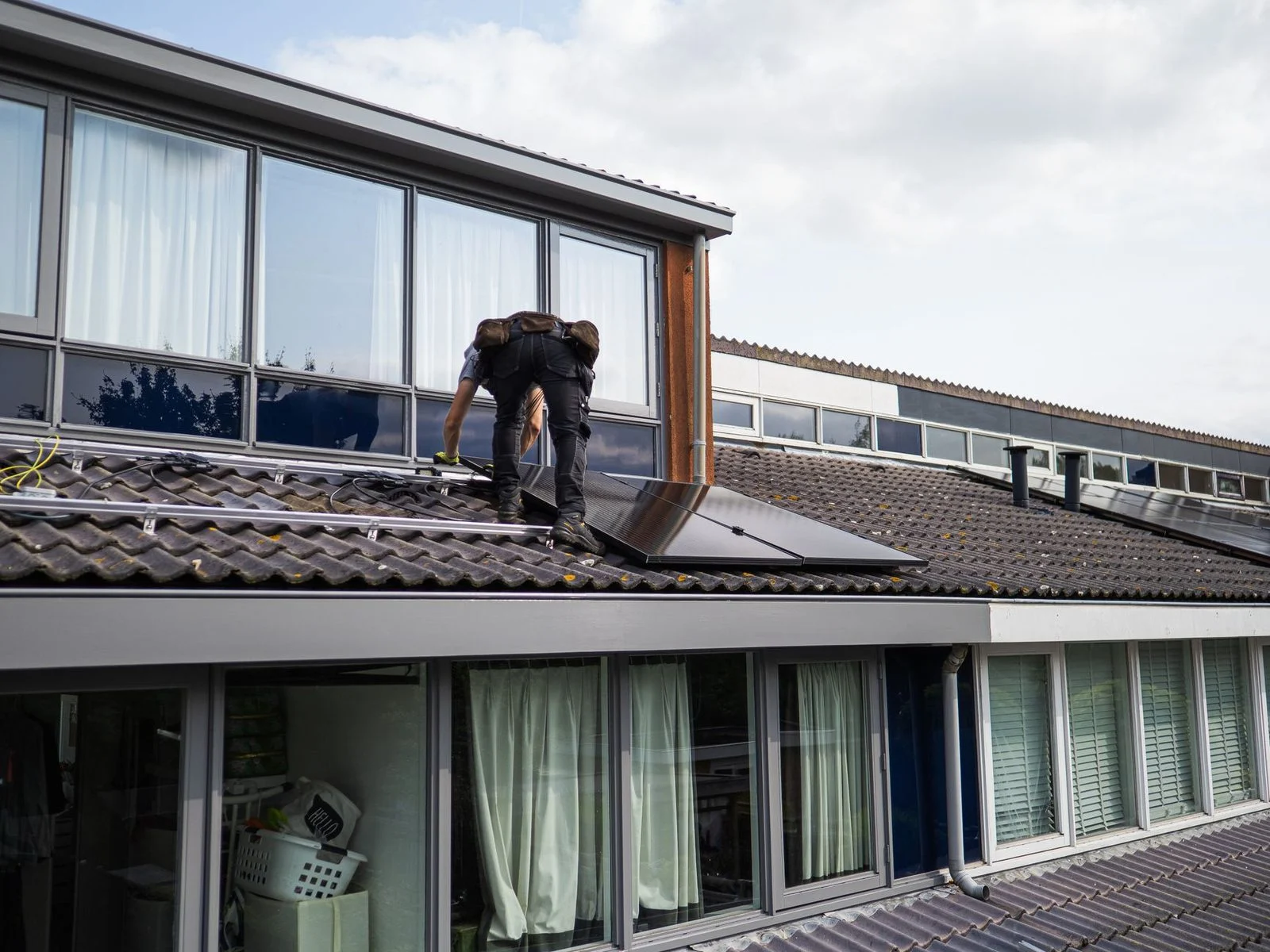
What a Solar Panel Installation Includes
A typical residential installation includes panels, an inverter, a mounting system, electrical connections, and monitoring.
- Solar panels capture sunlight.
- Inverter converts the power for home use.
- Racking and mounting hold the array to your roof.
- Electrical connections tie the system to your home’s service.
- Monitoring lets you track system output.
Fla. Stat. § 553.79 sets that rule, so permitting is part of the scope.
Roof work often comes first. Roof-mounted panels can require roof penetrations. They may affect roof warranties and maintenance. They generally need removal and reinstallation for roof repair or replacement, according to Lauderdale-by-the-Sea solar permit guidance. That’s why the survey includes a roof inspection. Your written estimate lists exactly what’s included.
Solar Battery Backup: What It Does and When It Matters
A battery stores power your panels produce, so you can use it later. That might mean evening hours or a power outage.
A solar-only system sends extra power to the grid. It generally shuts down during an outage for safety. A solar-plus-battery system can keep chosen circuits running when the grid is down.
Before sizing a battery, weigh these questions:
- Which appliances or circuits matter most during an outage?
- How many hours of backup does your household want?
- Does your electrical service have room for the added equipment?
Capacity and setup are matched to your needs during the site assessment. The IRS Residential Clean Energy Credit page describes a federal credit that may cover home battery storage at a 30% rate. It is subject to qualifying conditions and limits, so confirm your eligibility during the consultation.
How the Solar Installation Process Works
The process moves through six steps, from the first consultation to a walkthrough after installation.
- Free first consultation. The first consultation is free, confidential, and carries no obligation to continue. We talk about your goals, your home, and your roof.
- Site survey. The team checks roof condition, orientation, shade, and electrical service.
- Design and written estimate. You receive equipment, scope, and any roof work in writing.
- Permits and paperwork. Permits are handled before installation begins. Utility programs can add steps too.
- Installation and inspection. Crews mount the panels, connect the system, and schedule inspection before it goes live.
- Walkthrough. We show you how to read the system and what normal operation looks like.
Timelines depend on permitting, equipment availability, and project scope. The estimate sets out the expected sequence for your home.
What Drives the Cost of Solar in Fort Lauderdale
Cost depends most on system size, battery capacity, roof condition, and electrical work. The written estimate after the site survey gives the most accurate figure for your home.
- Number of panels, which sets system size
- Battery capacity, if you add one
- Roof type and condition
- Electrical upgrades to your service
- Roof repair or replacement needed first
A common mistake is comparing panel counts without checking the roof. A roof in poor condition should be addressed before or alongside panels. Mounting panels on a roof that needs work can mean removing and reinstalling the array later.
Roof work tied to a project can also bring in state rules.
Why Homeowners Choose ASP Superhome for Solar
ASP Superhome is a full-home provider. Solar and roof work can be planned together, not handled by separate contractors.
We handle solar panels, battery backup, roofing, impact windows and doors, and kitchen remodeling. Here’s how we approach a solar project:
- We check roof condition during the survey, so panels aren’t mounted on a roof that needs work.
- You get one point of contact for the estimate.
- The written estimate spells out scope, equipment, and roof work.
- We keep you informed at each step.
You see the scope in writing before any work begins.
Not sure what your next step is?
Talk it through with our team — the first consultation is free, confidential, and carries no obligation.
Solar Panel Questions Homeowners Ask
Here are short answers to common questions.
Will solar panels work during a power outage?
Most grid-tied systems shut down during an outage for safety. A battery is what provides backup power.
Do solar panels need roof repair first?
Not always. Roof age and condition decide it, and the survey checks both before scheduling.
Can solar go on a metal roof or tile roof?
Yes. Mounting methods differ by roof material, so the design accounts for yours. Finished metal panels typically get factory coil coating, often a two-coat paint system, according to the Metal Construction Association.
How long does installation take?
It depends on permits, equipment, and scope. The written estimate includes the expected sequence.
Do I need a permit?
Yes.
Does a solar contract need a lien notice?
Florida requires a construction lien notice in certain direct contracts over $2,500 for homes up to four units, under Fla. Stat. § 713.015.
Request Your Free Solar Estimate
If you’re weighing panels and battery backup for a Fort Lauderdale home, the next step is a site review. Start by sharing your goals, your roof’s age, and how your home uses power. We’ll schedule a site survey, then send a written estimate you can review at your own pace.
Request your free estimate to get started.
What Shapes the Cost of Solar in Fort Lauderdale
System size
The number of panels needed depends on your household's electricity use and the space available on your roof.
Roof condition
The age and condition of your roof affect whether panels can go on now or whether roof repair or replacement should come first.
Roof type
Installation on a metal roof or a tile roof requires a different approach, and that affects the scope of the project.
Battery backup
Adding battery storage raises the upfront cost but lets your home keep power when the grid goes down.
How Our Solar Process Works
1. Free first consultation
We discuss your goals, your electric bills, and your home. The consultation is confidential and carries no obligation to continue.
2. On-site survey
Our team reviews your roof's condition, orientation, and structure to confirm whether solar is a good fit for your home.
3. Your written estimate
You receive a quote that outlines the equipment, installation scope, and any roof work needed before panels go up.
4. Installation and activation
Once you approve the plan, we install the system and coordinate the steps needed to bring it online.
Panels Alone May Not Keep the Lights On
Most grid-tied solar systems shut down during a power outage for safety reasons. If you want backup power during storms or outages, ask about adding a solar battery backup to your system.


