


Solar Panels & Battery Backup | South Florida
Will a Solar Battery Keep My Refrigerator Running?
Find out how battery size, your fridge's daily use, and the other loads in your home determine how long your refrigerator can stay on during an outage.
By Jonathan Rodriguez · Published November 7, 2026
Quick Answer: Can a Solar Battery Keep a Refrigerator Running?
Yes, a solar battery can keep a refrigerator running during a power outage. Will a solar battery keep my refrigerator running for long? That depends on four things: the battery’s usable energy, the fridge’s daily energy use, the startup surge when the compressor kicks on, and whether solar panels recharge the battery.
A battery alone runs down. Panels that refill it during daylight are what stretch runtime past the battery’s stored energy. For many South Florida families, the worry is simple: a storm knocks out power, and the food in the fridge starts to matter. Knowing the math helps you plan before that happens.
This guide walks through each factor in order. You’ll be able to estimate your own situation by the end.
If an outage has you worried about the food in your fridge, our team can talk through your refrigerator, home, and backup options with you. Talk it through with our team — the first consultation is free, confidential, and carries no obligation.
What a Solar Battery Does During a Power Outage
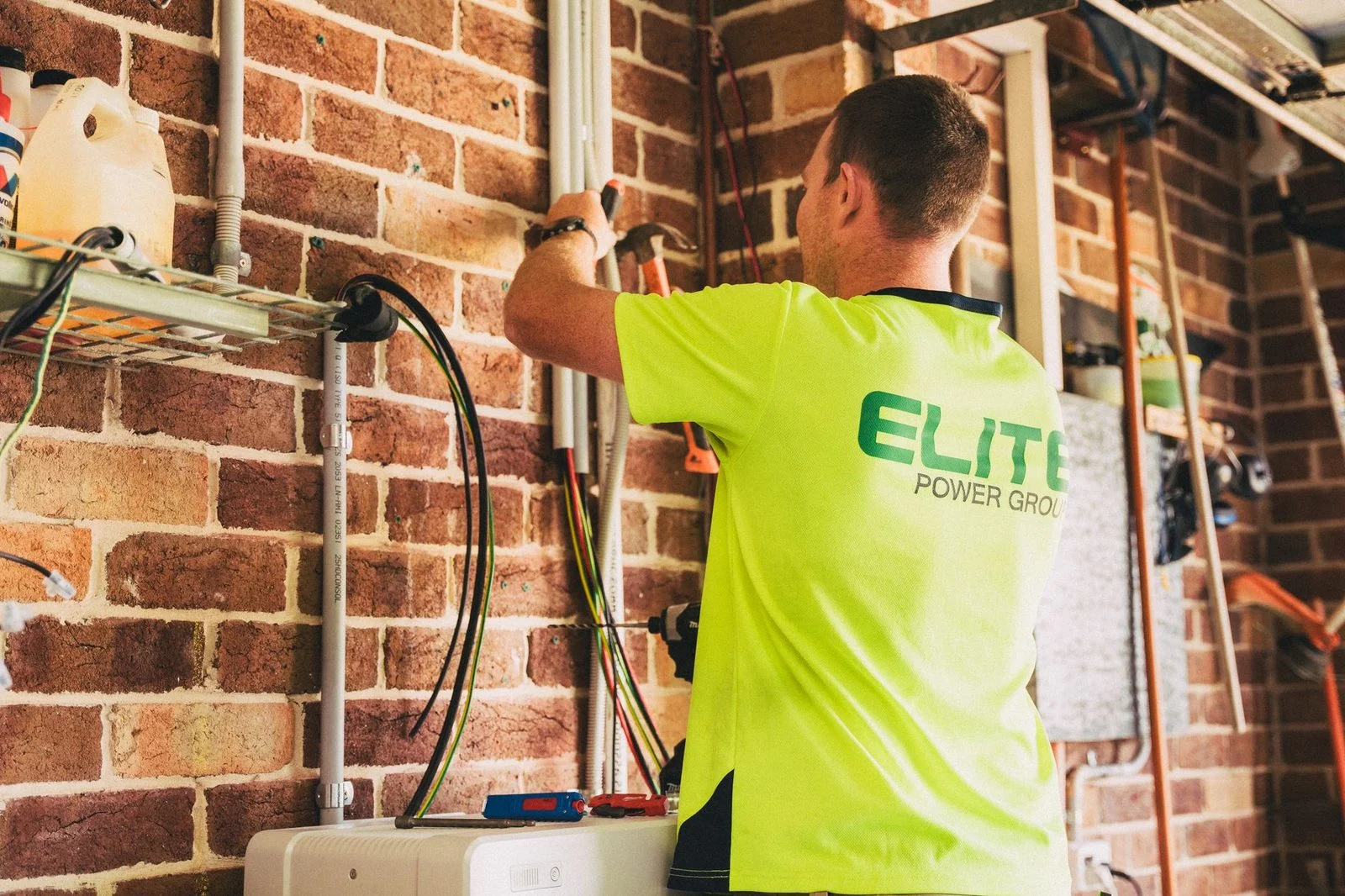
A solar battery stores electricity and sends it to your home when the grid goes down. An inverter changes the battery’s stored direct current (DC) into the alternating current (AC) your appliances use. The U.S. Department of Energy’s Solar Energy Technologies Office covers the basics of energy storage and battery backup.
Most backup setups do not power the whole house by default. Many homeowners wire only selected circuits, such as the kitchen circuit that serves the refrigerator. That keeps the load small. Whole-house backup needs a larger battery and more panels, and it costs more.
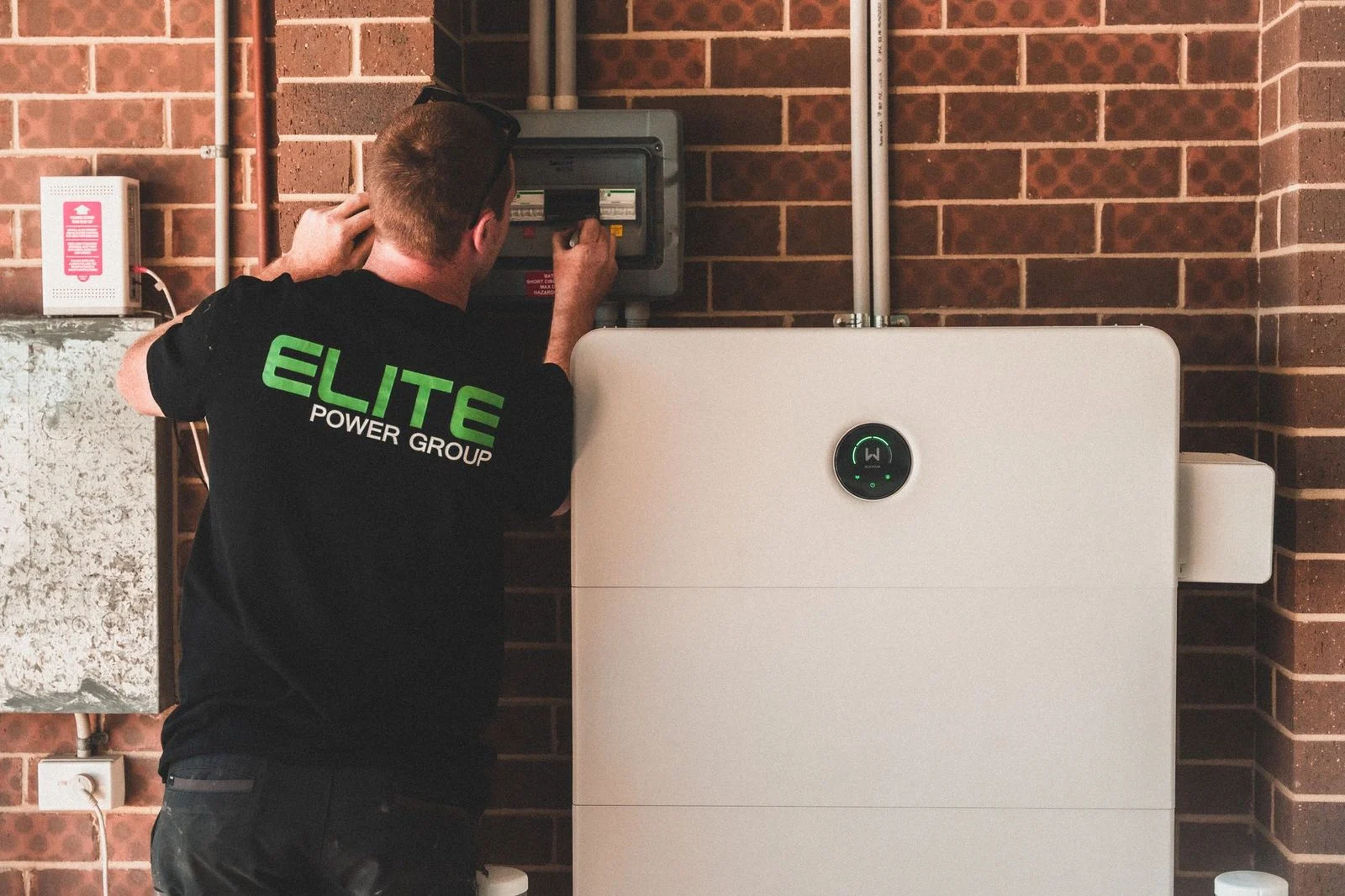
The battery is one part of a working system. It connects to the inverter, your electrical panel, and your wiring. A solar installer plans how these parts fit together in your home. That plan sets how much the battery can carry and for how long.
How Much Energy a Refrigerator Uses Each Day
A refrigerator’s compressor cycles on and off, so its energy use is best measured per day. Think in kilowatt-hours (kWh) per day, not per hour.
Start with the appliance’s rating. Energy labels usually list use in kWh per year. Divide that number by 365 to get a rough daily figure. A fridge rated at 500 kWh per year, for example, uses about 1.4 kWh per day.
Real use can run higher or lower than the label. Frequent door openings, a hot kitchen, a dusty coil, and a fridge that sits half empty all change the number. Plan with a margin rather than the bare rating.
The startup surge is the next issue. When the compressor starts, it pulls a short burst of extra power. The battery and inverter must handle that spike. If the inverter is too small, the fridge may not start, even when the battery still holds energy.
How Long Can a Solar Battery Run a Fridge?
Divide the battery’s usable capacity by the fridge’s daily kWh to estimate days of runtime on stored energy alone. That is the core calculation. The result is rough, but it shows whether a battery size is in the right range.
Usable capacity is not the same as rated capacity. Rated capacity is the number on the label. Usable capacity is the part you can draw without running the battery too low. Drawing a battery to empty every day can shorten its life. This is a common mistake: people plan around the full rated number and forget the reserve.
Here is a worked example with assumed numbers. Assume the fridge uses 1.4 kWh per day and the battery has 10 kWh of usable capacity. That works out to about seven days on stored energy alone, with nothing else running. This is an illustration, not a promise. Your own result depends on your appliances and your battery.
Shared loads cut that time. Lights, Wi-Fi routers, televisions, and especially air conditioning all draw from the same battery. Each one shortens how long the fridge stays supplied. An outage plan that ignores these loads will overstate runtime.
Can a Solar Panel Run a Refrigerator, and Is a 200W or 300W Panel Enough?
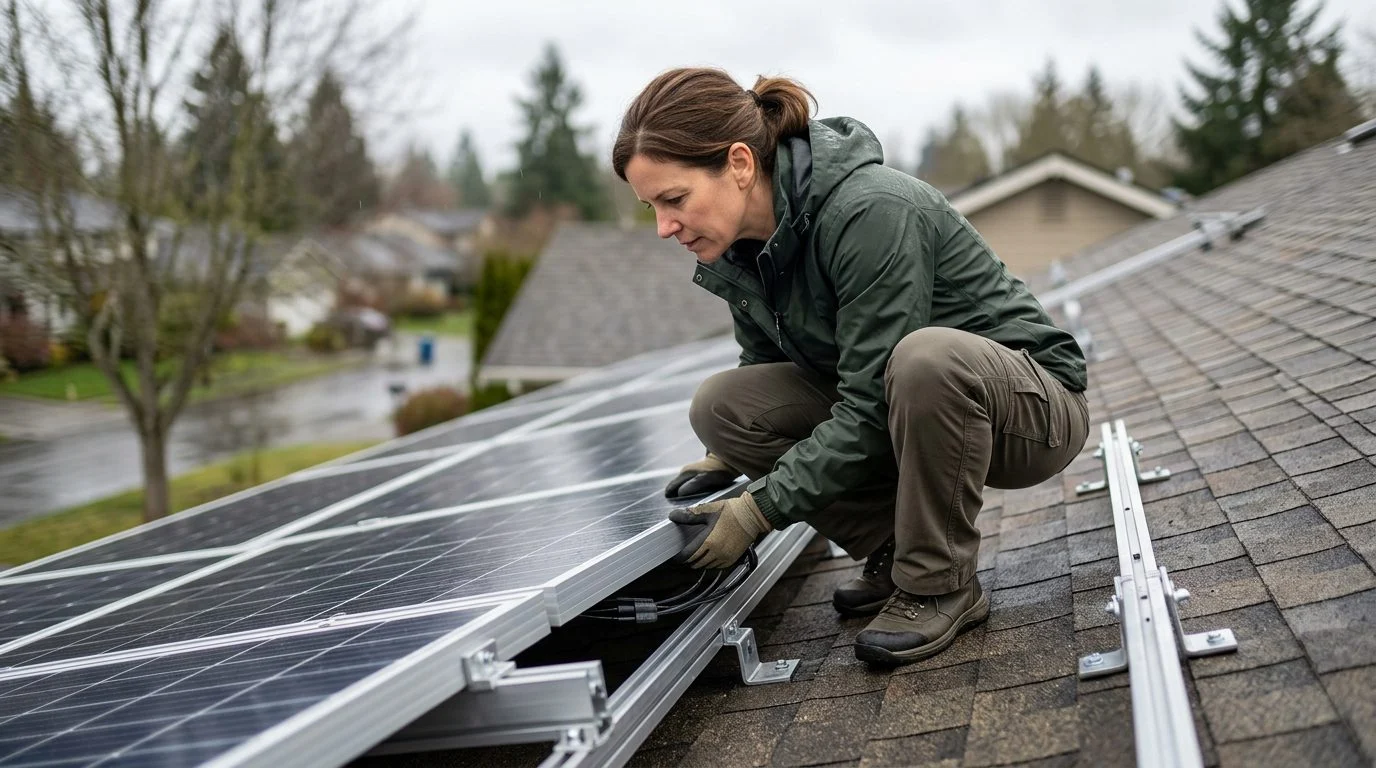
One 200-watt or 300-watt panel rarely covers a refrigerator’s full daily need by itself. Panel count matters more than the wattage of any single panel. Several panels add up to more daily energy than one panel of the same size.
Panels only make power during daylight, and their output rises and falls with sun exposure. That is why panels work best as a recharging source, not as a stand-alone supply. During the day, they refill the battery. The battery then carries the fridge through the night and into the next morning.
Panel output in South Florida changes with cloud cover, afternoon storms, and roof orientation. A roof that faces away from the sun, or several days of heavy clouds after a storm, slows recharging. Plan for slower recharge days, not only sunny ones.
If you want to review panel options for your roof, see solar panels.
Will a Solar Panel Run a 12V Fridge?
Yes, a solar panel can run a 12-volt fridge when it charges a battery sized for that fridge. A 12-volt refrigerator runs on direct current (DC) drawn from a battery. Many of these units are built for vehicles, boats, and off-grid cabins.
A standard household refrigerator works differently. It runs on alternating current (AC) from the home’s wiring, so it needs an inverter and a battery system sized for its load. A 12-volt unit can skip the inverter because it draws DC straight from the battery.
Energy use still decides how long the setup lasts. A 12-volt fridge that uses a lot of power will drain its battery as fast as an AC fridge would. Check the unit’s daily use first. Then size the battery and panels to match that number, with a margin for hot days.
Not sure what your next step is?
Talk it through with our team — the first consultation is free, confidential, and carries no obligation.
What to Do Before Setting Up Fridge Backup
List the circuits you want on backup before you choose a battery. Put the refrigerator first. Add any medical equipment or food-storage devices your household relies on. This list sets the size of the whole system.
Next, estimate the fridge’s daily use from its rating, then add a margin for hot weather and frequent door openings. Decide how the system will recharge: panels alone, the grid after power returns, or both. Panels alone need more sun and more panels. Adding grid recharge keeps the battery full.
Check the roof, the electrical panel, and the wall space. Roof type and orientation affect where panels can go. The battery also needs room and a proper location. The Florida Building Commission’s 2026 Florida Building Code analysis describes new door rules for openings into the home from a space that holds an energy storage system. Florida law also ties building permits to plan review under the Florida Building Code, as stated in Fla. Stat. § 553.79. Fla. Stat. § 553.79 reads: “(8) A permit may not be issued for any building construction, erection, alteration, modification, repair, or addition unless the applicant for such permit complies with the requirements for plan review established by the Florida Building Commission within the Florida Building Code.”
Next Steps: Talk Through Your Refrigerator Backup Plan
If you’re reading this during or after a power cut, the fridge may be on your mind, along with the food inside it. A backup decision can feel urgent right after a storm. You don’t need every answer today.
Start with the solar battery backup in South Florida guide to see how systems are set up for homes in the region. Then gather your fridge’s rating, your circuit list, and your roof details before you talk with anyone.
Our team can review your refrigerator, home, and outage concerns with you. The first consultation is free, confidential, and carries no obligation to continue. When you’re ready to talk, reach out through our contact page.
Frequently asked questions
Can a refrigerator run on solar power?
Yes. A solar battery and panel setup can power a refrigerator, with runtime set by battery size and the fridge’s daily use.
Will a solar battery keep my refrigerator running all night?
It can, if the battery holds enough usable energy for the fridge’s daily use. Other household loads shorten that time.
Does a solar battery work during a power outage?
Yes. A battery with an inverter can supply selected circuits when the grid is down.
Will a solar panel run a 12V fridge?
Yes, when the panel charges a battery sized for the fridge. A 12-volt unit draws direct current straight from that battery.
How We Help You Plan for Refrigerator Backup
Start with your fridge's real usage
We look at your refrigerator's age, efficiency, and typical daily energy use, since these numbers set the baseline for how much battery capacity you need.
Size the system around your whole home
We account for the other appliances and circuits you want to keep running, so your refrigerator's needs are planned alongside them rather than as an afterthought.
Review realistic runtime
We walk through what a battery and solar panel setup can realistically power, so you know what to expect before you decide.
Plan for the rest of the year
We discuss how your solar panels recharge the battery over time, including the sunny and cloudy stretches common in South Florida.
Key Reminder
Runtime varies from home to home. Battery capacity, how often the refrigerator opens and cycles, and how many other loads run at the same time all affect how long a battery can power your fridge. Ask for a site-specific review before you rely on backup power.
What Affects How Long Your Refrigerator Stays On
Battery Capacity
The usable energy stored in your battery is the main limit on backup time. A larger battery generally supports longer runtime.
Refrigerator Efficiency
Newer, energy-efficient models typically draw less power than older units, which can extend how long a battery lasts.
Other Household Loads
Air conditioning, water heaters, and other appliances drain the same battery. Running them together shortens the time your fridge can stay on.
Solar Recharging
Solar panels refill the battery during daylight. How quickly that happens depends on panel size, sunlight, and how much energy your home uses each day.
Plan Your Solar Battery Backup With ASP Superhome. Start With a Free First Consultation: Confidential and With No Obligation to Continue.
Related practice areas
- Residential Solar Panel Installation Kendall | ASP Superhome


