


Solar Panels | South Florida
How Much Solar Does Your Home Really Need?
A plain-language guide to sizing a solar system around your electricity use, your roof, and whether you want battery backup.
Start with a free first consultation
Free
First consultation
Confidential
Your information stays private
No obligation
No commitment to continue
By Jonathan Rodriguez · Published November 7, 2026
How Much Solar Is Needed to Power a Home?
If you ask how much solar is needed to power a home, start with your electric bill. The answer depends on how much energy the home uses, the sun hours at your site, and which loads the system must carry. You can estimate it in four steps: read your kWh use, convert it to daily energy, divide by sun hours, then turn kilowatts into a panel count.
If you're working through this for a home you don't live in, or after an outage you didn't expect, our team can help you sort out the numbers. Talk it through with our team — the first consultation is free, confidential, and carries no obligation.
What “powering a home” actually means
Powering a home can mean three different goals, and each one needs a different system size. Some households want to cover the whole house. Others want only essential circuits, such as the refrigerator, some lights, and a few outlets, to keep running. Many simply want to cover part of the monthly bill.
Two units matter here. Solar panels are rated in kilowatts (kW), which measures how much power the system can make at one moment. Your bill tracks kilowatt-hours (kWh), which measures energy used over time. A 6 kW system does not produce 6 kWh every day. Daily output depends on sun hours.
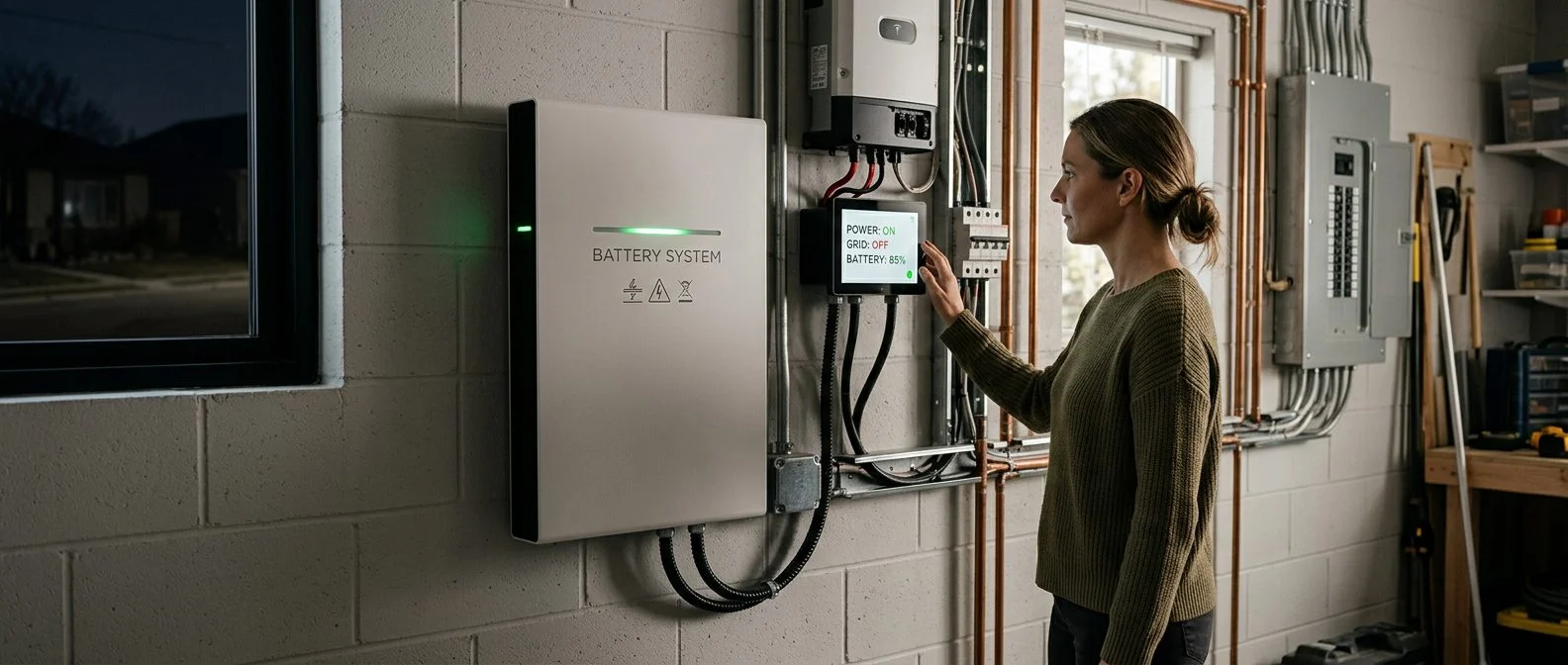
Backup adds another layer. A battery’s size depends on which loads it must carry and how many hours you want covered. A battery that runs a refrigerator and lights needs far less storage than one that carries central air conditioning.
How to calculate the solar your home needs
Four steps turn your bill into a system size. Each step uses a number you can read on paper.
Step 1: Find your average monthly kWh use. Add the last 12 months on your utility bill and divide by 12. Then look at the summer bills separately. South Florida air conditioning often pushes usage up in the hottest months, which can change your sizing.
Step 2: Convert to daily energy. Divide monthly kWh by 30. This gives your average daily kWh.
Step 3: Divide by peak sun hours. Peak sun hours is the local figure that converts a day of sunlight into an equivalent number of full-power hours. Divide your daily kWh by that figure to get the output in kW.
Under Florida’s rule on customer-owned renewable generation, the AC nameplate generating capacity of an inverter-based system is calculated by multiplying the total installed DC nameplate generating capacity by .85 to account for losses during the conversion from DC to AC. So divide your AC output target by 0.85 to find the panel capacity you need. Then add room for future changes, such as an EV charger. Under Fla. Admin. Code R. 25-6.065, customer-owned renewable generation must pass a check by local code officials, to ensure compliance with applicable local codes, before it may run in tandem with the investor-owned utility. You can read the rule here.
An illustrative example of energy needs assessment
This example uses assumed numbers. It is not data from a real home.
Assume the home uses 1,200 kWh per month, and assume 5 peak sun hours for the site.
| Step | Calculation | Result |
|---|---|---|
| Daily energy | 1,200 ÷ 30 | 40 kWh per day |
| Output needed | 40 ÷ 5 | 8 kW (AC) |
| Panel capacity needed | 8 ÷ 0.85 | about 9.4 kW (DC) |
Changing the inputs changes the answer. If usage rises to 1,500 kWh per month, daily energy becomes 50 kWh. At 5 sun hours, output needed is 10 kW, and panel capacity rises to about 11.8 kW. If the site gets 4 sun hours instead of 5 at the original usage, output needed is also 10 kW.
Run your own numbers with the same four steps. Your results will differ, because your bill, roof, and sun exposure are different.
How many solar panels does a home need?
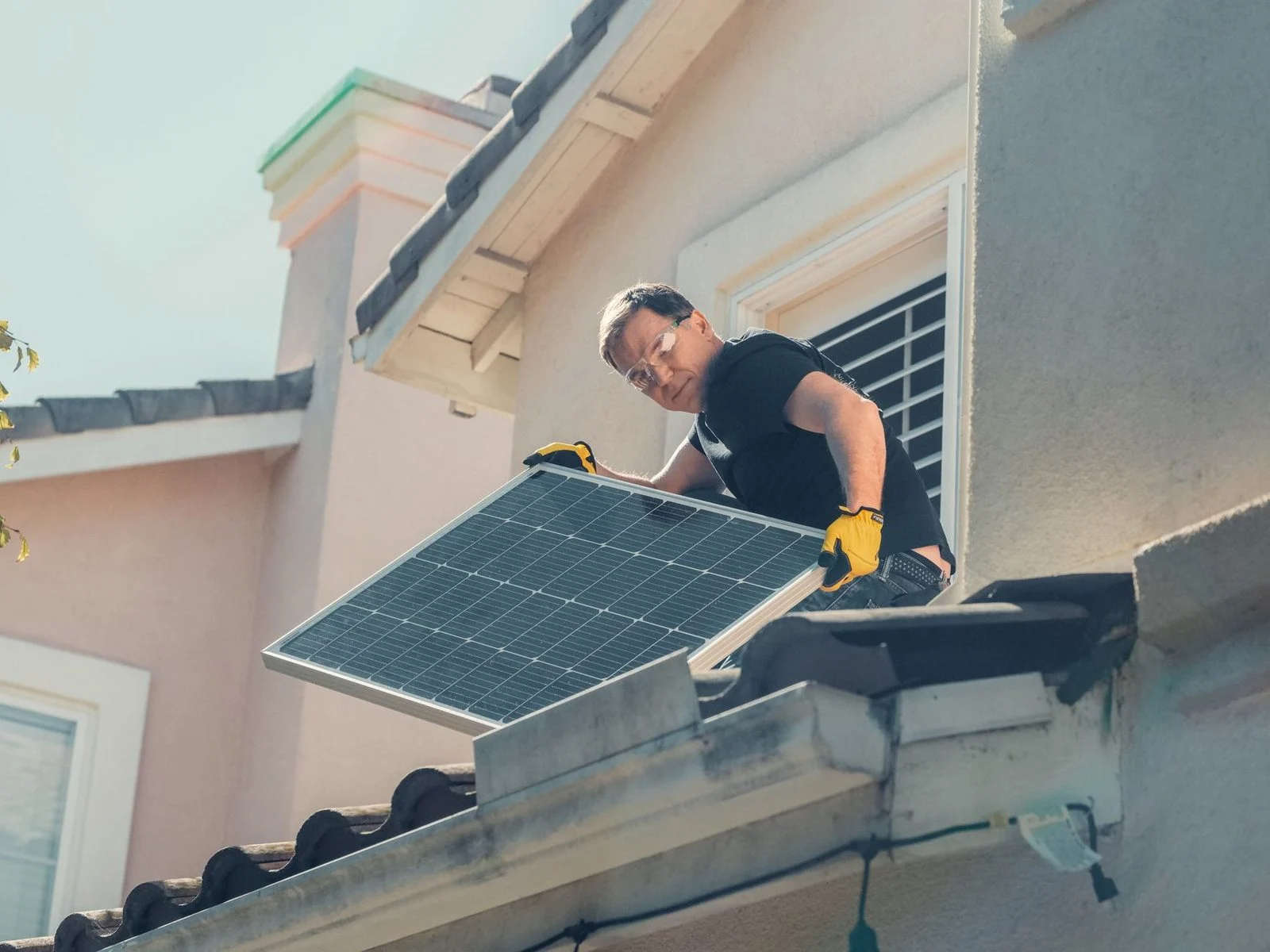
Divide the system size in watts by the wattage of one panel, then round up. The result is your panel count.
Take a 6 kW system, meaning 6 kW of total manufacturer’s AC nameplate generating capacity, which needs about 7.1 kW of installed DC panel capacity (6 ÷ 0.85). Using 400 W panels, about 7.1 kW of DC capacity is 7,100 ÷ 400 = 17.75, so 18 panels are needed. Using 350 W panels, about 7.1 kW of DC capacity is 7,100 ÷ 350 ≈ 20.3, so 21 panels are needed. Rounding up keeps the array at or above the target.
Make sure every figure uses the same basis. Florida’s rule measures gross power rating on AC output. A 6 kW AC rating needs about 7.1 kW of panels (6 ÷ 0.85). At 400 watts per panel, that is about 18 panels.
Roof fit matters too. The U.S. Department of Energy homeowner’s guide says rooftop solar suitability depends on climate, roof age, tree cover, size, shape, and slope. That applies to tile roofs as well. Reflective, light-colored metal roofing can also reduce heat transfer, according to the U.S. EPA on cool roofs.
Florida law also limits HOA rules. A deed restriction may not prohibit solar collectors on covered buildings. The association can still set the roof location, if it faces south or within 45 degrees of due south, as long as that determination does not impair the effective operation of the solar collectors.
Can a house run on solar power alone?
Not without storage or the grid. Panels stop producing at night, and they produce less on cloudy days. A battery or grid power has to cover those hours.
A solar battery backup system stores extra daytime production for later use. Its size depends on the loads it must carry and the hours it must cover. Storage has rules, too. The Florida Building Commission’s 2026 code analysis retitled section R328 to “Energy Storage Systems”. For storage inside living space, doors into the dwelling must meet fire-related thickness or rating rules and be self-latching and self-closing.
Grid connection shapes the math. Under Florida’s net metering rule, credits can offset your usage for up to twelve months. Unused credits are paid at year-end at an average annual rate based on the utility’s COG-1, as-available energy tariff. Customers still pay the customer and demand charges.
Weigh these drawbacks before you decide. Upfront cost is significant. Output depends on daylight and weather. Roof condition and open space limit where panels go. A battery holds less energy than a full home uses in a day.
Not sure what your next step is?
Talk it through with our team — the first consultation is free, confidential, and carries no obligation.
Key takeaways and a next step
Read your kWh use, convert it to daily energy, divide by local sun hours, then turn kW into a panel count. Keep every number on the same AC or DC basis.
Our solar battery backup page covers storage in more detail. Our related guides on solar backup generators and running a refrigerator on solar go deeper on specific loads.
Quick answers
How many solar panels does a 6 kW system need?
A 6 kW AC system needs about 7.1 kW DC, which is roughly 18 panels at 400 watts each or 21 panels at 350 watts each. Rounding up keeps the array at target.
Can a house run on solar power alone?
Only with a battery or grid power after dark, because panels make power only in sunlight.
Do I need a battery to use solar at night?
Yes, or grid power. Without storage, panels stop producing when the sun goes down.
If you’re working through this for a home you don’t live in, or after an outage you didn’t plan for, you don’t have to sort out the numbers alone. Contact our team for a free first consultation, which is confidential and carries no obligation to continue.
Four steps to size your solar system
1. Review your electric bills
Look at 12 months of utility bills to see your yearly kilowatt-hour use, including seasonal peaks such as summer air conditioning.
2. Estimate your daily energy needs
Divide your annual usage by 365 to find your average daily consumption. This is the baseline your system should be built to cover.
3. Check your roof and sun exposure
Roof size, pitch, orientation, and shade all affect how many panels fit and how much power they produce in South Florida sunshine.
4. Decide on battery backup
Panels produce power only in daylight. If you want electricity after dark or during outages, a battery adds storage and changes how much array you need.
What goes into a sizing estimate
Your actual usage
A sizing plan starts with how your household really uses electricity, not a generic rule of thumb.
Your home and roof
Roof space, direction, and shading determine how many panels can be installed and how well they perform.
Your system goals
Whether you want to offset bills, add battery backup, or prepare for outages changes the right system size.
A clear, honest plan
Our team walks you through the numbers in plain terms so you can make a decision you feel good about.
Key tip: sun alone is not the whole picture
Solar panels make electricity only while the sun is shining. Homes that need power at night or during outages typically need battery storage in addition to a properly sized array. Ask for a sizing review before you choose a system.
Common questions homeowners ask
How many panels will I need?
It depends on your kilowatt-hour use, panel wattage, and roof space. Each home is different, so a site-specific estimate is the reliable way to answer this.
Can my home run on solar alone?
Usually only with a battery or grid power after dark. A sizing consultation can show which combination fits your household.
Does a battery change the size I need?
Yes. Battery storage affects how much energy you need to generate during the day, so it is part of the sizing calculation from the start.


