


Solar & Battery Backup · South Florida
Can a Solar Generator Keep Your Whole Florida Home Running?
Hurricane outages and summer heat make backup power a practical question. Here is how to size it for the way your household actually uses electricity.
By Jonathan Rodriguez · Published November 8, 2026
If the power goes out, you want a straight answer fast. For most homes, a portable solar generator can’t run the whole house for long. It can keep a short list of essential devices running, and for many families that’s what matters most.
Whether a solar generator is enough to power a house comes down to which devices must stay on and how much energy they use each day. This guide walks through that math with South Florida homes in mind.
What Is a Solar Generator, and How Does It Work?
A solar generator is a portable battery unit that stores energy and delivers it as household power. It charges from solar panels or a wall outlet.
Four parts make it work:
- Solar panels collect sunlight and turn it into direct current (DC) power.
- A charge controller manages that power so the battery charges safely.
- Battery storage holds the energy until you need it.
- An inverter converts stored DC power into the alternating current (AC) your appliances use.
The main difference is timing. A solar generator stores energy in advance. A fuel generator makes power as long as it has fuel. Once a solar unit’s battery is empty, it stops until it recharges.
The U.S. Department of Energy’s Solar Energy Technologies Office offers guidance on energy storage and battery backup basics. For a wider look at your options, read our solar battery backup guide.
If you're planning backup power for a relative who relies on medical equipment, our team is ready to review your load list and home layout with you. Talk it through with our team — the first consultation is free, confidential, and carries no obligation.
Does Solar Energy Use a Generator?
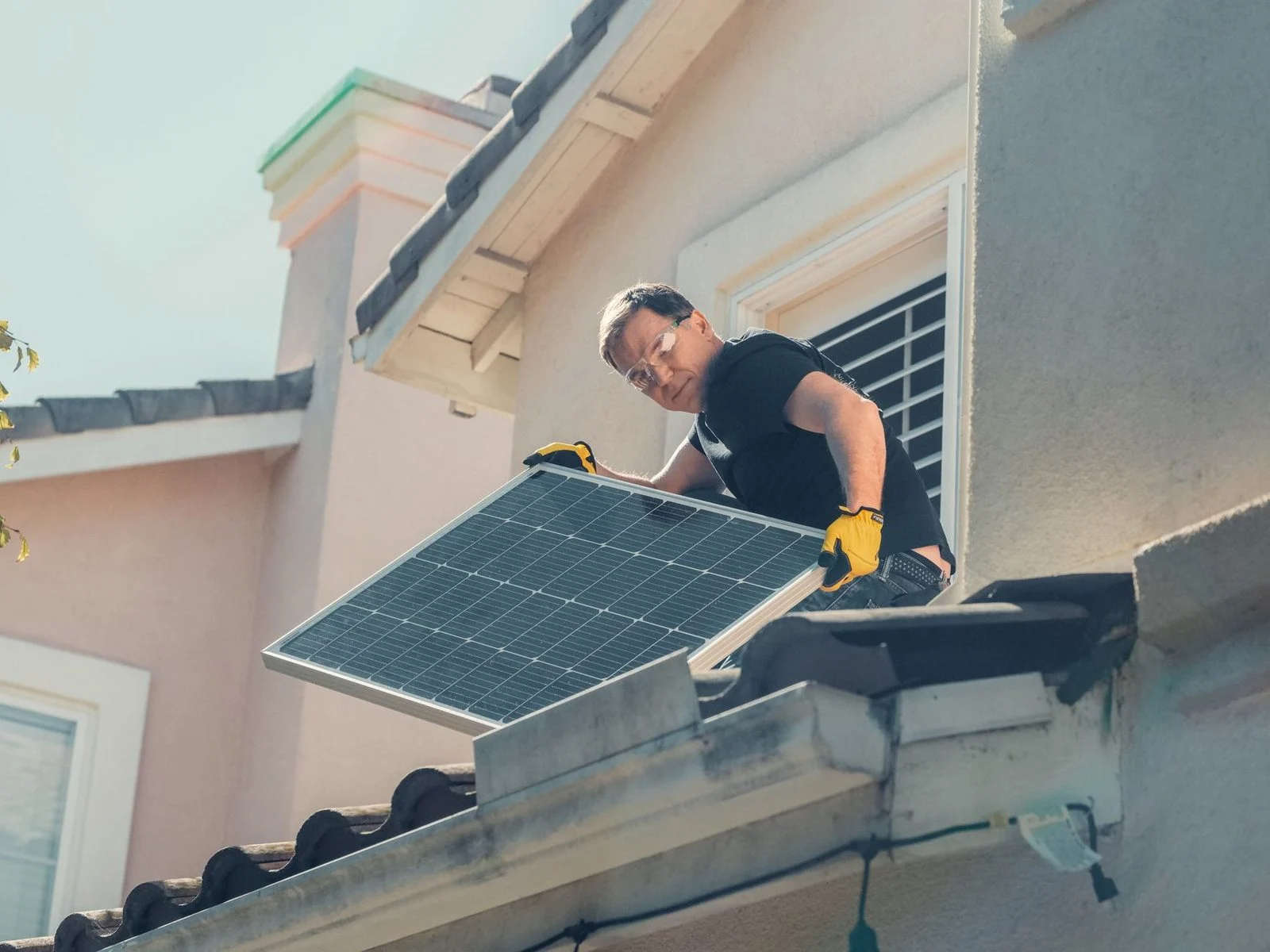
No. A solar panel system makes electricity from sunlight. It doesn’t burn fuel, so it doesn’t need a fuel generator to run. People mix up the two because both get called generators.
A solar generator is battery based. A gasoline or diesel generator burns fuel to make power. That difference shapes an outage in three ways:
- Fuel: Gas and diesel units need stored fuel and refills. Solar units need sunlight to recharge.
- Noise: A fuel engine runs loudly while it works. A battery unit has no engine running.
- Runtime: A fuel unit runs as long as it has fuel. A solar unit runs as long as its stored energy lasts.
Fuel can be hard to get during a storm, when lines form and stations close. Sunlight is steady in a different way, but it’s not always there. One caution applies to solar systems: they keep working in an outage only when backup operation is part of the design.
How to Check Whether a Solar Generator Can Carry Your House
Start by adding up the running watts you need. Then compare the daily energy total with what the unit stores.
Watts measure how much power a device draws at one moment. Watt-hours measure energy over time. You need both numbers. A unit can handle a high load for a short while and still run out of stored energy.
Here’s a simple method:
- List each device you want to keep running.
- Add up their running watts.
- Estimate hours of use per day, and multiply watts by hours to get daily watt-hours.
- Compare that daily total with the unit’s stored watt-hours, leaving room for losses.
For example, a 100-watt device running 5 hours uses 500 watt-hours a day.
Motors need extra attention. Refrigerators, air conditioners, and pumps draw a surge of starting watts when they switch on. That surge can be well above their running watts, so check that number too. Last, decide the scope. Backing up a whole house is a bigger job than backing up a set of critical circuits.
Which Home Loads Can a Solar Generator Realistically Carry?
A portable unit can often carry lighting, phone and laptop charging, a Wi-Fi router, fans, and a refrigerator for a limited time. These loads draw modest power and fit a small battery.
A common mistake is sizing the plan for the refrigerator alone. Then the fan, the router, and the phone charger get forgotten, and the total runs higher than expected.
Heavy loads are different. Central air conditioning, electric ranges, electric water heaters, and EV chargers draw large amounts of power. They usually need a larger battery, a bigger inverter, and more solar capacity than a portable unit offers.
Medical equipment needs its own plan. If someone uses a CPAP machine or an oxygen concentrator, put that device at the top of your list. Note its power draw and how many hours it runs each night. Then see whether the stored energy covers those hours with room to spare.
Whether the unit can cover your whole home depends on which circuits you back up and how much stored energy is available.
Solar Generator, Whole-Home Battery, or Traditional Generator?
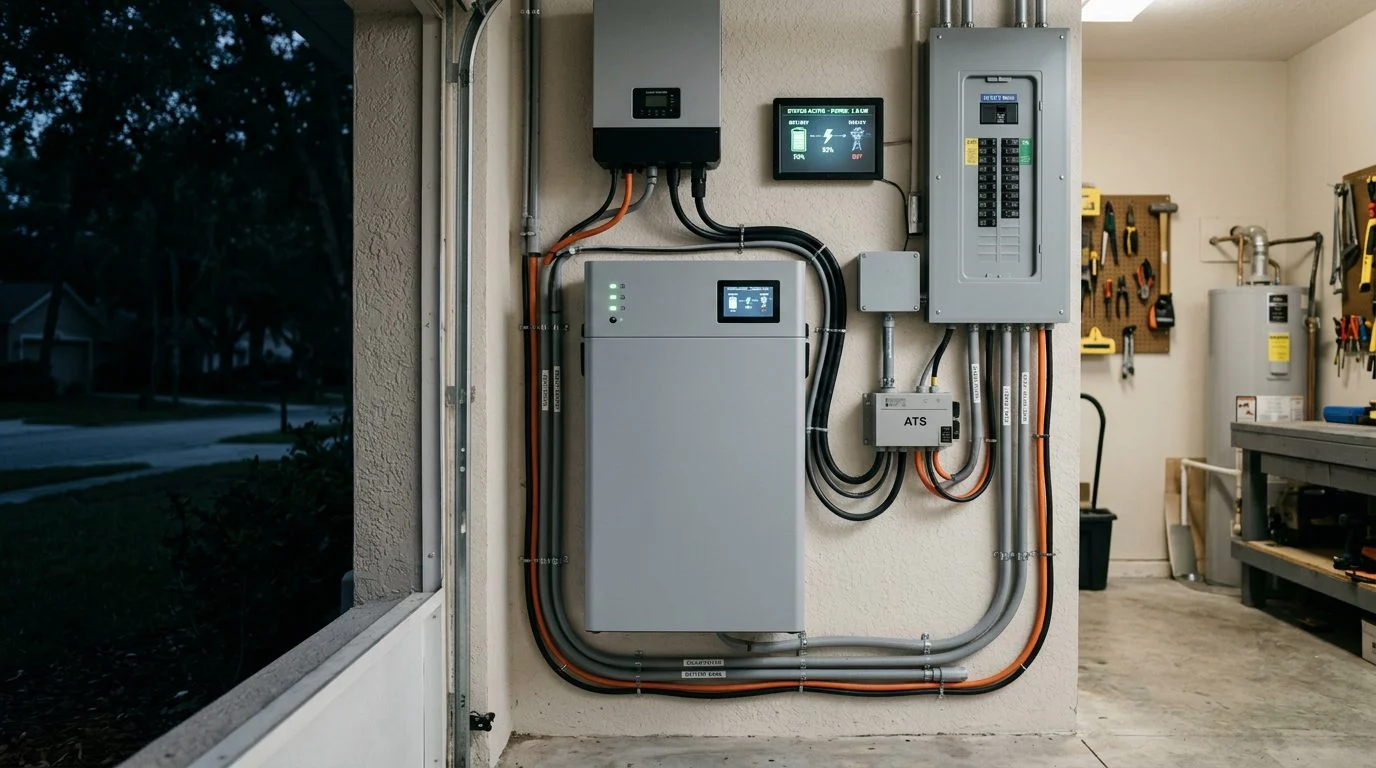
For a few essential circuits, a portable solar generator may be enough. For a whole house, a permanently installed solar battery system is built for the job. Most families end up choosing one of these two paths, based on their load list.
Compare the three options:
- Capacity: Portable units hold a fixed, modest amount of energy. Installed systems can be sized to a home’s square footage and daily use.
- Installation: A portable unit plugs in and moves with you. A whole-home system is installed and wired to the circuits you choose.
- Fuel and upkeep: A traditional generator needs fuel and engine maintenance. Solar batteries need no fuel but have a limited lifespan.
Indoor battery placement has code rules.
Limits South Florida Homeowners Should Plan For
Sunlight sets the pace of recharging, so cloudy days and the rainy season slow a unit down. A battery that charges well in a dry stretch may recover less during a week of storms. A unit at half charge on a cloudy morning may not be full by evening.
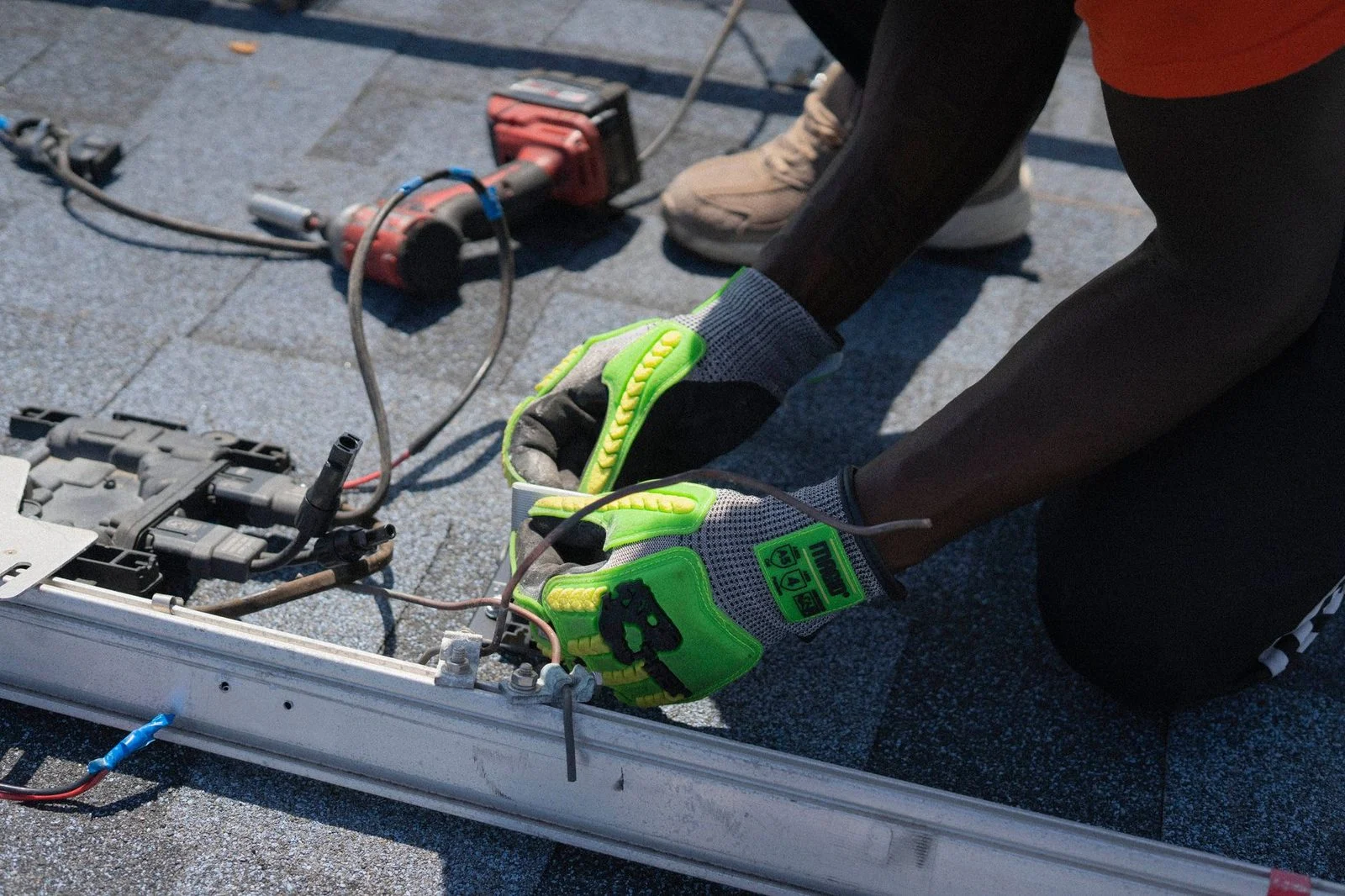
Storm season adds physical demands. Panels, mounts, and wiring must hold up to high winds and flying debris.
Roof condition matters too. The U.S. Department of Energy homeowners guide lists climate, roof age, tree cover, size, shape, and slope as factors in rooftop solar suitability, including for homes with tile roofs. If your home has a tile or metal roof, look at its condition before you plan panels.
Florida law also limits local bans on solar. Florida Statutes § 163.04 says an ordinance that prohibits, or has the effect of prohibiting, solar collectors or other renewable energy devices is expressly prohibited.
The main drawbacks are upfront cost and battery lifespan. Weigh both before you commit.
Not sure what your next step is?
Talk it through with our team — the first consultation is free, confidential, and carries no obligation.
Planning Backup Power for Your Home or a Family Member
Start with a written list of critical loads. For each one, note its wattage, hours of use, and starting surge. Then compare the daily watt-hours with the options above. Rough numbers still help. A rough list beats no list.
Many readers are planning for someone else. A parent or relative on home medical equipment may depend on power you now have to plan around, during an outage nobody chose.
You don’t have to work out the math alone. Our team offers a free first consultation, which is confidential and carries no obligation to continue, to review your load list and home layout. Contact our team to start.
Frequently asked questions
Can a solar generator run central air conditioning?
Usually not for long with a portable unit. Central air draws a lot of power and calls for a larger battery, inverter, and solar capacity.
Does solar energy use a generator?
No. Solar panels make electricity from sunlight without burning fuel. A solar generator is a battery unit, not a fuel generator.
What is the difference between watts and watt-hours?
Watts measure power at one moment. Watt-hours measure total stored energy over time, so you need both to size a unit.
Can a solar generator run a CPAP machine overnight?
Only if the unit stores enough energy for the machine’s full night of use. Add the machine’s nightly watt-hours to your load list and compare the two numbers.
How ASP Superhome Approaches Home Power
Start with your real loads
We look at which appliances you need during an outage, from refrigerators and lights to air conditioning, before recommending any equipment.
Safe, code-minded installation
Any connection to your home's electrical system is planned with a transfer switch and proper wiring so backup power stays safe for your family and utility workers.
Solar panels paired with battery backup
Our solar panel and battery backup solutions are designed to work together, so stored energy is ready when the grid goes down.
A team that coordinates your whole project
Our team can plan solar alongside roofing, impact windows, impact doors, and other home upgrades, so one project fits together.
Safety Warning
Never plug a portable generator or solar generator into a wall outlet to power your house, and never connect it to your home's wiring without a properly installed transfer switch. Backfeeding can injure utility workers and damage equipment.
Three Common Ways Florida Homeowners Power Up
Portable solar generator
Good for keeping a few essentials running, such as phone chargers, lights, a fan, or a small refrigerator, during short outages.
Whole-home solar with battery backup
Solar panels charge a home battery system that can carry key circuits or much of the home, and can recharge during daylight hours.
Hybrid approach
A smaller battery system covers critical loads, while a portable unit or additional capacity handles occasional high-demand needs.


