


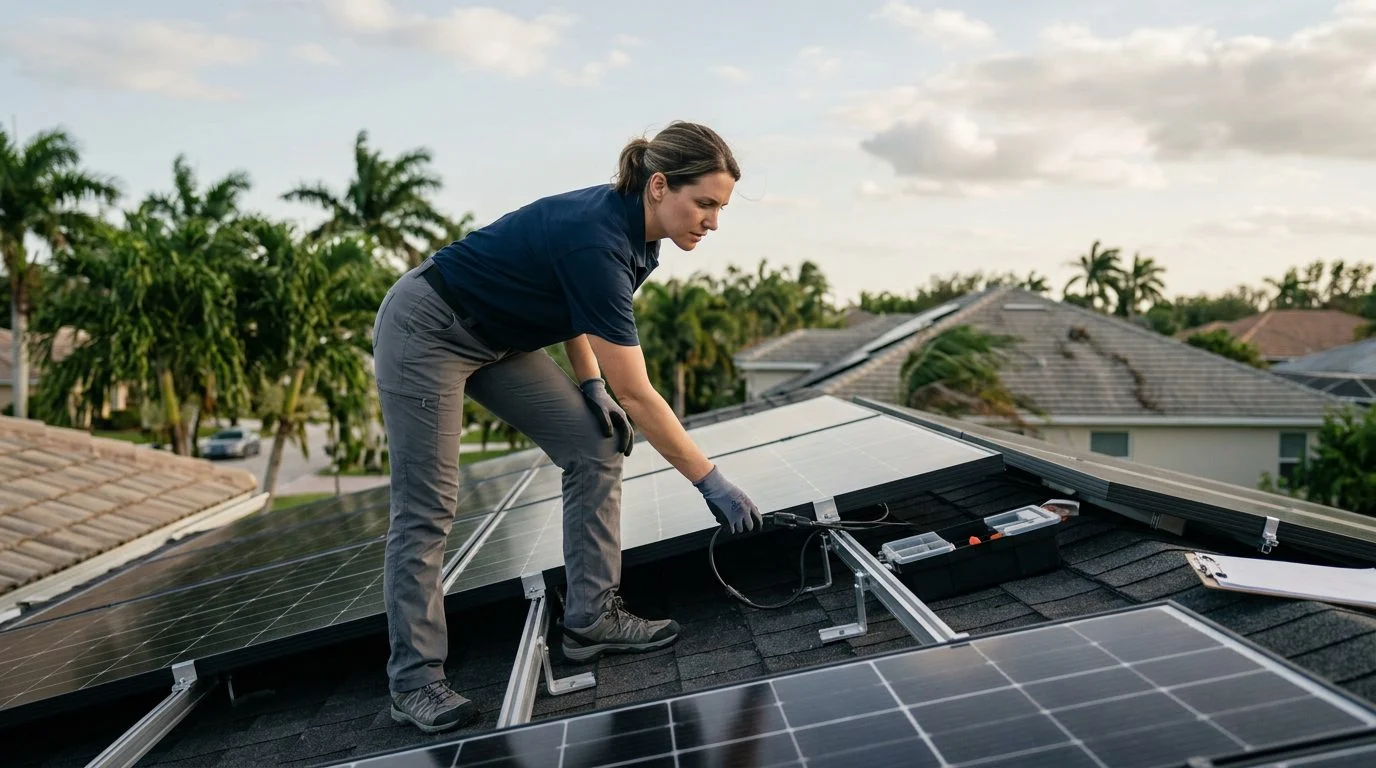
Solar Battery Backup | South Florida
Store Your Solar Power for When You Need It Most
How solar battery storage works for South Florida homes, and how to decide whether it fits your roof, your usage and your plans.
By Jonathan Rodriguez · Published October 30, 2026
How to Store Solar Energy in a Battery? South Florida
If you’re asking how to store solar energy in a battery, the short answer is this: your panels send power to the battery, the battery holds the extra, and it sends that power back when your home needs it. Think of the battery as a storage tank. The panels fill it during sunny hours, and your home draws from it at night or during an outage.
If you're weighing storage for your roof and panels, our team can talk it through with you whenever you're ready. Talk it through with our team — the first consultation is free, confidential, and carries no obligation.
How Solar Energy Gets Into a Battery
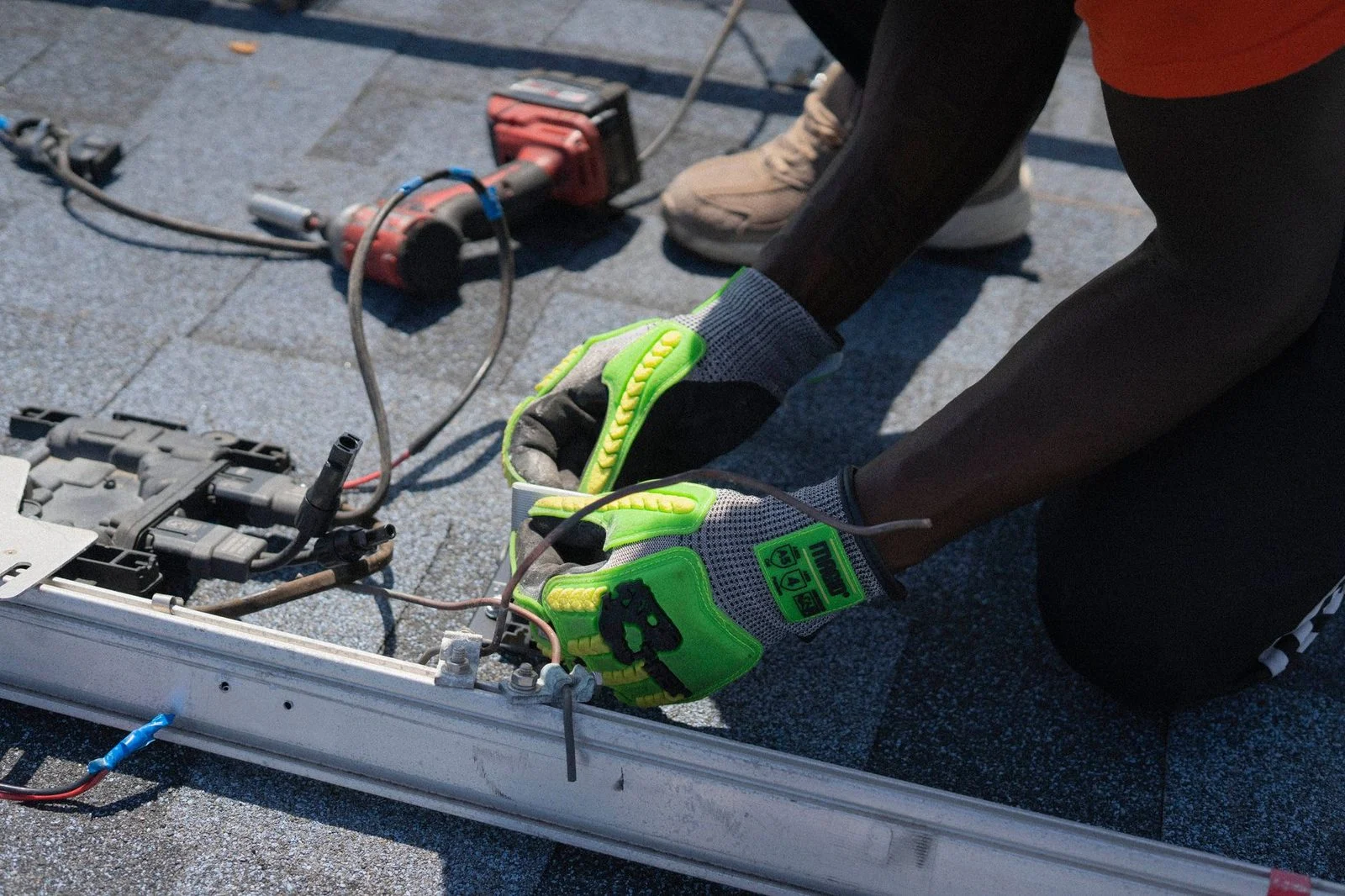
Solar energy gets into a battery through a charge controller or inverter that manages the flow of power. Solar panels make direct current (DC) electricity when sunlight hits them. Panels can’t store that power on their own, which is a common mix-up.
The electricity moves to a charge controller or hybrid inverter. This equipment decides how much power flows into the battery at any moment. The battery stores that energy in chemical form.
When your home needs the power, the battery releases it. Household appliances run on alternating current (AC), so the power is converted before you use it. For the bigger picture, read our solar battery backup guide for South Florida.
Common Battery Types Used With Home Solar
Lithium-ion and lead-acid are the two battery types you’ll hear about most for home solar. Lithium-ion batteries are common in newer home systems. They are compact and offer high usable capacity.
Lead-acid batteries are an older option. They tend to be heavier and need more maintenance.
Three terms come up in almost every quote. Capacity is measured in kilowatt-hours (kWh). It tells you how much energy a battery can hold. Depth of discharge is how much of that capacity you use before recharging. Round-trip efficiency is how much energy you get back compared with what you put in, because some energy is lost each time the battery charges and discharges.
The right battery type depends on your energy use, the space you have, and your goals. A battery that suits one home may not suit another.
Where Solar Energy Goes When the Battery Is Full
When the battery is full, extra solar power goes to your home’s appliances first. If your system is connected to the utility grid, any remaining power flows to the grid. Without a grid connection, that extra power has nowhere to go, so it isn’t used.
Grid-connected homes with customer-owned renewable generation interconnected to a Florida investor-owned utility’s electrical grid can net meter under state rules (Rule 25-6.065). Under Florida Administrative Code Rule 25-6.065, energy credits offset your usage in later months for a period of not more than twelve months. At the end of each calendar year, the investor-owned utility pays for unused credits at an average annual rate based on its COG-1, as-available energy tariff.
The same rule says you keep paying the customer charge and the demand charge for your maximum measured demand, even when excess energy goes to the grid. Rules can change over time, so check how your utility applies them when you connect.
How Long a Solar Battery Lasts and How Much Storage to Plan For
A battery’s life is usually described in charge cycles and in the years its warranty covers. A charge cycle is one full cycle of charging and discharging. Actual lifespan depends on how the battery is used.
Daily cycling matters. A battery that drains deeply every day wears differently than one used only during outages. Depth of discharge, temperature, and system setup all affect how long the battery lasts. This is why a 10 kWh battery doesn’t have one fixed lifespan.
Storage needs depend on the facts of each household. Those facts include daily electricity use, the backup you want, and the roof space available for panels. The U.S. Department of Energy’s homeowner’s guide to solar says rooftop suitability depends on climate, roof age, tree cover, size, shape, and slope. Those factors shape how much solar a roof can hold.
What Happens to Solar Panels After 25 Years
Solar panels lose output slowly over many years. They often keep producing power past their warranty period, though at lower output. Output doesn’t stop on a set date.
Batteries and panels age on different schedules. A battery may need replacing before the panels do. Plan for that when you compare options, and keep the battery’s warranty terms in mind.
Roof condition matters too. A roof that needs repair or replacement is easier to address before panels go on. For a broader look at long-term value, see is solar still worth it in 2026.
Not sure what your next step is?
Talk it through with our team — the first consultation is free, confidential, and carries no obligation.
Using Stored Solar Power During a South Florida Outage
A battery-backed solar system can power selected loads during an outage. Which loads it covers depends on how the system is designed and wired.
South Florida hurricane season brings a real risk of outages, so backup power is a common concern. Installers typically set critical loads, such as refrigerators, lighting, and internet equipment, to receive power first. The battery alone doesn’t decide this. The system design does.
Solar panels without a battery work differently. Grid-tied panels may shut down during an outage for safety. To see why, read can you use solar panels during a power outage. To estimate how much capacity a home may need, see is 10kW solar enough to run a house.
Talking Through Your Home’s Situation
Many people reading this are dealing with a storm, a rising power bill, or a decision for a parent or relative. You may not be ready to choose anything yet. Questions come first, and that’s a sensible place to start.
Is there still a federal tax credit for solar batteries?
Under IRC § 25D, the credit is unavailable for any expenditure made after December 31, 2025. IRC § 25D provides that an expenditure with respect to an item shall be treated as made when the original installation of the item is completed, but an expenditure in connection with the construction or reconstruction of a structure shall be treated as made when the original use of the constructed or reconstructed structure by the taxpayer begins.
Do solar batteries work with a tile roof?
Rooftop suitability for solar is shaped by roof age, shape, slope, and tree cover, as the DOE’s homeowner guide notes, and those considerations also apply to tile roofing. Our team can review your roof during a free first consultation — confidential, with no obligation to continue. Your roof’s condition is part of that picture.
Where does solar go when the battery is full?
Extra power goes to your home first, then to the grid if your system is connected. Without a grid connection, that extra power goes unused.
If you’re weighing this for your own home or for someone you help, our team can talk through your roof, panels, and storage needs with you. Our free first consultation is confidential and carries no obligation to continue. You can reach our team here.
What to Consider Before You Choose a Battery
Your daily energy use
Look at when your household uses the most electricity. Evening use is often the biggest factor in how much stored power you will need.
Backup priorities
Decide which circuits matter most during an outage, such as refrigeration, medical equipment, lighting and internet, so the system can be sized around them.
Panel and system compatibility
Your existing solar array, inverter and electrical service determine which battery options fit. A site review confirms the details before any purchase decision.
Local conditions
Heat, humidity, storm exposure and roof orientation all matter in South Florida. Installation planning should account for where and how the system will be mounted.
Size the System Before You Buy
A battery that is too small may not cover the loads you care about, and one that is too large may add cost without matching your usage. Review your electric bills and backup goals before choosing a capacity.
How a Solar Battery System Works
1. Solar panels produce power
During daylight, your panels generate electricity for the home. Any power you do not use right away can be directed to the battery.
2. The battery stores the surplus
The battery holds extra energy so it is available later, such as after sunset or during a grid outage.
3. The inverter manages the flow
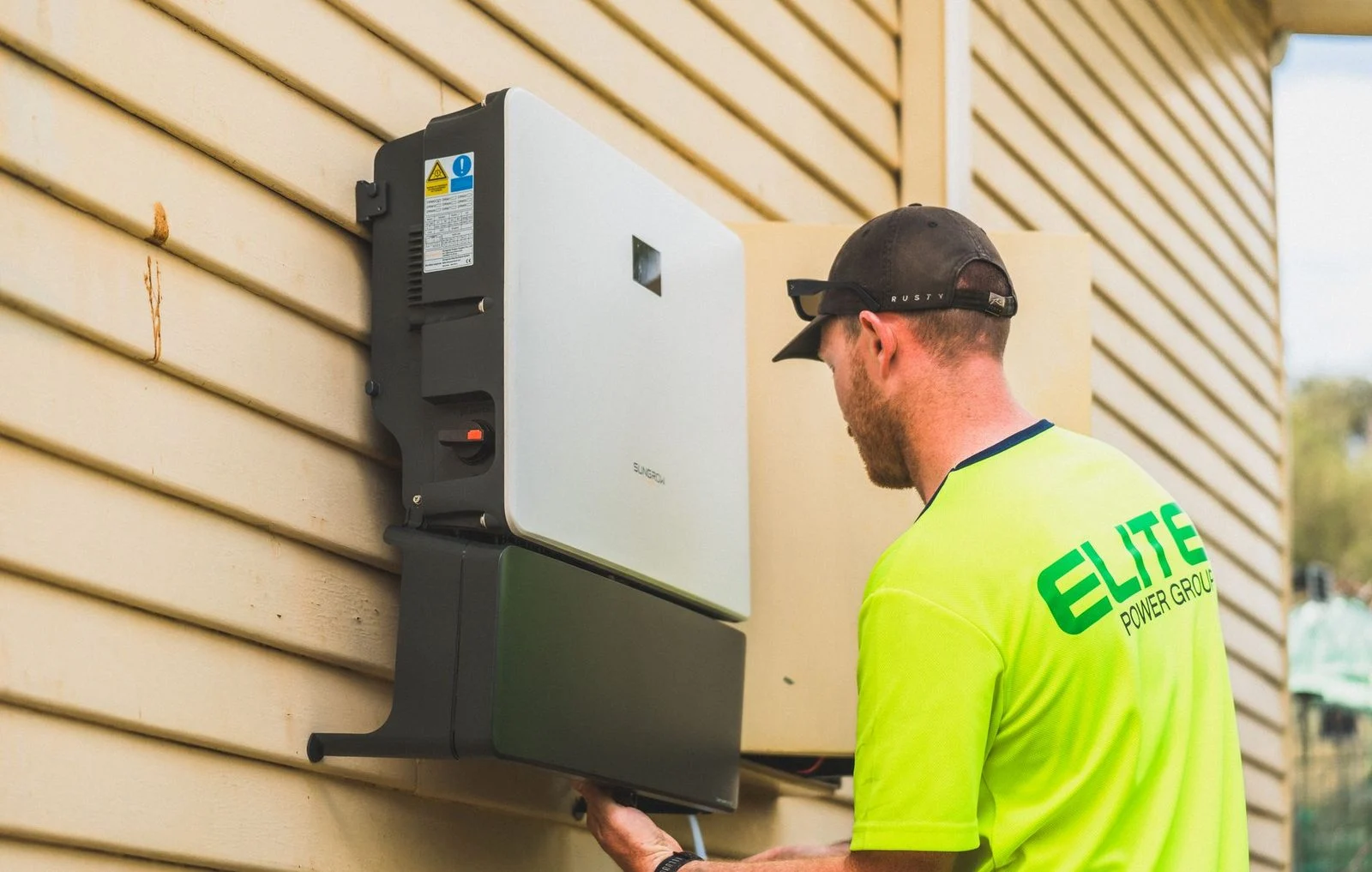
The inverter converts and routes electricity between the panels, the battery, the home and the grid, depending on how the system is set up.
4. Stored power returns to the home
When the home needs power, the system draws from the battery first in many configurations, helping reduce how much energy is pulled from the grid.
Talk With Our Team About Battery Storage for Your Home. Your First Consultation Is Free, Confidential and Comes With No Obligation to Continue.
Related practice areas
- Insurer Roof Age Letter and Solar Battery in South Florida


