


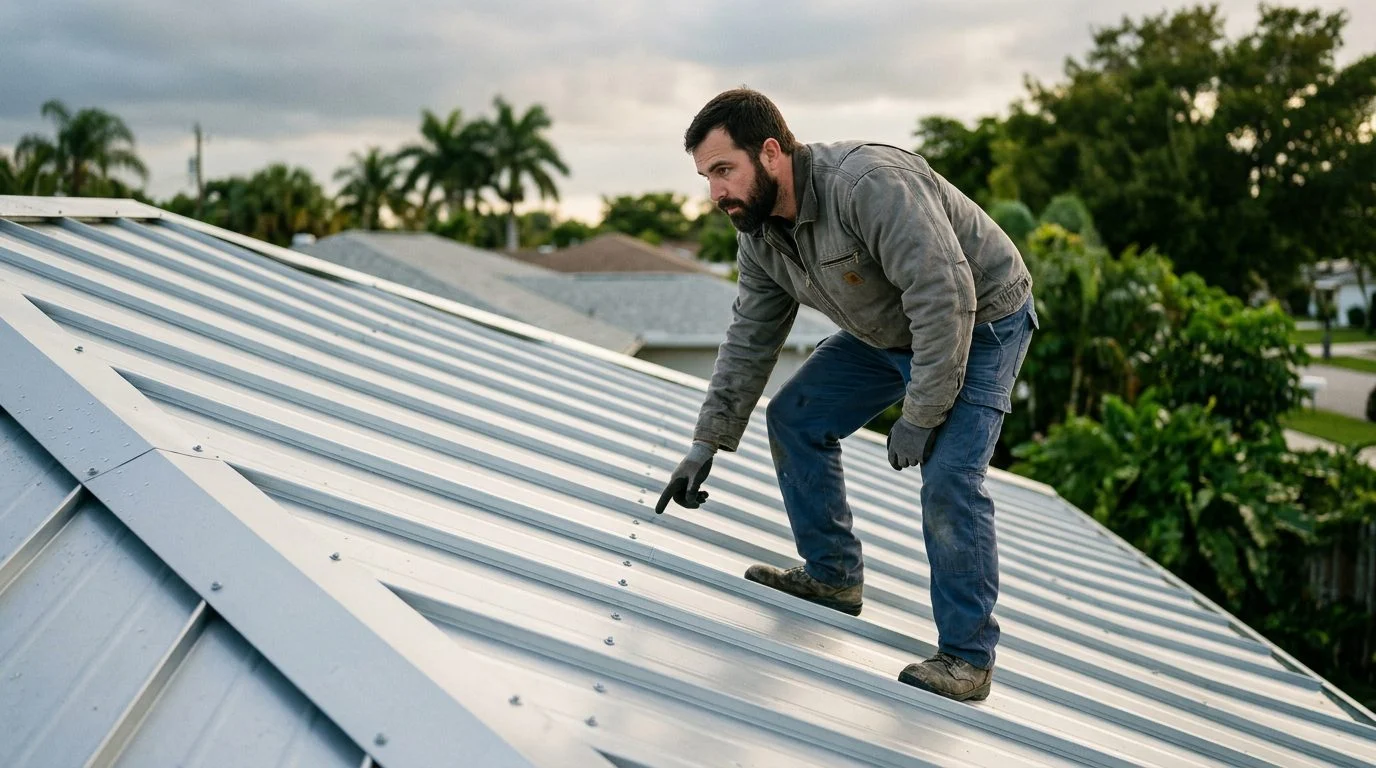
Roof Replacement | South Florida
The Least Expensive Way to Replace a Roof in South Florida
Lowest total cost over the life of the roof, not just the lowest price today. Here is how to weigh your options and request a free estimate.
By Jonathan Rodriguez · Published October 20, 2026
The least expensive way to replace a roof is the path with the lowest total cost over the roof’s life, not the lowest first quote. For most South Florida homeowners, that means paying a fair price for the right work, replacing only the parts that need it, and avoiding shortcuts that cause leaks later.
If you’re reading this after a leak or a storm, you may be looking into it for a parent, a tenant, or a family member. That’s a stressful spot. This guide explains the cost drivers, the trade-offs, and the Florida rules that shape your budget.
What Does “Least Expensive” Really Mean for a Roof?
The lowest-cost roof is the one with the lowest total cost across its service life. A low first bill can still cost more if the work fails early.
Water that gets past thin underlayment or loose flashing can damage decking, insulation, and ceilings. Those repairs often cost far more than the savings on the original job.
Consider two bids. One skips proper flashing and ventilation to come in low. The other is a complete install with quality underlayment. The second costs more today, but it’s usually the better value because Florida’s sun, rain, and wind test every roof hard.
If a leak or storm damage has you deciding between a patch and a full replacement, our team can talk it through with you. Talk it through with our team — the first consultation is free, confidential, and carries no obligation.
What Drives the Cost of a Roof Replacement?
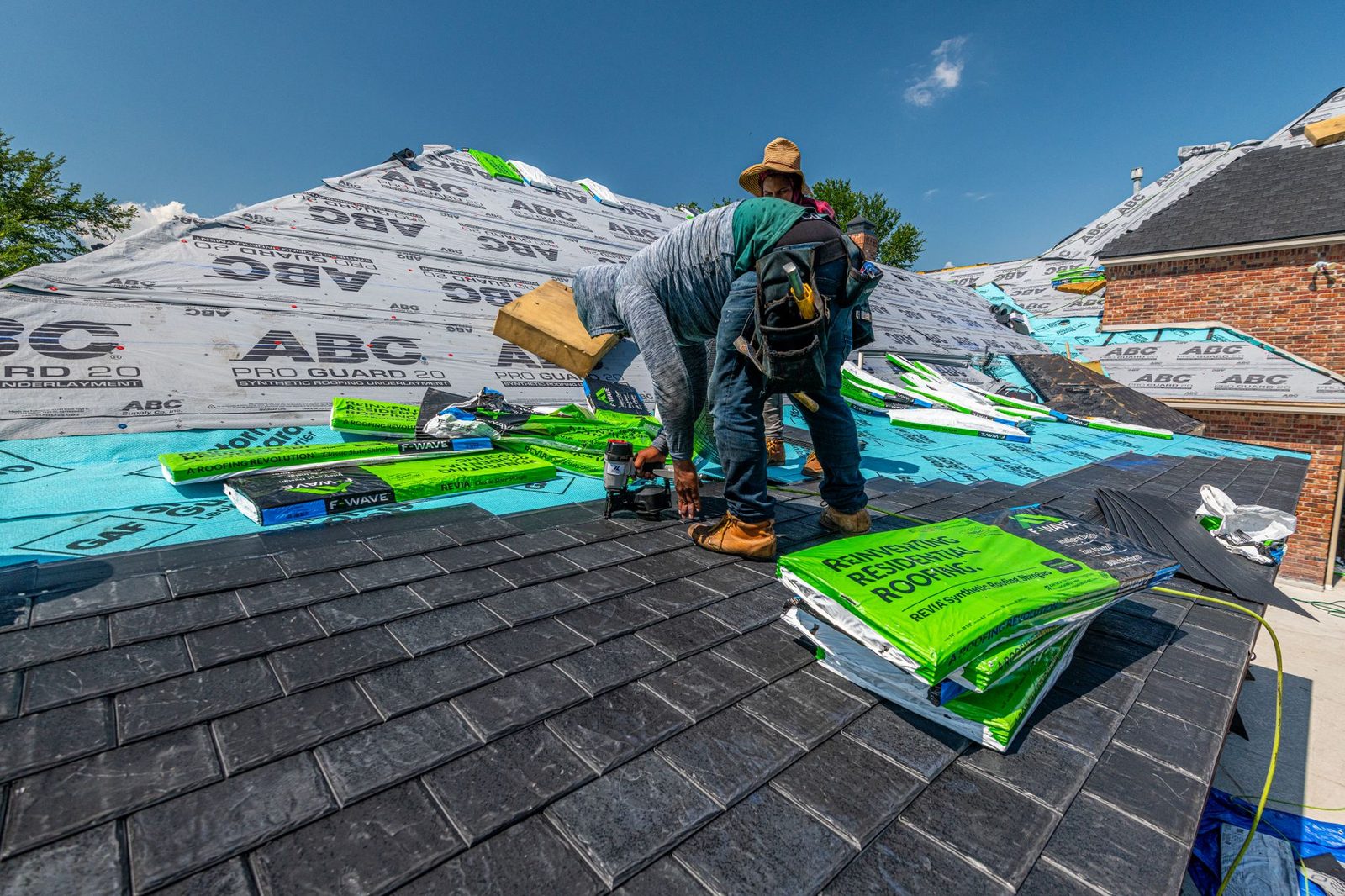
Roof size, roof shape, and the condition under the surface drive most of the price. Contractors measure roofs in squares, where one square equals 100 square feet. Larger roofs need more material and more labor, so the total square count is the first number to check on any estimate.
Shape matters too. Steep pitches need more safety gear and more time. Valleys, hips, and penetrations such as vents, skylights, and chimneys add cut work and extra flashing.
Hidden costs show up after the old roof comes off. Tear-off removes the existing layers. Then the crew checks the roof decking, the sheathing under the covering. Rotted decking must be replaced before new material goes on. Permits add fees and inspection time. Tight access, steep driveways, and limited staging space can also raise labor costs.
Ask for an estimate that lists tear-off, decking, permits, and access as separate lines. That shows you where the money goes.
How Can You Lower the Price Without Cutting Critical Work?
You can lower the price by replacing only damaged sections when the rest of the roof is sound, by scheduling wisely, and by requiring a written, itemized estimate. Cutting underlayment, flashing, or ventilation rarely saves enough to justify the risk.
Partial replacement works when damage is limited. A storm may tear shingles or panels from one slope while the others stay intact. Replacing that section can cost less than a full tear-off. The whole roof should still be inspected first to confirm the rest is sound.
Timing can help as well. Ask about the schedule. Crews often have more openings outside the busiest storm-repair periods.
Florida law also protects you on paperwork. Under Fla. Stat. § 489.147, it is a prohibited practice for a contractor to authorize insurance-claim repairs without a good faith estimate of the itemized, detailed cost of services and materials.
Which Roofing Material Gives the Lowest Total Cost?
Metal and tile usually cost more up front, so the total cost over time is what matters. The right material fits your home’s structure and your budget.
Fewer storm repairs can offset a higher install price.
Tile is heavy. Its weight means the roof structure must be able to carry it, so a structural check belongs in the budget before you commit. When it is installed correctly on a structure that supports it, tile can be a long-lasting choice.
Compare each material’s upfront cost with its expected lifespan, maintenance needs, and storm performance. A lower bid on the wrong material can leave you paying for a second roof sooner than planned.
When Is a Repair Cheaper Than Replacing the Roof?
A targeted repair is cheaper when leaks are isolated, damaged panels or tiles are few, and the decking underneath is sound. Replacement becomes the lower-cost path when damage is widespread, leaks keep returning, or the roof is near the end of its life.
Use a simple test. Add up the cost of repairs over the past year or two. If that total is climbing toward the price of a new roof, replacement is often the smarter spend.
Florida law also sets a threshold for partial work. If an existing roofing system or roof section was built, repaired, or replaced in compliance with the 2007 Florida Building Code or a later edition, and 25 percent or more of that system or section is being repaired, replaced, or recovered, only the repaired, replaced, or recovered portion must be built to the Florida Building Code in effect.
Our guide comparing patching and replacing walks through more examples.
How Does Florida Weather Change the Total Cost?
Florida’s heat, humidity, salt air, and storm winds wear roofs faster. Shortcuts often lead to earlier repairs. A roof that is cheap to install but fails after one storm costs you twice.
The Florida Building Code is built around this risk. The Legislature finds that the effects of recent hurricanes have demonstrated the Florida Building Code’s effectiveness in reducing property damage to buildings constructed under its requirements, and that mitigating property damage is a valid and recognized objective of the Florida Building Code.
Permits are part of the budget. Miami-Dade County’s roofing permit page covers required forms, checklists, and contractor e-permitting. Each county sets its own forms and fees.
Wind mitigation can also affect your costs. The Florida Office of Insurance Regulation explains wind-mitigation inspection procedures and the premium savings available for qualifying hurricane-loss mitigation measures.
Not sure what your next step is?
Talk it through with our team — the first consultation is free, confidential, and carries no obligation.
How Do Insurance and Documentation Affect Your Budget?
Insurance can help pay for a new roof, but your policy terms, the cause of damage, and the claim deadlines decide how much. Read your own policy and watch its dates.
Florida sets claim-notice deadlines. Under Fla. Stat. § 627.70132, a claim generally must be noticed to the insurer within 1 year after the date of loss, and a supplemental claim within 18 months. For hurricanes and windstorms, the date of loss is the date the hurricane made landfall, or the date the event is verified by the National Oceanic and Atmospheric Administration.
Replacement-cost coverage has limits too. Under Fla. Stat. § 627.7011, extra costs to meet current laws and ordinances may be limited to 25 or 50 percent of the dwelling limit, as the policyholder selects. If a roof deductible applies, the insurer may limit its roof payment to actual cash value until it has reasonable proof you paid that deductible.
Document everything before work starts. Take dated photos of the roof, the ceilings, and any water stains. Keep the written estimate. Build your budget around four lines: permits, tear-off, a decking contingency, and a reserve for hidden damage.
Talk Through Your Roof Options With ASP Superhome
If you’re weighing a roof repair against a full replacement, ASP Superhome can help you sort through the choices. Our team offers roof repair, roof replacement, metal roofing, and tile roofing for homes across South Florida.
What is the least expensive way to replace a roof?
The least expensive way is the path with the lowest total cost over the roof’s life. Replacing only sound-damaged sections and getting a written, itemized estimate often helps keep the total down.
Is metal roofing worth the higher upfront cost in Florida?
Metal costs more at the start. Whether metal roofing fits your budget depends on your home.
Can I replace only part of my roof?
Yes, when damage is limited to certain sections and the decking is sound. Fla. Stat. § 553.844 addresses existing roofing systems built, repaired, or replaced in compliance with the 2007 Florida Building Code or a later edition: if 25 percent or more of the roofing system or roof section is repaired, replaced, or recovered, only the repaired, replaced, or recovered portion must be constructed in accordance with the Florida Building Code in effect, as applicable.
Do I need a permit to replace a roof?
Permit requirements for residential roof repair and replacement can vary by city and county, and ASP Superhome can discuss what applies to your project. Other counties set their own rules, so the details vary by location.
To talk through repair or replacement options for your roof, contact ASP Superhome for a free first consultation, which is confidential and comes with no obligation to continue. Your first consultation is free, confidential, and without obligation to continue.
How ASP Superhome Approaches Your Roof Project
Free first consultation
Start with a confidential, no-obligation consultation at no cost to you.
Repair or replace, honestly assessed
We look at the condition of the roof and explain whether targeted repairs or a full replacement fit your home.
Support from our office team
Assistants and office staff help you schedule, follow up, and keep your project organized from start to finish.
Serving South Florida communities
We work with homeowners across Miami, Fort Lauderdale, West Palm Beach, Kendall, Boca Raton, Naples, and Fort Myers.
Cost Factors to Weigh Before You Choose
Material and lifespan
Metal and tile roofing cost differently at installation. Compare how long each material is expected to last in South Florida's heat, humidity, and storms.
Damage extent
If only certain sections are damaged, targeted roof repair may be more economical than replacing the entire roof.
Underlayment and decking
Hidden deck or underlayment issues can change the price. A thorough inspection helps prevent surprises in the written estimate.
Storm-ready upgrades
Pairing a roof with impact windows, impact doors, or solar panels can be planned together, so you avoid paying for the same work twice.


