


Roofing Guide | South Florida
What Is the Newest Type of Roofing? A South Florida Guide
There is no single official newest roof. Here is how newer metal, tile, impact-rated, and solar-ready roofing options compare for South Florida homes.
By Jonathan Rodriguez · Published October 22, 2026
What is the newest type of roofing? Short answer: there is no single official newest type. The word “newest” is used loosely for metal profiles, tile designs, and roofs built to work with solar. Here is what people usually mean, and how South Florida’s climate shapes the choice.
The short answer: there is no single “newest” roof
Roofing has no official ranking that names one newest type. The term describes materials, profiles, and methods that are newer than the usual choice in a given market.
Most so-called new roofs are newer versions of established materials. Metal and tile have been used for a long time. What changes is the panel design, the fasteners, the coatings, and how the roof is prepared for other systems like solar.
A roof that feels new to one homeowner may be a familiar product in the industry. Keep that in mind when you compare claims. This page covers what people usually mean, the newer options being discussed, and how Florida conditions affect the decision.
If storm damage or an aging roof has you weighing your options, our team is glad to talk them through with you, at your own pace. Talk it through with our team — the first consultation is free, confidential, and carries no obligation.
What people usually mean by “newest” in roofing
In practice, “newest” usually refers to one of three things: a newer product, a newer profile, or a newer installation approach.
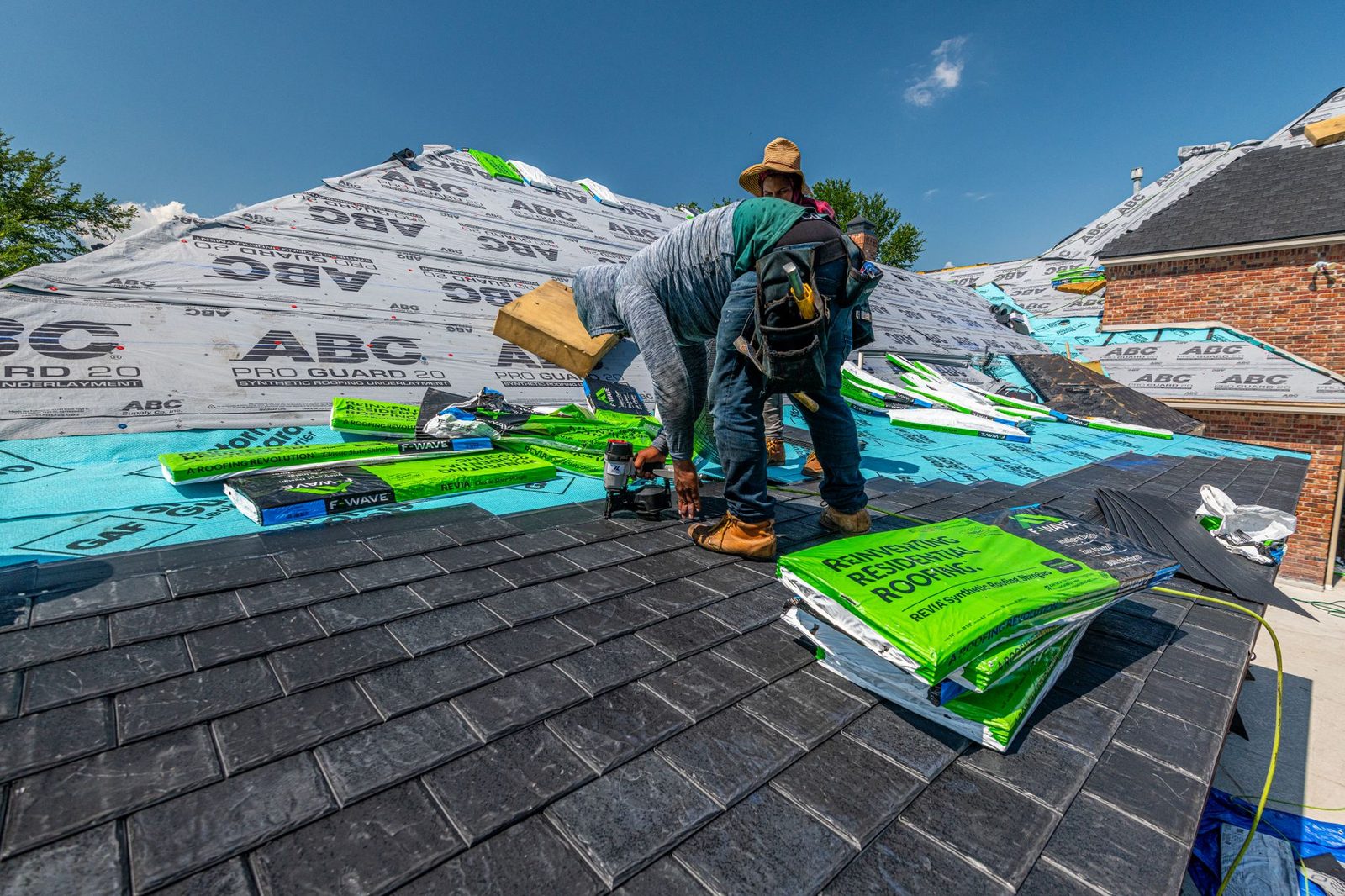
Newer products include composite and polymer-based shingles and tiles. Newer profiles include standing-seam metal panels and lighter-looking tile designs. Newer installation approaches include roofs planned for solar panels or battery systems.
Florida adds one more layer. The Florida Building Code contains or incorporates the rules that govern how roofs are designed, built, and repaired. So a “new” roof in Florida also has to fit current code rules.
Be careful with the word “impact” too. Under Fla. Stat. § 553.8425, for local product approval, products or systems of construction must demonstrate compliance with the structural windload requirements of the Florida Building Code through one of the listed methods. Under Fla. Stat. § 553.842, a product may not be advertised, sold, offered, or marketed as hurricane, windstorm, or impact protection from wind-borne debris unless it is approved under that section or § 553.8425. Advertising, selling, offering, providing, distributing or marketing a product as hurricane, windstorm or impact protection from wind-borne debris without approval under § 553.842 or § 553.8425 is prohibited, and anyone who does so is subject to the Florida Deceptive and Unfair Trade Practices Act under part II of chapter 501, in an action brought by the enforcing authority as defined in section 501.203.
Newer roofing options homeowners are asking about
The options most often discussed are standing-seam metal, impact-rated components, modern tile profiles, and solar-ready roofs. Each has trade-offs, and none is ranked here.
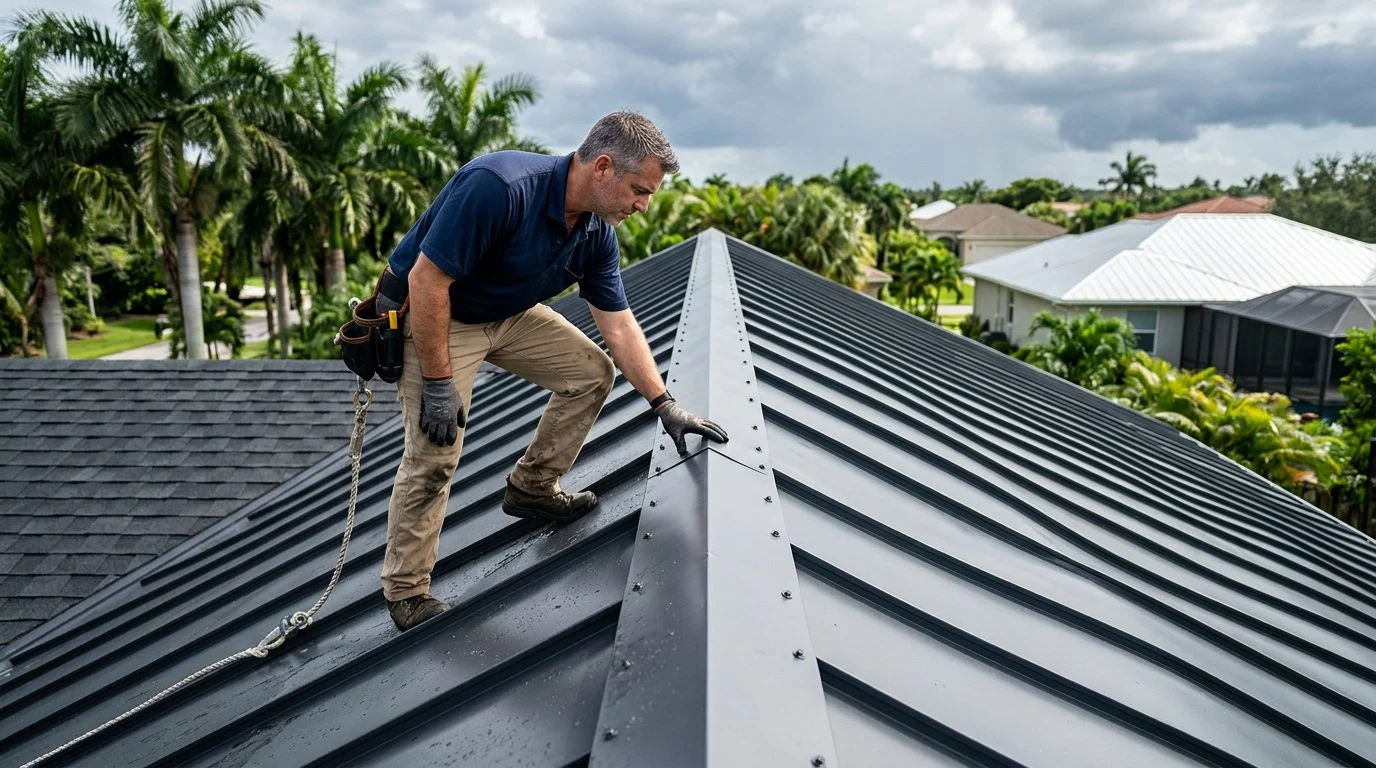
Standing-seam metal uses concealed-fastener panels with a clean, continuous look. After Hurricane Ian, the IBHS assessment of roof coverings found that metal roofing systems held up well in winds below 130 mph.
Impact-rated components are products tested for wind-borne debris. Florida law lists roofing, windows, exterior doors, and skylights among categories that need statewide approval. Approval can come through a certification mark or listing, among other methods.
Newer tile profiles vary in weight, appearance, and installation needs. Compare the specific product with the structure it will sit on. A general tile type does not tell you enough.
Solar-ready roofs prepare the roof for panels and batteries. The federal definitions in IRC § 25D describe qualifying solar electric property. They also say a solar panel installed as a roof is not disqualified solely because it is a structural component. Under the qualified battery storage technology definition, eligible storage must have a capacity of not less than 3 kilowatt hours, along with the other requirements of that definition.
Why South Florida conditions shape the choice
South Florida’s hurricane season, strong sun, humidity, and coastal salt air all affect roofing choices. A product that works well inland may need different attention near the water.
Florida’s building code also affects timing.
Permits matter in Miami too. Rules for roof work can differ by municipality, so ask our team what may apply to your project.
For durability in this climate, read about metal roof lifespan in Florida. Miami-Dade readers can also review the Miami Gardens metal roof replacement page.
Questions to weigh when a newer roof is on the table
Weigh lifespan, weight, appearance, cost, and timing before you choose a product. Each one changes which options fit.
Start with the roof’s age and your insurance.
Wind mitigation can also matter. The Florida Office of Insurance Regulation explains how homeowners can use an official mitigation inspection form with an insurance agent to seek hurricane-wind premium discounts.
Cost depends on the materials, the roof’s size and shape, and the work involved. Our roof replacement cost guide walks through the main cost drivers.
Timing changes the options. A roof replaced after storm damage often follows a different path than one planned on a schedule. For the full overview, see our roof replacement guide.
Talk through your roof with ASP Superhome
If you’re weighing a new roof, you may be dealing with an aging roof, storm damage, or a decision about a parent’s home that you didn’t plan for. Those situations are hard to sort out alone, and the right answer depends on your home.
ASP Superhome offers impact windows, impact doors, metal roofing, tile roofing, roof replacement, roof repair, solar panels, solar battery backup, and kitchen remodeling across South Florida. Our first consultation is free, confidential, and carries no obligation to continue (consulta inicial gratuita, confidencial y sin compromiso).
Frequently asked questions
What is the newest type of roofing?
There is no single official newest type. The term usually describes newer metal profiles, tile designs, impact-rated components, or solar-ready roofs.
Is standing-seam metal roofing a good choice in Florida?
Standing-seam metal can suit many South Florida homes, and IBHS found metal systems held up well in winds below 130 mph after Hurricane Ian. Your roof’s structure and local rules still shape the choice.
Questions to ask before a roof project
Our team can review the details of your project and talk through the steps involved.
Does a roof replacement have to meet current code?
Where the Newest Roofing Ideas Show Up
Newer Metal Profiles
Updated standing-seam and panel designs focus on tighter seams, concealed fasteners, and coatings suited to heat, humidity, and salt air.
Updated Tile Designs
Modern tile shapes and lighter-weight profiles can offer a traditional look with a different load and installation profile than older tile.
Impact-Rated Components
Newer underlayments, fasteners, and edge details are built to meet current impact and wind requirements for coastal and storm-prone areas.
Solar-Ready Roofs
Roof systems planned with solar panels and battery backup in mind can simplify future installation and keep the roof and solar system working together.
Questions to Ask Before You Choose
Wind and Impact Performance
Ask how the system is rated for wind and impact and request the product documentation for your specific home.
Local Climate Fit
Heat, humidity, storms, and salt air in Miami, Fort Lauderdale, West Palm Beach, Naples, and Fort Myers all affect which materials hold up best.
Future Plans
If you may add solar panels or battery backup later, consider a roof designed to support that work from the start.
Written Scope
Make sure the estimate lists materials, underlayment, flashing, and cleanup in writing so you can compare the details clearly.
Tip: Confirm the Details First
Marketing terms like "newest" or "next generation" do not describe a specific product. Ask for the exact product name, rating documentation, and warranty terms before you sign anything.


