


Roof Repair | South Florida
Fix Small Roof Problems Before They Become Big Bills
Ask ASP Superhome to look at your leak, cracked tiles or storm damage. Timely roof repair can help you avoid the larger costs of water damage and full replacement.
By Jonathan Rodriguez · Published October 28, 2026
What is the cheapest way to repair a roof? The cheapest way is the smallest fix that stops water from getting in and holds up over time. It is not simply the lowest number on a quote. A low price on the wrong fix often means paying again within months.
This guide explains what drives roof repair costs, which low-cost fixes work for shingle, tile, and metal roofs, and when a patch stops being the cheapest choice. It also covers insurance and permit rules that matter to homeowners in Miami, Fort Lauderdale, West Palm Beach, Kendall, Naples, Fort Myers, and Boca Raton.
The short answer: the cheapest repair is the smallest fix that stops the real problem
The cheapest repair is the smallest fix that stops water at its actual entry point. Finding that point is the first step, and it often decides the total cost.
Water often travels before it shows. It can run along a rafter or under a shingle and appear as a ceiling stain far from the source. A stain tells you water is getting in, but not exactly where.
Sealing the stain while a flashing gap keeps leaking costs more over time. You pay for the patch, then for the leak, then for the damage it causes inside.
On an otherwise sound roof, a spot repair is usually the lowest-cost route. A correct diagnosis comes first, because it shows which small repair is the right one.
A ceiling stain or a leak after a storm can feel urgent, especially when you're handling it for someone else. We're glad to talk through the lowest reasonable fix with you. Talk it through with our team — the first consultation is free, confidential, and carries no obligation.
What drives the cost of a roof repair
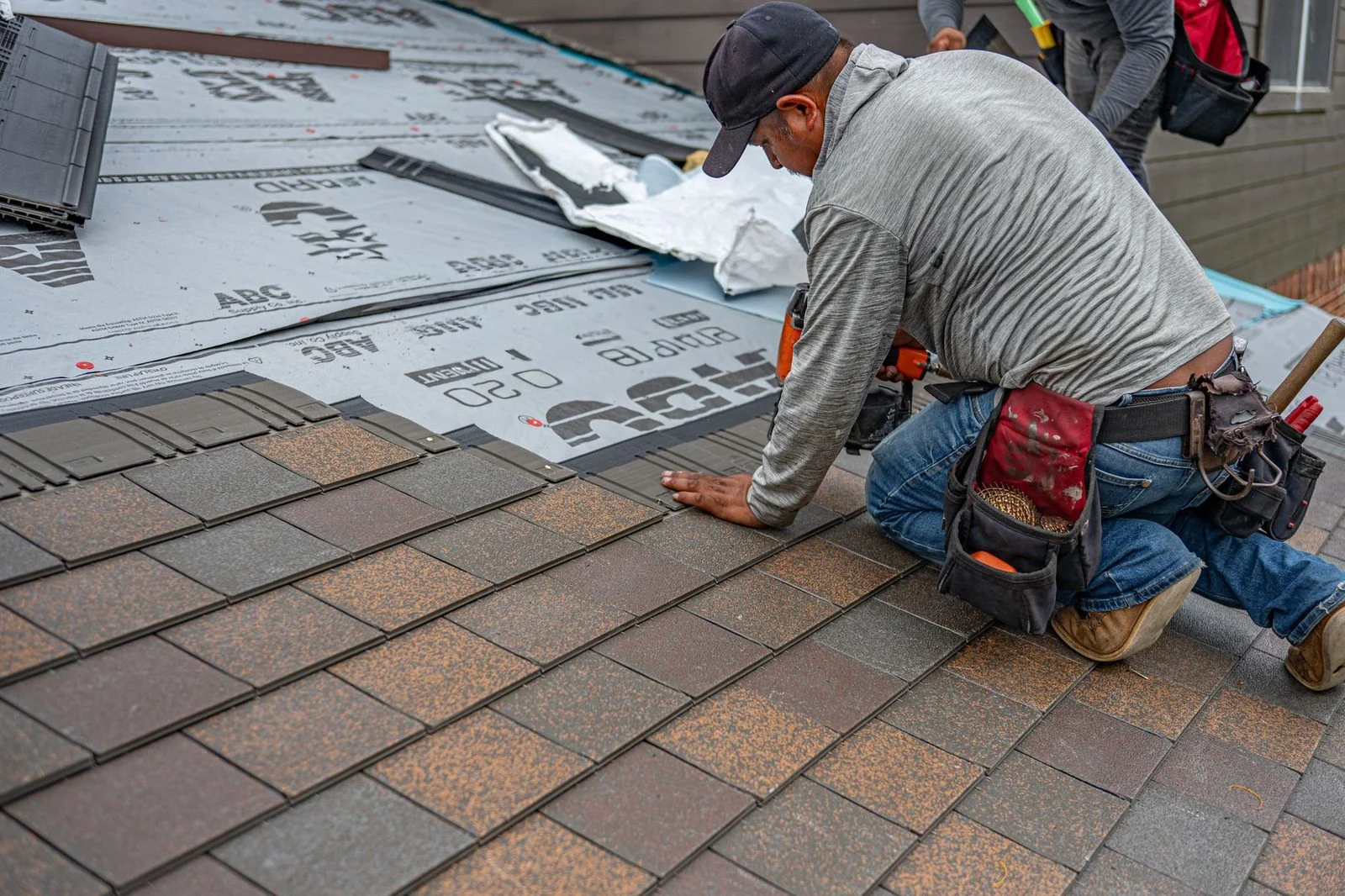
Roof type, slope, access, and the extent of damage are the main cost drivers. Each one changes the materials, time, and safety steps a repair needs.
Roof type. Asphalt shingle, concrete or clay tile, and metal panels each use different materials and techniques. Tile is heavy and brittle, so crews work on it with extra care.
Roof design and slope. Steep roofs are harder to work on safely, so crews often need more time and equipment. Flat roofs have their own waterproofing needs, and a patch there must bond to the membrane.
Size of the damage. One area costs less than several. Damage that reaches the decking or underlayment adds work, because those layers must be repaired before the outer covering goes back on.
Access and stages. Height, tight lots, and the need to work in stages all add labor. Matching an older tile or metal profile can also raise the cost, since a close match may require more material.
Common low-cost repairs by roof type and problem
Most low-cost repairs replace or reseal one small part of the roof. The right choice depends on the material and the cause.
Missing or lifted shingles. Replacing a few shingles and resealing them is often the most economical fix. It works best when the shingles around the gap are still firm.
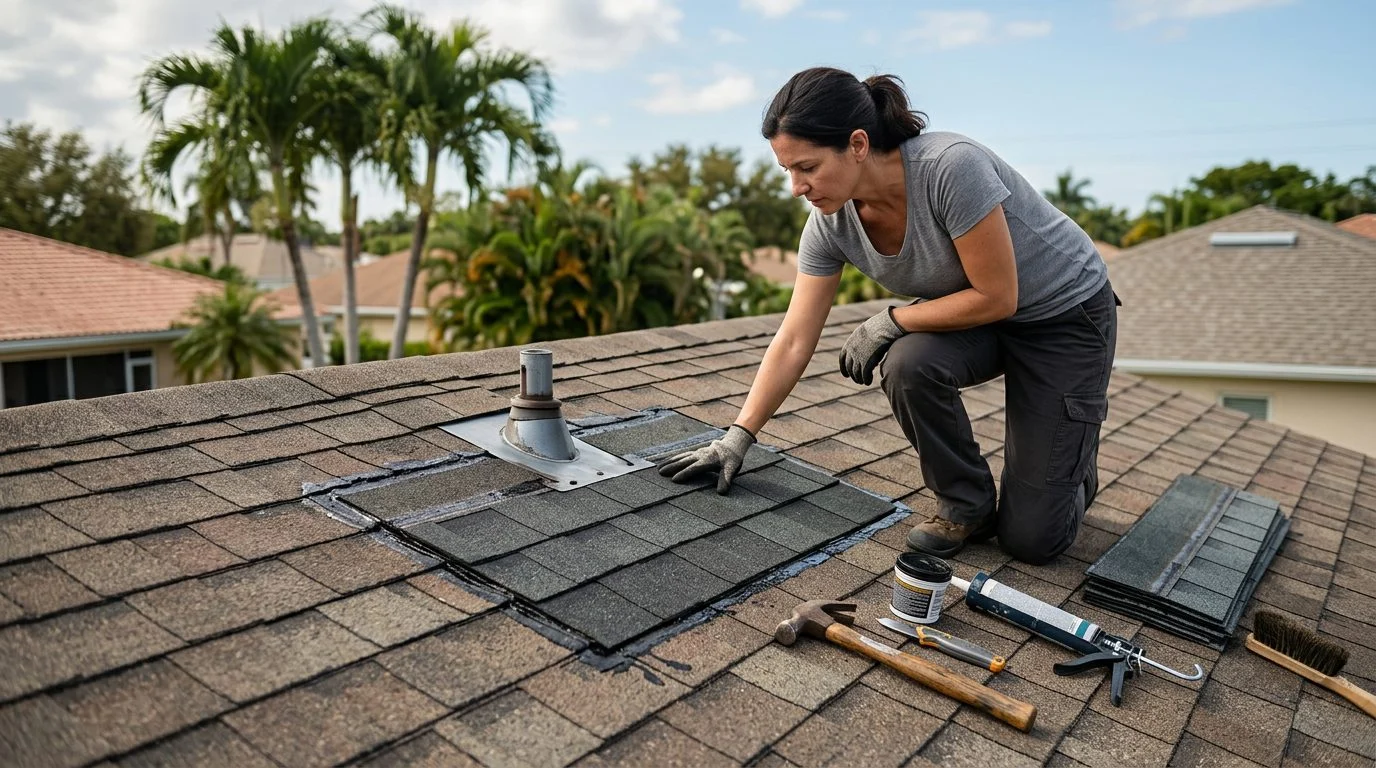
Leaks at flashing, vents, and chimneys. Flashing is the metal or sealed trim that keeps water out at roof joints. Resealing or replacing it is usually far less work than a full re-roof.
Cracked or loose tile. On a sound tile roof, replacing cracked tiles and re-securing loose ones is a targeted job. The crew should also check the underlayment beneath the broken area.
Loose metal panels and fasteners. Tightening fasteners, resealing seams, or replacing one damaged panel section can stop a leak. Backed-out fasteners are a common cause of small metal leaks.
Sealant and coatings. A coating only makes sense where the surface is sound and the problem is surface wear. Coating over a failing area hides the leak instead of stopping it.
When a patch is not the cheapest option
A patch stops being the cheapest option when the same leak returns or the damage spreads. Repeated fixes in one spot point to a deeper problem.
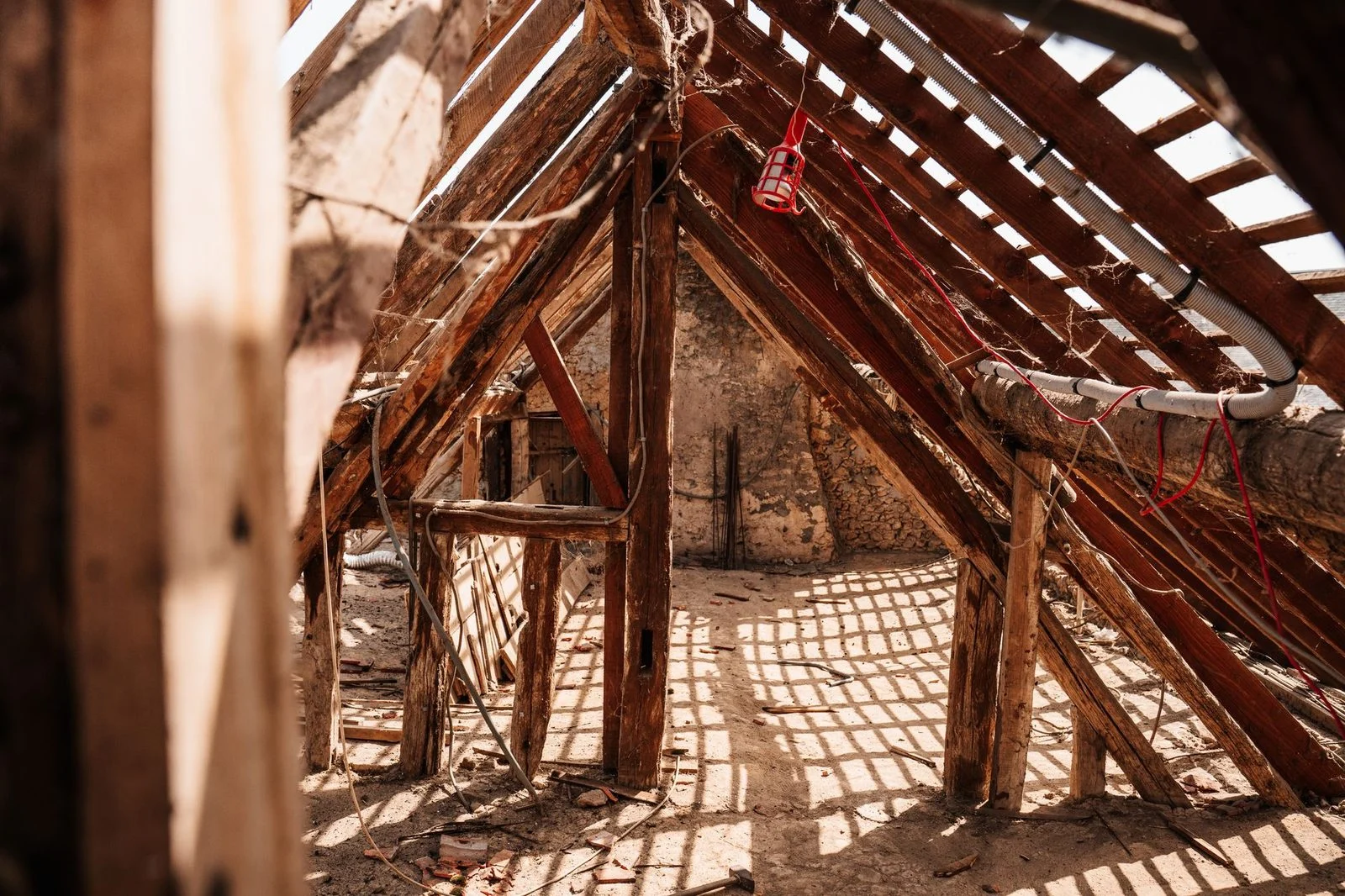
Soft or rotted decking is a warning sign. Patching the surface over damaged wood does not restore the structure underneath. When many areas fail, a string of spot repairs can cost more than a planned replacement.
Roof age matters too. An older roof with widespread wear may not justify several repairs in a row, especially if each fix buys only a short time.
To decide, compare two numbers: the cost of ongoing repairs and the cost of replacement for this specific roof. A written inspection gives you the facts for that comparison. For the replacement side, see our roof replacement services.
How materials and labor affect the final bill
Materials and labor both shape the final bill. Small jobs often carry a high labor share, because travel, setup, and inspection still apply.
Materials include shingles, tile, metal panels, underlayment, flashing, and sealants. Each has its own cost and matching needs, so ask which products the estimate uses.
Florida law requires a good faith estimate before a contractor signs an insurance-related repair agreement. The estimate must itemize the cost of services and materials. The final cost can still differ as the insurer adjusts the claim Fla. Stat. § 489.147.
Permits add cost and time. Local permit requirements for roof work can vary by city, so our team can review what may apply to your project. Miami-Dade County lists the forms and hurricane-mitigation documents used for roofing permits.
Under Florida law, a contractor who receives initial payment of more than 10 percent of the contract price for residential repair or construction must apply for necessary permits within 30 days after that payment, and must start work within 90 days after all necessary permits are issued, unless the contractor has just cause or the person who made the payment agreed in writing to a longer period Fla. Stat. § 489.126.
Ask for the scope of work in writing. Look for line items for decking repair, underlayment, and permit fees, since these are often the hidden costs.
Insurance, storm damage, and a roof leak
Florida law sets payment rules for insurance claims, but your policy terms still matter. Start by reading how your policy pays for roof repair.
For a dwelling, the insurer must first pay at least the actual cash value of the loss, less your deductible. Actual cash value is the value after depreciation. The insurer then pays remaining repair amounts as work is done and costs are incurred Fla. Stat. § 627.7011.
If a roof deductible applies, the insurer may limit the roof payment to actual cash value. That limit can last until you give reasonable proof that you paid the deductible.
Roof age also matters. An insurer may not refuse or non-renew a policy solely because of roof age when an authorized inspection shows the roof has 5 or more years of useful life remaining. Under Florida law, an insurer must allow a homeowner to have a roof inspection performed by an authorized inspector, at the homeowner’s expense, before requiring replacement of a roof that is at least 15 years old as a condition of issuing or renewing a homeowner’s policy.
Document the damage with dated photos, and keep every inspection note.
Quick answers
Will insurance cover a 10-year-old roof?
Coverage depends on your policy, the cause of the damage, and the roof’s condition. Florida law restricts an insurer from refusing to issue or renew a homeowner’s policy insuring a residential structure solely because of roof age when an authorized inspection shows the roof has 5 or more years of useful life remaining; this applies to policies issued or renewed on or after July 1, 2022.
Does a roof repair need a permit in Miami?
The City of Miami states that permits are required for residential roof repair or replacement.
Is flashing repair cheaper than a new roof?
Usually, yes, when flashing is the only failed part.
Not sure what your next step is?
Talk it through with our team — the first consultation is free, confidential, and carries no obligation.
Next step: a free first consultation for your roof problem
If you see a ceiling stain, a leak after a storm, or a loose tile, you may be the one handling it. You might be researching for a parent, a tenant-owner, or a household member, with a tight budget.
The lowest reasonable fix starts with a clear diagnosis. Our team can help you sort out the cause and the smallest repair that stops it.
ASP Superhome offers a free first consultation, which is confidential and carries no obligation to continue. To get started, book a free estimate.
How We Approach Roof Repair in South Florida
Start with an inspection
We examine the roof, flashing, vents and gutters to identify the source of the problem rather than only the stain on your ceiling.
Repair what can be repaired
When a targeted repair will restore the roof's protection, we recommend it. When damage is widespread, we explain why replacement may make more sense.
Clear, written estimates
Our team outlines the scope of work, materials and options so you can compare choices and decide with confidence.
Support from our team
Our staff keeps you informed from the first call through completion, so you always know what to expect.
Don't Wait on a Leak
Water that enters through a damaged roof can spread into insulation, drywall and framing, and it can encourage mold. A small repair today is usually simpler than repairing the damage that follows.
Common Roof Repair Needs
Leaks around vents and chimneys
Flashing and seals around penetrations are among the most frequent sources of roof leaks, especially after heavy rain.
Cracked or displaced tiles
Tile roofs can lose pieces to wind-driven debris, foot traffic or age. Replacing damaged tiles can help restore a watertight surface.
Lifted or missing shingles and panels
Metal panels and shingles can loosen over time or during storms. Securing or replacing them can prevent water from getting underneath.
Storm and wind damage
After severe weather, a professional inspection can identify damage that is not obvious from the ground.


