


Roofing | South Florida
Is It Cheaper to Replace Your Own Roof?
Doing the work yourself can cut labor costs, but materials, disposal, permits and mistakes can wipe out those savings. Here is what South Florida homeowners should weigh before they start.
By Jonathan Rodriguez · Published October 20, 2026
The Short Answer: What a DIY Roof Replacement Can and Cannot Save
Is it cheaper to replace your own roof? It can be, but only on the labor line. Materials, tear-off, disposal, permits, and the cost of mistakes still apply when you do the work yourself.
The real comparison is total cost of ownership. That means what the roof costs over the years you own the house, not just the number on a quote. A cheap first job that leaks in year three is not a savings.
The answer also changes with the house. Roof size, pitch, material, and the condition of the wood decking under the shingles all change the math. A low-slope tile roof in Boca Raton and a steep shingle roof in Fort Myers will not cost the same to do yourself, even at the same square footage.
For the full replacement overview, read our roof replacement guide.
If a leak or storm damage has turned this into an urgent decision, our team can help you compare real numbers before you commit to anything. Talk it through with our team — the first consultation is free, confidential, and carries no obligation.
What Goes Into the Cost of a Roof Replacement
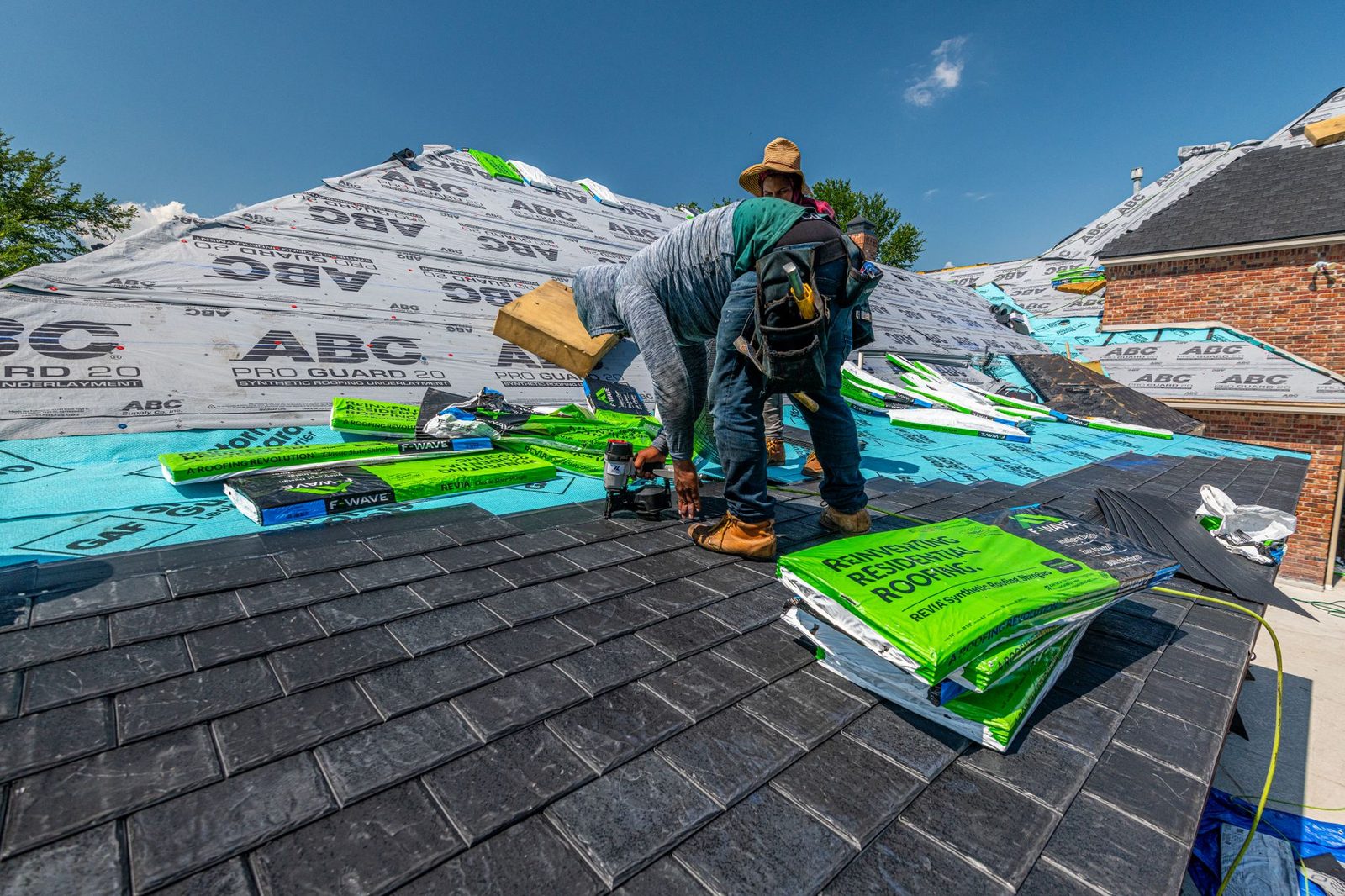
A roof replacement bill covers much more than shingles or panels. It usually includes tear-off and disposal, underlayment, flashing, drip edge, ventilation, the roofing material itself, and labor.
Tear-off and disposal are the lines DIY estimates miss most often. Someone has to strip the old roof, haul the debris away, and pay the dump fee. Many homeowners price only the new material and find the gap after the old roof is already off.
Decking repair adds cost you cannot see from the ground. Once the old roof comes off, rotted or damaged plywood may need replacing before new underlayment goes down. You will not know the true decking condition until that point.
Permits come next. Unless otherwise provided by law, Florida permit law makes it unlawful to repair or replace a building without first getting a permit from the enforcing agency. Fees and steps differ by city and county, so plan for them early.
Can You Replace a Roof Yourself?
Yes, in some cases, but it is hard, slow, and risky work. Florida law allows some owners to act as their own contractor.
Under that exemption, you must personally supervise all work not done by licensed contractors. You must also personally sign the permit application and meet local permitting requirements. Owner-builder status is not a shortcut around the rules.
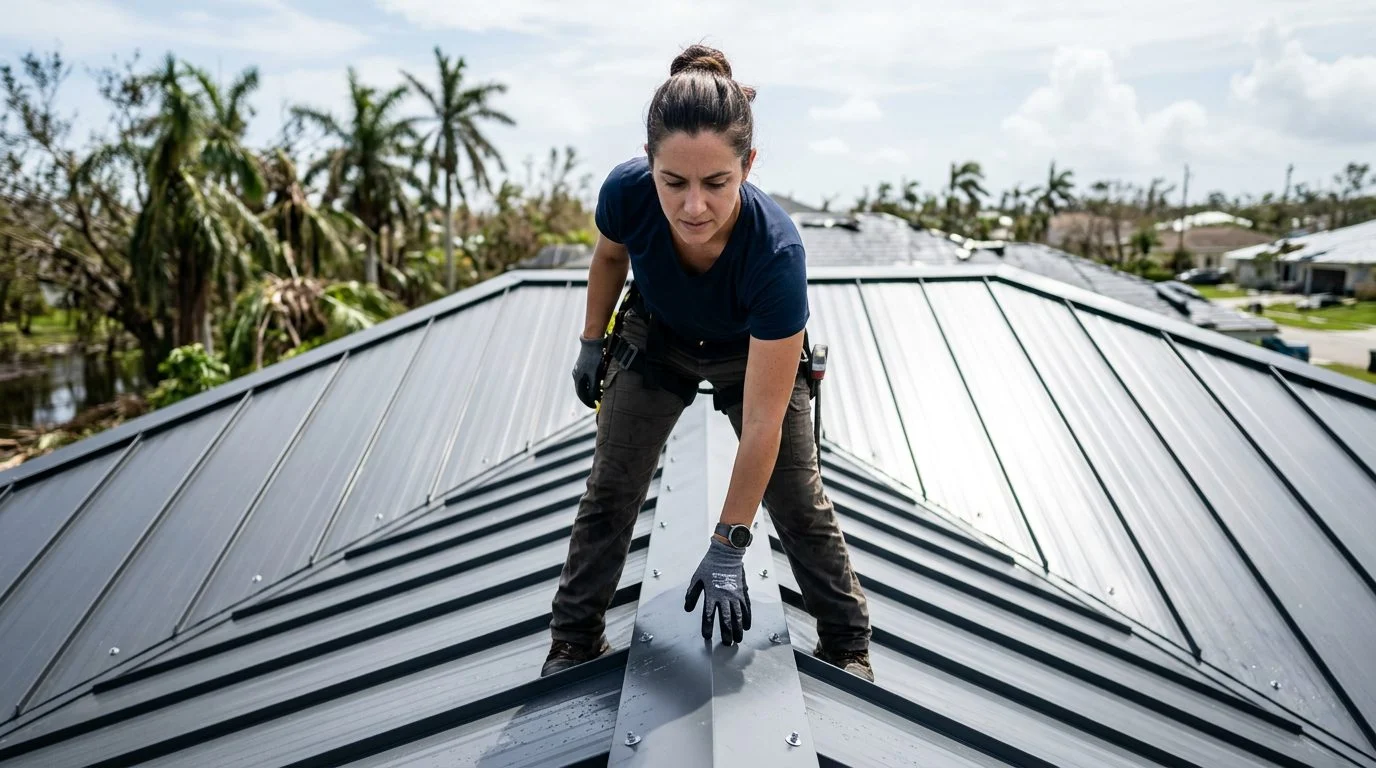
The physical work is demanding. You will climb steep slopes and lift heavy bundles of shingles, metal panels, or tile. You will need nail guns, a safety harness, ladders, staging, a dumpster, and proper lifting gear.
Skill matters as much as strength. Valleys, roof penetrations, and flashing around chimneys and vents decide whether water stays out. Wind-rated fastening affects how the roof performs in a storm.
Time is another limit. A DIY job can stretch across many days or weeks. During that time, the house stays open to rain, and one afternoon storm can find a half-finished section.
Safety Risks and Hidden Costs of a DIY Roof Job
Falls from the roof edge or from a ladder are the main personal safety risk in roof work. A fall can cost far more than any labor savings. Injuries to you or to any helper are real costs too.
South Florida adds its own problems. Heat stress builds quickly on a roof in summer. Sudden afternoon storms can soak exposed decking and underlayment before the job is sealed.
Structural damage is another risk. Improper tear-off can crack decking or pull fasteners loose. Overloaded decking can sag. Missed rot may not show until a later leak appears.
Leaks from poor installation often do the most damage. Water can soak insulation, drywall, flooring, and belongings. Interior repairs often cost more than the labor you saved.
Florida law also raises a liability point. The owner-builder disclosure warns that an owner-builder may be held liable and face serious financial risk for injuries to an unlicensed person working on the property. It also states that homeowner’s insurance may not cover those injuries.
Warranty, Insurance, and Resale Value Considerations
Paperwork and insurance rules can change what a DIY roof costs you. Warranty terms vary by manufacturer and often name who installed the roof. Ask about those terms before you buy materials.
Insurance rules depend in part on roof age. Under Florida homeowners’ insurance law, an insurer may not refuse to issue or renew a policy solely because a roof is less than 15 years old. For a roof at least 15 years old, the insurer must allow an inspection at the homeowner’s expense before requiring replacement. It may not refuse solely for roof age if an inspection performed by an authorized inspector shows that the roof has 5 or more years of useful life remaining.
Florida also requires a notice of commencement for many improvements. That notice is effective for one year after recording unless a different date is set, or for one year plus any additional period of time when the owner’s contract with the contractor runs longer than one year. Owners who forget this paperwork can face delays with lenders and buyers.
Resale value matters too. A roof with permit and inspection records gives a buyer something to check. Uneven or unfinished work can lower perceived value, even when the roof does not leak today.
The Cheapest Way to Replace a Roof: Material and Scope Choices
Asphalt shingles usually have the lowest upfront cost. Metal roofing and tile roofing often cost more at the start. Compare each material by upfront cost, expected lifespan, and maintenance needs, not just the price per square.
Metal roofing deserves a close look in South Florida. The Insurance Institute for Business & Home Safety reported that metal roofing systems held up well in winds below 130 mph in Southwest Florida during Hurricane Ian. A higher starting price can change the long-term budget in a storm-prone area.
Repair can be the lower-cost step when damage is limited. Replacement becomes the more economical choice when repairs would cover a large share of the roof. Under section 553.844(5) of the Florida Statutes, if an existing roofing system or roof section was built, repaired, or replaced in compliance with the 2007 Florida Building Code or a later edition, and 25 percent or more of that system or section is being repaired, replaced, or recovered, only the repaired, replaced, or recovered portion must be constructed in accordance with the Florida Building Code in effect. Under the Florida windstorm loss mitigation law, if 25 percent or more of an existing roof system is repaired, replaced, or recovered, only that portion must meet the current Florida Building Code, for roofs built under the 2007 code or later.
The same law limits roof-to-wall connection work. For existing buildings not otherwise required to comply with the Florida Building Code for new construction, roof-to-wall connections at gable ends or all corners are not required unless their evaluation and installation can be completed for 15 percent of the cost of roof replacement. Impact windows, impact doors, and solar work can also change both the upfront cost and the long-term value of a roof project. Plan those choices together.
Not sure what your next step is?
Talk it through with our team — the first consultation is free, confidential, and carries no obligation.
Talk Through Your Roof Options With ASP Superhome
If a leak, storm damage, or an aging roof has turned this into an urgent decision, you are not alone in weighing it. Doing the work yourself may look cheaper on paper. The full picture includes materials, labor, permits, and timing.
Real numbers help you decide with less guesswork. ASP Superhome can walk you through the materials, labor, permits, and timeline for your specific roof. The first consultation is free, confidential, and carries no obligation to continue.
Contact ASP Superhome through the contact page to book your estimate.
Frequently asked questions
Is it cheaper to replace your own roof?
It can lower the labor cost. Materials, disposal, permits, and mistakes can erase those savings.
Do I need a permit to replace a roof in Florida?
Under Fla. Stat. § 553.79(1)(a), unless otherwise provided by law, repairing or replacing a building without a permit is unlawful.
Can a homeowner do the work alone?
Florida law allows some owners to act as their own contractor on a home they occupy, under strict conditions.
What Adds Up Beyond Labor
Wind and Storm Ratings
South Florida roofs must hold up to hurricane-force winds and driving rain. Materials and installation methods matter as much as the price per square foot.
Time and Tools
A full replacement can take days of physical work, plus equipment rental, safety gear and cleanup. Those hours add up quickly.
Disposal and Hidden Damage
Tear-off debris must be hauled away, and rotted decking or underlayment is often discovered only after the old roof comes off.
A Small Mistake Can Become a Costly Leak
Improper flashing, fasteners or sealing can lead to leaks that damage ceilings, insulation and interior finishes. Repairing that damage often costs more than a professional installation would have.
Repair, Replace or Upgrade?
Roof Repair
Isolated damage from wind or debris may be fixed without replacing the whole roof. A timely repair can prevent water damage from spreading.
Roof Replacement
When the roof is aging, widely damaged or leaking in several places, a full replacement often makes more financial sense over the long term.
Metal Roofing
Metal roofs are engineered for South Florida's heat and storms and are a durable option for homeowners planning to stay for years.
Tile Roofing
Tile offers classic style and strong performance in the Florida climate. Proper installation is key to keeping it secure and watertight.


