


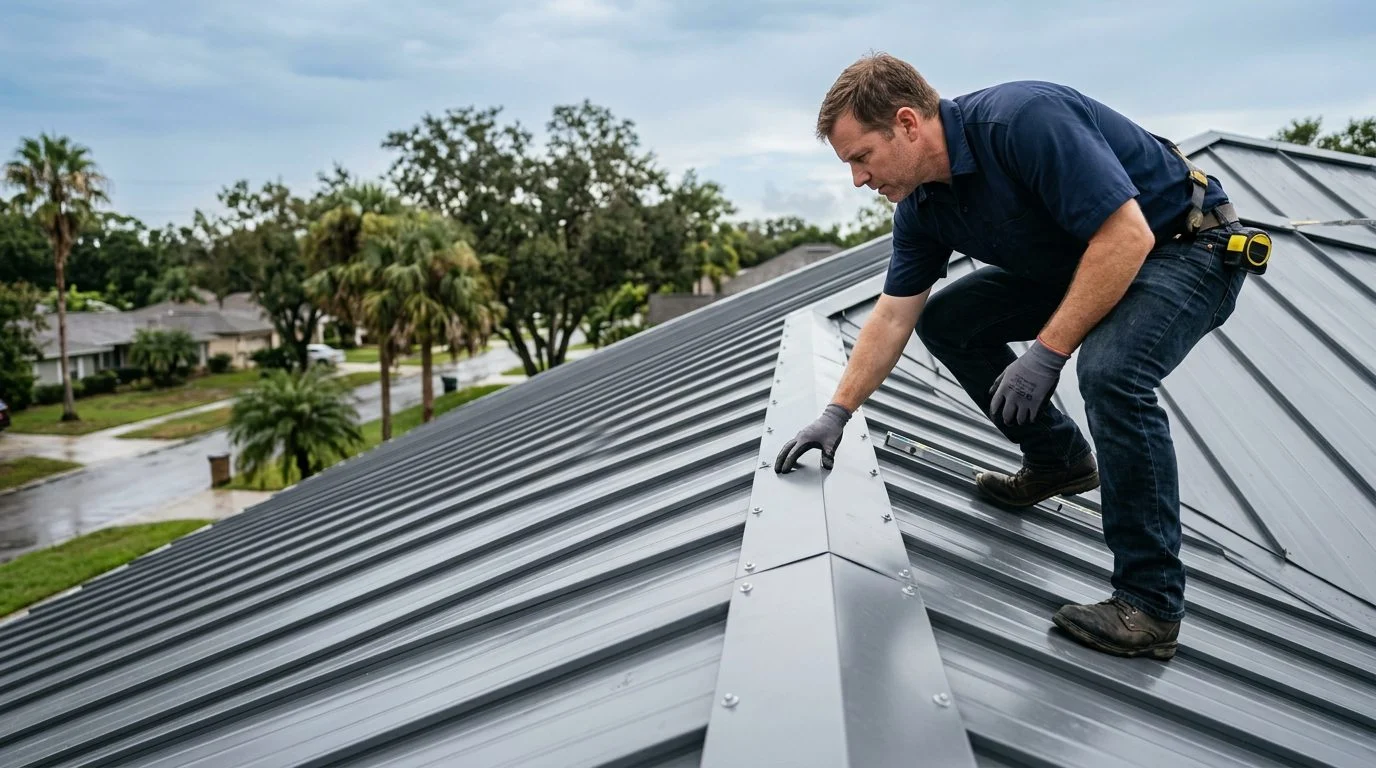
Roof Replacement | South Florida
Planning a Roof Replacement? Start with the Permit Questions
Permit rules can vary by city and county across South Florida. Learn what to expect, then talk with our team about your roof project.
Your First Consultation
Free
First consultation
Confidential
Your information stays private
No obligation
Continue only if you choose
By Jonathan Rodriguez · Published October 28, 2026
Short answer: when a Florida roof replacement needs a permit
Do I need a permit to replace my roof in Florida? Generally, yes. Many roofing and window projects in Florida may require approval from the local building authority before work begins. Whether a specific job needs one depends on the facts of that job, so the scope of the work matters most.
If you’re reading this after a leak, a storm, or a letter from your insurer, you’re probably under time pressure. A clear answer helps you plan the next step. This page covers the governing rules, the 25% threshold, the permit steps, how permits connect to insurance and roof age, and who may pull a permit.
If a leak, storm damage or an insurance letter has you planning a roof replacement, you don't have to sort out the permit steps alone. Our team can talk through your home's situation with you. Talk it through with our team — the first consultation is free, confidential, and carries no obligation.
What Florida roof replacement law actually governs
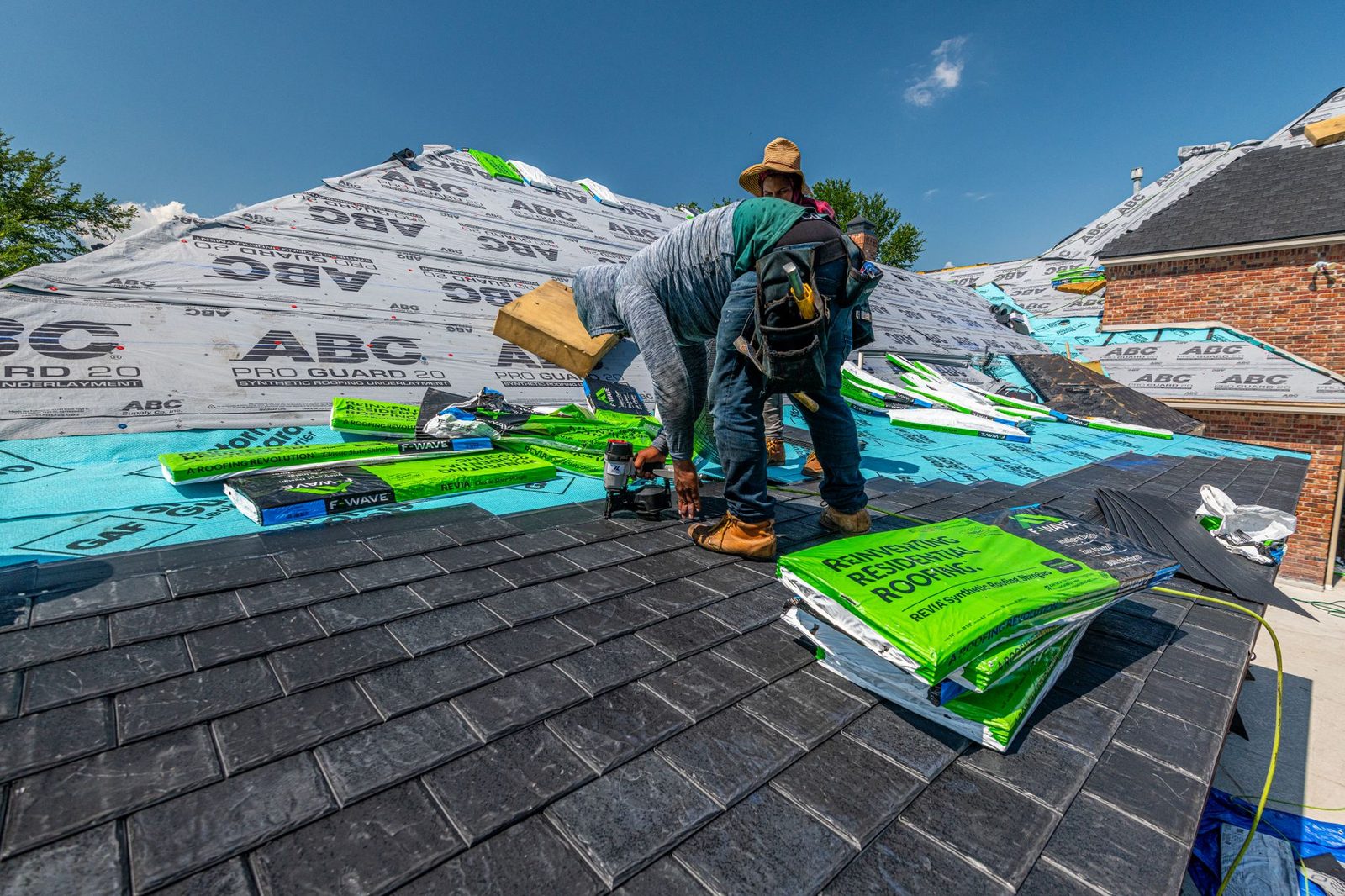
Florida’s building code sets the rules for roof work. Under Fla. Stat. § 553.73, the Florida Building Code contains the laws and rules that govern repair, alteration, and demolition of buildings. Fla. Stat. § 553.73 provides that the edition of the Florida Building Code in effect on the date of application for any permit authorized by the code controls the work covered by that permit and any extension granted to it.
The local building department issues the permit. The City of Miami roofing permit page says the city requires permits for residential and commercial roof repair or replacement. The Miami-Dade roofing permit requirements page notes that applications may involve required forms, checklists, and hurricane-mitigation documentation.
Expect the paperwork to differ from one city to the next, even when the state rules are the same.
Repair versus replacement: when a permit may or may not apply
A full replacement means installing a new roof covering across the roof. A repair fixes a limited area, such as a patch or a few damaged shingles or tiles.
Scope is the deciding fact. Patching a small leak and tearing off the whole covering are different jobs, even if the same storm caused both. Write down the exact area and work before you talk with the building department, so the classification is clear from the start.
The material you choose can also matter. If you’re switching to tile, the NRCA roofing materials guidance says structural load capacity should be verified when tile replaces another roof covering. Tile is heavy, so the framing has to carry it. Metal and tile have different load and installation needs, so compare them before you file.
The 25% rule and how partial replacement counts
Under Florida Statutes § 553.844, if an existing roofing system or roof section was built, repaired, or replaced under the 2007 Florida Building Code or a later edition, and 25 percent or more of it is repaired, replaced, or recovered, only the repaired, replaced, or recovered portion must be built to the Florida Building Code in effect. If an existing roof system or roof section was built, repaired, or replaced in compliance with the 2007 Florida Building Code or a later edition, and 25 percent or more of it is repaired, replaced, or recovered, only that repaired, replaced, or recovered portion must meet the code in effect.
Here’s an illustration, not a legal rule of its own. Say a roof section covers 2,000 square feet and a crew re-covers 500 square feet of it. That is exactly 25 percent of the section. Measure the area carefully, because the threshold is measured against the roofing system or roof section.
The exception starts with the earlier work. It applies only when that earlier work met the 2007 code or a later edition. Keep records of past roof work, including permits and inspection results, because you may need to show which code edition applied.
The same statute also addresses roof-to-wall connections. For site-built single-family homes in the wind-borne debris region with an insured value (or, if uninsured, a just valuation) of $300,000 or more, a roof replacement must include roof-to-wall connection improvements, but these are not required unless evaluation and installation at gable ends or all corners can be completed for 15 percent of the cost of roof replacement.
What the permit process involves
The process usually starts with an application that describes the project, the roofing materials, and the installation method. Local offices may also require forms and supporting documents, as the Miami-Dade page notes.
For applicants using a local government plans reviewer, Fla. Stat. § 553.792 sets review deadlines once the application is complete and sufficient. For a roofing permit on an existing single-family dwelling where the work is valued under $15,000, the deadline is 5 business days. For roofing on residential units under 7,500 square feet, it is 30 business days.
Fees are set by the enforcing agency. Fla. Stat. § 553.79 refers to reasonable fees the agency adopts. The Charlotte County residential roof permit page covers permit documents, inspection timing, and permit fees. Those details vary by county, so plan for the timing before you schedule the work.
How permits connect to insurance and roof age
Your policy sets what your insurer pays.
Roof age is also a factor.
If you’re filing a storm claim, timing matters. Florida law (Fla. Stat. § 627.70132) requires notice of a claim or reopened claim under a property insurance policy to be given to the insurer in accordance with the policy terms within 1 year after the date of loss. Notice of a supplemental claim must be given to the insurer in accordance with the policy terms within 18 months after the date of loss, or the claim is barred. For hurricanes, tornadoes, windstorms, severe rain, or other weather-related events, the date of loss is the date the hurricane made landfall or the date the event is verified by the National Oceanic and Atmospheric Administration. Keep your permit and inspection records with your policy papers, and review the policy terms with your insurer.
Not sure what your next step is?
Talk it through with our team — the first consultation is free, confidential, and carries no obligation.
Who may pull a permit, and what about licensing?
Who applies for a permit and who does the work are separate questions. Under Fla. Stat. § 489.13, a local building department shall not issue a building permit to a contractor without a valid, active state certificate or registration in the right category. A local license alone is not enough for work that requires state licensure.
For roofing, Fla. Stat. § 489.113 says a contractor shall subcontract roofing work unless it holds a state certificate or registration in the roofing trade category. Fla. Stat. § 489.113 reads: “(3) A contractor shall subcontract all electrical, mechanical, plumbing, roofing, sheet metal, swimming pool, and air-conditioning work, unless such contractor holds a state certificate or registration in the respective trade category, however:(a) A general, building, or residential contractor, except as otherwise provided in this part, shall be responsible for any construction or alteration of a structural component of a building or structure, and any certified general contractor or certified underground utility and excavation contractor may perform clearing and grubbing, grading, excavation, and other site work for any construction project in the state.” Under Fla. Stat. § 489.128, a contract entered into on or after October 1, 1990, by an unlicensed contractor is unenforceable by that contractor.
Whether you own the property and who will do the work decide which path fits your situation. Check those facts first, because they shape the permit, the licensing, and the contract.
Quick answers
Does a roof replacement always need a permit in Florida?
Florida law requires a permit before a building is repaired or replaced. Your local building department applies that rule to your job.
How long does a roofing permit take?
Timing depends on the jurisdiction and workload. Some residential roofing permits have statutory review deadlines of 5 or 30 business days.
Does insurance pay for code upgrades?
Replacement cost coverage generally excludes code-upgrade costs.
Talk with ASP Superhome about your roof project
If a storm, a leak, or a claim letter brought you here, you may not have chosen this project yourself. The permit question is one piece of a larger decision about repair, replacement, and materials. ASP Superhome offers roof replacement, roof repair, metal roofing, tile roofing, and related work such as impact windows and impact doors.
Our free first consultation is confidential and comes with no obligation to continue. To start the conversation, reach out through the ASP Superhome contact page and book your free first consultation. For more background, read the roof replacement guide next.
What a Permit Application Often Includes
Scope of work
Be ready to describe whether the job is a repair or a full replacement, including any changes to decking, underlayment, or flashing.
How Our Team Can Help
Permit-ready planning
We help you organize the project details that local building departments commonly ask for.
Material guidance
We can talk through metal roofing, tile roofing, and other options so your product information is clear.
Clear timelines
Permit review times vary by jurisdiction and workload, so we discuss what to plan for before work begins.
Responsive support
Our team and office staff stay in touch throughout your roof project.
Check Before You Start
Before any roofing work begins, confirm with your local building department what your project requires. Requirements differ between Miami, Fort Lauderdale, West Palm Beach, Naples, Fort Myers, and other areas.


