


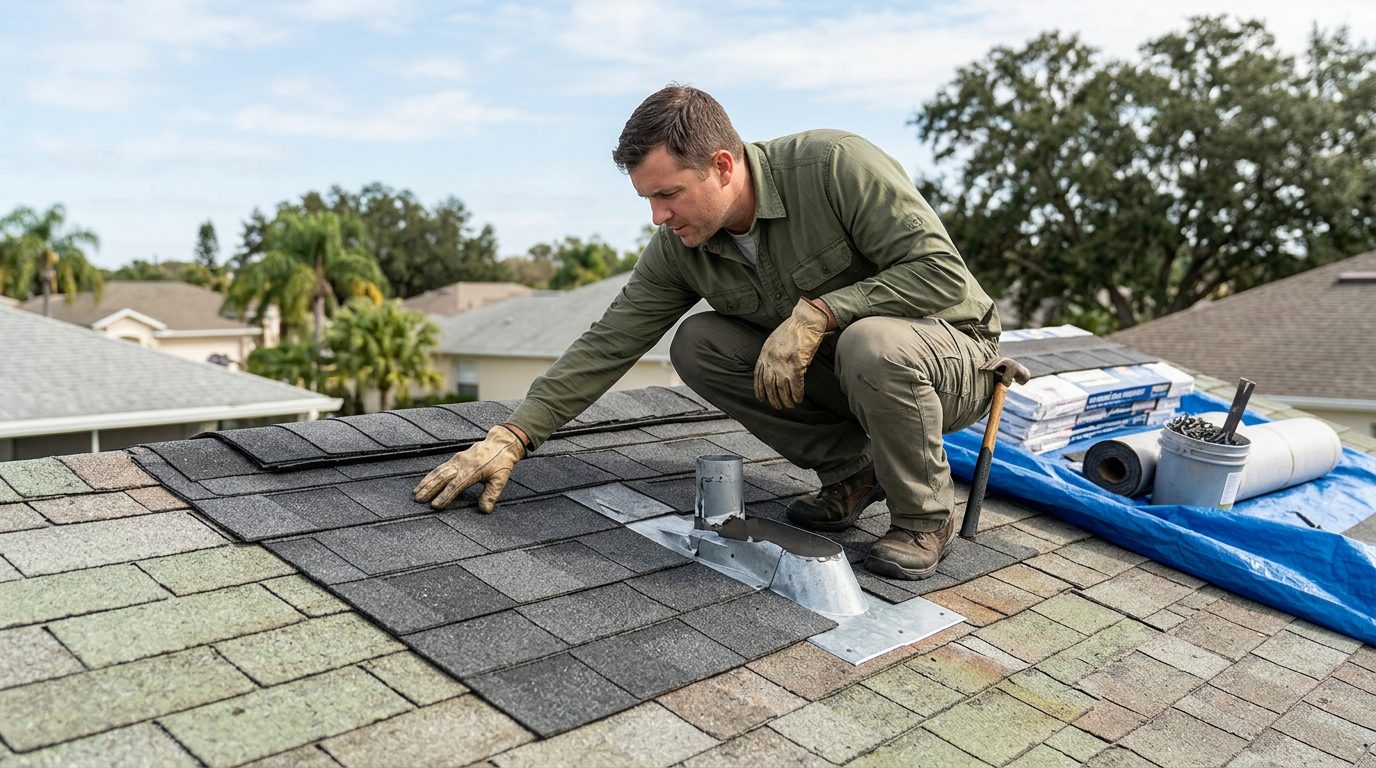
Roof Repair & Replacement | South Florida
Replace Only the Roof Decking That Has Failed
Rotted, soft, or loosely fastened sections of roof decking don't always mean you need a full tear-off. Learn how failed sections are identified and replaced, and when sound decking can stay, from ASP Superhome.
By Jonathan Rodriguez · Published November 3, 2026
You only replace the roof decking that fails, not the whole deck by default. Replace roof decking Florida projects follow that rule in most cases. Decking is the sheathing under your roofing. Sound, well-fastened panels can often stay in place. This guide explains how decking is checked, what the permit file should show, and how decking work affects cost. It covers homes in Miami, Fort Lauderdale, West Palm Beach, Kendall, Naples, Fort Myers, and Boca Raton.
Short Answer: Only Failed Decking Sections Need Replacement
Decking is replaced where it fails inspection, not across the whole roof automatically. Failure usually means rot, delamination, soft or crumbling panels, or fasteners that will not hold new roofing. Sound, well-fastened decking can usually stay if the new roof system works with it.
Florida code supports this approach. The 2026 Florida Building Code analysis for residential roofs says Exception 2 was revised to allow only the upper roof covering to be removed when recovering. That applies when the existing or repaired substrate is adequate for the new covering (Florida Building Code analysis, residential roofs). The word “adequate” is the key test.
Structural damage has its own rule. The 2026 existing-building analysis says structural damage must be repaired under the code’s structural repair section (Florida Building Code analysis, structural repairs).
Because the right scope depends on the facts of each roof, the deck is checked before the scope is set.
If soft ceilings, stains, or an aging roof have you unsure whether your decking can stay, our team can look at it with you before the scope is set. Talk it through with our team — the first consultation is free, confidential, and carries no obligation.
What Roof Decking Is and Why It Matters in Florida
Roof decking is the sheathing layer that sits on your rafters or trusses. Your shingles, tile, or metal panels attach to it.
The deck does more than hold the roof’s surface. It helps carry wind uplift, the force that tries to lift a roof during a storm. Every fastener that holds the roof covering goes into the deck. If the deck is weak, the roof has less to grip.
South Florida conditions add pressure. Heat, humidity, and heavy rain can keep wood damp for long periods. Water that enters through an old leak can soak a section for years. Hurricane-season wind adds load to every connection. The code treats roof wind resistance as a whole-system issue. A 2026 code analysis says roofs must comply with all of Section 1504 (Florida Building Code analysis, roof wind resistance).
Much of the damage sits under the old roofing. Staining, soft spots, and loose nails often stay hidden until the roof comes off.
How Decking Is Inspected During Tear-Off
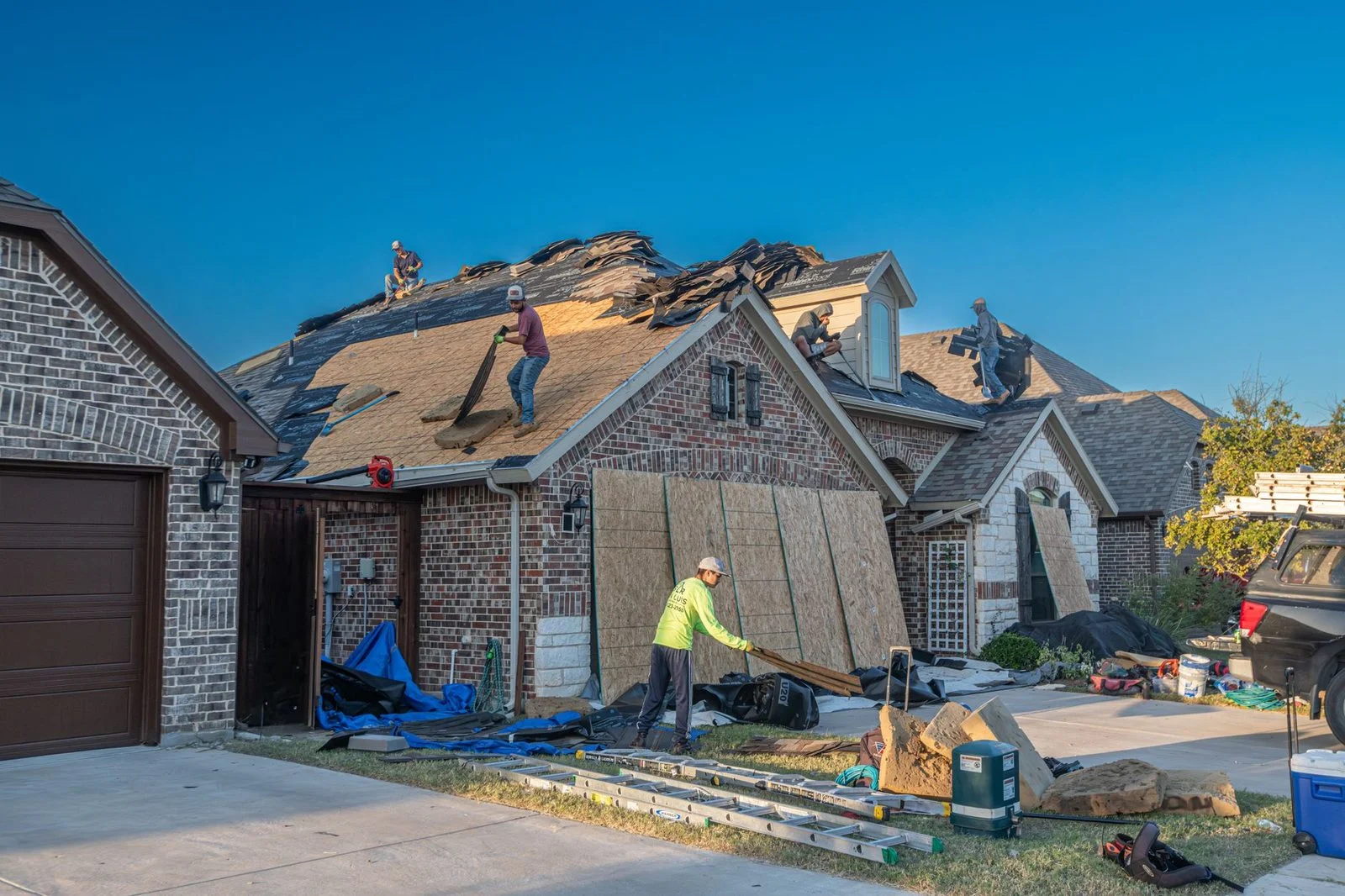
Decking is checked after the old roofing is removed. That is the point where every panel is exposed and can be tested.
Inspectors and installers look for several signs. Dark staining points to past water exposure. Soft spots or crumbling wood suggest rot. Swelling or separating layers at edges and seams point to delamination. Popped or loose nails show a fastener has lost its hold. Each sign matters because the new roof attaches through the same panels.
The check also covers common leak points. Penetrations, valleys, and eaves get close attention, since water often enters there first. A stain at one point can mean the damage runs wider.
Fastening follows code tables, not guesswork. The 2026 fastening schedule ties the nail type for roof sheathing to the specific gravity of the framing wood. Where that value is less than 0.35, fastening must be designed under the AWC NDS (Florida Building Code fastening schedule analysis).
Each damaged section is marked and measured before work moves on. That keeps the replacement area clear on the roof and in the record.
Sheathing Types and Grades Used on Florida Roof Jobs
Plywood and oriented strand board (OSB) are the two common roof sheathing types. Both are wood-based panels. Both can serve as roof decking when they meet code requirements.
Check the panel’s grade stamp and span rating. Look for a stamp from APA or an equivalent certifier. Confirm the span rating fits the actual spacing of your rafters or trusses.
Panel thickness must fit that framing spacing and the wind design that applies to the building. A thinner panel over wide spacing can flex more under load, which can work fasteners loose.
Some panels are made for moisture exposure during construction. These exposure-rated panels suit roofs that stay open to weather for a while.
The Florida Building Code sets the minimum sheathing and fastening rules. For shingle roofs, a 2026 analysis notes that the fastening section now gives specific guidance for interlocking shingles (Florida Building Code analysis, shingle fastening).
Ask about panel type and grade before work starts. That keeps the deck choice on the record.
Permits, Code Requirements, and What the Permit File Should Show
Yes, a roof replacement needs a permit. Unless otherwise provided by law, Florida law makes it unlawful to repair or alter a building without first getting a permit from the enforcing agency (Florida Statutes § 553.79).
Local rules vary in detail. The City of Miami says permits are required for residential and commercial roof repair or replacement. Requirements for roofing work in the City of Miami are published on the city’s permit page (City of Miami roofing permit). Our team can explain the paperwork a roofing project may involve during a free first consultation.
Keep a written record of which sections were replaced, which were repaired, and which were left in place. Note the fastening used on the new deck. That record helps at inspection and later if questions come up.
If a permit is denied or revoked for code noncompliance, the local agency must name the code sections behind the finding (Florida Statutes § 553.79).
How Decking Work Changes the Cost of Your Roof
Decking adds cost only when failed sections must come out and be replaced. Base roof pricing covers tear-off, underlayment, and the new roof system over sound decking.
Cost rises with the number and size of failed sections. A few small patches are a small line item. Widespread rot across many sheets is a larger one. Labor for removal, new fastening, and disposal adds to the total when damage is extensive.
Florida law also sets a threshold that can change scope. Under Florida Statutes § 553.844, if 25 percent or more of a roofing system or roof section is repaired, replaced, or recovered, only that portion must meet the Florida Building Code in effect. This applies when the existing system was built, repaired, or replaced under the 2007 code or a later edition (Florida Statutes § 553.844).
A clear quote should show decking as its own line. You can then see how much of the price comes from the deck and how much from the roof itself. Our team can explain how that threshold applies to your roof.
Not sure what your next step is?
Talk it through with our team — the first consultation is free, confidential, and carries no obligation.
Next Step: Confirm Your Deck Condition Before You Commit
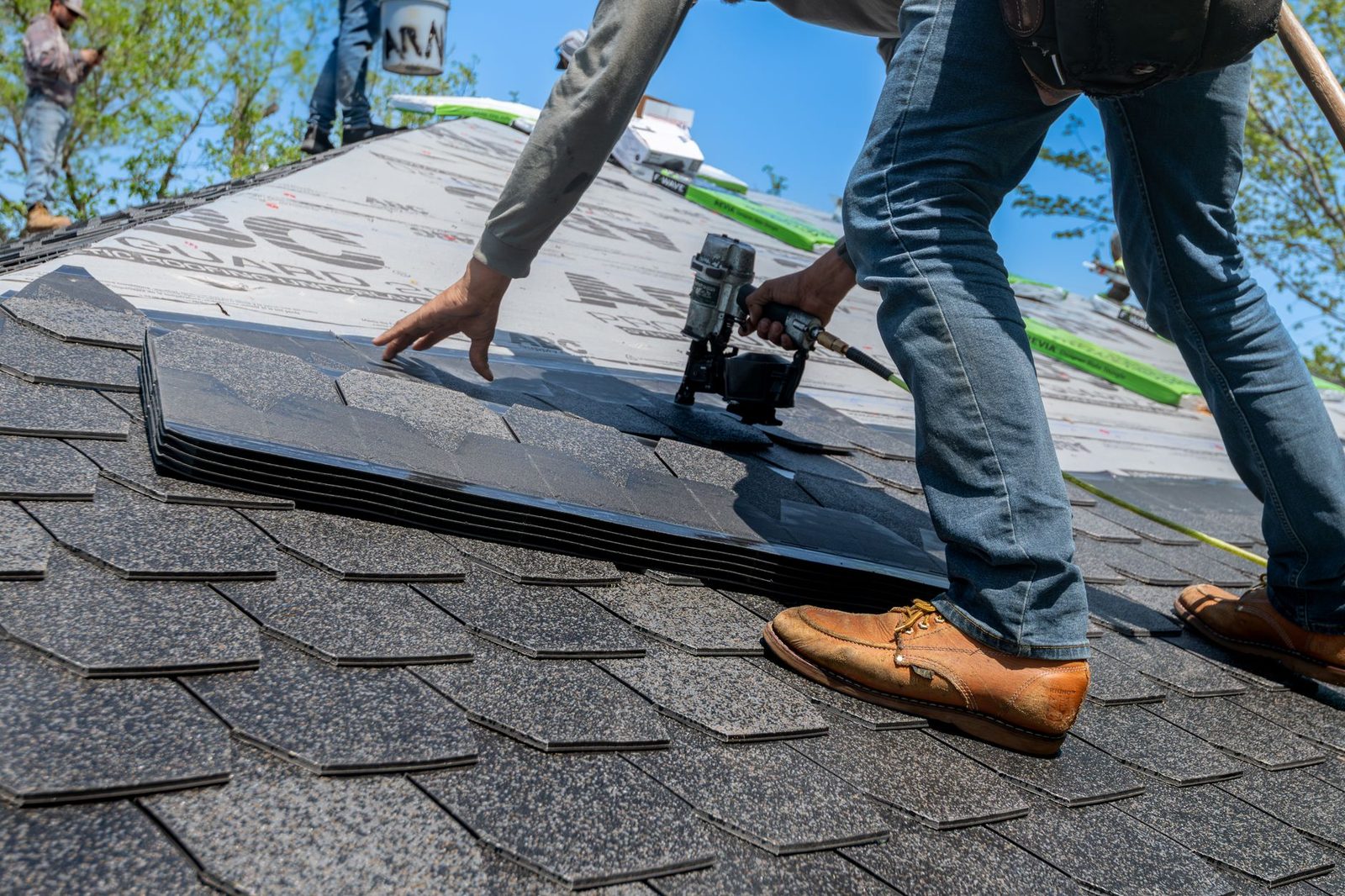
The safest next step is to check the deck before you agree to a roof scope. Soft ceilings, water stains, or an aging roof are signs the deck may be involved.
Those signs make the deck the key unknown. A replacement decision made before the deck is seen can change both the price and the permit scope.
ASP Superhome offers a free initial consultation that is confidential and without obligation. If you’re weighing a roof replacement, contact ASP Superhome to request a free estimate and talk through the deck condition before the scope is final.
Frequently Asked Questions
Do I have to replace all the roof decking?
No. Usually only the failed sections, such as rotted, delaminated, or loosely fastened panels, need replacement. Sound decking can stay when the new roof is compatible with it.
Does a Florida roof replacement need a permit?
Yes. Yes. Unless otherwise provided by law, Florida law makes it unlawful to repair or alter a building without first getting a permit (Florida Statutes § 553.79).
Is plywood or OSB better for roof decking?
Both are common. The right choice comes down to grade, span rating, and thickness for your framing.
Can only part of a roof be replaced?
Repairs limited to the damaged portion can be made, and that repaired, replaced, or recovered section must meet the current building code. Under Florida law, if one quarter or more of an existing roofing system or roof section is worked on, only that work must meet the Florida Building Code in effect, but only if the existing roofing system or roof section was built, repaired, or replaced in compliance with the 2007 Florida Building Code or a later edition (Florida Statutes § 553.844).
How We Approach Decking Repairs
Inspection First
We check the decking from the attic and the roof surface to find which sections are rotted, delaminated, or loosely fastened.
Sound Decking Stays
Where the existing wood is solid and compatible with the new roofing system, we leave it in place to limit unnecessary work.
Clear Written Scope
You receive a plain-language description of which sections need replacement, what materials are involved, and how the work will proceed.
Coordinated Crew
Our team manages the decking replacement alongside your roof repair or roof replacement so the work moves in a sequence that makes sense.
Don't Cover Soft Spots and Hope for the Best
Spongy, sagging, or discolored decking can hide water damage that spreads to insulation, drywall, and framing. If you notice these signs, have the roof inspected before it leaks inside your home.
Signs Your Decking May Need Attention
Soft or Bouncy Spots
Areas that give underfoot or flex more than the surrounding roof often point to deteriorated sheathing.
Stains in the Attic
Dark rings or damp patches on the underside of the roof deck can signal moisture that has already soaked into the wood.
Lifting or Popped Nails
Panels that have shifted, or fasteners that have backed out, may no longer hold the roofing system securely.
Visible Delamination
Plywood or OSB layers that are separating or crumbling should be evaluated before a new roof is installed over them.


