


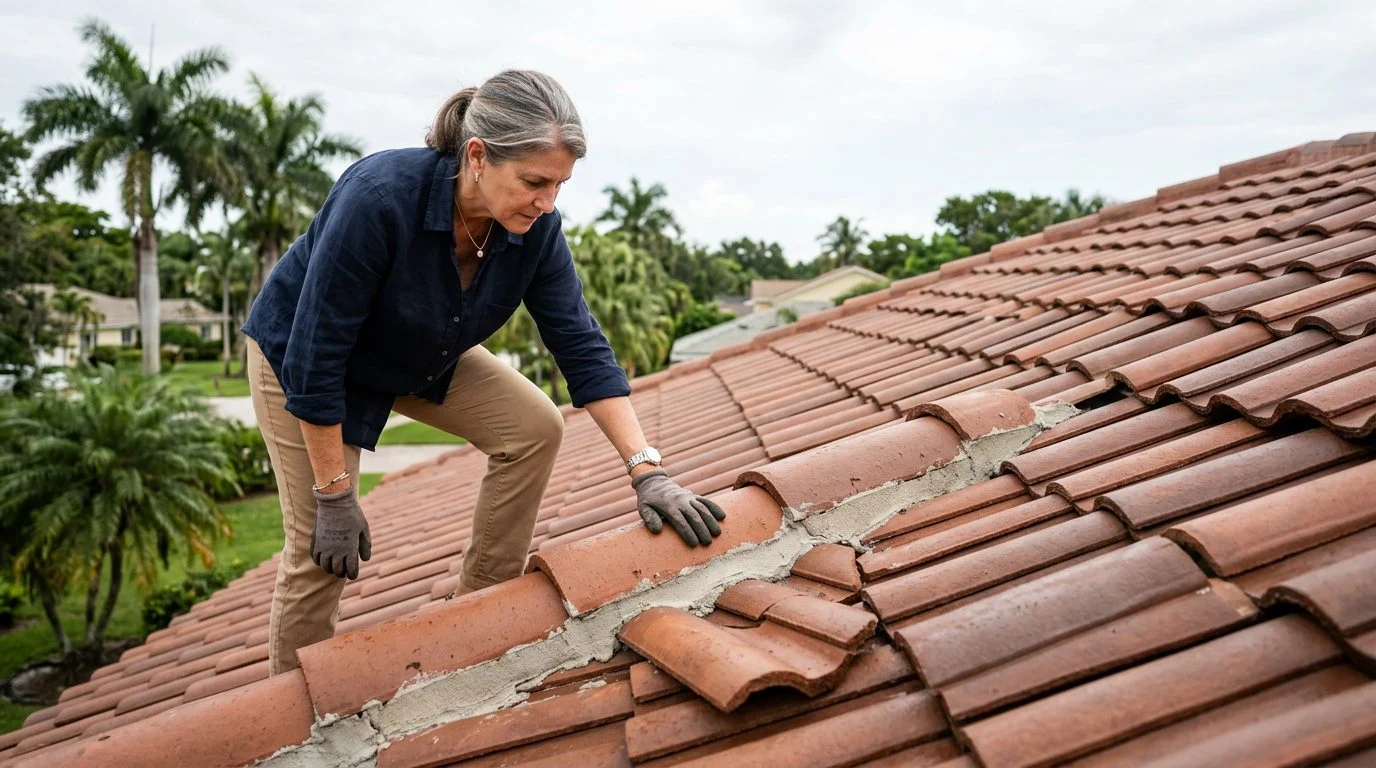
Tile Roofing | South Florida
Tile Roof Replacement in South Florida: Know Your Deposit Terms Before You Sign
Deposit requirements depend on your signed contract. ASP Superhome walks you through what to look for so you can make a clear decision about your tile roof replacement.
Start With a Free Consultation
Free
Initial consultation, confidential and with no obligation to continue
By Jonathan Rodriguez · Published November 8, 2026
If you’re planning a tile roof replacement in South Florida, a deposit is one of the first questions to ask. Whether you owe one, and how much, comes from your signed contract.
Short answer: a deposit is common, and the signed contract sets its size
Yes, many tile roof replacement quotes include a deposit. The written agreement decides whether you owe one and how much. Look for the total contract price, each payment amount, and the event that triggers each payment. Check who pulls the permits, what the deposit covers, and whether it is refundable. If any of these items is missing, ask for it in writing before you sign. For the full replacement process, see our roof replacement guide.
Not sure what your next step is?
Talk it through with our team — the first consultation is free, confidential, and carries no obligation.

What Florida law says about roofing deposits
Florida ties a large first payment to a permit deadline. Under Fla. Stat. § 489.126, a contractor who receives, as initial payment, money totaling more than 10 percent of the contract price for repair, restoration, improvement, or construction to residential real property is required to seek the permits needed for the work within 30 days after the date payment is made, unless no permit is needed for the work under the applicable codes and ordinances, the contractor has just cause for failing to apply for permits, start the work, or refund the payment, or the person who made the payment agreed, in writing, to a longer period to apply for permits or start the work or to longer periods for both. When a contractor does not meet the requirements of paragraph (a), the contractee must send a letter demanding that the contractor apply for the necessary permits, start the work, or refund the payment, sent via certified mail, return receipt requested, to the address listed in the contracting agreement; if the agreement lists no address for the contractor, or there is no written agreement, the letter must be mailed to the address listed for licensing purposes with the department or the local construction industry licensing board, if applicable. An inference may be drawn that the contractor lacks just cause if it fails to apply for the necessary permits, start the work, or refund the payment within 30 days after receiving that letter (Fla. Stat. § 489.126).
Under Fla. Stat. § 489.126, a contractor who receives, as initial payment, money totaling more than 10 percent of the contract price for residential repair or improvement must apply for necessary permits within the period the statute sets after payment is made. Fla. Stat. § 489.126 reads: “Apply for permits necessary to do work within 30 days after the date payment is made, except where the work does not require a permit under the applicable codes and ordinances, and.” The number matters because it tells you when the contractor must act.
If the contractor misses that deadline, the statute gives you a path. It may be inferred that the contractor lacks just cause if it does not apply for permits, start the work, or refund your payment within 30 days after that demand.
Two more rules belong in your paperwork. Fla. Stat. § 489.1425 requires a written statement about the Florida Homeowners’ Construction Recovery Fund in residential contracts, unless labor and materials total $2,500 or less. Fla. Stat. § 713.015 requires a construction lien notice in direct contracts over $2,500 for homes of up to four units. That notice says you should require, before any payment, a written release of lien from any person or company that has provided you a notice to owner.
A typical payment schedule from deposit to final payment
A common schedule ties each payment to a finished stage of the job. The stages usually run from signing, to materials ordered, to tear-off and installation, to final payment after the work is complete. Your contract should name each stage and the amount due at it. That way you know what you’re paying for before money moves.
Ask these questions before you sign:
- What does the deposit cover, and when is it applied to the price?
- Who applies for the permit, and by what date?
- Is the final payment tied to completion and inspection?
- What happens to my payments if I cancel?
Cancellation rights depend on how the contract was signed. Fla. Stat. § 501.025 gives a buyer in a home solicitation sale until midnight of the third business day after signing to cancel. Fla. Stat. § 489.147 gives a residential property owner a right to cancel, without penalty or obligation, a roof contract signed within 180 days of a Governor’s state of emergency, if the property is in the declared area, within 10 days after the execution of the contract or by the official start date, whichever comes first. When a seller must refund, Fla. Stat. § 501.041 requires payments to be returned within 10 days after a home solicitation sale is canceled.
How tile versus metal affects the contract, weight, and permits
Tile and metal roofs follow different installation standards, so your contract should name the product and the method. The Florida Roofing and Sheet Metal Association’s tile installation guidance covers hip, ridge, and rake tile installation under the FRSA-TRI manual. The Tile Roofing Industry Alliance’s installation guides address code requirements and acceptable products for high-wind applications in Florida. A tile quote should reflect a roof structure assessment, because the structure shapes both scope and cost.
Permits come first. The City of Miami’s Get a Roofing Permit page says the first building-permit review may take up to 14 business days. Miami-Dade’s roofing permits page covers forms, checklists, and contractor e-permitting. For tile work in Miami-Dade, see our permit guide.
Partial work can trigger new code.
For metal, the Insurance Institute for Business & Home Safety’s Hurricane Ian roof assessment reports that metal systems held up well in winds below 130 mph in Southwest Florida. Impact claims need checking too. Fla. Stat. § 553.842 says products, including panel walls, exterior doors, roofing, skylights, windows, shutters, impact protective systems, and structural components, need statewide approval before they are sold as hurricane or windstorm impact protection.
Warranty terms: separate manufacturer coverage from installation quality
A manufacturer warranty covers the product. The installation promise sits in your contract. These are two different documents with different terms, so read both.
Ask for each warranty in writing. Check its length, what it covers, what it excludes, and who handles a claim. Confirm whether the installer’s workmanship is covered and for how long. Don’t pay a deposit until these terms are in writing.
A contractor executing a contract to replace or repair a roof of a residential property must include in the contract, or attach to it, language in bold type of not less than 14 points, placed in the signature area for the residential property owner. If the proposed work is related to an insurance claim, that language advises the owner to contact the insurance company to confirm coverage before signing (Fla. Stat. § 489.147). That language tells you to verify coverage with your insurance company before you sign. For older roofs, Citizens Property Insurance Corporation describes underwriting documentation, including remaining useful life and proof of replacement when less than five years remain.
Take the next step with a free first consultation
If you have a tile roof quote and a deposit request in hand, talk with us before you pay. Bring your estimate, your draft contract, and your insurance questions. We can review the payment schedule, permit terms, and warranty language with you. Our first consultation is free, confidential, and carries no obligation to continue. Contact ASP Superhome to request a quote for your tile roof replacement in South Florida.
Frequently asked questions
Is a deposit required for a tile roof replacement in South Florida?
No single rule applies. The signed contract sets whether a deposit is due and how large it is.
Can I get my payment back if I cancel?
Florida law requires a seller in a home solicitation sale to return payments within 10 days after a cancellation. Check your contract for its cancellation terms.
How We Help You Understand Your Deposit
Review the Contract Together
We explain the payment section, what it says about any deposit, and how the total cost is structured.
Clarify Cancellation Terms
We point out the cancellation language in your agreement so you know what the document says before you commit.
Answer Your Questions
Ask about materials, scheduling, and payment milestones for your tile roof replacement, and get straightforward answers.
Support From Start to Finish
Our team stays available to help you follow your project from the first consultation through completion.
Read Before You Pay
Do not pay a deposit until you have read the full contract, including the payment schedule and cancellation terms. If anything is unclear, ask for an explanation in writing before you sign.
Questions to Ask About Your Tile Roof Deposit
What does the contract say?
Look for the exact amount, the due date, and whether the deposit is refundable under the stated terms.
How is the payment scheduled?
Confirm each payment milestone and what work or materials it covers before you authorize it.
What are the cancellation terms?
Find the cancellation section and note how and when you must notify the company in writing.
Is everything in writing?
Keep copies of the signed contract, receipts, and any change orders for your records.


