


Roof Replacement | South Florida
How Much Does a New Roof Cost in Florida? Start With Your Roof Square Count
Learn how roofers measure a roof in squares, which factors shape the price, and how to read an estimate line by line.
By Jonathan Rodriguez · Published November 4, 2026
If you’re asking how much does a new roof cost in Florida, start with the roof square. Roofers commonly quote by the square, and one square equals 100 square feet of roof surface. The total is the number of squares times a per-square rate, plus separate line items. Once you understand that formula, a quote gets much easier to read. This guide explains each part, so you know what to ask.
What a Roof Square Is and Why Roofers Price by It
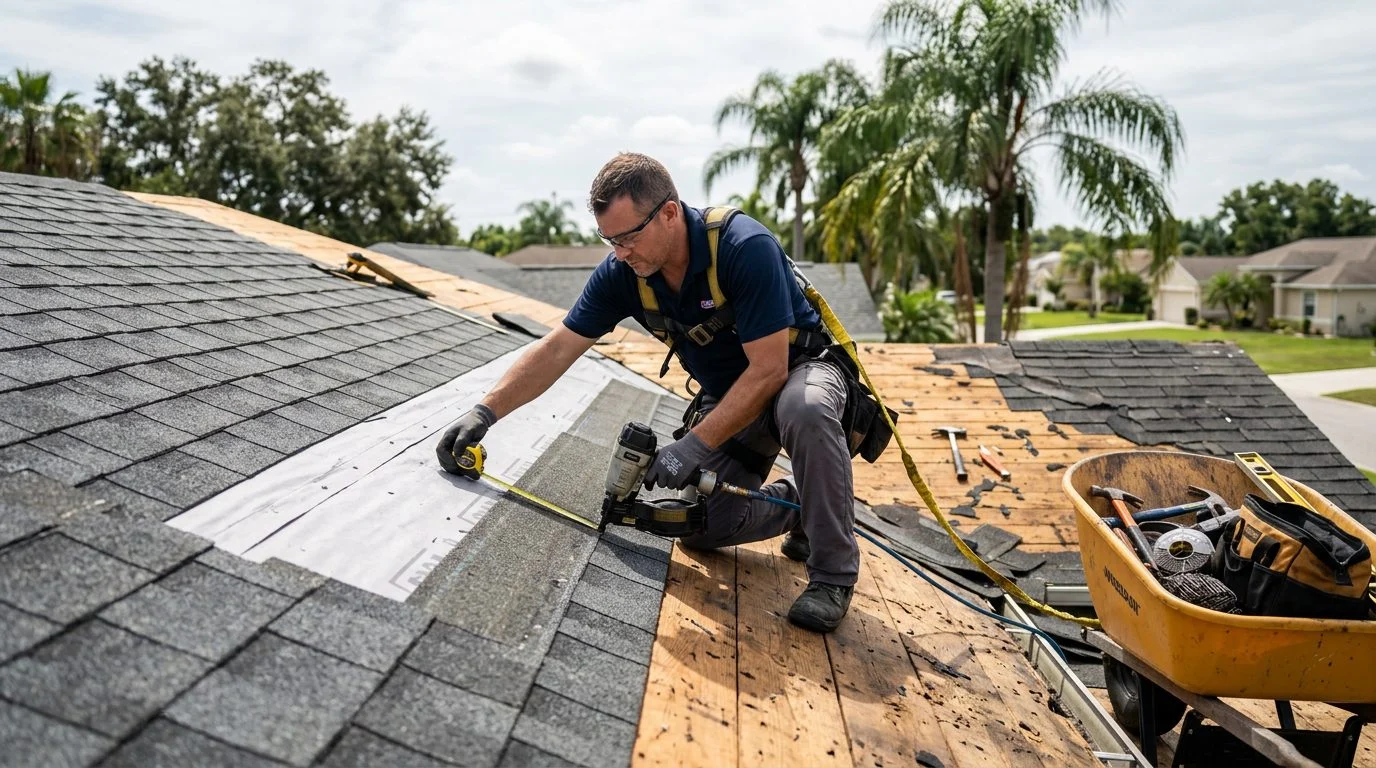
A roof square is 100 square feet of roof surface, and roofers use it to size and price the job. It measures the roof itself, not the rooms inside the house.
That difference matters. A roof covers more area than the floor below it. A sloped roof is longer than the flat footprint it sits on, so pitch adds surface. Overhangs at the eaves add more. Garages, porches, and separate roof sections add more again.
So a 2,000 square foot home does not automatically mean 20 squares. Two homes with the same floor plan can have very different roof areas. A steeper pitch or more roof planes raise the count. The measured roof area decides the number.
Ask how the squares were measured. A written estimate should show the square count and the method used to get it. Without that number, you can’t check the rest of the math.
If a storm, a leak, or an aging roof has put a decision in front of you or a family member, our team can talk it through with you; your free first consultation is confidential, with no obligation to continue. Talk it through with our team — the first consultation is free, confidential, and carries no obligation.
How a Florida Roof Replacement Quote Is Built
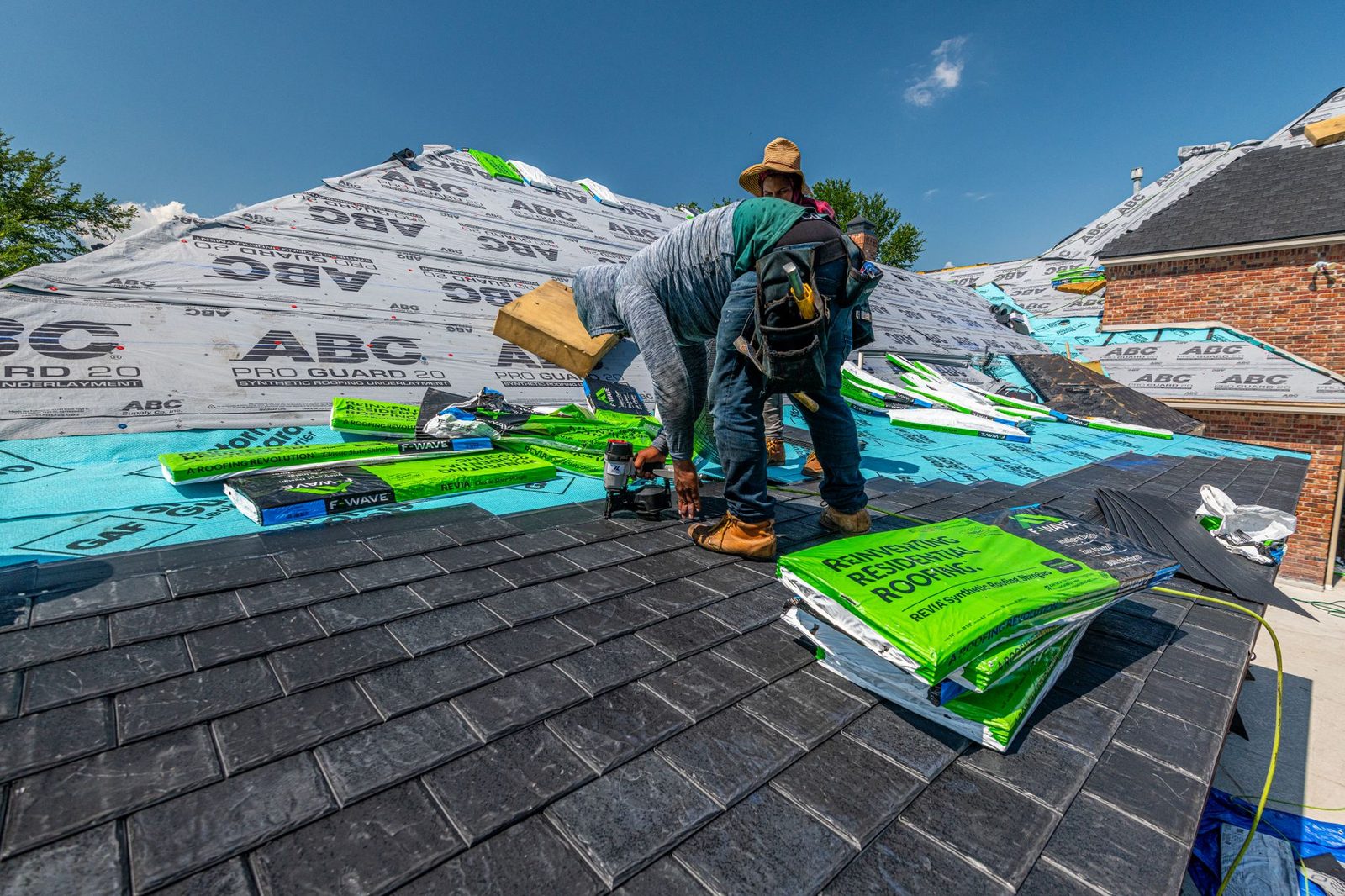
A roof replacement quote usually multiplies the squares by a per-square rate, then adds separate line items. Those line items can make up a large share of the final total.
The per-square rate covers the main material and labor. Other work often appears on its own line. Common examples include tear-off and disposal, underlayment, flashing, drip edge, vents, and trim.
Florida’s code sets rules for several of these parts. The Florida Building Commission’s 2026 code analysis says underlayment must lap over hips and ridges a minimum of 6 inches, except where ventilation openings are provided. The same analysis requires drip edge on asphalt shingle roofs to be mechanically fastened at 4 inches on center throughout the state.
A low per-square rate can still cost more in total. If the rate leaves out tear-off, underlayment, or flashing, those lines get added later. A complete written estimate should show:
- The square count and how it was measured
- The material, panel gauge, or tile type
- Each removal, underlayment, flashing, and trim line
- A note on the deck and what happens if hidden damage appears
Roofing Material and How It Changes the Price Per Square
Material sets the base per-square rate, and each option brings its own installation steps. Metal and tile each carry different costs than asphalt shingles.
Metal roofing comes in two main types. Standing seam panels use raised, interlocking seams. Exposed fastener panels are screwed through the panel face. The installation method and panel profile both change the price.
Metal type matters too. Galvalume is a coated steel, and aluminum is a different metal. Each one carries its own material cost. Panel gauge, which is the thickness, also changes cost and rigidity. A lower gauge number means a thicker panel.
Metal also held up well in a real Florida storm. IBHS found that metal roofing systems held up well in winds below 130 mph after Hurricane Ian in Southwest Florida.
Tile is heavier than metal or shingles. That weight can affect the structure and the installation work. The 2026 code analysis also revised tile flashing rules for clarity.
Repair and replacement are separate scopes. A repair priced per square covers a smaller area of work. It is not the same as a full replacement.
Roof Pitch, Shape, and Trim: The Hidden Cost Drivers
Pitch, roof shape, and trim raise the cost of each square. This happens even when the flat area looks simple.
Steeper roofs take more time and more safety equipment. Crews work more carefully on a steep slope. Labor rises as a result.
Complex shapes add cuts and flashing. Hips and valleys meet at angles that need custom cutting. Each vent, pipe, skylight, or chimney needs its own flashing work.
Trim and edge details also add cost. Drip edge, ridge work, and gable trim are small lines on paper. They take real hands-on time.
Labor often makes up a larger share of the total than homeowners expect. Removal, flashing, and detail work all take skilled hours. Ask whether labor is built into the per-square rate or listed separately.
Tear-Off Versus Roofing Over and the Existing Roof’s Condition
A roofer may remove the old roof or cover it, and each path changes the quote. The 2026 code analysis for recovering versus replacement says the upper roof covering may be removed when recovering. That is allowed only if the existing or repaired substrate is adequate for the new roof.
Tear-off reveals the deck. The deck is the sheathing under the roofing. Rot, soft spots, or damaged boards can only be measured once the old roof is opened. Decking repair adds cost that a first estimate may not show.
This is why the same square count can produce different totals. Two roofs of equal size can need very different deck repairs or code work.
Florida wind rules also affect the scope. Florida’s windstorm loss mitigation statute says that for site-built, single-family residential structures, a roof replacement must incorporate certain wind-resistance techniques. It also says that for site-built, single-family homes in the wind-borne debris region with an insured value (or, if uninsured or no insured value is shown, a just valuation for the structure) of $300,000 or more, a roof replacement must improve roof-to-wall connections, but those connections are not required unless evaluation and installation at gable ends or all corners can be completed for 15 percent of the cost of roof replacement.
Common Questions About Florida Roof Replacement Costs
Most roof cost questions come down to squares, line items, and what the deck and code require.
How many squares is my roof?
Start with the measured roof area, not the floor area. Ask for the square count, and check that it includes every slope, overhang, and roof section.
Do I need a permit for a new roof in Miami-Dade?
Miami-Dade County’s roofing permit page covers required forms, checklists, and hurricane-mitigation documentation. Ask whether permit work appears on the estimate.
Does insurance affect a roof replacement?
Yes, insurance can shape the scope and the timing. Citizens Property Insurance sets underwriting requirements for older roofs, including age thresholds for tile roofs. The Florida Office of Insurance Regulation describes wind-mitigation inspections and possible premium discounts for qualifying measures.
Not sure what your next step is?
Talk it through with our team — the first consultation is free, confidential, and carries no obligation.
Questions to Ask About a Written Estimate
A written estimate should show the squares, the material, and each line item in plain terms. Use these questions to read it line by line.
- How were the squares measured, and does the count include every roof section?
- Are removal, disposal, underlayment, flashing, and trim included or listed separately?
- Which material, panel gauge, or tile type is specified?
- What happens if hidden deck damage is found?
Florida adds some protections to these contracts. For repairs under an insurance claim, a contractor must provide a good-faith estimate of the itemized cost, under Fla. Stat. § 489.147. For direct contracts over $2,500 on improvements to single or multiple family dwellings up to and including four units, the contract must carry a construction lien notice in no less than 12-point, capitalized, boldface type under Fla. Stat. § 713.015.
Talk Through Your Roof With ASP Superhome
If you’re working through a roof decision for yourself or a family member, you don’t have to sort out the square count alone. A storm, a leak, or an aging roof can force a decision on a timeline nobody planned. Our team at ASP Superhome can talk through your roof’s square count, material options, and scope. Book your free first consultation. It is confidential and carries no obligation to continue.
How We Help You Read Your Estimate
Measured Roof Area
We base your estimate on the measured roof area, including every slope, overhang, and roof section.
Line-by-Line Pricing
Your estimate shows materials, labor, and tear-off separately, so you can see what each part of the job includes.
Clear Answers
Our team will walk you through the options, from metal and tile roofing to repair, and answer your questions in plain language.
Confidential First Consultation
Your first consultation is free, confidential, and comes with no obligation to continue.
Watch for Incomplete Estimates
An estimate that does not show the roof square count, or that leaves out slopes, overhangs, or tear-off, may not reflect the full cost of your project. Ask for a written, itemized estimate before you decide.
What Shapes the Price of a New Roof
Roof Size in Squares
One roofing square covers 100 square feet of roof surface. The total square count is the starting point for most estimates.
Roofing Material
Metal roofing and tile roofing differ in material cost, weight, and installation requirements, which all affect the final number.
Roof Complexity
Steep pitches, multiple roof sections, and roof penetrations such as vents and skylights add time and materials to the job.
Tear-Off and Disposal
Removing the old roof, replacing underlayment, and hauling away debris are separate line items that belong in your estimate.


