


Roofing Guide | South Florida
Thinking About Doing Your Own Roof in Florida? Start Here.
The answer depends on your property, your plans, and the permits involved. Get clear answers before you pick up a tool.
By Jonathan Rodriguez · Published November 2, 2026
Can you legally do your own roof? Sometimes. Florida law lets some owners act as their own contractor on a home they live in, but roof work still needs a permit. This guide explains the conditions, the licensing line, and the insurance and resale effects that matter most.
The short answer: sometimes, and only with a permit
Yes, a homeowner can sometimes do roof work, but only under specific conditions and with a permit. Fla. Stat. § 553.79 generally requires a permit for most repairs and alterations to a building in Florida, unless otherwise provided by law. A permit is what makes the work lawful. Skipping it is not a shortcut. Whether you qualify depends on the facts: who owns the property, whether you live there, and what roof work you plan.
If a leak or storm has you deciding about your roof right now, our team can help you sort out the permit and licensing questions for your home. Talk it through with our team — the first consultation is free, confidential, and carries no obligation.
What the owner-builder exemption covers
The owner-builder exemption covers an owner who builds or improves a one-family or two-family home for their own use or occupancy. The home cannot be built or substantially improved for sale or lease, unless you are completing the requirements of a building permit where the contractor listed on the permit substantially completed the project, and you first receive approval from the local permitting agency, which must determine that the contractor listed on the permit substantially completed the project. The owner must also provide direct, onsite supervision of all work not done by licensed contractors.
Here is the trap many people miss. If you sell or lease a home you built or substantially improved within 1 year after construction is complete, the law presumes it was built for sale or lease. That presumption violates the exemption. A roof job done shortly before a quick sale can cause real trouble.
Rentals and homes built for sale don’t fit this path. The City of Florida City’s owner-builder affidavit states that an owner may perform qualifying work without a contractor license, and that roofing needs a separate permit.
Small jobs follow different rules. That exemption does not apply to part of a larger job, or to smaller contracts split up to avoid the law.
Why a permit is required for roof replacement and repair
Roof replacement and repair generally require a permit under Florida law. Fla. Stat. § 553.79 also lets the enforcing agency revoke a permit when the work does not match the Florida Building Code.
Permit details vary by city and county. Charlotte County’s residential roof permit page covers permit documents, inspection timing, permit fees, owner-builder restrictions, and a small-repair exemption. Your local building department sets the paperwork for your address.
Timing can be quick. For a roofing permit on an existing single-family home with work valued under $15,000, § 553.792 requires the local government to approve, approve with conditions, or deny a complete and sufficient application within 5 business days, unless the applicant waives that timeframe in writing, when the applicant uses a local government plans reviewer.
A common mistake is treating a full tear-off like a patch. Another is splitting one roof into several small purchases to stay under a dollar limit. That approach does not avoid the permit rules.
Licensing: when the owner can do the work and when a licensed roofer is required
Work on your own home can fall under the owner-builder path. Work for someone else generally needs a licensed contractor. Florida treats a person who does contracting work without a valid license as guilty of unlicensed contracting. Under § 489.13, the state can impose an administrative fine of up to $10,000 on an unlicensed person. A local building department also cannot issue a building permit to a contractor who lacks a valid active license in the right category.
Hiring carries risk too. Residential contracts over $2,500 must also include a written statement about the Florida Homeowners’ Construction Recovery Fund, under § 489.1425. Fla. Stat. § 489.1425 reads: “(1) Each agreement or contract for repair, restoration, improvement, or construction to residential real property must contain a written statement explaining the consumer’s rights under the recovery fund, except where the value of all labor and materials does not exceed $2,500.”
Before work starts, verify the license. The City of Cape Coral’s construction lien law guide says homeowners should verify a contractor’s license, and that contracts should show the license number.
How DIY roof work affects insurance and resale
Two things matter most: the claim deadline and your paper trail. Under Fla. Stat. § 627.70132, a claim is barred unless notice reaches the insurer within 1 year after the date of loss. A supplemental claim is barred unless notice is given within 18 months. For hurricanes, tornadoes, windstorms, and other weather events, the date of loss is the landfall date or the date the National Oceanic and Atmospheric Administration verifies the event.
Hurricane-wind mitigation discounts work differently. The Florida Department of Financial Services says roof discounts vary by insurer and depend on roof age, condition, and type, and are typically limited to roofs under 10 years old.
Keep the permit, inspection records, material receipts, and before-and-after photos. Buyers and insurers often ask for proof of what was done and when. Missing records can slow a sale or a claim.
Safety and product requirements in South Florida
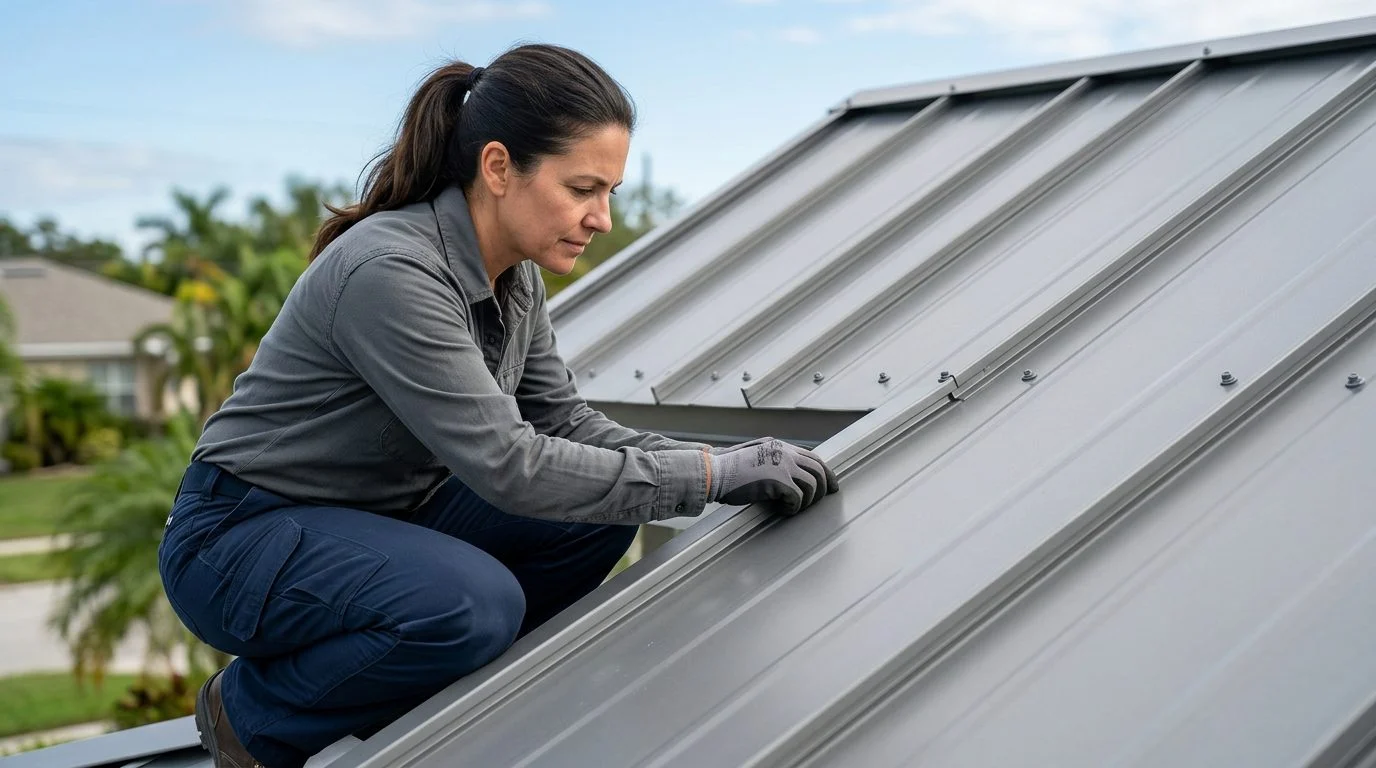
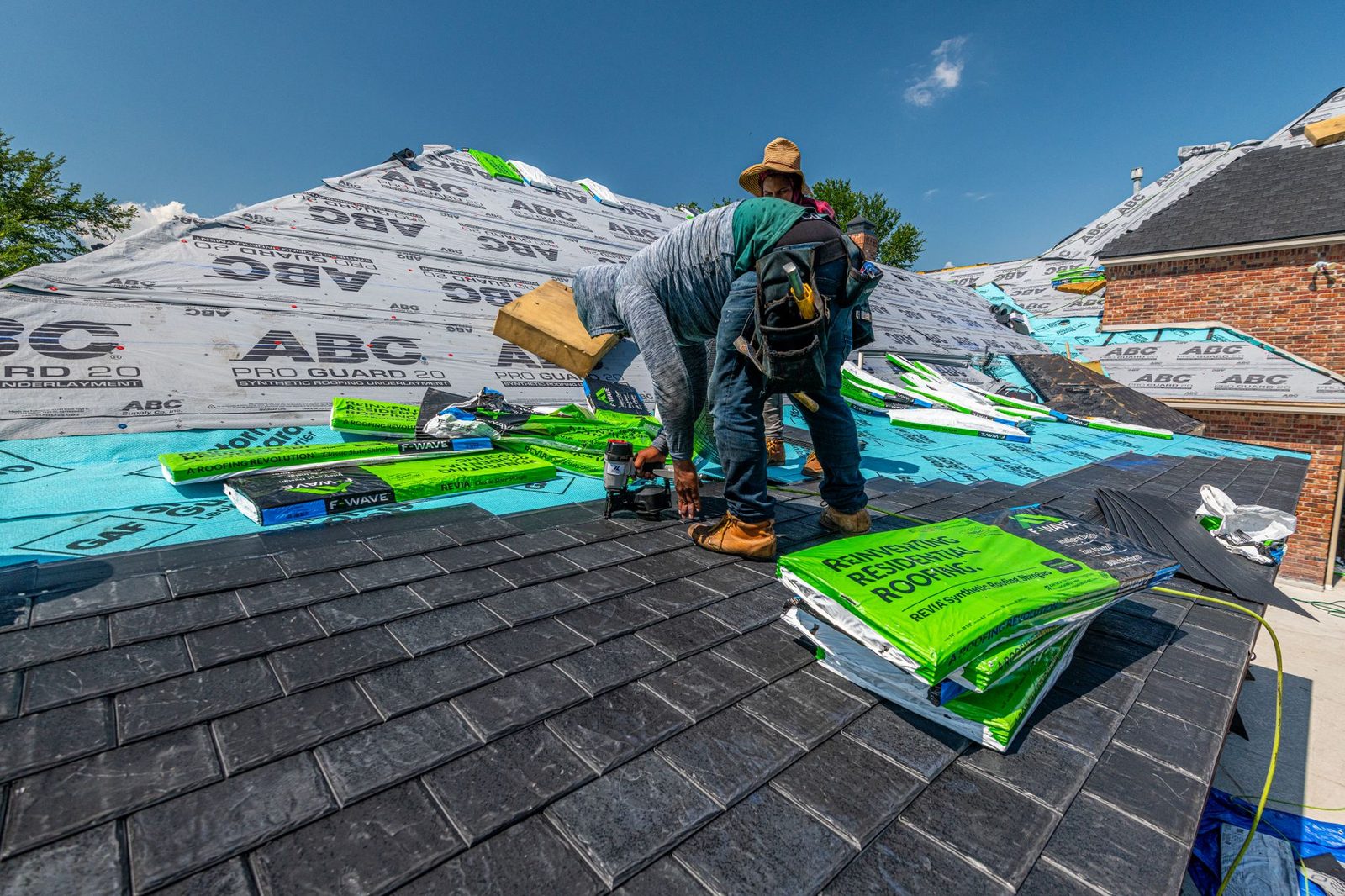
Roof work is physically dangerous. Falls from height and heat exposure are real hazards, especially on steep roofs. Tile is heavy and can crack under foot traffic. Metal, shingle, and tile systems each have their own installation sequence.
South Florida roofs also face wind rules. The Legislature finds that the effects of recent hurricanes on the state have demonstrated the effectiveness of the Florida Building Code in reducing property damage to buildings constructed in accordance with its requirements, and have also exposed a vulnerability of some construction undertaken prior to implementation of the Florida Building Code, and that the mitigation of property damage constitutes a valid and recognized objective of the Florida Building Code (Florida Statutes, Section 553.844).
The same statute addresses partial work. If an existing roofing system built or repaired under the 2007 or later Florida Building Code has 25 percent or more repaired, replaced, or recovered, only that portion must meet the code in effect. Plan the job with the code in mind, not just the cost of materials.
Not sure what your next step is?
Talk it through with our team — the first consultation is free, confidential, and carries no obligation.
Repair or replacement after a storm: what the damage tells you
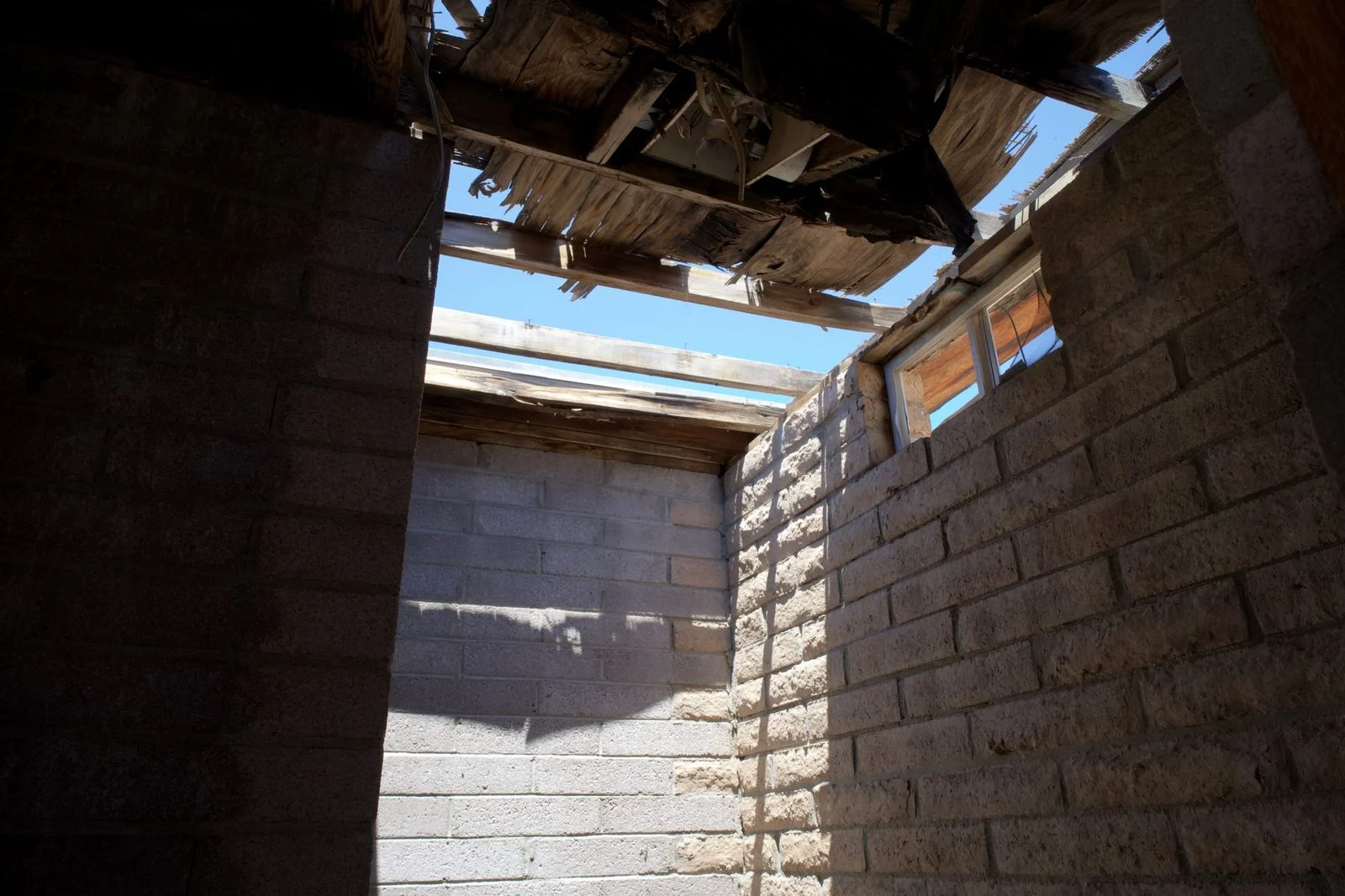
Storm damage runs from a few lifted shingles to structural problems. The repair-or-replace decision depends on how far the damage spreads. A single cracked tile or a small leak can be a repair. Damage across many slopes usually points toward replacement.
Signs that a roof has moved past a simple DIY patch include sagging decking, water stains spreading across ceilings, and widespread granule loss on shingles. A leak that keeps coming back is another warning sign. A common mistake is patching the visible leak while the wood deck underneath stays wet and weak.
Recovering an old roof has its own limits.
Talk with our team about your roof
If you’re deciding whether to do this roof yourself, talk with our team before you commit. You might be handling this for an aging parent, for a tenant, or because a leak appeared after a storm and can’t wait.
Our team at ASP Superhome can look at your roof’s condition and go over the permit and licensing questions that apply to your property. You can also review the full range of options in our roof replacement guide.
Frequently asked questions
Can you legally do your own roof in Florida?
Sometimes. The owner-builder exemption can cover a home you own and live in, but a permit is still required.
Under Florida law, most building repairs and alterations generally need a permit unless otherwise provided by law, and whether roofing needs its own permit depends on local permitting rules.
Can I hire someone unlicensed to do my roof?
Work for others generally needs a licensed contractor. Unlicensed contracting can bring a state fine of up to $10,000.
Our free first consultation is confidential and comes with no obligation to continue. If a leak or storm has you deciding now, request a free estimate and we’ll talk through your options.
Check Before You Start
Before any roofing work begins, confirm whether a permit is required and who is allowed to perform the work. Mistakes here can be costly to fix later.
How Our Team Can Help
Clear Answers
We explain the questions that matter for your home, so you know where you stand before making a decision.
Permit Awareness
We walk you through what paperwork and approvals your project may involve.
Roof Options
From metal and tile roofing to roof repair and full roof replacement, we help you weigh your choices.
Confidential Consultation
Our free first consultation is confidential and comes with no obligation to continue.
Questions to Ask Before You Start
Do you own and live in the home?
Your ownership and occupancy can affect which options are available to you. Bring your property details to your consultation.
Is a permit required?
Most roofing projects involve permits and inspections. Ask about requirements for your specific job and location.
Who will do the work?
Hiring unlicensed help for work on someone else's property can lead to serious penalties. Verify who is doing the work and what they are authorized to do.
What does the job involve?
A simple repair is very different from a full replacement. Describe the damage or goals and our team will help you plan next steps.


