


Roof Replacement | South Florida
Thinking About Replacing Your Own Roof in Florida?
Learn the rules, permits, and safety steps before you start. Then talk with the ASP Superhome team about a roof replacement built for your home.
By Jonathan Rodriguez · Published October 29, 2026
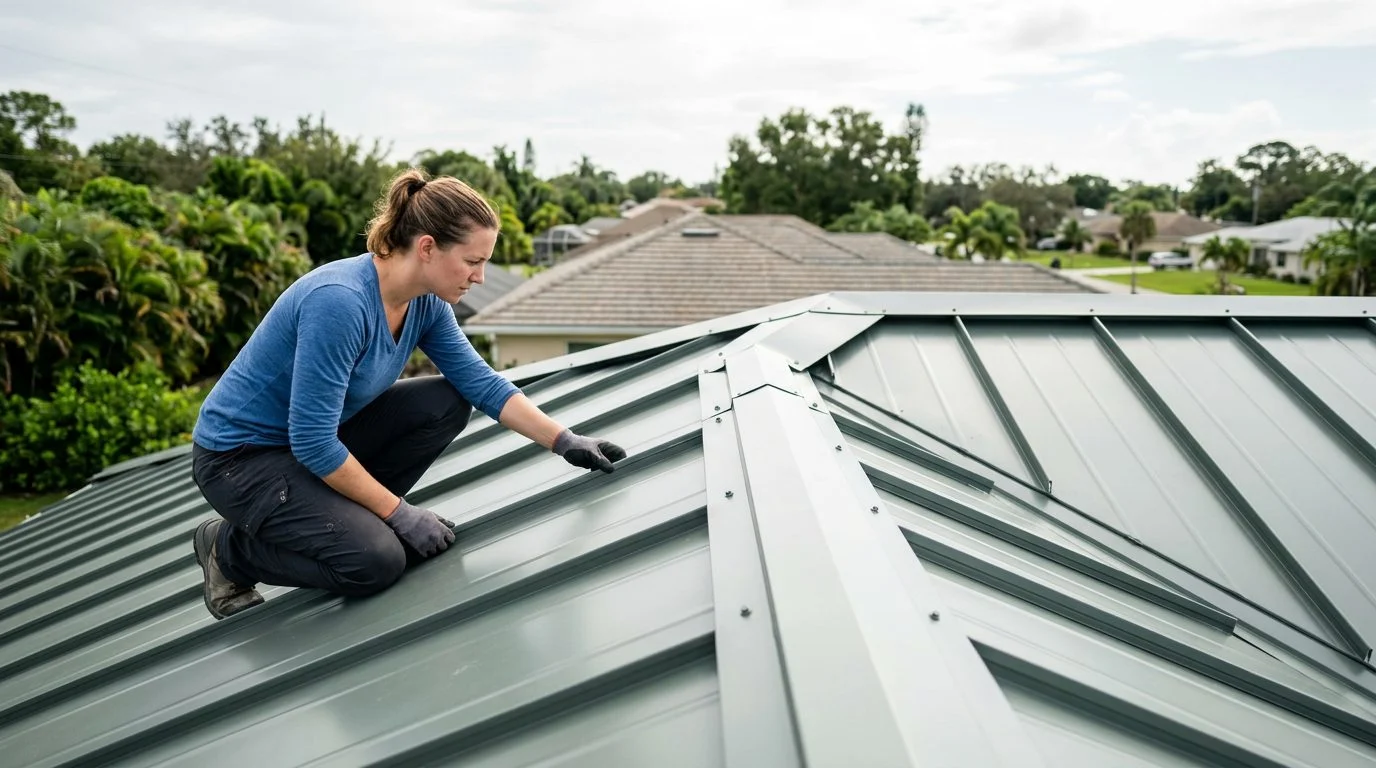
Florida law may let you act as your own contractor on a home you own and live in. The roof work still has to meet the Florida Building Code and your local permit rules. So “can you replace your own roof in Florida?” depends on the property, the work, and where the home sits.
The short answer: can a Florida homeowner replace their own roof?
A homeowner may be able to replace the roof on their own one- or two-family residence if it is for their own use or occupancy and is not built or substantially improved for sale or lease, and the owner personally provides direct onsite supervision. The job still has to follow the building code and local permit rules.
Florida’s building code covers more than new construction. It governs the alteration, repair, and demolition of buildings, so roof work falls under it too. Fla. Stat. § 553.73 sets out that scope.
Two kinds of roof work matter here. A repair patches or swaps a few shingles, tiles, panels, or flashing. A full replacement removes and rebuilds the whole roof system. The rules, permits, and insurance effects differ, so keep the two separate as you read.
Local offices add their own layer. Miami and other South Florida cities run their own permit processes. Their forms and timelines can differ, so the same roof may need different paperwork in different places.
If a leak, storm damage, or an aging roof has you weighing a replacement, we're glad to talk through the permit and insurance questions with you. Talk it through with our team — the first consultation is free, confidential, and carries no obligation.
Owner-builder rules for a primary residence
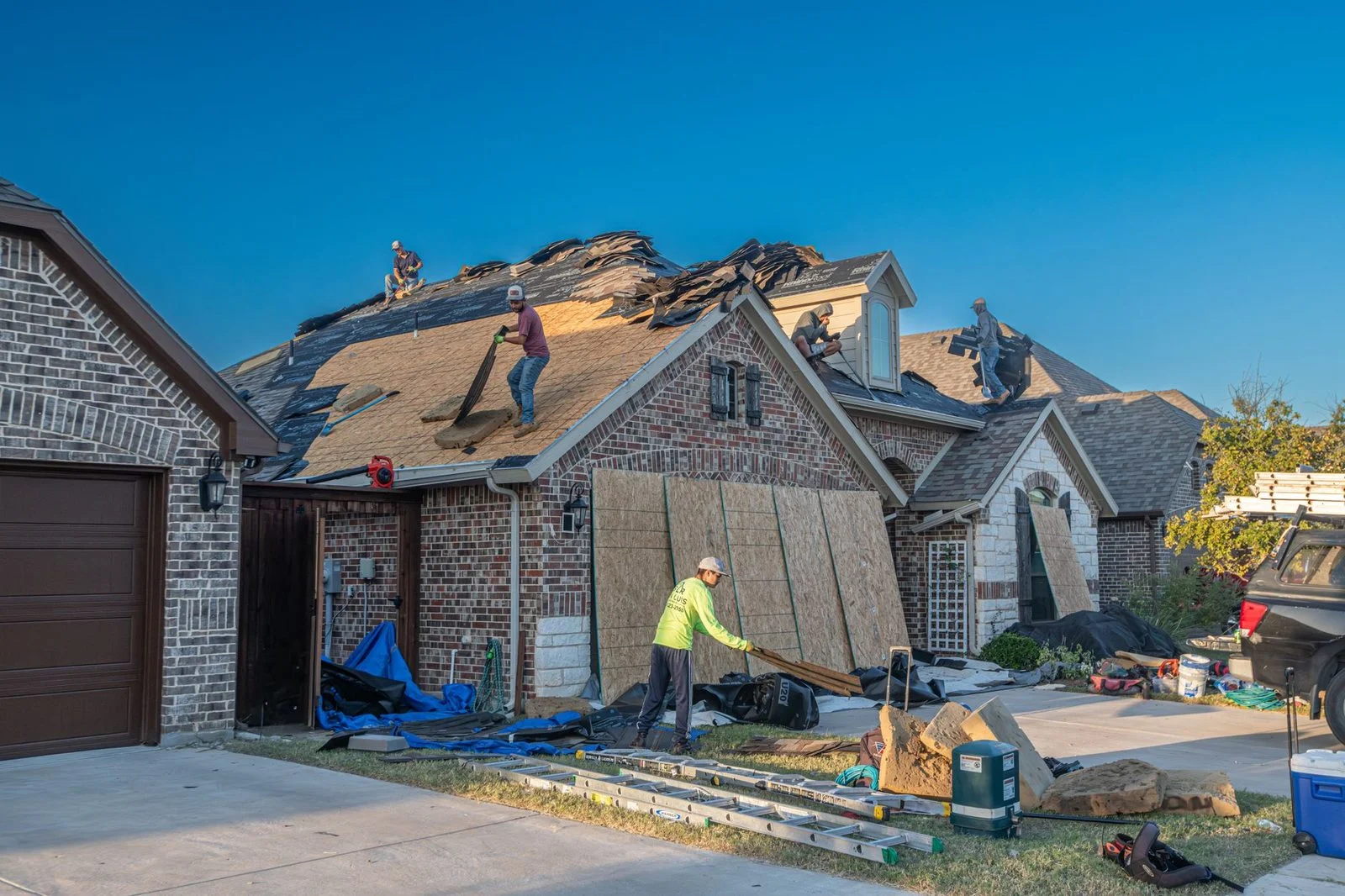
Florida allows some owners to act as their own contractor, but only under narrow conditions. The main exemption covers one- or two-family homes that the owner uses or occupies. Fla. Stat. § 489.103 sets out these conditions.
Three conditions matter most for a roof:
- The home is for your own use or occupancy, and it is not offered for sale or lease.
- You personally provide direct, onsite supervision of all work not done by licensed contractors.
- You personally appear and sign the permit application, and you meet local permitting requirements.
You cannot hand supervision to a licensed contractor who isn’t licensed for the work. Any unlicensed helper must work under your direct supervision and be your employee, with tax withholding and workers’ compensation.
Under the owner-builder exemption, you may act as your own contractor only with certain restrictions: you must provide direct, onsite supervision yourself of all work not performed by licensed contractors, and the home must be for your own use or occupancy and not offered for sale or lease, so rentals and investment properties don’t fit.
Do I need a permit to replace my roof myself in Florida?
A full roof replacement generally needs a building permit.
Florida law also ties permits to plan review.
For a roofing permit on an existing single-family home under $15,000, a local government using its own plans reviewer must act within 5 business days of a complete application. Fla. Stat. § 553.792 sets those timeframes.
Miami-Dade’s roofing permit page lists required forms, checklists, contractor e-permitting, and certain hurricane-mitigation documents. Permits usually bring inspections and a final sign-off.
Skipping the permit leaves no approved record of the roof. That can complicate an insurance claim, a home sale, or a disclosure.
What is the 15 year roof rule in Florida?
Florida’s 15-year roof provision is about insurance inspections. Under Fla. Stat. § 627.7011, an insurer may not refuse to issue or renew a homeowner’s insurance policy solely because of roof age if an inspection by an authorized inspector indicates that the roof has 5 years or more of useful life remaining. Florida law allows a homeowner, when a roof is at least 15 years old, to arrange a roof inspection by an authorized inspector at the homeowner’s expense before an insurer can require replacement as a condition of issuing or renewing a policy. The homeowner pays for that inspection.
The insurer may not refuse to issue or renew a policy only because of roof age. That applies if the inspection shows the roof has 5 years or more of useful life left. The inspection report becomes the key document.
Your policy wording and your insurer’s rules still control how roof age is applied. Read your renewal notice closely.
How home insurance affects a DIY roof replacement
Your policy decides who pays for what, so review it before you start. A DIY job can change how a claim or renewal goes.
Fla. Stat. § 627.7011 requires insurers, before issuing a homeowner’s insurance policy, to offer replacement-cost coverage both without and with law and ordinance costs, meaning costs necessary to meet applicable laws and ordinances regulating the construction, use, or repair of property or requiring the tearing down of property, including the costs of removing debris. The law and ordinance coverage may be limited to 25 or 50 percent of the dwelling limit, as selected by the policyholder, and applies only to repairs of the damaged portion of the structure unless total damage exceeds 50 percent of the replacement cost of the structure. Those costs may fall to you.
Unless you reject it in writing, a dwelling policy includes law and ordinance coverage. That coverage is limited to 25 percent of the dwelling limit. Fla. Stat. § 627.7011 reads: “However, additional costs necessary to meet applicable laws and ordinances may be limited to 25 percent or 50 percent of the dwelling limit, as selected by the policyholder, and such coverage applies only to repairs of the damaged portion of the structure unless the total damage to the structure exceeds 50 percent of the replacement cost of the structure.”
Claim deadlines are strict. Under Fla. Stat. § 627.70132, a claim must be noticed to the insurer within 1 year after the date of loss. A supplemental claim must be noticed within 18 months. For hurricanes, the date of loss is the date the hurricane made landfall. For tornadoes, windstorms, severe rain, or other weather-related events, the date of loss is the date NOAA verifies the event.
Wind-mitigation discounts use an official inspection form. The Florida Office of Insurance Regulation explains how homeowners use the form for premium discounts.
Average cost and the risks of a DIY roof
Cost depends on the facts of each roof. Compare the full scope of work, not a materials-only figure.
The main cost drivers are roof size and pitch, the material (metal or tile, for example), tear-off and disposal, underlayment, permits, and inspections. Damaged decking adds cost too.
Fastening matters for wind resistance. The Florida Building Commission’s 2026 residential analysis of changes describes revised fastening guidance for interlocking asphalt shingles. That analysis is a summary of changes, not the code text.
Roof work in South Florida heat and wind carries real risks. Falls from steep pitches are a serious hazard. Workers also face heat exhaustion and overhead electrical lines. Poor flashing or loose fastening can show up later as leaks.
Not sure what your next step is?
Talk it through with our team — the first consultation is free, confidential, and carries no obligation.
Roof repair versus full replacement: which path fits your situation?
A small repair and a full replacement answer different problems. A repair fixes one damaged area. A replacement rebuilds the whole roof system.
Your situation should guide the choice. An active leak calls for prompt repair. Storm damage starts insurance deadlines. An older roof calls for an inspection first. A planned move to metal or tile may change the structure and the permit scope.
The Florida Building Commission’s 2026 recovering-versus-replacement analysis describes revised rules on when an existing roof may be recovered and when it must be removed.
ASP Superhome offers roof repair, roof replacement, metal roofing, and tile roofing across South Florida. One conversation can cover the repair-or-replace question.
Talk with ASP Superhome about your roof
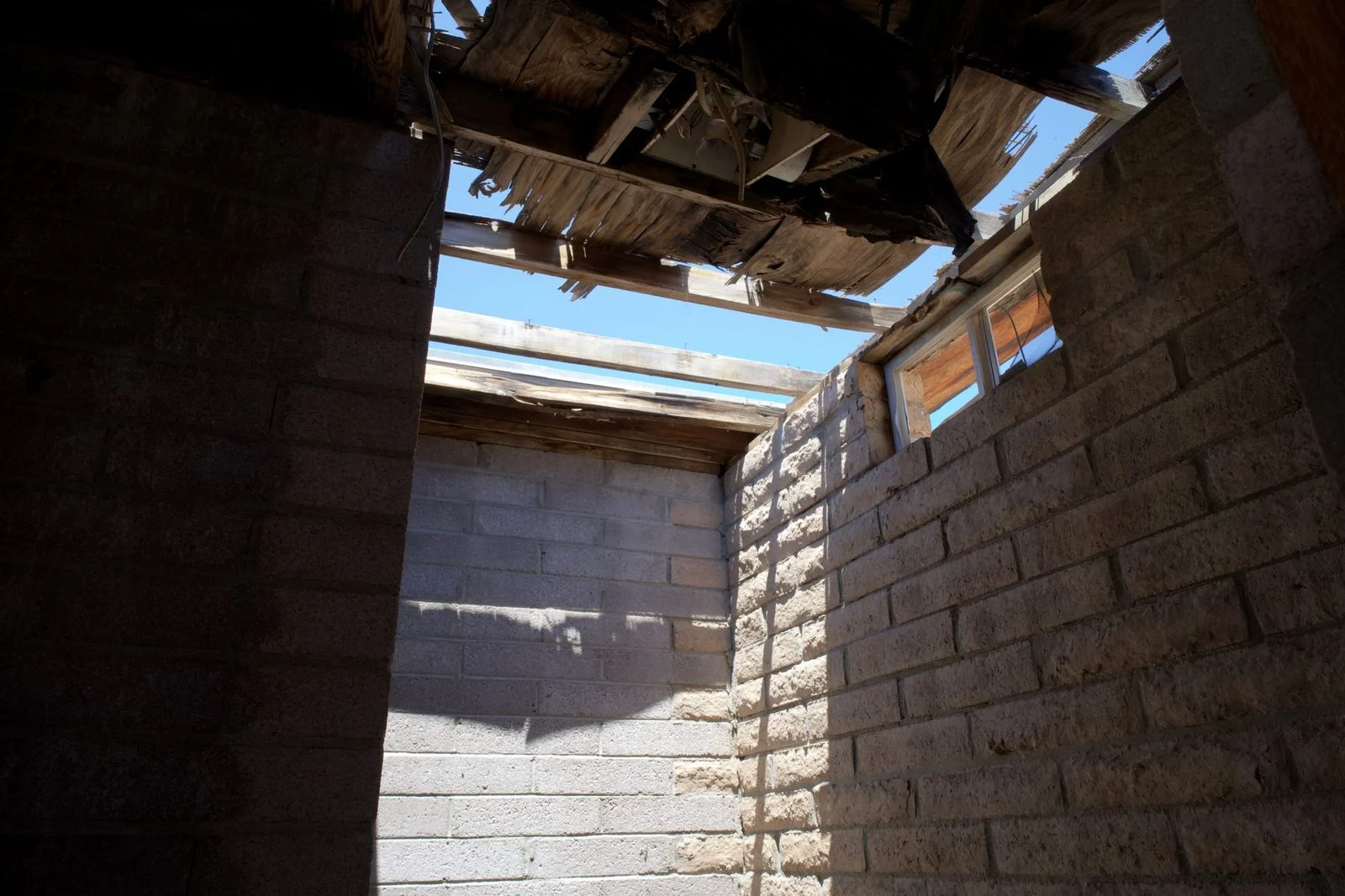
If a leak, storm damage, or an aging roof has you deciding on a replacement, you don’t have to sort it out alone. Some readers are handling a parent’s home. Others manage a rental. The owner-builder exemption may not fit either situation.
Can you replace your own roof in Florida if you live there?
Florida law may allow it for a one- or two-family home you own and occupy. You still need code compliance, permits, and your own direct supervision.
Do I need a permit to replace a roof in Florida?
A full replacement generally needs one.
How long do I have to report hurricane roof damage?
Florida law generally requires notice of an initial claim within 1 year after the date of loss. A supplemental claim has an 18-month limit.
Roof repair and insurance coverage
If you are weighing a replacement, ASP Superhome offers a free first consultation. It is confidential and comes with no obligation to continue (Spanish: consulta inicial gratuita, confidencial y sin compromiso). We can review your roof and your permit and insurance questions with you. Request a quote.
Check Before You Tear Anything Off
Do not remove shingles or tiles until you have confirmed the permit and code requirements for your home. Starting work first can cause delays and costly corrections.
Why Homeowners Talk With ASP Superhome
Free First Consultation
Start with a confidential conversation about your roof, with no obligation to continue.
Clear Options for Your Roof
Compare metal roofing, tile roofing, and full roof replacement to find the right fit for your home.
Built for South Florida Conditions
We focus on roofing and home upgrades designed for South Florida weather, including impact-resistant products.
Serving South Florida Communities
We work with homeowners in Miami, Fort Lauderdale, West Palm Beach, Kendall, Naples, Fort Myers, and Boca Raton.
Questions to Settle Before You Start
Confirm Your Property Type
Find out whether your home qualifies for owner-led work under Florida rules before you buy materials.
Plan Your Permits
A full replacement generally requires a permit. Build the permit timeline into your project schedule.
Review Code Compliance
Your new roof must meet current building codes, including wind-resistance and installation requirements.
Weigh the Safety Risks
Roof work is dangerous. Consider fall protection, equipment, and the time it takes to finish the job safely.


