


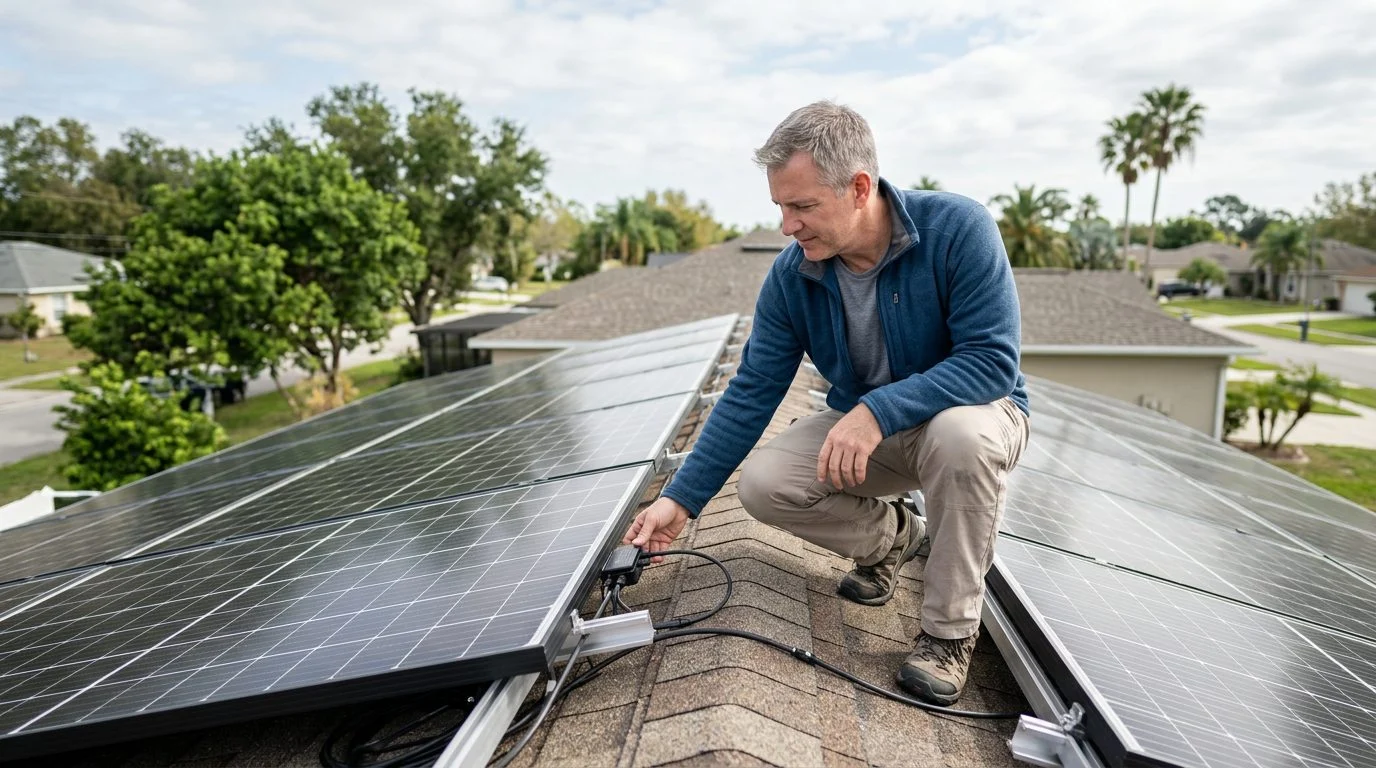
Solar Battery Backup | South Florida
How Much Is a Backup Battery for Solar Panels in Florida?
The price depends on battery capacity, the equipment you choose, and how much of your home you want to keep running during an outage. Here is what drives the cost.
By Jonathan Rodriguez · Published October 31, 2026
How much is a backup battery for solar panels? There is no single answer. The price depends on how much energy the battery stores, how much power it can deliver, how much of your home it must keep running, and what installation work is needed. This guide explains what sits behind a quote, so you can compare numbers on the same basis. If you’re reading this after a recent outage or before storm season, you’re in good company.
What a backup battery for solar panels typically costs
The total price is the battery hardware plus installation, and most quotes combine the two. The battery unit is only one part of a working backup system. Installed cost also covers the connection to your solar inverter, transfer equipment, wiring, and inspection.
That difference matters when you compare quotes. One provider may list only the battery unit. Another may list the complete installed system. Contact ASP Superhome for a free first consultation, which is confidential and carries no obligation to continue, to learn what a project total includes and what scope it covers.
Quoted prices also vary with capacity, brand, and how much of the home the battery must power. Two quotes for the same house can look far apart when they cover different battery sizes or different circuits. Match the scope first, then compare the price.
If a recent outage has you weighing battery backup, our team can look at your home's electrical details and outage concerns with you. Talk it through with our team — the first consultation is free, confidential, and carries no obligation.
What drives the price of a solar battery?
Battery capacity is the main cost driver. Capacity is measured in kilowatt-hours (kWh), which is the amount of energy the battery can store. More stored energy usually means a higher price.
Power output is measured in kilowatts (kW). It sets how many appliances can run at the same time. A battery can hold enough energy and still struggle to start a central air conditioner if its power output is too low. Many homeowners shop by capacity alone and miss this limit.
Brand, warranty length, and expected lifespan also shape the price. A longer warranty may come with a higher upfront cost. Read the warranty terms, not just the number of years.
Whole-home backup usually costs more than backing up only essential circuits. A whole-home system carries a larger load, so it needs more capacity and power.
How many batteries do you need?
Start with two questions. How much electricity does your household use each day? Which loads must stay on during an outage?
Write down your critical loads. These often include the refrigerator and freezer, medical equipment, ceiling fans, internet and work equipment, and any well or pool pump. Critical loads shape the size of the system more than anything else.
Capacity adds up across modules. Several smaller modules can reach the same total kWh as one larger unit. The better fit depends on wall space, the inverter, and whether you may add capacity later.
An installer typically sizes the system after reviewing your home’s electrical setup. That review covers your panel, the circuits you want to back up, and the solar equipment already in place. A sizing review gives you a real plan, not a guess.
LiFePO4 versus lithium-ion: how chemistry affects cost and life
LiFePO4 (lithium iron phosphate) batteries are generally known for long cycle life and stable chemistry. Lithium-ion is a broader family, with designs that differ in energy density. Energy density describes how much energy fits into a given size and weight.
UL Solutions describes how energy density, lifespan, and safety characteristics differ across battery technologies. Use that as a starting point when an installer proposes one chemistry over another.
A lower upfront price is not the whole comparison. A cheaper unit with a shorter life or weaker warranty can cost more over the years you own the home. Compare expected cycle life, warranty terms, and installer support along with price.
Installation, inverter compatibility, and other added costs
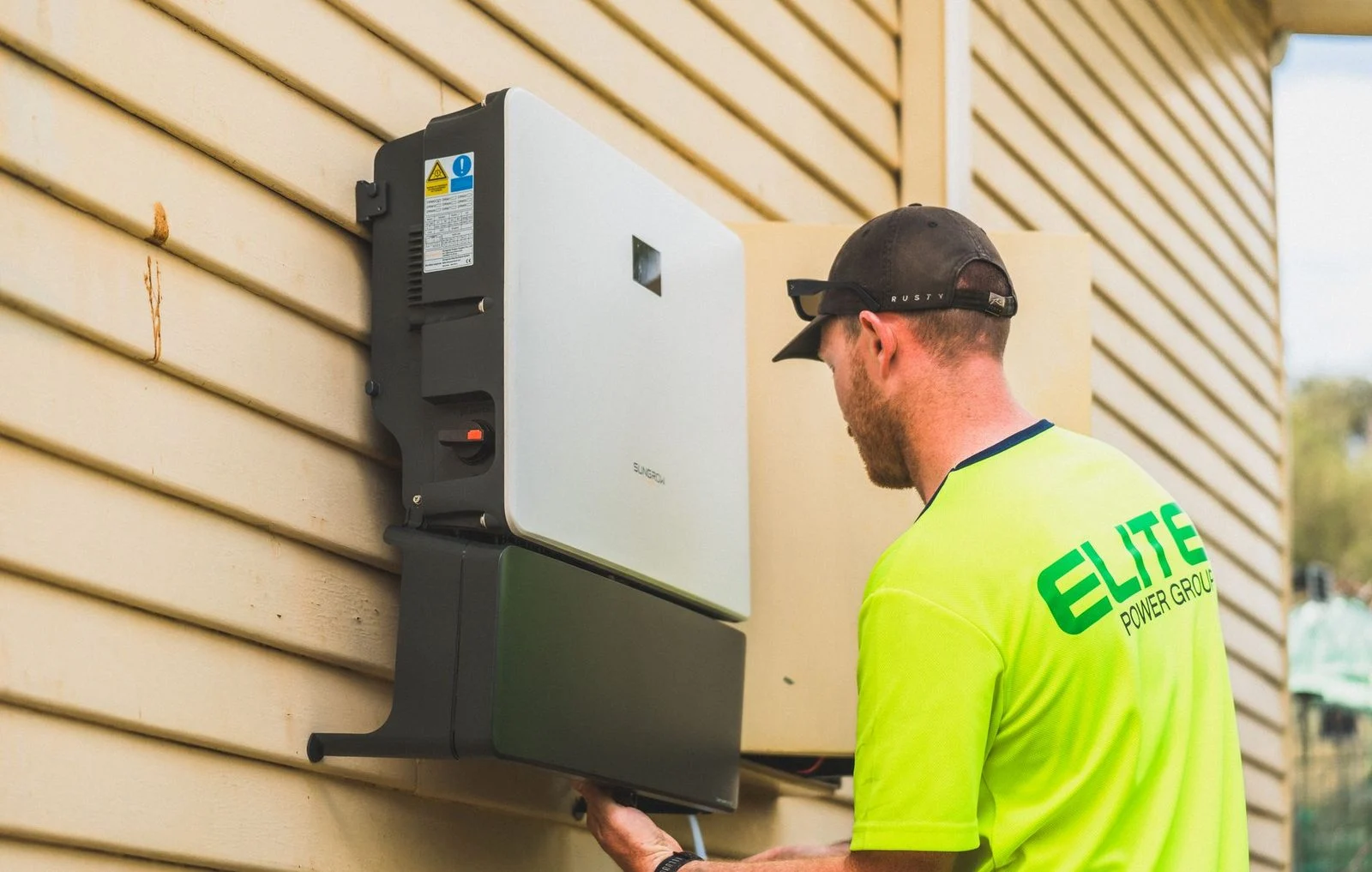
Installation often adds more to the bill than people expect. The battery must connect safely to your solar system and your home’s electrical panel.
Start with inverter compatibility. Check whether your existing solar inverter works with a battery, or whether a hybrid inverter is needed. This one choice can change the cost of the whole project.
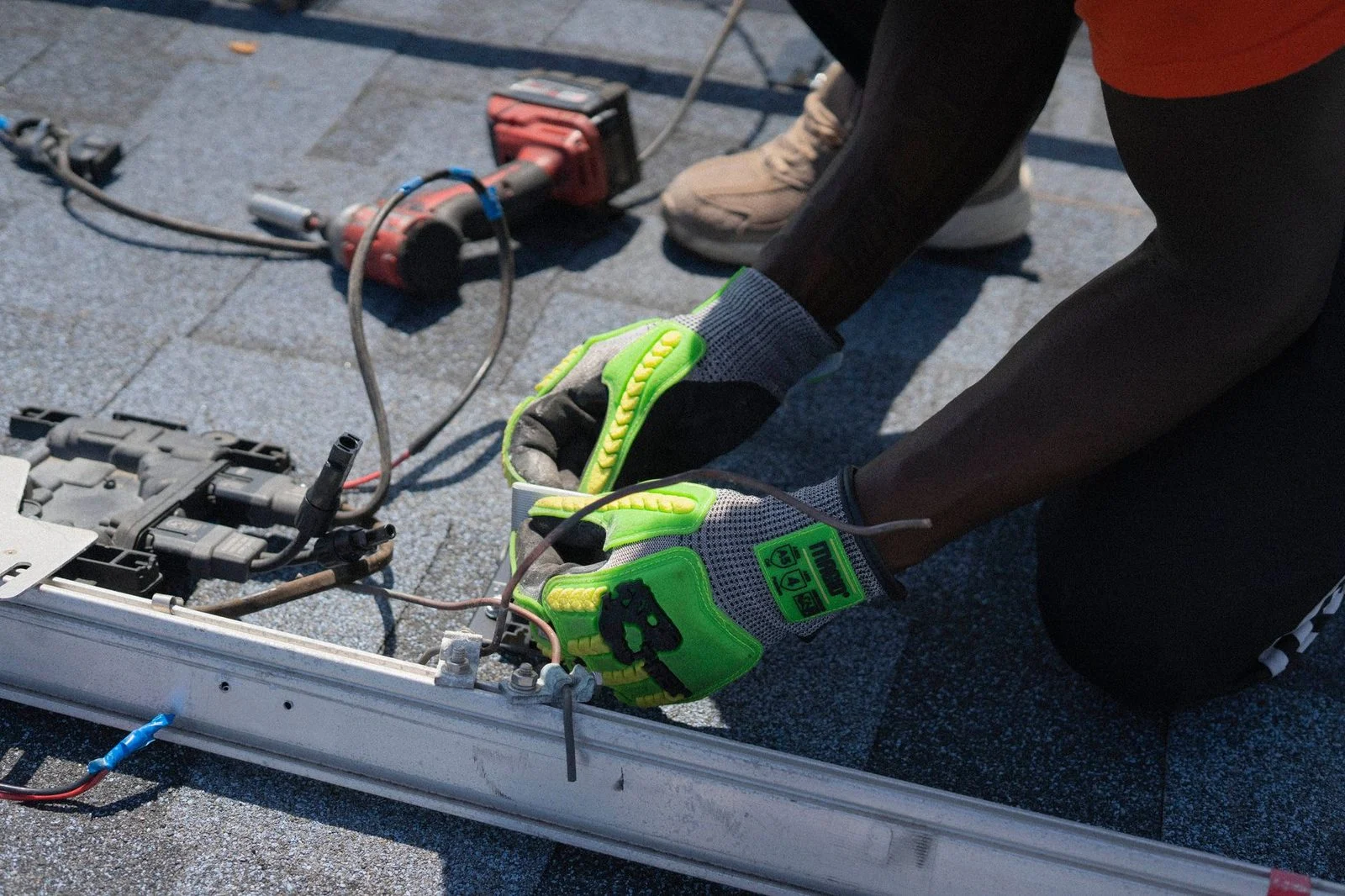
Next comes the electrical work. A transfer switch or backup subpanel decides which circuits the battery powers. Battery wiring connects the storage unit to the home’s electrical system, and our team can review the setup for your property.
Florida permit rules add steps. Under Fla. Stat. § 553.79, a permit is generally required before a building is altered or repaired, unless other law provides otherwise.
The 2026 Florida Building Code, Residential, now titles R328 as “Energy Storage Systems.” The 2026 code analysis says openings into the dwelling need solid wood doors at least 1 3/8 inches thick. Solid or honeycomb-core steel doors of that thickness also qualify, as does a door with a 20-minute fire protection rating. These doors must be self-latching and self-closing.
If your utility is investor-owned, its interconnection agreement may require a manual disconnect switch at your expense. See Fla. Admin. Code R. 25-6.065.
A battery added to an existing array can cost differently than one installed with a new system. The current inverter and wiring may need changes.
Is a battery worth it in South Florida?
A battery is worth it when your home needs backup power and your household can use stored energy well. South Florida storm season brings a real risk of power loss.
A battery keeps selected circuits running during an outage. That matters most for homes with medical equipment, food storage, or work-from-home needs.
Value depends on how often the home loses power, what it must keep running, and how long you plan to own the home. Batteries can also store solar energy for use after sunset. That changes the savings picture for some households more than others.
Federal tax rules also matter. The U.S. Department of Energy’s Solar Energy Technologies Office focuses on solar energy technologies. The IRS Residential Clean Energy Credit page describes a 30% credit that may cover eligible home battery storage, subject to qualifying-residence and expense rules. Under IRC § 25D, the credit does not apply to expenditures made after December 31, 2025. Confirm current eligibility before you count on it.
Labor counts too. 26 U.S.C. § 25D counts labor for onsite installation and for wiring that connects the equipment to the home.
Not sure what your next step is?
Talk it through with our team — the first consultation is free, confidential, and carries no obligation.
Adding a battery to a leased or 20-year solar system
A battery can be added to a leased solar system, but the lease sets a lot of the rules. Leased systems often have contract terms that affect whether a battery is allowed and who owns it.
Contact ASP Superhome to learn how a battery fits into your solar project, including any lease terms. Ask who owns the battery, whether the lease allows changes to the equipment, and what happens when the lease ends.
Those answers change the long-term picture more than the sticker price. Federal tax rules can also treat leased equipment differently from owned equipment, so ask about the tax effect too.
Get the lease terms in writing. A battery quote means little if the contract blocks the change or leaves ownership unclear.
Next step: get a battery cost estimate for your home
The useful next step is a review of your home’s electrical details and your must-run loads. That gives you an estimate built on your home, not a headline number.
You may be researching this for a home you share with family, after a recent outage, or before the next storm season. That’s a lot to weigh at once. You don’t have to sort it out alone.
Bring your panel details, your list of critical loads, and your current solar contract if you have one. Our team can speak to battery sizing and cost for homes in Miami, Kendall, Fort Lauderdale, Boca Raton, West Palm Beach, Naples, and Fort Myers. Your first consultation is free, confidential, and comes with no obligation to continue. Request your estimate with ASP Superhome.
Frequently asked questions
How much does a solar battery cost?
The price includes the battery unit and installation. It varies with capacity, brand, and how much of the home the battery powers.
Is LiFePO4 better than lithium-ion?
Neither is better for every home. Compare cycle life, warranty terms, and installed cost before you choose.
Can I add a battery to existing solar panels?
Often yes. Your inverter, wiring, and any lease terms decide what changes are needed.
Can a solar battery run my whole house?
It can, but whole-home backup usually costs more than backing up essential circuits.
What Shapes the Price of a Solar Battery
Battery capacity
Storage is measured in kilowatt-hours (kWh). A larger battery stores more energy and costs more up front.
Backup goals
Powering only essential circuits, such as the refrigerator, lights, and fans, needs less capacity than keeping the whole house running.
Equipment and brand
Battery chemistry, warranty terms, and the inverter that connects the battery to your system all affect the final price.
Installation and wiring
Labor, electrical upgrades, permits, and how the battery fits with your existing solar panels are part of the total cost.
How to Plan Your Budget
List your critical loads
Start with the appliances and circuits you need during a power outage. This sets the size of battery that makes sense for your home.
Decide how long you need backup
Consider how many hours of power you want to keep running. Longer backup times require more stored energy and a higher investment.
Review the warranty
Look at the battery's warranty length and terms along with its price. A longer warranty can make a higher price easier to justify over time.
Get a site-specific estimate
Your roof, electrical panel, and existing solar system all affect the final cost. A site review gives you a number based on your home.


