


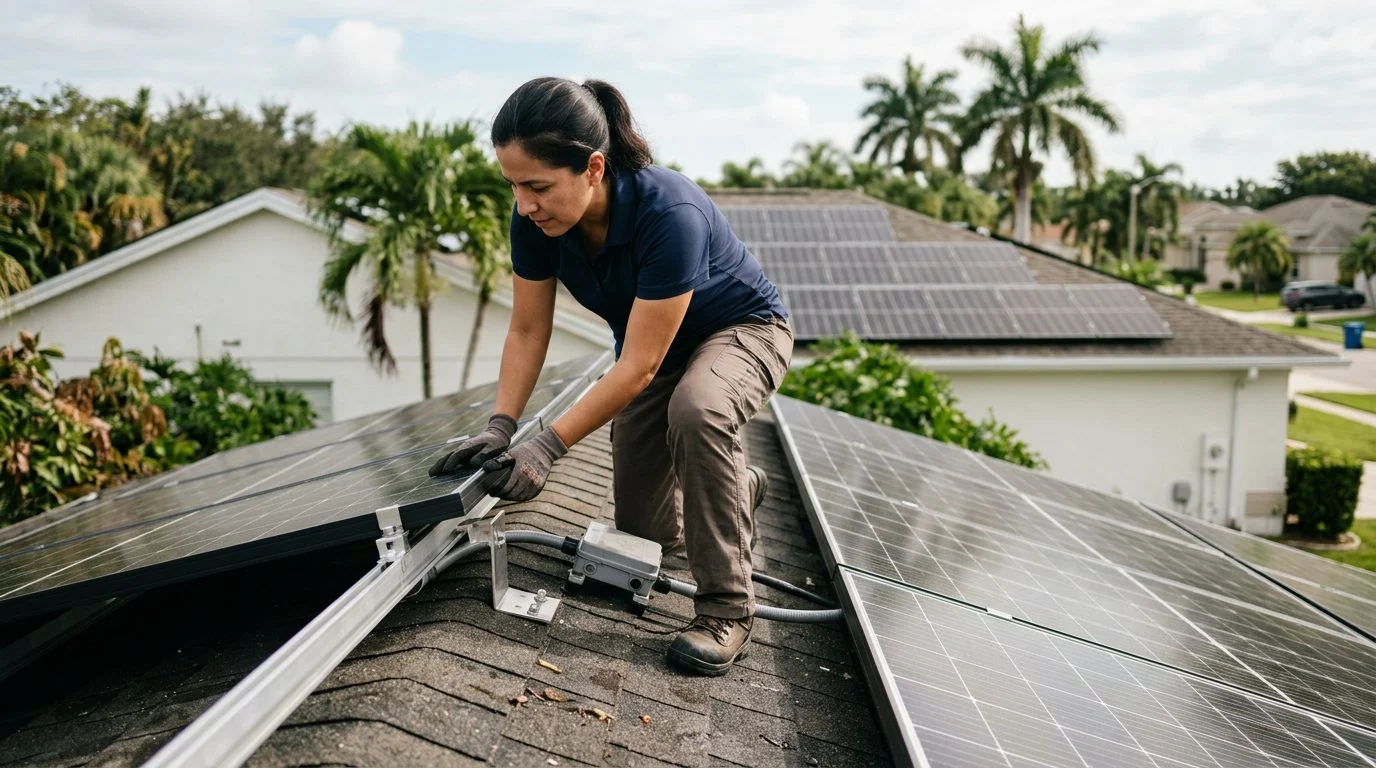
Solar Panels | South Florida Homes
What Solar Panels Cost on a 2,000 Sq Ft South Florida Home
Square footage alone doesn't set the price. Your electricity use, roof, battery choice, and permits do. Here is how to plan your budget with ASP Superhome.
By Jonathan Rodriguez · Published November 5, 2026
How Much to Install Solar Panels on a 2000 Sq Ft House in South Florida
The cost of solar on a 2,000 sq ft house follows the electricity the home uses, not its floor area. Yearly kilowatt-hours (kWh) set the system size. Roof condition, battery choice, and permits then shape the final price.
If you’re asking how much to install solar panels on a 2000 sq ft house, you’re probably gathering numbers before you decide anything. That’s a sensible place to start. This guide shows the math behind the price. The example is illustrative, not a quote.
If you're gathering numbers for a parent's home, we can turn your bills and roof details into a clear quote for that house. Talk it through with our team — the first consultation is free, confidential, and carries no obligation.
Why square footage alone can’t answer the cost question
Square footage describes the building. It doesn’t describe the power the building uses. Two 2,000 sq ft homes can need very different systems. One may run central air all summer, a pool pump, and an EV charger. The other may use far less.
Sizing starts with the household’s electricity use. Square footage is a rough clue, not the answer. Keep that in mind as you read the steps below.
Sizing the system from electricity use
Start with twelve months of utility bills to find the home’s total yearly kWh. Add up all twelve. One summer bill can mislead, because air conditioning in South Florida pushes usage up for several months. The 12-month total gives a fair picture.
Next, divide the yearly kWh you want to cover by the yearly output each installed kilowatt makes at your site. The result is an approximate AC size in kilowatts. Florida’s interconnection and net metering rule ties AC and DC capacity together. For inverter-based systems, it multiplies total DC nameplate capacity by .85 to get AC nameplate capacity. So you can work backward from an AC rating to the DC panel total.
Here is an example. Assume a home uses 12,000 kWh a year. Assume the site estimate says each installed kW makes 1,000 kWh a year. Both numbers are assumptions for illustration. Covering 12,000 kWh needs about 12 kW of AC output. Divide by 0.85 and you get about 14.1 kW DC. With 400-watt panels, that’s about 36 panels. Change one input and the count changes.
Roof direction, shade from trees or nearby buildings, and roof pitch all change what a system produces. The U.S. Department of Energy homeowner’s guide to solar lists climate, roof age, tree cover, size, shape, and slope as factors in rooftop solar suitability.
What drives the total installed price
The installed price adds up the system size, equipment, labor, electrical work, permits, and any roof work. A larger AC target means more panels, more racking, and more wiring.
Equipment includes the panels, the inverter that converts DC power to AC, and the mounting hardware. Labor covers installation and the wiring that connects the system to the home. Labor costs properly allocable to the onsite preparation, assembly, or original installation of covered property are included in qualifying expenditures under IRC § 25D, but the credit does not apply to expenditures made after December 31, 2025, as the statute explains.
Permits and inspections add steps.
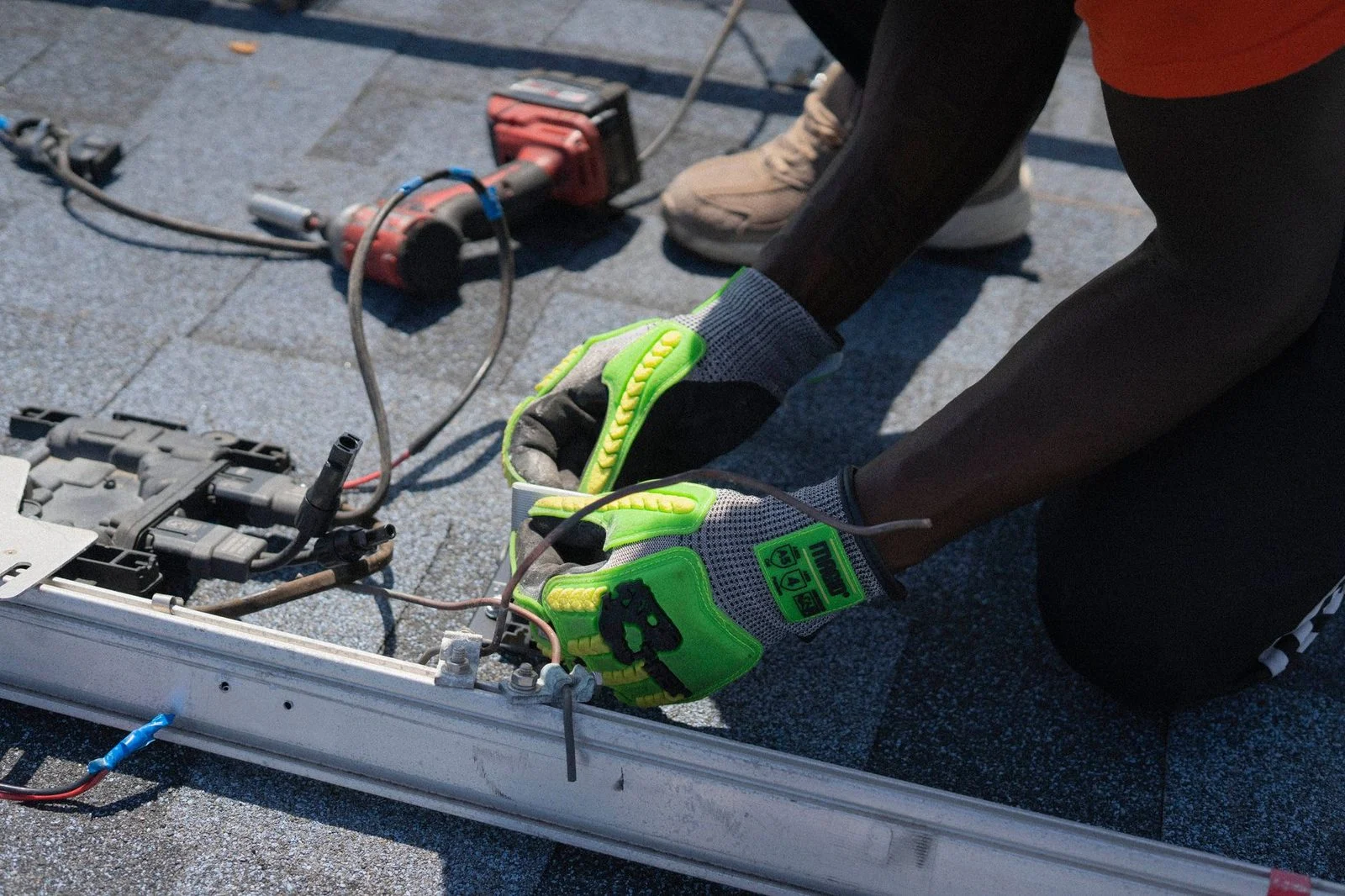
Roof material also changes the job. Shingle, tile, and metal roofs each need different mounting methods. The installer has to match the hardware to the roof you have. The example above is a model. A site visit turns it into a quote for one specific house.
Adding battery backup to the estimate
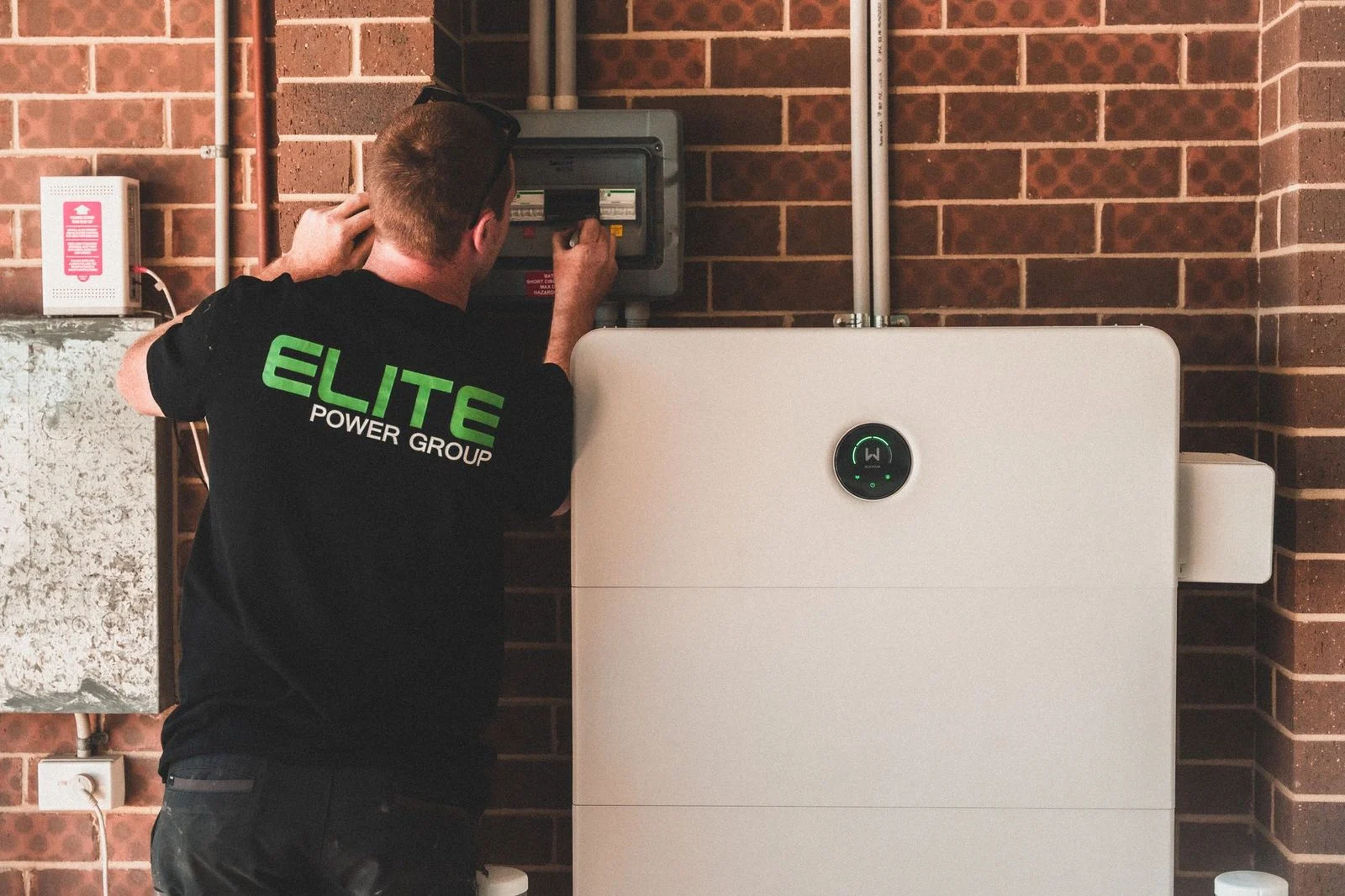
A solar battery backup stores extra daytime solar power. The home can use that power later, such as in the evening or during an outage. Battery sizing starts with the loads you want to run during an outage. Common choices include the refrigerator, some lights, ceiling fans, and a few outlets.
Whole-house backup is one choice, not the default. It costs more because it stores and delivers much more energy. A battery is a separate line item in the estimate. It adds cost and changes the payback picture. Compare a solar-only quote with a solar-plus-battery quote. Don’t assume one includes the other.
The Florida Building Commission’s 2026 code change analysis shows the storage section was retitled from “Stationary Storage Battery Systems” to “Energy Storage Systems.”
Preparing the roof before solar goes on
Check the roof’s age and condition before panels go on. Solar panels stay mounted for many years, so a weak roof under them creates trouble later. Pulling panels off to fix the roof means extra labor and extra time. Repair or replacement done first avoids that.
Exception 2 has been revised to allow the upper roof covering or roof system to only be removed, when recovering provided the existing or repaired substrate is adequate for installation of new approved roof covering or roof system. Source: 2026 code change analysis. The upper roof covering may be removed when recovering, if the existing or repaired base is adequate for the new covering. In plain terms, the condition of the roof base decides whether a new covering can go over the old one.
We also handle roof repair, roof replacement, tile roofing, and metal roofing. That includes roof repair, roof replacement, tile roofing, and metal roofing.
Not sure what your next step is?
Talk it through with our team — the first consultation is free, confidential, and carries no obligation.
Incentives, financing, and net cost
Gross cost is the total on the proposal before any incentives. Net cost is what remains after the incentives and credits that apply to you. Keep these two numbers separate when you compare quotes.
The federal residential clean energy credit is a tax credit. The IRS page on the Residential Clean Energy Credit provides further detail on the credit, which does not apply to expenditures made after December 31, 2025.
Florida net metering adds its own rules. Under the Florida interconnection rule, energy credits offset your usage in later months for not more than twelve months. At year end, the utility pays for unused credits at an average annual rate based on its COG-1 as-available energy tariff. Under Fla. Stat. § 193.624, the just value of a residential renewable energy source device may not be considered in assessed value.
Incentive rules and financing terms change over time. Use the figures that reflect the rules in effect on the date of the proposal. Compare total price, included equipment, warranty terms, and monthly financing cost side by side. If a sale is a home solicitation sale, the buyer may cancel until midnight of the third business day after signing by giving the seller written notice of cancellation in person or by mail at the address in the agreement, under Fla. Stat. § 501.025.
Take the next step with your bills and roof details
To get a real number, you need twelve months of bills, your roof’s age and material, and your plans for new loads. Those three items turn this example into a figure for one house.
If you’re gathering this for a parent’s home, or you didn’t expect to weigh solar this year, wanting a clear number before you commit is reasonable.
Gather these items first:
- Twelve months of utility bills
- Roof age and roof material
- Planned additions, such as an EV charger, pool equipment, or a new air conditioner
Our free first consultation is confidential and carries no obligation to continue (consulta inicial gratuita, confidencial y sin compromiso). Bring your bills and roof details to it. To request a quote for your house, contact us here.
For more background, see our solar panels page, our Miami-Dade and Fort Lauderdale solar pages, or our Spanish-language Miami page.
Frequently asked questions
How much to install solar panels on a 2000 sq ft house?
The final price depends on the facts of your house. Yearly electricity use, roof condition, battery choice, and permits all shape it.
How many solar panels does a 2000 sq ft house need?
The count follows yearly kWh use, not square footage. The worked example above needed about 36 panels of 400 watts, under stated assumptions.
Can a battery power the whole house?
A battery can cover the loads you choose, such as refrigeration, lights, and fans. Whole-house backup is a separate choice and costs more.
Does the federal credit cover solar?
Qualifying solar costs fall under the federal residential clean energy credit only for expenditures made on or before December 31, 2025, so the credit may not be available for your purchase. The IRS page sets out the rate and the covered period.
Should the roof be replaced before solar?
Often the roof should be checked first, since panels stay mounted for years. Repair or replacement done beforehand can avoid removing panels later.
What Shapes Your Solar Price
Yearly electricity use
Your annual kWh usage determines how many panels your home needs, more than its size does.
Roof condition
The age, material, and structure of your roof affect installation planning and overall scope.
Battery backup
Adding solar battery backup changes the system design and cost, and it depends on how you want to use stored power.
Permits and paperwork
Permitting requirements vary by project, so they are part of the estimate for your specific home.
How to Prepare for Your Estimate
Gather your power bills
Twelve months of electricity bills show how much energy your home uses, which is the starting point for system sizing.
Note your roof details
Know your roof type, approximate age, and any past repairs or replacements so the estimate reflects your home.
Decide on battery backup
Think about whether you want backup power during outages or mainly want to lower your bills. Your answer shapes the design.
Talk through the plan
Our team will review your goals, walk through the options, and explain what the estimate covers.


