


Solar Battery Backup | South Florida
Find the Right Spot for Your Solar Battery
Location affects how well your home battery performs, lasts, and stays protected from South Florida heat, humidity, and storms. Here is what to consider before installation.
By Jonathan Rodriguez · Published October 24, 2026
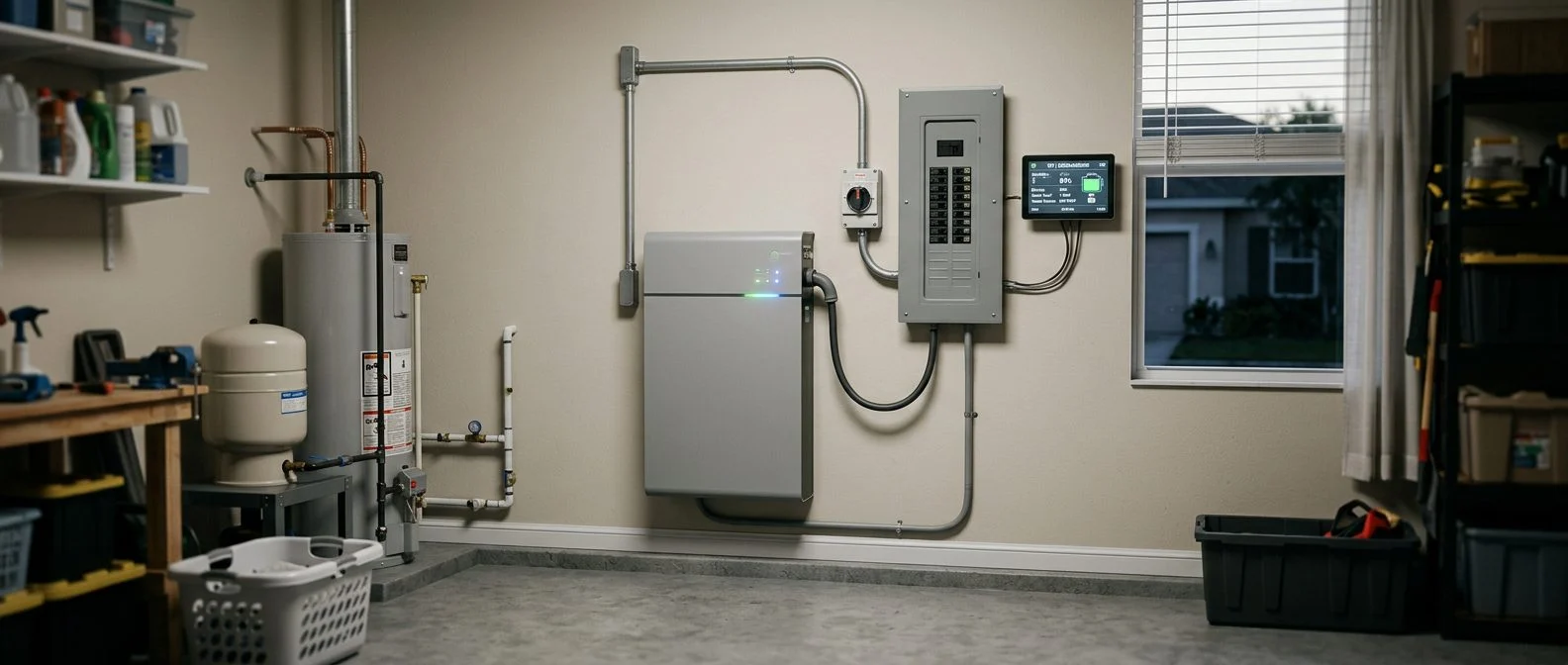
A solar battery usually goes in the garage, on an exterior wall, in an interior utility space, or under a covered lanai or porch. The right spot depends on the battery model, your home’s layout, and local building rules. If you’re searching for where to install solar battery in home, this guide walks through each option for a South Florida house.
Heat, humidity, salt air, and hurricane season change the answer more here than in many other places. Homes in Miami, Fort Lauderdale, West Palm Beach, Kendall, Naples, Fort Myers, and Boca Raton all face these conditions.
Many readers research this for a parent’s house or a rental they manage. That’s a fair place to start. This page gives you the factors to weigh before anyone looks at the site. For the basics, read our solar battery backup overview.
Where Solar Batteries Usually Get Installed in a Florida Home
Most solar batteries go in one of four places: the garage, an exterior wall, an interior utility or mechanical space, or a covered area such as a lanai or porch. The best choice for one home can be a poor choice for another.
Three things shape the decision. The first is the battery model and its environmental rating. The second is the layout of your electrical panel. The third is what local building rules allow. The Florida Building Code contains all laws and rules that govern the design, construction, alteration, modification, repair, and demolition of public and private buildings, structures, and facilities, so the permit process matters.
Heat exposure and clearance from walls and equipment round out the list. The sections below cover each factor in plain terms.
If you're weighing a battery for a home you help manage, we can look at your garage, wall, or utility space with you and talk through heat, clearances, and the path to your panel. Talk it through with our team — the first consultation is free, confidential, and carries no obligation.
Garage, Exterior Wall, Utility Room, or Covered Porch: Comparing Locations
Each location trades convenience against exposure. No single spot works best for every home.
Garage
A garage is often close to the electrical panel and easy to reach for service. The trade-off is heat. Parked vehicles, the garage door, and a hot roof above can push temperatures up. Ventilation matters here.
Exterior Wall
An exterior wall keeps the unit out of living space. It also faces direct sun, rain, and wind-driven rain. Near the coast, salt air can wear on metal parts, so the enclosure rating deserves a close look.
Interior Utility Room
An interior utility or mechanical closet usually gives the most controlled temperature. It still needs airflow. It also needs enough working room for an installer to service the unit safely.
Covered Lanai or Porch
A covered lanai or porch blocks direct rain and much of the sun. Make sure airflow stays open. Also confirm the spot stays easy to reach over time.
Do Solar Batteries Need to Be Under Cover?
Not every battery needs a roof over it. Most do need protection that matches the manufacturer’s stated environmental rating.
Some models are rated for outdoor installation. Others are made for indoor or semi-protected spaces. The rating appears in that model’s documentation, and it differs by brand and by unit.
In South Florida’s rainy season, direct sun and standing water are the main concerns. An enclosure or cover is one way installers handle that exposure when the rating calls for it. Ask the installer which rating applies to the exact unit you’re considering.
How Heat and Humidity Shape Battery Placement in South Florida
Heat and humidity are the biggest local factors in where a battery should sit. Batteries work inside an operating temperature range. The manufacturer publishes that range, and the installation has to keep the unit within it.
Walls and garages that take afternoon sun can run hot, especially on west-facing sides. Shade and airflow often decide whether a spot works. This matters in Miami, Fort Lauderdale, Boca Raton, and Fort Myers, where summer heat is part of daily life.
Humidity and salt air add another issue. Near the water, corrosion can affect enclosures and connections. Naples and Boca Raton homes close to the coast should weigh this early in the plan.
Once the battery is in place, how it releases stored energy at different times of day also matters. For that, see solar battery time-of-use savings in Florida.
Space and Clearances: How Much Room a Battery Needs
A battery needs clear space for service access, airflow, and a path to the electrical panel. The exact clearance figures come from the product itself.
Manufacturer specifications set minimum clearances from walls, ceilings, and other equipment. They also set spacing between units when more than one battery is installed. Those figures come from each product’s installation manual and the installer’s review of your site.
Footprints differ by design. A wall-mounted unit needs a sound, flat surface. A floor-standing unit needs floor space and a clear front. Stacked modules need room for units you might add later.
Plan for a walkway too. An installer needs a clear route to reach the unit for maintenance.
Inverter, Wiring Distance, and How Solar Panels Connect
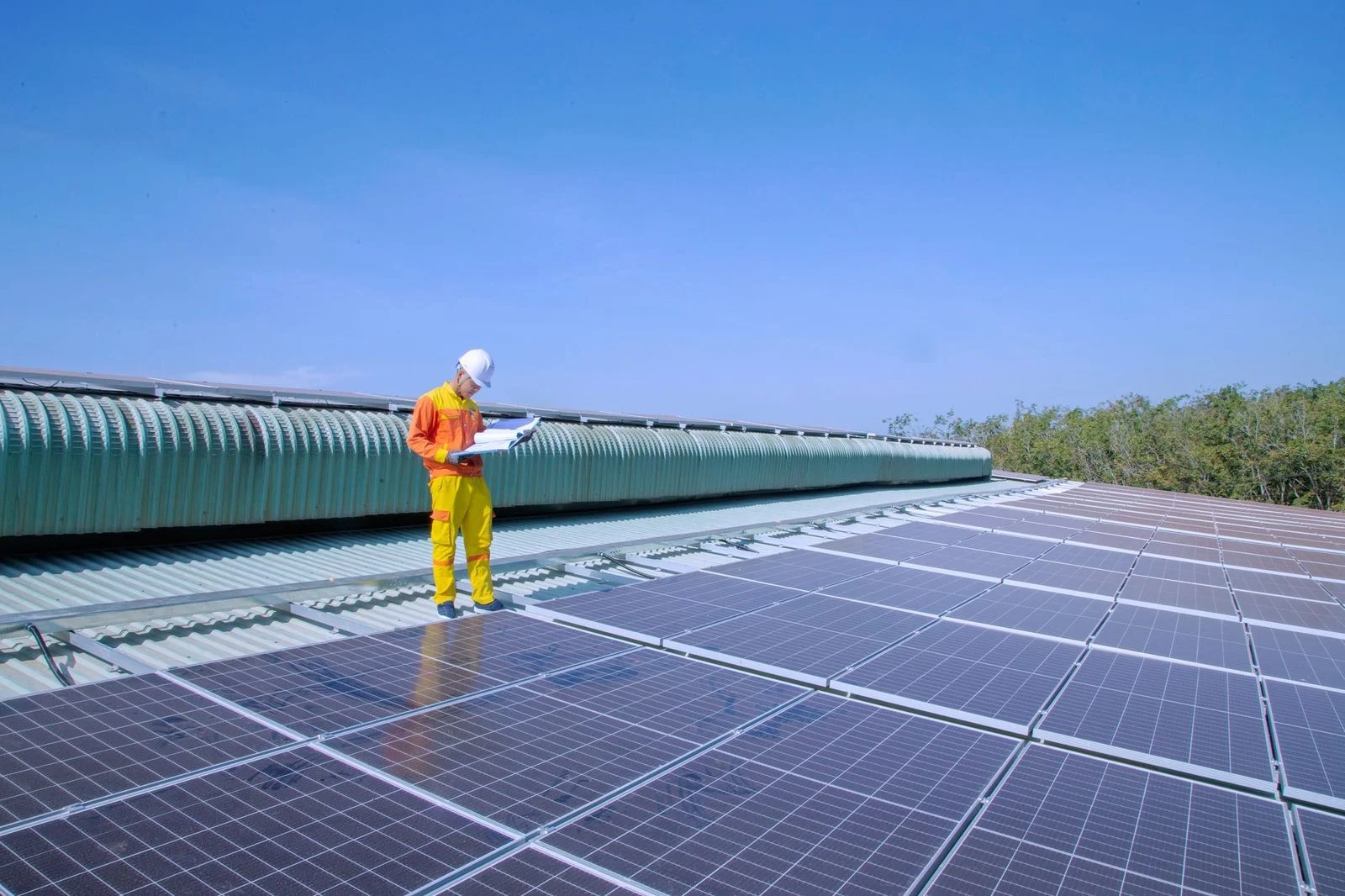
Solar panels make DC power. An inverter changes that power to AC power for your home. A battery system uses an inverter or inverter-charger to store and release energy through the same kind of conversion.
Florida’s interconnection rule states its purpose and the utilities it applies to. Under Florida’s rule on customer-owned renewable generation, the purpose is to promote the development of small customer-owned renewable generation, particularly solar and wind energy systems, and the rule applies to all investor-owned utilities, except as otherwise stated in subsection (10).
Shorter wire runs between the battery, the inverter, and the panel connection usually make the layout simpler. Installers typically plan the inverter and battery together with the electrical panel and the main service connection.
Not sure what your next step is?
Talk it through with our team — the first consultation is free, confidential, and carries no obligation.
Code, Fire Safety, and Habitable vs. Non-Habitable Spaces
Local building rules decide which spaces are allowed. Habitable rooms such as bedrooms and living areas are usually treated differently from garages and utility spaces.
Wall and roof materials matter too. Combustible and non-combustible materials can change where a unit may mount. The building’s construction is part of the plan.
Lithium-ion batteries carry fire risk. UL Solutions reports on lithium-ion battery incidents, including reported injuries and fatalities. The same reporting notes limits in the available safety data. For more on precautions, see solar battery fire safety in Florida.
Florida law also sets rules for who may do this work.
Planning for Storms: Placement and Hurricane Season
A battery’s location affects how well it handles wind-driven rain, flooding, and debris during hurricane season. Each spot carries different risks.
A covered spot blocks direct rain, but wind can still push water sideways. A low-lying spot can take on water in heavy storms. A spot away from loose objects and overhanging limbs lowers debris risk.
Secure mounting and protected access both matter. A unit that’s hard to reach after a storm is harder to check. For storm steps, see hurricane season preparation for solar batteries.
Talk Through Your Home’s Battery Location
A site review answers the questions a placement guide can’t. It looks at the garage, wall, or utility space you have in mind. It checks heat exposure, clearances, the route to your panel, and the rating the battery needs.
If you’re researching this for a parent, a relative, or a rental you manage, you don’t need every answer yet. Bring the layout you know and the questions you have.
Our first consultation is free, confidential, and comes with no obligation to continue (consulta inicial gratuita, confidencial y sin compromiso).
Ready to talk through your home’s layout? Request a quote with ASP Superhome, and we’ll look at your garage, wall, or utility space with you.
Common Questions
Can a solar battery go in a garage?
Yes, garages are a common spot. Heat and ventilation need careful attention there.
Do solar batteries need to be under cover?
It depends on the unit’s environmental rating. Check the rating for the exact model.
Is there a federal tax credit for home batteries?
The IRS Residential Clean Energy Credit page explains current eligibility and limits.
What to Weigh When Choosing a Location
Heat and ventilation
Batteries work best within the temperature range in their specifications. Spots with airflow and limited direct sun help protect performance.
Weather exposure
Rain, humidity, and wind-driven storms are common in South Florida. Consider whether the location offers shelter, and check the environmental rating for the exact model.
Distance to the panel
A shorter run between the battery, the solar system, and your electrical panel can simplify wiring and keep the layout clean.
Access for service
Leave room for maintenance, inspection, and future upgrades, and keep the area clear of clutter.
Common Installation Locations
Garage
A popular choice for its proximity to the electrical panel. Heat buildup and ventilation need careful planning in a closed garage.
Utility or laundry room
Often indoors and easier to keep at a stable temperature, though space and airflow should be reviewed before installation.
Exterior wall
Keeps the unit out of the living space. Shade, weather protection, and the unit's environmental rating are key factors.
Side or back of the home
Can offer a convenient location near the solar equipment. Protection from direct sun and driving rain should be considered.
Check the Rating Before You Decide
Environmental ratings and temperature limits vary by battery model. Confirm the requirements for your specific unit before choosing a location.
Plan Your Solar Battery Installation With Us. Start With a Free First Consultation, Confidential and With No Obligation to Continue.
Related practice areas
- Is a Shattered Sliding Glass Door Covered by Insurance?


