


Solar Panels | South Florida Guide
What Is a Solar Inverter, and Why Does It Matter for Your Home?
A clear guide to the part of your solar system that turns sunlight into power your home can use, from ASP Superhome.
By Jonathan Rodriguez · Published November 8, 2026
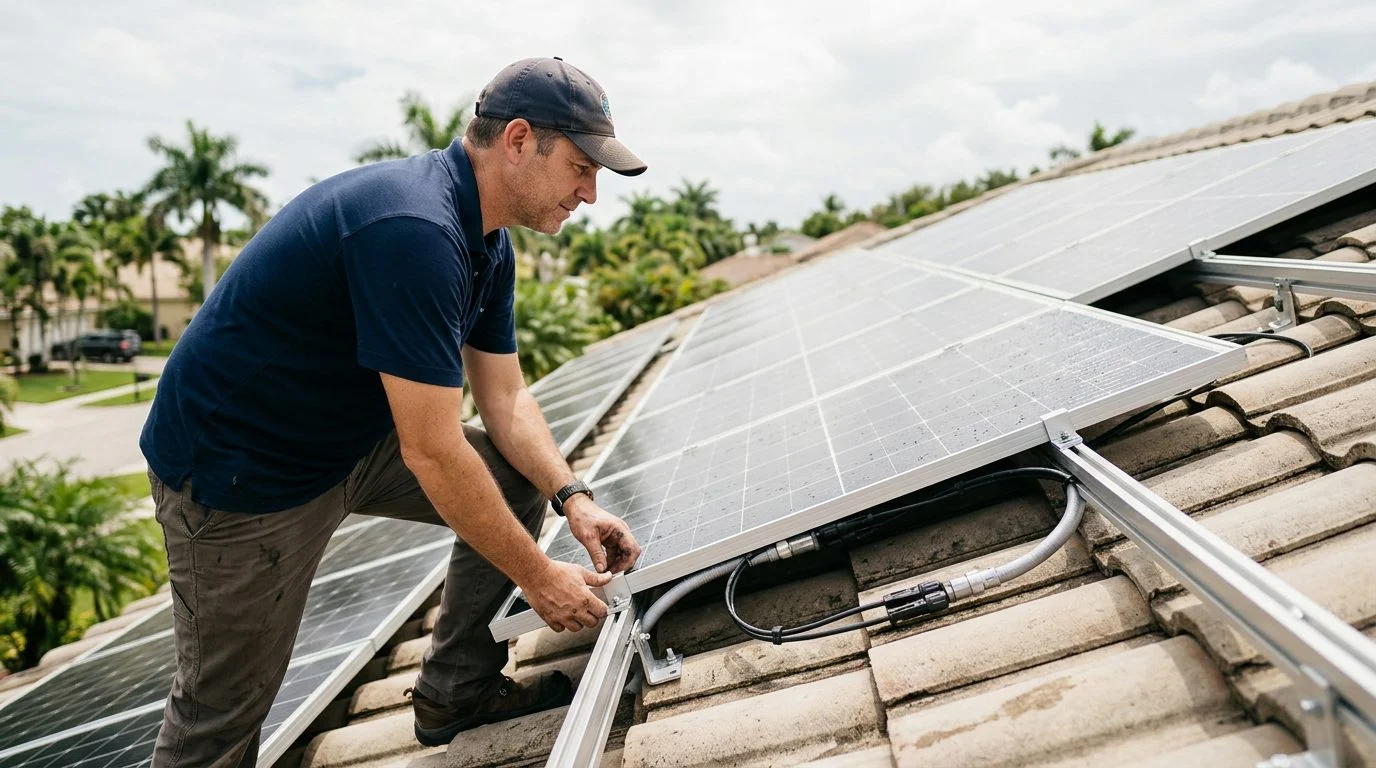
What is a solar inverter? It’s the device that changes the electricity from your solar panels into a form your home can use. Panels make one type of current, and your appliances need another. The inverter is the bridge between them. Here’s what it does, how it works, and how it fits with battery backup in South Florida.
What Is a Solar Inverter?
A solar inverter converts direct current (DC) from solar panels into alternating current (AC). AC is the type of electricity that most home outlets, appliances, and utility grids use.
Solar panels produce DC, which flows in one steady direction. AC flows back and forth. Your air conditioner, refrigerator, and lights are built to run on AC. Without an inverter, panel power can’t run a standard South Florida home.
The inverter sits between three parts of the system. The panels feed it on one side. Your home’s electrical panel receives its AC output on the other side. Where the system connects to the utility grid, the inverter links the home to that grid too. If you add a battery, the inverter usually connects to it as well.
For the bigger picture on storage, read our solar battery backup guide for South Florida.
If you're looking into an inverter for a family member's home, or a battery decision you didn't plan for, our team can talk it through with you. Talk it through with our team — the first consultation is free, confidential, and carries no obligation.
How a Solar Inverter Works
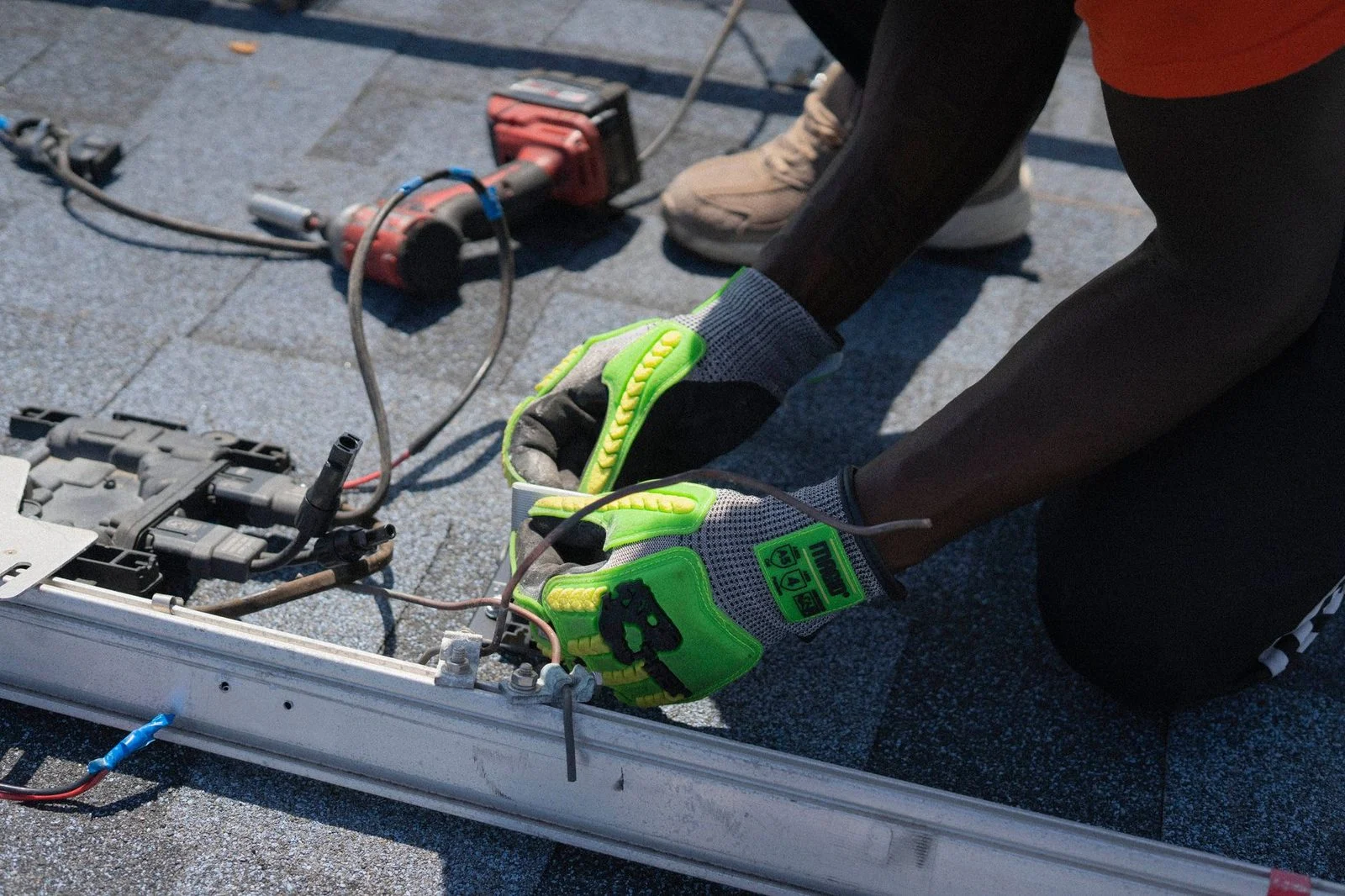
A solar inverter takes DC power from the panels and switches it into AC power your home can use. It does this with electronic circuits that rapidly switch the current, shaping it into a steady AC wave.
Here’s the sequence. Sunlight hits the panels. The panels produce DC electricity. That DC power flows into the inverter. The inverter converts it to AC that matches your home’s voltage and frequency.
Inverters also manage power flow. They decide where the electricity goes: to your home, to a battery if one is installed, or out to the grid. Most inverters also track system performance. That’s how owners check how much power their panels produced.
The key point is simple. The inverter doesn’t create power. It converts the power the panels produce, so output rises and falls with the sunlight reaching the panels.
Types of Solar Inverters
The three main types are string inverters, microinverters, and hybrid inverters. Each one suits a different system layout. The right choice depends on your roof, your panel layout, and whether you want a battery.
String inverters are one central unit. A row of panels wires together and feeds into that single box. This is a common, long-used design.
Microinverters are small units mounted at each panel. Each panel converts its own DC power to AC. One panel’s output doesn’t have to pass through a central box.
Hybrid inverters are built to work with a battery. They manage solar input, battery charging, and household supply in one unit. If a battery is part of your plan now or later, a hybrid design is worth asking about early.
Roof type matters too. The DOE homeowners guide to solar says rooftop solar suitability turns on climate, roof age, tree cover, size, shape, and slope. That applies to homes with tile roofs as well.
Common Questions About Solar Inverters
Here are short answers to the questions people ask most. Each answer depends on how the system is built.
Does the solar inverter turn off at night?
The inverter has no solar input at night, because panels make no power in darkness. A system with a battery can supply stored power after dark, depending on how it’s designed.
Can you run AC on a solar inverter?
The inverter’s AC output feeds your home’s circuits, and air conditioning is one of those loads. What the system can run at one time depends on its size and whether it has a battery.
Can you run an inverter directly off a solar panel?
Not as a standalone power source. An inverter is part of a complete system. It takes its input from panels or a battery, and it isn’t something you plug into a wall outlet.
For more on runtime, see our guide to solar inverter runtime questions.
How the Inverter Connects to Batteries and the Grid
In a battery system, the inverter controls charging from the panels and power flowing out to your home. The cited rule addresses grid-connected systems.
The purpose stated in Fla. Admin. Code R. 25-6.065 is to promote the development of small customer-owned renewable generation, particularly solar and wind energy systems, and the rule applies to all investor-owned utilities, except as otherwise stated in subsection (10).
It also addresses notice from the investor-owned utility to the customer, such as giving prior notice of disconnection to the extent practicable, or leaving a door hanger if prior notice is not given. Read the full text in Fla. Admin. Code R. 25-6.065.
Florida’s 2026 building code also changed one term. The energy storage section moved from “Stationary Storage Battery Systems” to “Energy Storage Systems.” The Florida Building Commission’s 2026 analysis of changes lists that change as a title change.
Because the inverter and battery work together, the inverter you choose shapes what the battery can do. That’s why it’s worth deciding both at the same time.
Talking Through Your Inverter Options With Our Team
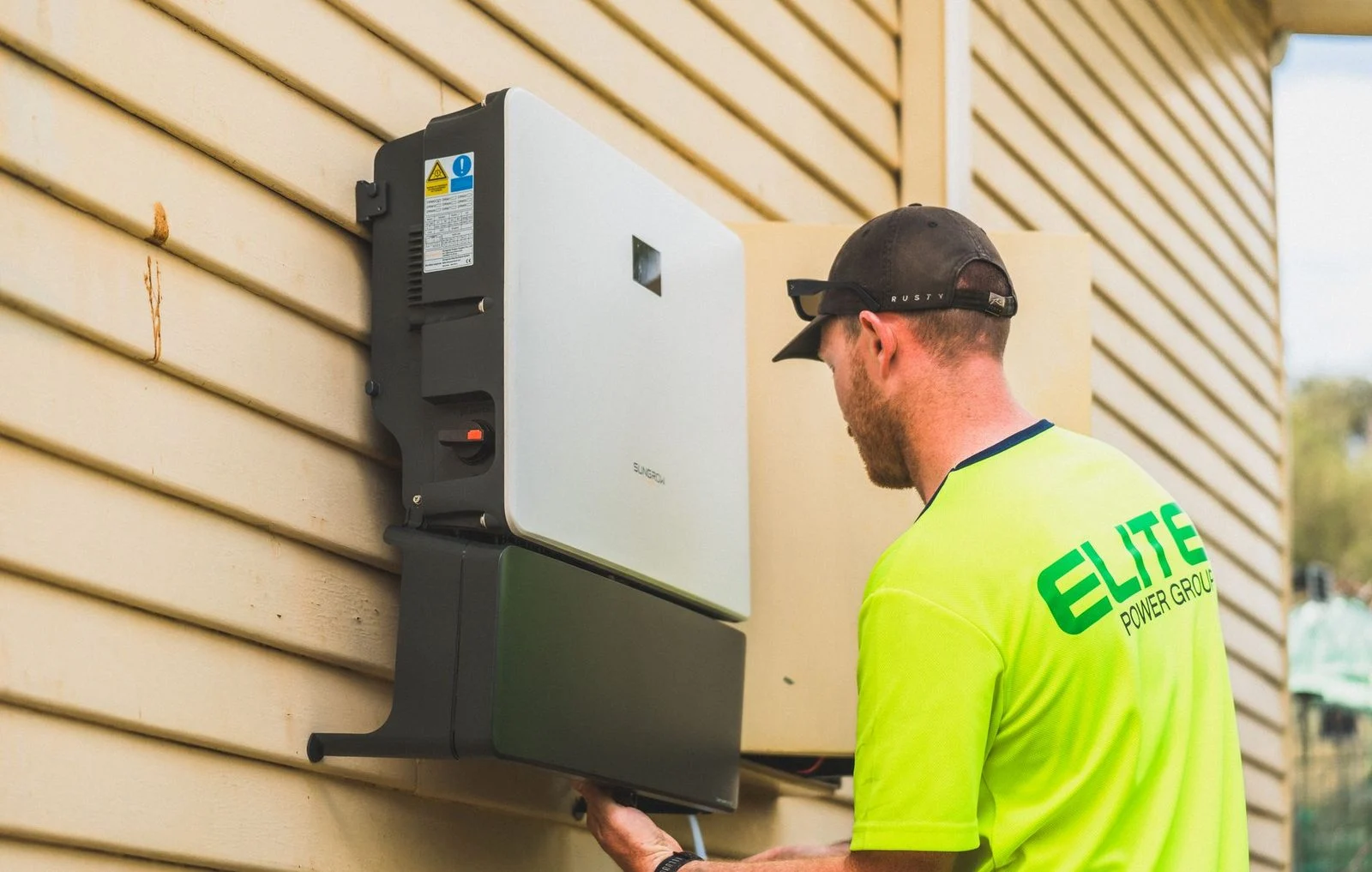
Our team can help you see how an inverter would fit your roof, your panels, and your backup goals. The first step is a conversation, not a commitment.
Maybe you’re researching this for a parent or relative. Maybe a panel or battery decision landed on you during a hard stretch at home. That’s a lot to take in at once. You don’t have to sort out the roof, the wiring, and the battery alone.
Our first consultation is free, confidential, and comes with no obligation to continue. Request your free estimate and we’ll walk through your options with you.
Why Homeowners Start with a Conversation
Free first consultation
Your initial consultation is free, confidential, and comes with no obligation to continue.
Plain-language answers
We explain how an inverter fits with your panels, battery backup, and home's electrical needs, without jargon.
Whole-home perspective
Solar, roofing, impact windows, and doors are planned together, so each part of your home works well with the others.
Clear next steps
Our team walks you through options and a quote so you can decide at your own pace.
Tip: Plan Your Battery Backup Early
If you may want battery backup later, ask about an inverter that can support a battery from the start. Planning ahead can make future upgrades simpler and help the system match your household's needs.
Questions to Bring to Your Consultation
How much of my home can it power?
Ask how the inverter's output size relates to your air conditioning, appliances, and typical daily use.
Will it work with battery backup?
Find out whether your inverter is designed to charge and discharge a battery, and how that affects your backup power.
How will I monitor performance?
Ask what monitoring tools come with the system so you can see production and spot issues early.
What does maintenance involve?
Ask about routine checks, warranty coverage, and what to expect over the life of the equipment.
Have questions about your solar inverter?
Start with a free, confidential consultation, with no obligation to continue.


