


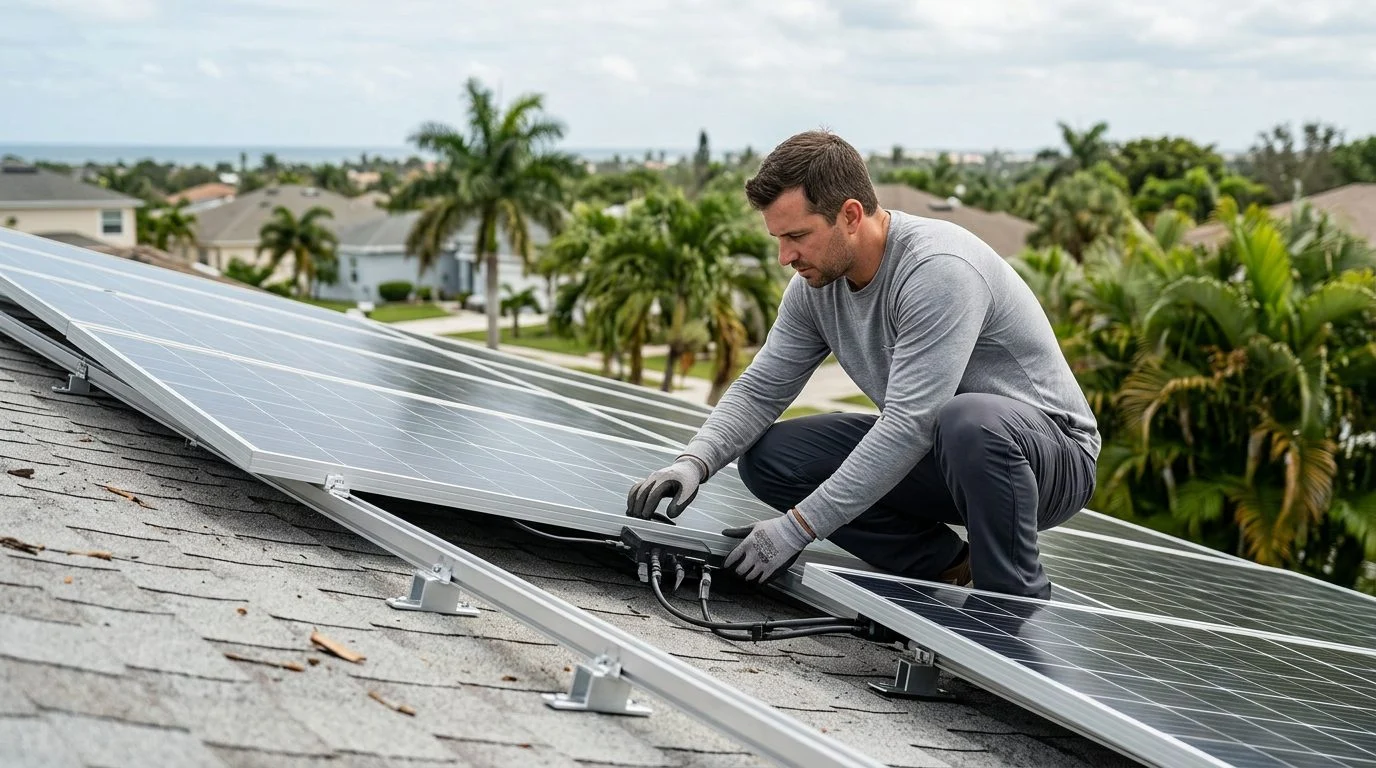
Solar Battery Backup | Miami-Dade
Know the Steps Before Your Solar Battery Goes In
See how design, permits, installation, inspection, and utility approval shape the timeline for a solar battery backup system in Miami-Dade, and what you can do to keep your project moving.
By Jonathan Rodriguez · Published November 7, 2026
A solar battery installation in Miami-Dade takes as long as its steps take, and no single number fits every home. The total time depends on the battery setup, your home’s electrical system, how fast the permit moves, and when the utility finishes its part.
Short Answer: What Sets the Timeline for a Solar Battery in Miami-Dade
The timeline follows a chain of steps, and each step can wait on the one before it. Four things shape the schedule most: whether the battery joins existing solar or comes with a new system, the condition of your electrical panel, how quickly the permit is reviewed, and the utility’s interconnection steps.
Plan around your project’s facts, not a fixed count of days. Your installer can build a schedule after reviewing your home. For a broader look at battery options, read our solar battery backup guide for South Florida.
If a recent outage has you weighing a battery now, our team can review your panel and roof details with you during a free first consultation. Talk it through with our team — the first consultation is free, confidential, and carries no obligation.
The Phases of a Residential Solar Battery Installation
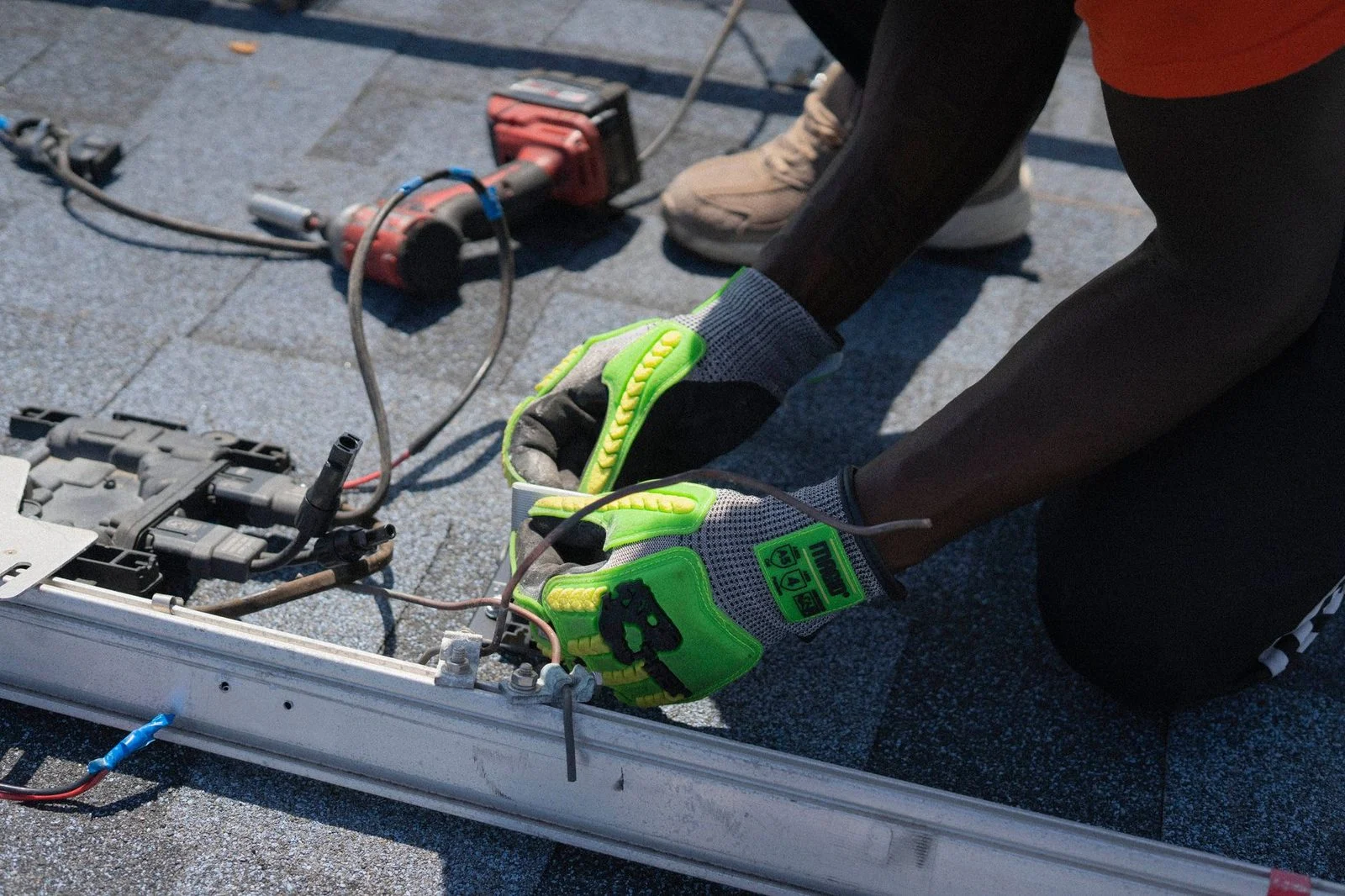
A typical project moves through five phases: design, permitting, equipment installation, inspection, and utility approval. Some phases overlap, and others must finish before the next one starts.
Design comes first. The team checks your roof and electrical setup, then sizes the system. The permit application then goes to the local building department. Equipment goes in on site, and the electrical connection follows. Inspection and utility approval come last.
Installation day is often the shortest part of the schedule. Most of the wait sits in paperwork and approvals. The connection can’t be finalized until those steps clear.
Utility rules add their own clock. Fla. Admin. Code R. 25-6.065 applies to investor-owned utilities and customer-owned renewable generation. Local code officials must inspect and approve the system before it runs in parallel with the grid. You must notify the utility at least 10 days before placing equipment in service. Under Florida Administrative Code Rule 25-6.065, which governs investor-owned utilities, the customer is to execute the Standard Interconnection Agreement and deliver it to the investor-owned utility at least 30 calendar days prior to beginning parallel operations and within one year after the utility executes the Agreement.
Permits, Inspections, and What Delays Approval in Miami-Dade
Permit review often sets the pace, and Florida law sets deadlines for many residential permits. Under Fla. Stat. § 553.792, a local government must act within set timeframes after receiving a complete and sufficient application. For an existing single-family home with work under $15,000, the window is 5 business days when the applicant uses a local government plans reviewer. That list includes electrical and roofing permits.
The clock starts only with a complete application. Within 5 business days, the government must say in writing what’s missing. If it doesn’t, the application is treated as complete. If a local government misses a deadline, it must cut the permit fee by 10 percent for each business day it is late, unless the parties agree in writing to a reasonable extension, the delay is caused by the applicant, or it is attributable to force majeure or other extraordinary circumstances. It does not have to cut the fee if it sends the applicant written notice by e-mail or United States Postal Service within the deadline stating the reasons the application fails to comply, and the notice also states that the applicant has 10 business days after receiving the notice to submit revisions, failing which the application will be denied.
Common causes of delay are simple to name. Plans may be incomplete or missing equipment specifications. The electrical panel may need an upgrade. Revision requests add time, and inspectors need to be scheduled. Under the code, the building official may also require construction documents in digital form, as explained in the Florida Building Commission’s Building analysis.
You can prepare now. Gather your electrical panel details, the home address, roof information, and any documents from an existing solar system. Having these ready helps the application move cleanly.
Adding a Battery to Existing Solar Versus a New Solar and Battery System
An add-on battery usually skips some early design work, but it still needs its own connection and inspection. A combined project starts with more design and permit steps, so its schedule begins with more work.
With an add-on, the installer first reviews how your current system connects. The battery location then becomes a design item. The Florida Building Commission’s Residential analysis says that when a battery sits in a space inside the home, openings into the dwelling need specific doors. They must also be self-latching and self-closing. Settling this early keeps the install from stalling later.
Roof condition matters too. The U.S. Department of Energy’s homeowner’s guide to solar says rooftop solar suitability depends on climate, roof age, tree cover, size, shape, and slope. That applies to tile roofs as well. Sizing the system before setting battery timing also helps. Our guide on how much solar is needed to power a home covers that step.
Common Questions About Solar Installation Timing
Solar timing works best as a set of stages, and battery work often overlaps with solar work.
How long does solar power installation take?
There’s no fixed number. The stages are design, permits, installation, inspection, and utility approval, and each one sets the pace.
How long does a solar battery hold its charge?
It depends on the battery’s capacity and how much power your household uses during an outage. The design step sets both.
Does a solar battery need an inspection?
Yes. The code’s required inspections include a building final inspection, so plan for one.
Does federal money pay for it?
The U.S. Department of Energy says its Solar Energy Technologies Office does not directly fund individuals or companies to install solar. Don’t count on DOE money for your project.
Homeowners in Miami and Boca Raton can also read our local battery backup pages for Miami and Boca Raton.
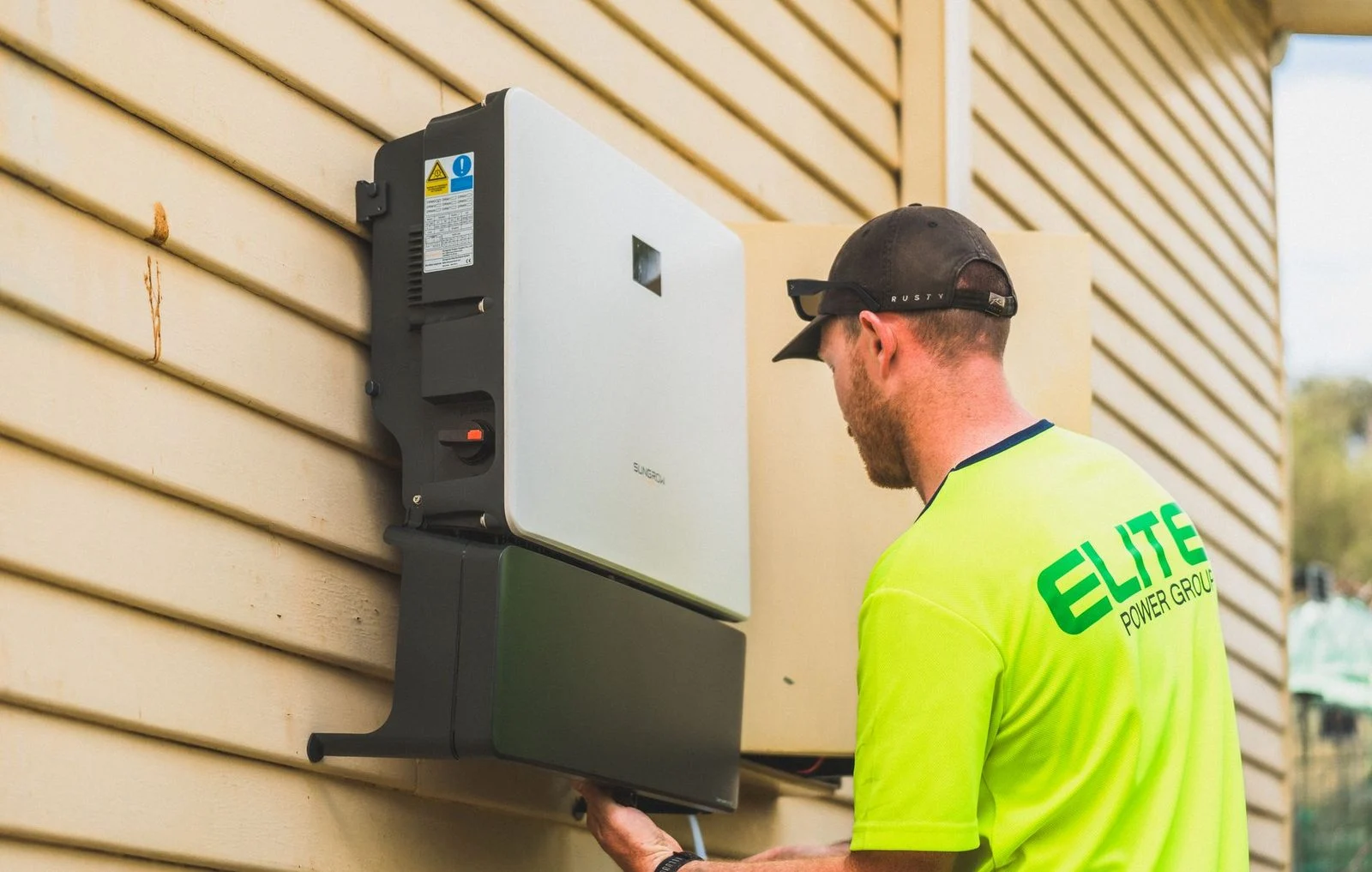
Talk Through Your Own Timeline With Our Team
If you’re weighing a battery after a recent outage, or helping an older parent decide, the steps can feel like a lot at once. You don’t have to map them out alone.
Start with our free first consultation, which is confidential and carries no obligation to continue. Our team can review your panel, roof, and home details and walk you through a timeline for your project. Contact our team when you’re ready to talk it through.
What Shapes Your Installation Timeline
System Design
The battery's capacity and the power your household uses during an outage set the design. Clear design decisions early help the rest of the project move forward.
Permits and Paperwork
Missing details are one of the most common causes of delay.
Scheduling the Crew
Installation dates depend on crew availability, equipment delivery, and weather. Ask for a projected schedule so you know what to expect.
Inspection and Approval
Inspections and utility approval come after installation. Making sure the system is ready for these steps keeps the final stage from stalling.
Ask for a Written Timeline
Before you sign, request a written schedule that lists each stage of your solar battery project, from design through utility approval. A clear timeline makes it easier to plan around your household needs.
Key Steps, From Start to Finish
1. Design and Site Review
We review your home, your electrical setup, and your backup power goals to size the battery and plan the layout.
2. Permits
Your plan is prepared and submitted for the required approvals. This stage often sets the pace for the whole project.
3. Installation
Once approvals are in hand, the battery system and related equipment are installed and connected by our team.
4. Inspection and Utility Approval
The completed system is inspected and cleared with your utility before it is switched on for regular use.


