


Solar Panels | South Florida
Can a 300 Watt Solar Panel Run Your Fridge?
A practical look at what one panel can power, what a fridge really needs, and when battery backup makes the difference.
By Jonathan Rodriguez · Published November 7, 2026
Usually not by itself. A 300 watt solar panel can cover part of a refrigerator’s daily energy on a sunny day. It can’t run a fridge around the clock on its own. Whether it can depends on how much energy the fridge uses, how much sun the roof gets, and whether a battery stores power for night. Here is the math, with every assumption labeled so you can plug in your own numbers.
The Short Answer: One 300-Watt Panel and a Refrigerator
A 300-watt panel can supply part of a fridge’s daily energy, but it can’t run a fridge through the night alone. The panel makes power only while the sun shines. The fridge needs power every hour, including overnight.
Keep two questions separate. How much energy does the panel make in a day? How much energy does the fridge use in a day? If the panel makes less than the fridge uses, the gap usually shows up at night and during cloudy stretches.
Many people start with the panel’s wattage because it’s printed on the box. That number alone doesn’t tell you whether the fridge will keep running. A battery and inverter are what turn one panel into a working refrigerator backup.
If a storm or outage has you worried about the food in your fridge, our team can help you check your own numbers. Talk it through with our team — the first consultation is free, confidential, and carries no obligation.
How Much Power a Refrigerator Actually Uses
A refrigerator’s energy use depends on its model, its age, its size, and how often the door opens. Two ratings matter most.
Running watts are the steady power the fridge draws while the compressor runs. Starting watts, also called surge watts, are the short burst when the compressor kicks on. Starting watts are higher than running watts, so your power equipment must handle that burst.
Daily energy is measured in kilowatt-hours (kWh). One kWh equals 1,000 watts running for one hour. To find your fridge’s daily number, look for the yellow EnergyGuide label. It lists an estimated annual kWh figure. Divide that number by 365 to get a daily average.
Older units, side-by-side models, and fridges with ice makers can draw more energy than newer efficient ones. Use the label on your own unit, not a number from a general chart.
What a 300-Watt Panel Produces in a Day
A panel’s daily output depends on peak sun hours, not on how long the day lasts. Peak sun hours are the equivalent hours per day when sunlight reaches full strength. South Florida gets strong sun, but output shifts with the season, afternoon clouds, summer storms, and the roof’s angle.
Use this basic formula:
panel watts × peak sun hours × system losses = approximate daily watt-hours
Here is an example with labeled assumptions. Assume a 300-watt panel, 5 peak sun hours, and 75 percent system efficiency. That gives 300 × 5 × 0.75 = 1,125 watt-hours, or about 1.1 kWh per day. Now assume the fridge uses 1.5 kWh per day. That is an example input only, not a fact about any model. On these numbers, the panel covers about 73 percent of the fridge’s daily use, before battery losses.
Florida’s net-metering rule also shows how panel size is counted. Under Fla. Admin. Code R. 25-6.065, the AC nameplate generating capacity of an inverter-based system is calculated by multiplying the total installed DC nameplate generating capacity by .85 to account for losses during the conversion from DC to AC. This rule defines “gross power rating” as the total manufacturer’s AC nameplate generating capacity of an on-site customer-owned renewable generation system that will be interconnected to and operate in parallel with the investor-owned utility’s distribution facilities.
Why the Panel Alone Usually Falls Short
The panel makes power only in daylight. The refrigerator runs day and night. At night the panel makes nothing, and the fridge keeps cycling. Without stored energy, the fridge either draws from the grid or stops.
This is the most common gap in fridge-solar planning. A panel sized for daytime use can still leave the fridge short overnight. Adding a second panel, or moving from a 200-watt to a 300-watt panel, raises daily output in proportion. Under the same sun and losses, 300 watts makes about half again as much as 200 watts. More panels still don’t cover the night.
Grid-tied systems add another limit. A solar system without a battery usually shuts off during a grid outage. So the fridge loses power when the neighborhood does. Battery backup is what changes that.
Adding a Battery and Inverter for Refrigerator Backup
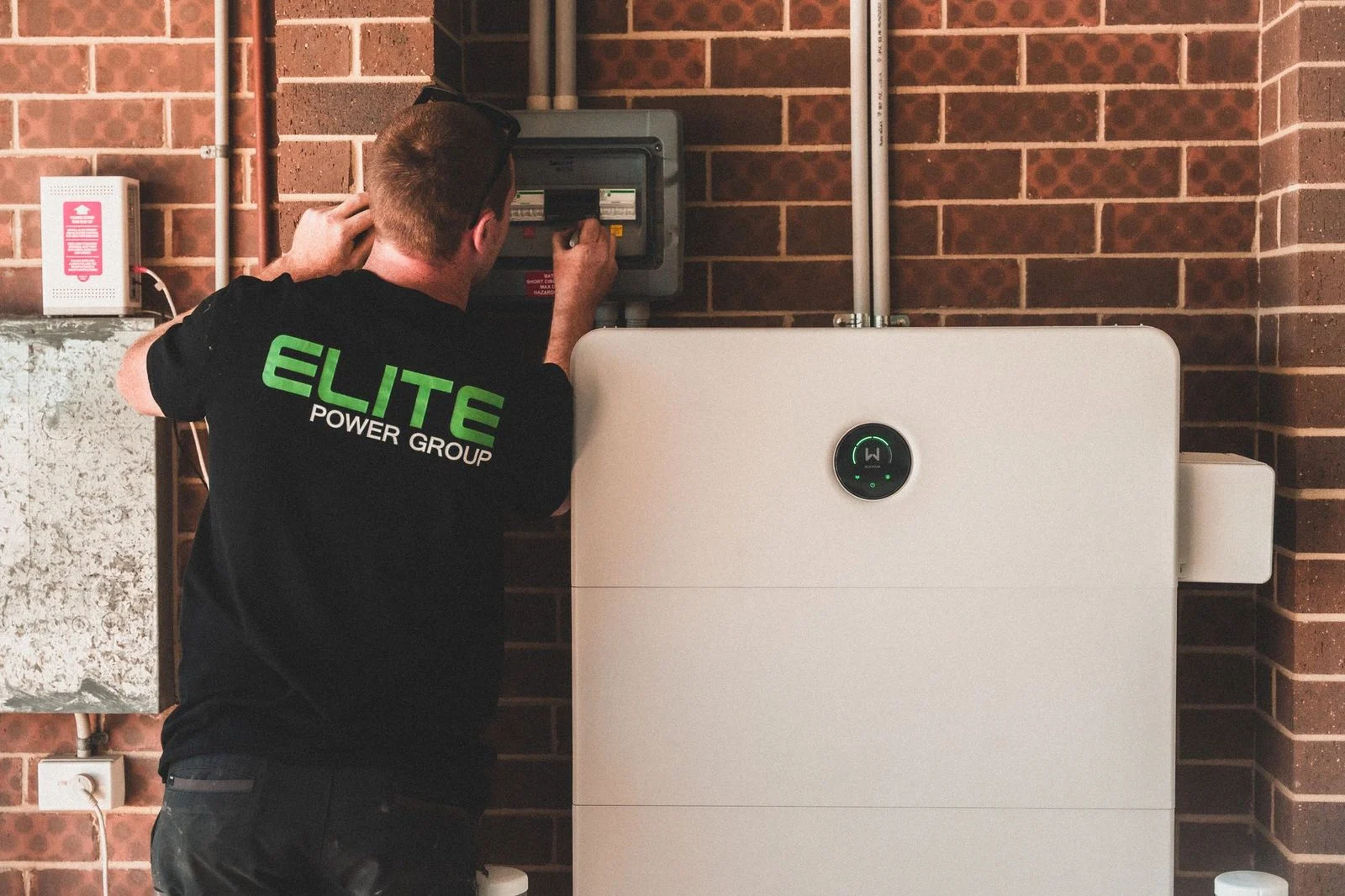
A battery stores daytime energy so the fridge can run after dark and during an outage. An inverter converts the battery’s stored DC power into the AC power the fridge uses. You need both for a true backup setup. The U.S. Department of Energy’s Solar Energy Technologies Office covers the basics of battery storage and backup.
The inverter must handle the fridge’s running watts and its starting watts. Panel output is not the test. Check the fridge’s label or manual for both figures, then match the inverter to the higher number.
Battery size sets how many hours the fridge can run. Outside heat, how often the door opens, and how often the compressor cycles all change the result. Plan for the fridge’s real usage, not an ideal sunny day.
Talk Through Your Own Numbers With Our Team
You may be planning this for a parent, a rental, or a home where the power just went out. These decisions often come with little time to think. Running the numbers first helps you avoid buying the wrong equipment.
Our team looks at a few inputs: the refrigerator’s model and energy label, the roof’s size and sun exposure, and the goal for the backup. Is the goal keeping food cold for a day, running for a few hours, or running longer? Roof condition matters too. The roof and the power plan connect.
Quick answers
Can a solar panel power a mini fridge?
A smaller fridge uses less daily energy, so one panel covers more of its load. Overnight running still needs stored power.
Will a 300W inverter run a fridge?
Only if its rating covers the fridge’s running and starting watts. The panel’s 300 watts is not the test.
Do I need a battery to run a fridge on solar?
Yes, if you want it to run at night or during an outage.
Our first consultation is free, confidential, and comes with no obligation to continue. If you want a clear picture of your fridge, roof, and backup goal, contact our team.
What Decides Whether One Panel Is Enough
Daily energy use
A fridge runs in cycles all day and night. Its daily kilowatt-hour use matters more than its size on a label.
Starting watts
Compressors draw a surge when they kick on. Your inverter must be rated to handle that spike, not just the running load.
Sun hours
A 300 watt panel produces the most during peak sun. Output drops on cloudy days and after sunset.
Battery storage
Overnight operation depends on stored power. A battery keeps the fridge running when the panel is not producing.
Watch the Inverter Rating
A 300 watt panel does not tell you whether a fridge will run. Confirm that your inverter's continuous and surge ratings cover the fridge's startup draw before you buy.
Your Next Steps
Measure your fridge
Check the appliance's energy use in kilowatt-hours per day and note its startup and running wattage.
Size the system to the load
Match panel output, inverter capacity, and battery storage to your fridge's real daily needs.
Plan for the night
Decide whether a battery backup is needed to keep food safe after dark and during outages.


