


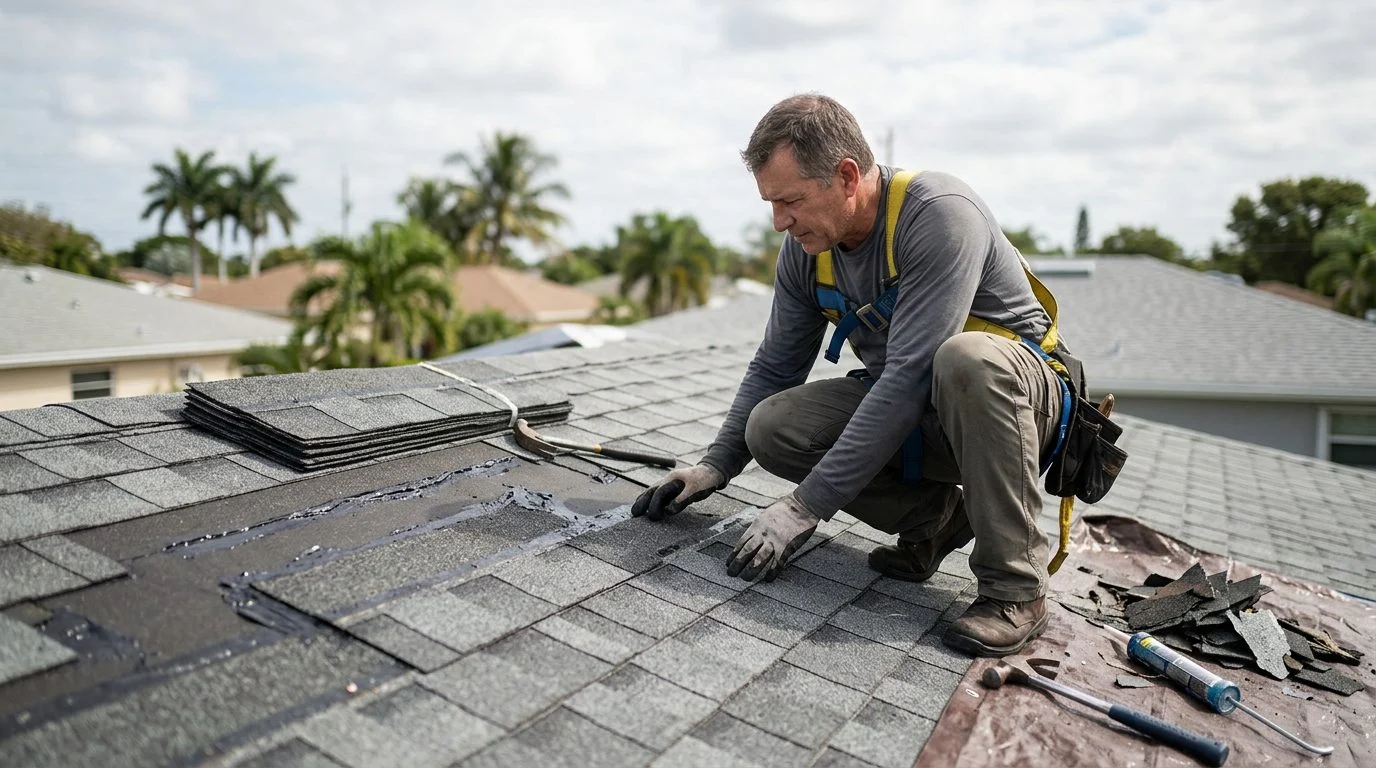
Roof Care | South Florida
Storm Damage on Your Roof? Know What to Look For
Hurricanes, tropical storms and heavy rain can leave damage you can't see from the ground. Learn the signs to check, and when it's time to have a professional look.
Start With a Free Consultation
Free
First consultation
No obligation
Confidential, with no pressure to continue
By Jonathan Rodriguez · Published November 2, 2026
What does storm damage look like on a roof? It usually shows up as missing or lifted shingles, bent flashing, dented gutters, and water stains inside the home. Look for several of these signs together, not just one.
Storm damage is any physical change that wind, hail, flying debris, or heavy rain leaves on a roof. Some of it you can see from the yard. Some of it hides under the shingles or in the attic.
This guide is for South Florida homeowners checking after a storm, whether for their own home or for a family member, tenant, or household. It shows what to look for and how the insurance clock works.
What Storm Damage on a Roof Looks Like at a Glance
Storm damage shows up as parts that are broken, shifted, or missing, plus water getting where it shouldn’t go.
Start with a walk around the outside of the house. Look in the yard for shingle pieces, bent gutter sections, and fallen branches. Use binoculars or a phone zoom to study the roof from the ground.
A ground check can catch obvious problems. It can’t confirm that a roof is sound. Loose nails, soft decking, and small flashing gaps usually need a closer look from a ladder, the attic, or a professional inspection.
One sign rarely tells the whole story. Missing shingles, dented gutters, and a ceiling stain together point to a storm much more clearly than any one of them alone.
If shingles, flashing, or a ceiling stain have you worried since the storm, our team can walk through what you're seeing and what comes next. Talk it through with our team — the first consultation is free, confidential, and carries no obligation.
Damaged Shingles: Missing, Lifted, Creased, or Cracked
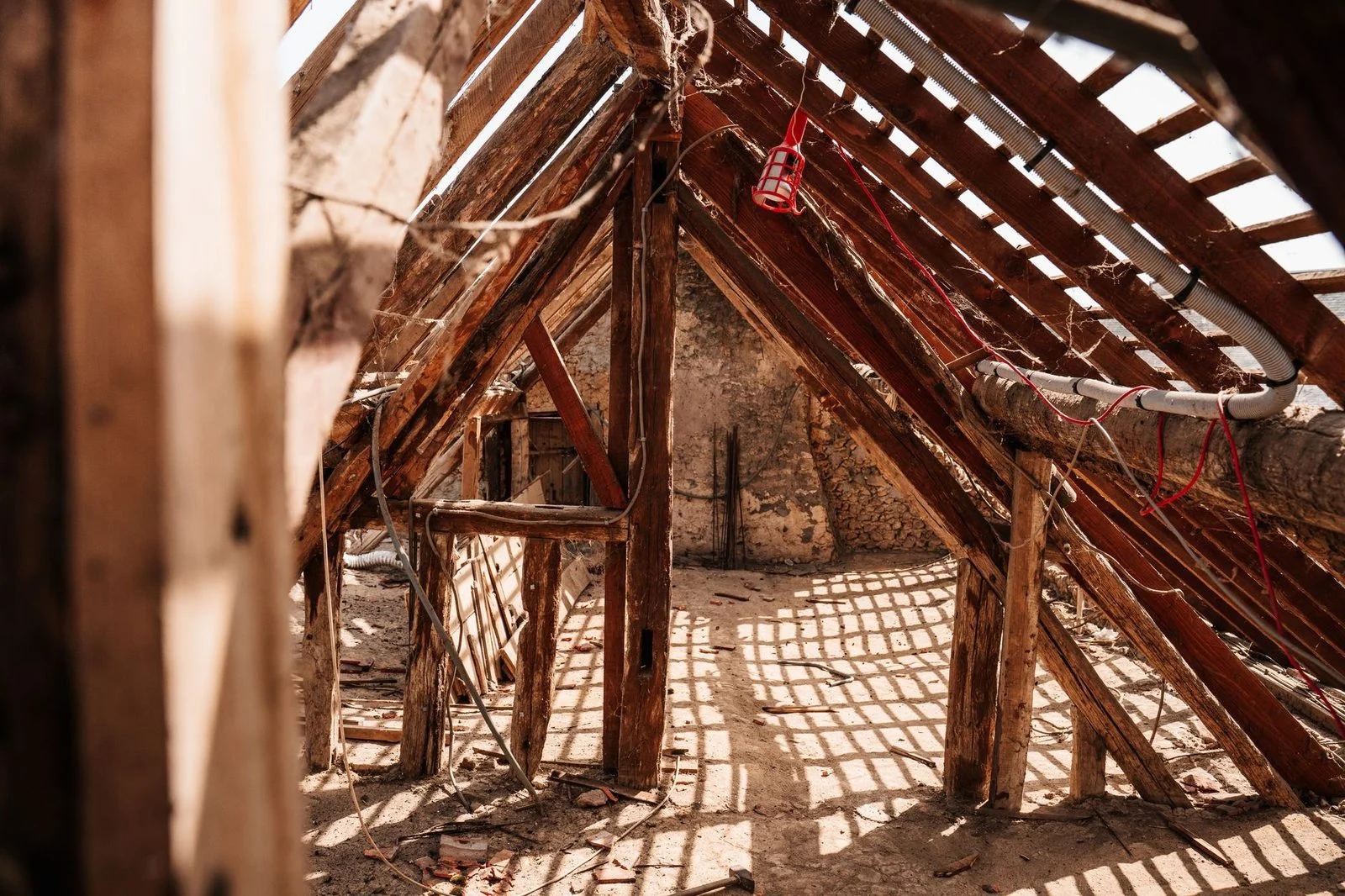
Damaged shingles look missing, lifted, creased, cracked, or bare. Each of these can let wind and water in.
Missing shingles leave bare patches where the underlayment or roof deck shows. Lifted or curled tabs stand up at the edges, and some shingles slide out of line with their neighbors.
Creases and cracks are harder to spot. A crease is a fold line across the shingle. A crack runs through the material and can split the tab.
Granule loss is another clue. Granules are the small grit on the shingle surface. After a hard storm, you may find granules piled in gutters or at downspout outlets. Dark or bare patches that appeared after one storm are the clearest sign. Photograph them and note the date.
Damaged Flashing and Exposed Edges
Damaged flashing looks bent, lifted, torn, or pulled away at chimneys, vents, skylights, valleys, and where the roof meets a wall. Flashing is the metal or sealed piece that directs water around these openings.
Check for bent or lifted metal, torn sections, and nails that are now exposed. Sealant that has pulled away from a joint is another warning sign. So is an edge that no longer sits flush.
Flashing matters because water often finds its way in there. Shingles can look fine while water still enters at a flashing joint. Check flashing even when the roof surface looks mostly intact.
Florida’s building code also pays attention to these edges. The Florida Building Commission’s analysis of the 2026 Residential code says the flashing section now covers all roof types and shapes. These are details worth checking when you look at the edges.
Gutters, Downspouts, and Other Metal Parts
Dents, bends, and separated seams in gutters and downspouts often point to hail or flying debris. Gutters are an easy place to start because they sit at eye level.
Look for gutters pulled away from the fascia, the board along the roof edge. Sagging sections can mean hangers gave way under debris. Check downspouts for crushed or disconnected sections too.
Other metal parts matter. Dented vents, ridge caps, and drip edge can show that hail or debris struck the roof itself. Metal parts sometimes show impact even when the shingles look largely unchanged.
Metal roofs deserve their own look. The Insurance Institute for Business & Home Safety’s Hurricane Ian roof review examines roof coverings after Hurricane Ian. Dents and loose panels still need a check.
Leaks, Stains, and Signs Inside the Home
Water stains on ceilings, damp attic insulation, and daylight through roof boards mean water has passed the roof covering. Treat these signs as urgent.
Watch for stains that grow, spread, or change color after rain. A fresh brown ring or a soft, damp spot on drywall is a reason to act. Musty odors and mildew in the attic point to moisture that has been sitting.
Check the attic on a dry day with a flashlight. Look at the underside of the roof deck near the leak point. Wet decking, dark stains, or daylight through a seam all matter.
Leaks can show up during rain or days later, as water travels along rafters and insulation. A dry ceiling doesn’t rule out a leak. Water can also run far from its entry point, so the stain may not sit directly under the damage.
A leak can have more than one cause. Water may enter at a flashing joint, through a torn shingle, or along a damaged vent. Get an inspection soon, because a leak that sits can spread.
Storm Damage Versus Normal Wear and Age
Storm damage tends to be sudden, uneven, and tied to one event. Normal wear is gradual and spread across the whole roof.
Age-related signs include granule loss across the entire roof, brittle shingles, and curling edges on many shingles at once. Storm damage usually shows as a cluster in the area that took the wind or hail.
Knowing if a roof is bad takes more than one sign. Combine the roof’s age, the number and pattern of signs, and any water inside the home. Whether a roof should be repaired or replaced depends on the facts.
Roofers often mention a 25% rule of thumb for comparing repair costs with replacement. It is a general guideline, not a formal code or legal standard.
Not sure what your next step is?
Talk it through with our team — the first consultation is free, confidential, and carries no obligation.
How Storm Damage Differs on Metal, Tile, and Asphalt Roofs
On asphalt shingles, look for lifted tabs and missing pieces. On metal, look for dents, scratches, and loose panels. On tile, look for cracked, chipped, or shifted pieces.
Asphalt roofs show the most common signs: lifted tabs, missing pieces, and granule loss. Tile roofs need a different eye. Cracked or shifted tiles, and displaced ridge or hip pieces, can let wind and water in.
Metal roofs show impact in dents and scratches on panels, vents, and trim. Loose panels or fasteners and damaged trim or flashing are also common. Dents are easy to miss from the ground, so check metal from several angles in good light.
If you’re weighing alternatives to shingles, metal and tile are both options. ASP Superhome offers metal roofing and tile roofing. Each roof type has its own damage pattern, so knowing your roof’s material makes an inspection easier to read.
What to Document and How to Take the Next Step
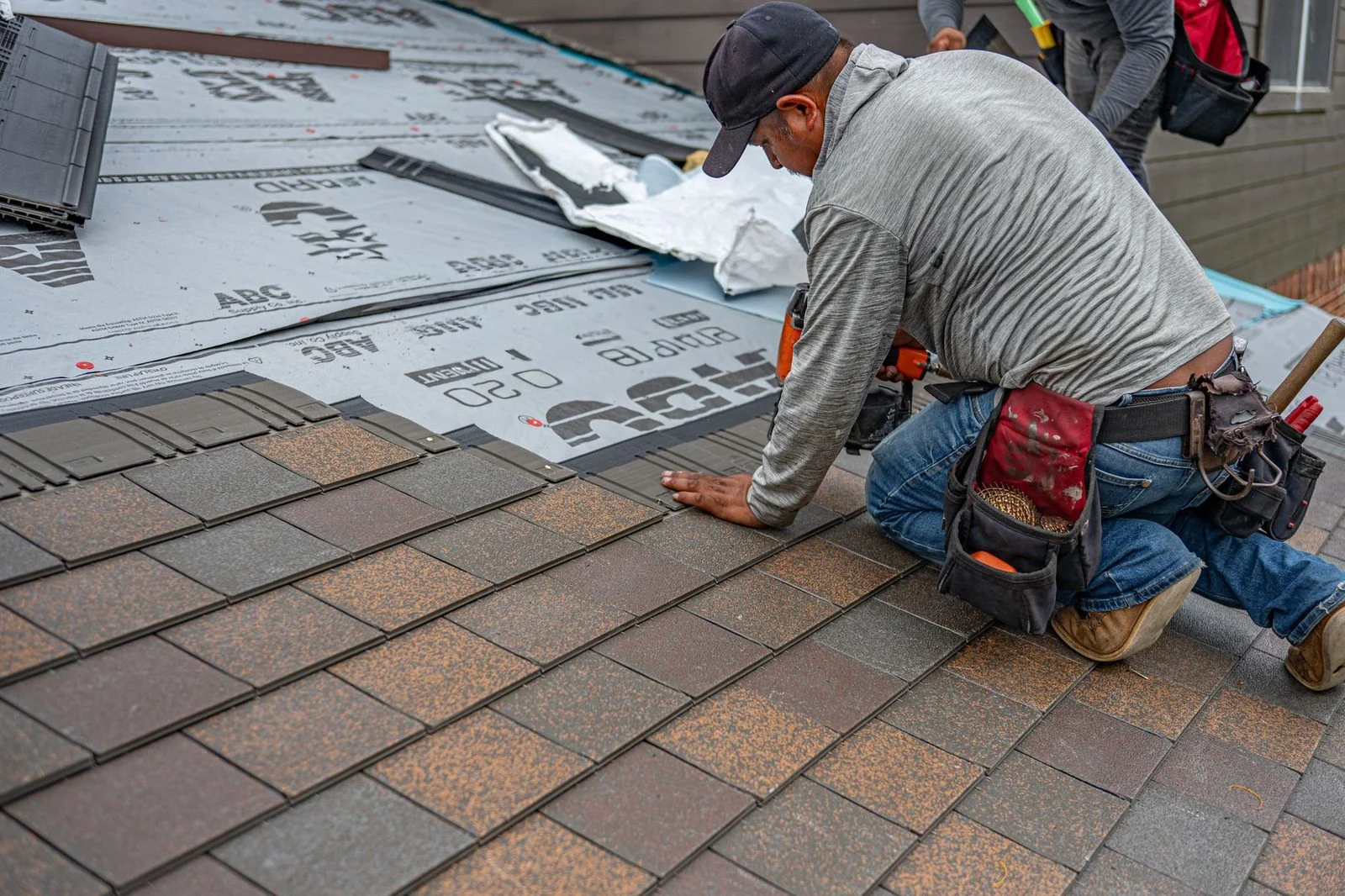
Document the damage with dated photos or video before any repairs. Then report it to your insurer promptly.
Good records include photos of the roof, gutters, flashing, and interior stains. Add notes on the storm date and when you first noticed each sign. Keep receipts for emergency fixes like a tarp or temporary patch.
Timing matters under Florida law. Under Fla. Stat. § 627.70132, a claim or reopened claim under a property insurance policy is barred unless notice reaches the insurer in accordance with the policy terms within 1 year after the date of loss. These time limits are paused during a combat-zone or combat-support deployment that materially affects a named insured servicemember’s ability to file. A supplemental claim is barred unless notice is given within 18 months after the date of loss. For hurricanes, the date of loss is the date the hurricane made landfall; for tornadoes, windstorms, severe rain, or other weather-related events, it is the date the National Oceanic and Atmospheric Administration verifies the event.
If shingles, flashing, or a ceiling stain have you worried, our team can help you sort out what you’re seeing. Our initial consultation is free, confidential, and carries no obligation to continue. When you’re ready, request a free estimate.
What does storm damage look like on a roof?
Storm damage often looks like missing, lifted, or cracked shingles, bent flashing, dented gutters, and water stains indoors. Look for several of these signs together.
When should I file a hurricane claim for my roof?
Does a roof leak always mean the roof needs replacing?
No. A leak can come from one damaged flashing joint, and the full set of signs decides the next step.
Storm Damage Signs to Check
Missing or lifted shingles
Gaps in the roof surface, shingles on the ground, or edges that curl or lift are common after strong winds.
Cracked or broken tiles
On tile roofs, look for chipped, cracked or displaced tiles, especially along ridges and edges.
Bent or loose flashing
Metal flashing around vents, chimneys, skylights and valleys can bend or pull away and let water in.
Dented or damaged gutters
Dents, separated seams or gutters pulled away from the fascia often point to wind or debris impact on the roof edge.
Water stains indoors
Stains on ceilings or walls, peeling paint, or damp insulation in the attic can signal water getting past the roof.
Safety First
A storm-damaged roof can be slippery, unstable and weakened. Check the property from the ground and from inside the home. Don't climb onto the roof yourself.
Solutions for Storm-Damaged Roofs
Roof Repair
Targeted repairs for leaks, damaged shingles or tiles, and failed flashing, handled by our team.
Roof Replacement
When damage is widespread, a full replacement can give your home a fresh, complete roof system.
Metal Roofing
Durable metal roof options designed to stand up to South Florida weather.
Tile Roofing
Classic tile roofing that complements Florida homes, with repair and replacement options.
Not Sure What Your Roof Needs? Let's Take a Look.
Related practice areas
- Roof Replacement in South Florida: Complete Homeowner’s Guide
- Will Insurance Cover Roof Damage From Hail? Florida Guide


