


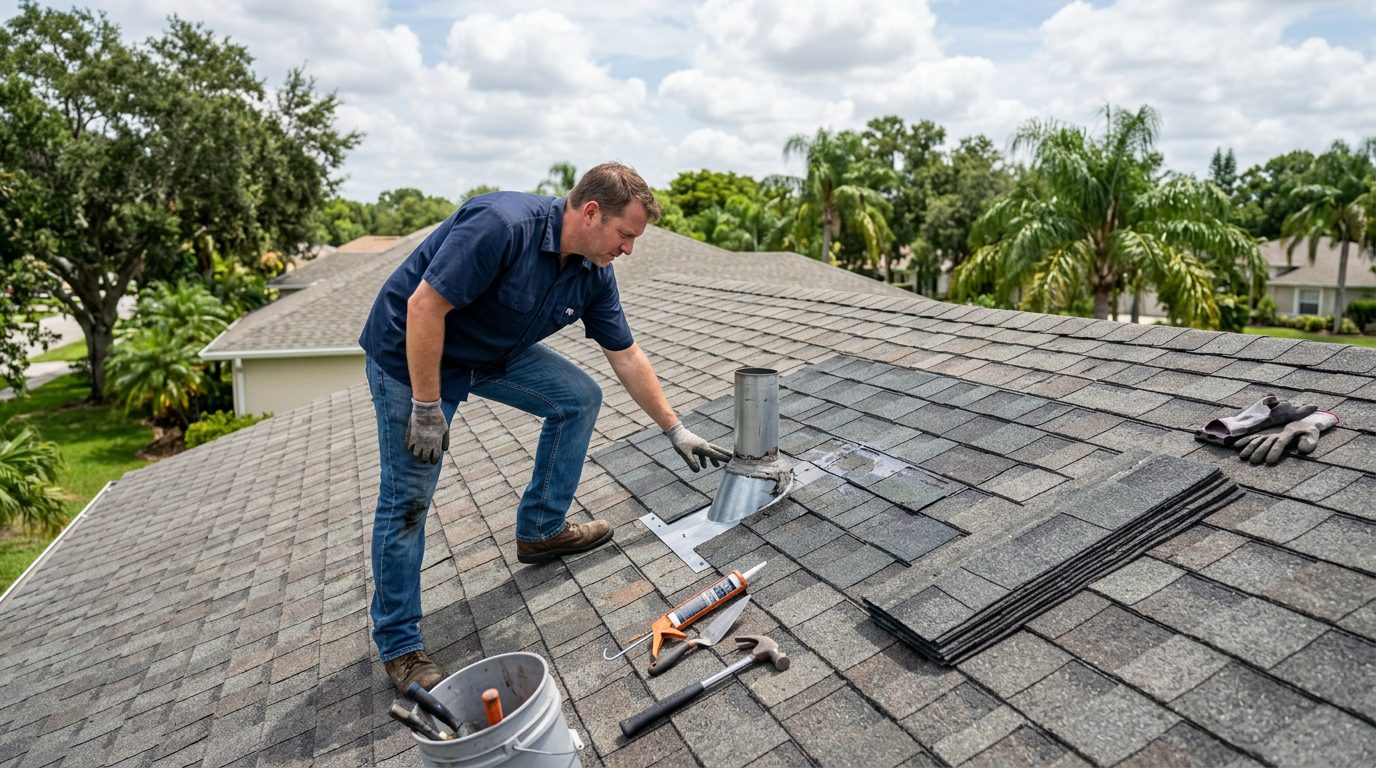
Roof Repair · South Florida
Stopped a Roof Leak Fast? Start Here.
Practical first steps for protecting your home from a leaking roof, plus the repair and replacement options ASP Superhome can review with you across South Florida.
Start With a Free Consultation
Free
First consultation
Confidential
Your conversation stays private
No obligation
No pressure to continue
By Jonathan Rodriguez · Published October 20, 2026
What is best to repair a leaking roof? For most leaks, the right fix is a targeted repair at the exact spot where water gets in, not a coating over the whole roof. Stop the water first, find the entry point, and then decide between repair and replacement.
If you’re standing under a ceiling stain with a bucket in your hand, this is a stressful moment. The leak may be over your own bedroom. It may be in a rental unit or a family member’s home. This guide covers the first steps, the common causes, and the repair options that fit South Florida homes.
Stop the Water First: What to Do in the Next Hour
Protecting your belongings and the floor comes first. Then limit how far the water spreads.
Move furniture, electronics, rugs, and valuables out of the wet area. Place buckets under active drips and empty them before they overflow. Lay towels or a plastic sheet on the floor to keep water from running into other rooms.
If a ceiling bulges with water, treat it as a hazard. Relieve it carefully from below, in a controlled way, and keep people and light fixtures away from the sagging spot. If you can safely reach the switch, turn off power to any fixture near the water.
Stay off the roof during rain. Never climb onto a wet or steep roof to fix it yourself. Tile can crack under your weight, and wet surfaces are slippery. Rushed work in bad weather can make the leak worse.
If a leak is spreading into a room you use every day, you don't have to figure out the repair alone; our team can look at the roof with you and talk through your options. Talk it through with our team — the first consultation is free, confidential, and carries no obligation.
Find the Likely Source of the Leak
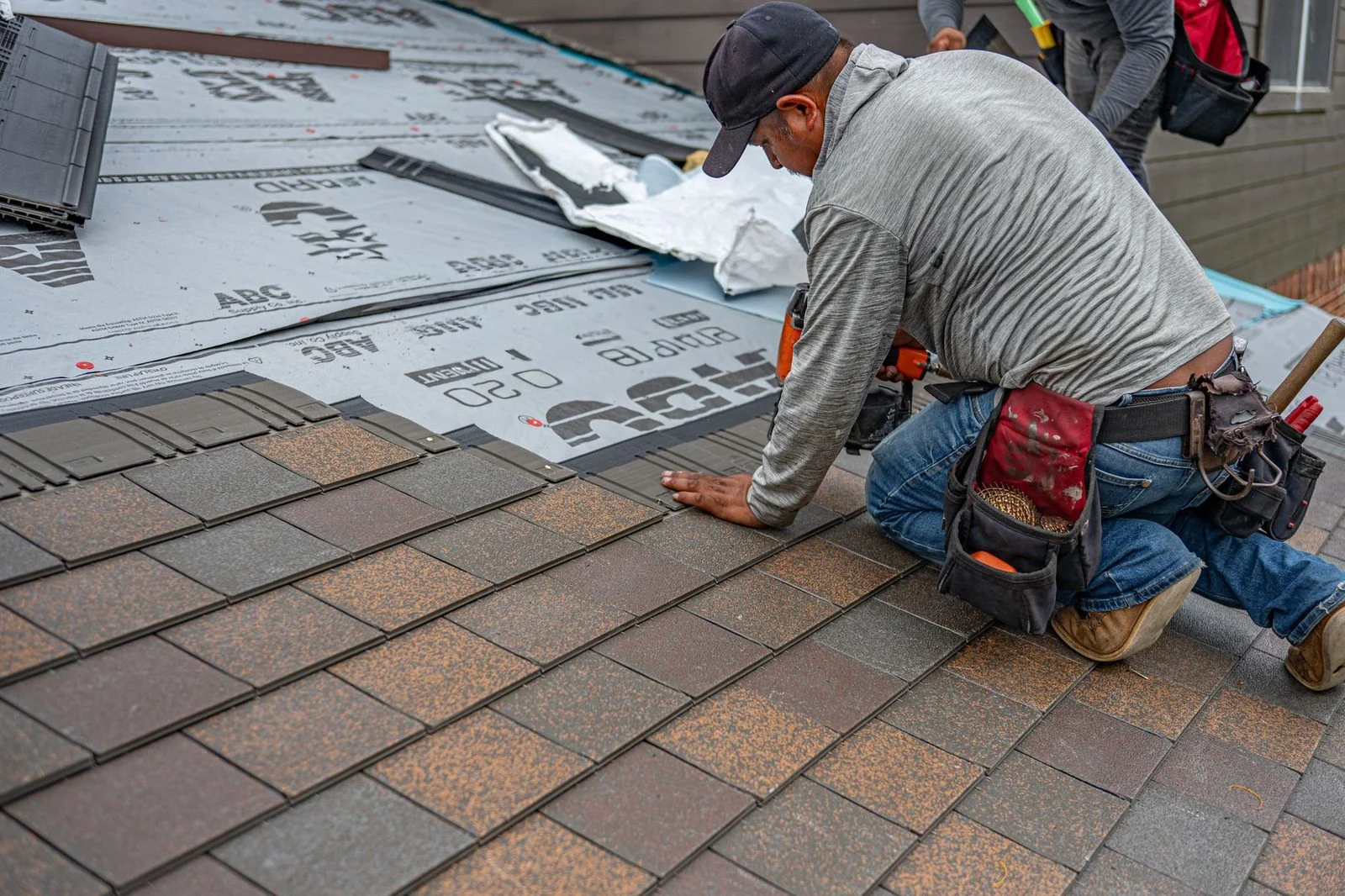
The spot where the drip shows up is often not where the water gets in. Trace the stain upward, toward the roof.
Water often runs along rafters and decking before it drops through the ceiling. That means the entry point can sit several feet away from the stain. Mark the stain’s edges with tape so you can see whether it grows.
Check the attic on a dry day. Look for wet insulation, dark wood, and daylight coming through gaps. Any of these signs point toward the area above you.
From the ground, use binoculars to look for lifted, cracked, or missing shingles or tiles. Check metal panels and seams for damage. Pay close attention to the usual trouble spots: flashing around chimneys, vents, and skylights, where a roof meets a wall, roof valleys, and sealant that has aged or cracked.
What to Use to Seal a Leaking Roof
Roofing sealant and roofing cement can close small gaps, cracks, and nail heads. They work only on a clean, dry surface.
Sealant is generally a short-term step on its own. It does not correct flashing that has failed or decking that has rotted. If water is getting under those parts, sealant on top will not stop it for long.
Match the product to the roofing material. A product that bonds well to asphalt or tile may not suit metal panels or a flat membrane. Read the product’s surface requirements before you buy and apply it.
For a lasting repair, the usual fix is to replace damaged flashing or components. Adding more sealant over them rarely solves the problem. Repeated surface sealing is a sign the entry point still needs a closer look.
How to Temporarily Patch a Hole in the Roof
Cover the opening with a heavy tarp that extends well past the damaged area. Fasten it with battens and fasteners so wind can’t lift it.
Keep the tarp taut so water runs off instead of pooling on it. Check it after each storm, because wind can loosen the edges quickly.
Document the damage before you clean up or start temporary work. Take dated photos of the stains, the ceiling, the wet materials, and the roof opening. Florida law sets deadlines for property insurance claims. Under Fla. Stat. § 627.70132, a claim is barred unless notice was given to the insurer under the policy terms within 1 year after the date of loss. A supplemental claim is barred unless notice was given within 18 months after the date of loss. For storm-related leaks, the date of loss is the date the hurricane made landfall, or the date the event is verified by the National Oceanic and Atmospheric Administration.
A temporary patch protects the inside of your home while a permanent repair is scheduled. It is not meant to be a lasting fix.
Is It Normal for a Roof to Leak in Heavy Rain?
No. A roof should shed heavy rain. Leaks that appear only during downpours usually point to one weak spot, such as a gap at flashing, a seam, a pipe or vent opening, or a lifted covering.
Water can enter at one point and run a long way before it drips. The drip location may not be the source, so follow the stain back toward the roof.
Leaks that return with each heavy storm generally need a closer inspection of the specific entry point. Repeated surface coating is not a substitute for finding and fixing that point.
Repair or Replace? Choosing the Right Fix for a Leaking Roof
A single, localized leak is usually a repair job. Widespread leaks point toward replacement.
Targeted repair fits a leak from one failed flashing piece, a few missing shingles or tiles, or a small breach in a flat membrane. These problems have a defined location.
Replacement becomes the better long-term path when leaks appear in several areas, when leaks keep returning, or when the decking is soft or rotted. A roof that has been patched many times also deserves a serious look at replacement.
Flat roofs follow a similar process. A typical repair starts by locating the breach, then cleaning and drying the area. A compatible patch or coating goes on next. Standing water, called ponding, should also be addressed, because it wears on the surface and can cause new leaks.
The right choice depends on the roof’s age, the extent of the damage, and the roofing material. That is why an on-site inspection matters before you commit to a method. In Miami, a roof repair or replacement generally needs a permit. The City of Miami roofing permit page covers how to apply for a roofing permit.
Not sure what your next step is?
Talk it through with our team — the first consultation is free, confidential, and carries no obligation.
Repair Considerations for Florida Roofs
Heavy rain, wind-driven water, and intense sun put steady stress on sealants, flashing, and fasteners. Many South Florida leaks trace back to those parts.
Metal and tile roofs each have their own repair details. Panels, underlayment, and tiles must be secured and sealed in the right order. A repair that ignores those details may hold for a short time and then fail.
Permits and documentation matter too. Miami-Dade County’s roofing permit guidance covers required forms, checklists, contractor e-permitting, and certain hurricane-mitigation documentation.
Building code can also apply.
Finally, a roof inspection can support insurance discounts. The Florida Office of Insurance Regulation explains that Florida homeowners can submit an official wind-mitigation inspection form to an insurance agent to request hurricane-wind mitigation premium discounts.
Your Next Step: Get Your Leak Looked At
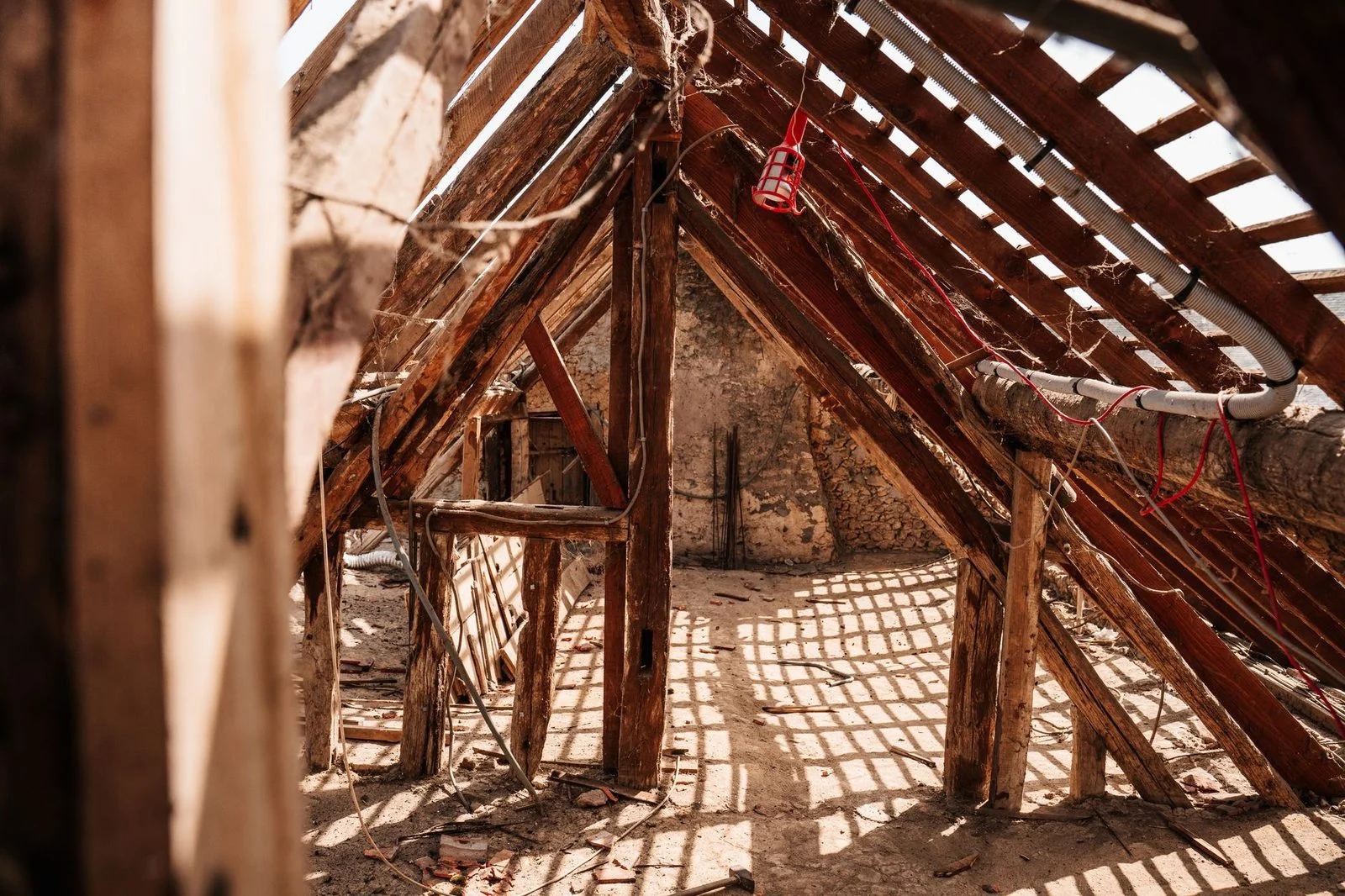
The fastest way to know whether you need a repair or a replacement is an on-site inspection. An inspector can find the entry point, not just the drip.
Common Questions
What do you use to seal a leaking roof?
Roofing cement or roofing sealant can close small gaps on a clean, dry surface. It is usually a short-term step, not a full repair.
How do I temporarily patch a hole in my roof?
Cover the opening with a heavy tarp that extends past the damage. Fasten it with battens so wind can’t lift it.
Does homeowners insurance cover roof leak damage in Florida?
Coverage is set by your policy terms. Under Florida law, a claim under a property insurance policy, other than a supplemental claim, must be reported within 1 year after the date of loss.
Do I need a permit to repair a roof in Miami?
The City of Miami requires permits for residential roof repair or replacement. Its first review cycle may take up to 14 business days.
If water is coming into your home now, you don’t have to sort it out alone. Contact ASP Superhome to schedule an on-site inspection. The first consultation is free, confidential, and comes with no obligation to continue.
First Steps When Your Roof Leaks
1. Protect the inside
Move furniture, electronics, and valuables away from the wet area. Place buckets or containers under drips and lay towels on the floor to limit damage.
2. Document the damage
Take dated photos and short videos of the stains, ceiling damage, and water entry points. Clear records make the next steps easier to review.
3. Make a temporary cover
If you can reach the area safely from the ground or inside the home, a temporary covering can slow water entry until a permanent repair is made.
4. Get the roof reviewed
A professional inspection shows where water is entering and whether a repair or a larger roof project makes more sense for your home.
Your Repair and Replacement Options
Targeted roof repair
Fixing a specific damaged area, such as flashing, worn sealant, or a few damaged tiles or panels, when the rest of the roof is still sound.
Metal roofing
A durable option for South Florida homes. Metal roofing can be a strong choice when the existing roof needs more than spot repairs.
Tile roofing
A classic option for many Florida homes. Tile roofs may need repair of underlayment, flashing, or individual tiles, depending on their condition.
Roof replacement
When leaks are widespread or the roof is near the end of its service life, replacing the roof may be a more practical long-term path than repeated repairs.
Safety Warning
Do not climb onto a wet, steep, or damaged roof, and do not walk on tile. Water and broken tile can cause serious falls. Keep your distance and call ASP Superhome to have the roof assessed safely.
Why Homeowners Contact ASP Superhome
Clear conversation
We explain what we see, what the options are, and what each one involves, in plain language.
Focused on South Florida
We work with homeowners in Miami, Fort Lauderdale, West Palm Beach, Kendall, Naples, Fort Myers, and Boca Raton.
Repair or replace
We help you weigh a targeted fix against a full roof project, so you can decide with the facts in front of you.
Respectful and unhurried
Our team takes the time to answer your questions before any decision is made.
Stop the Leak Before It Spreads. Start With a Free Consultation.
Related practice areas
- Roof Replacement in South Florida: Complete Homeowner’s Guide
- What Does a Full Roof Replacement Include? | ASP Superhome


