


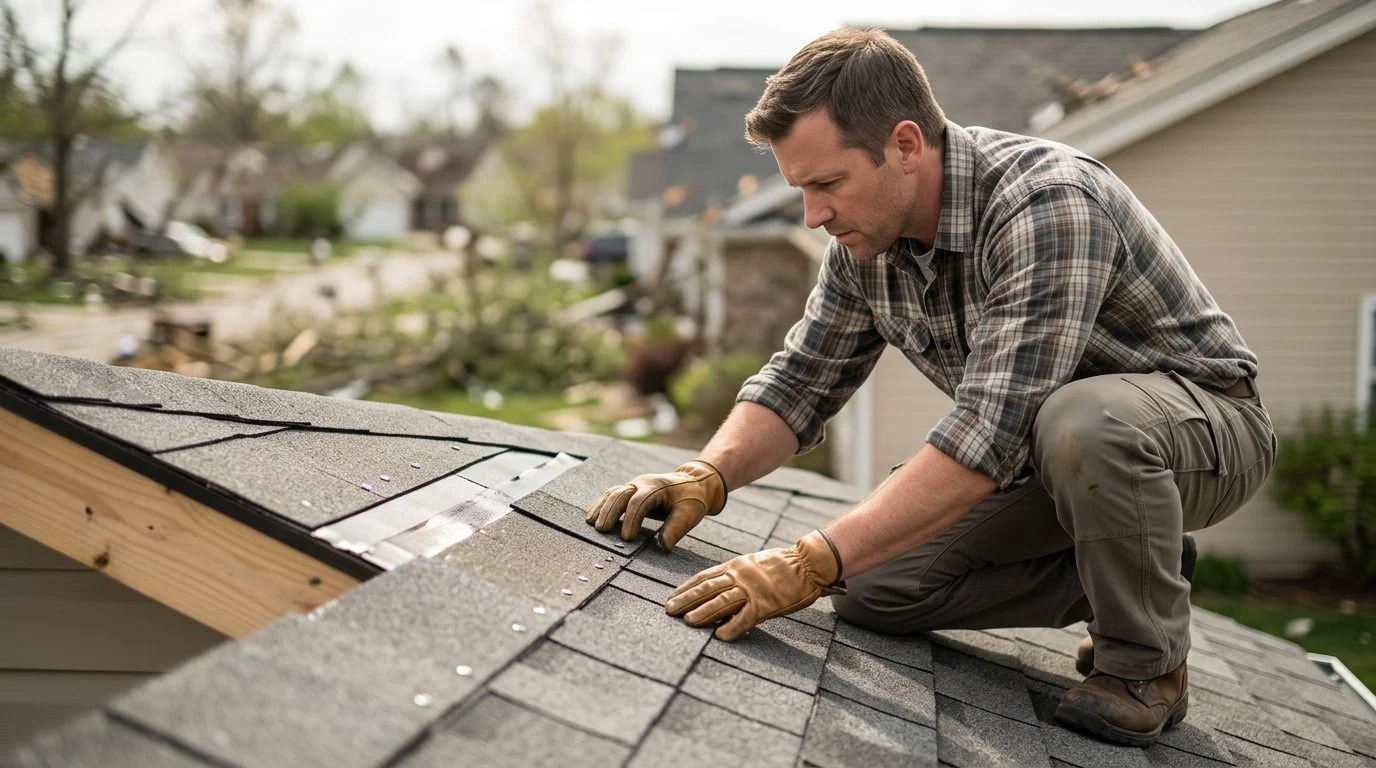
Roof Replacement | South Florida
What a Full Roof Replacement Includes, From Deck to Shingle
A full replacement renews every layer of your roof, not just the damaged patch. Here is what the project covers and how to plan it across South Florida.
By Jonathan Rodriguez · Published October 20, 2026
What does a full roof replacement include? In short, it includes every layer of the roof. The old covering comes off, the deck is checked and repaired, and a new system goes on from the deck up. Each part has a job. This guide walks through them in the order they’re installed, so you can read a roofing estimate with confidence.
What a full roof replacement covers
A full roof replacement covers the whole roofing system, not one area or one leak. A repair fixes a specific problem. An overlay installs new material over the old roof instead of removing it. A full replacement goes deeper than both.
What brought you here decides the scope. A leak, an aging roof, storm damage, or a note from a home inspection can each start the conversation. A few lifted shingles after a storm may point to a repair. Wear across the entire roof points toward replacement.
Think about where the problems show up. If the roof leaks in several rooms, or cracks run across the whole slope, the discussion is usually about the full system. If one valley leaks after one storm, the discussion may be much narrower.
A roof is a system, and each layer depends on the others. Good tile or metal can still leak if the underlayment, flashing, or deck beneath it is weak. That’s why a complete estimate lists every layer, not just the visible surface.
If a leak or a storm has you weighing a new roof, reach out and our team can talk through your roof's age, condition, and likely scope with you. Talk it through with our team — the first consultation is free, confidential, and carries no obligation.
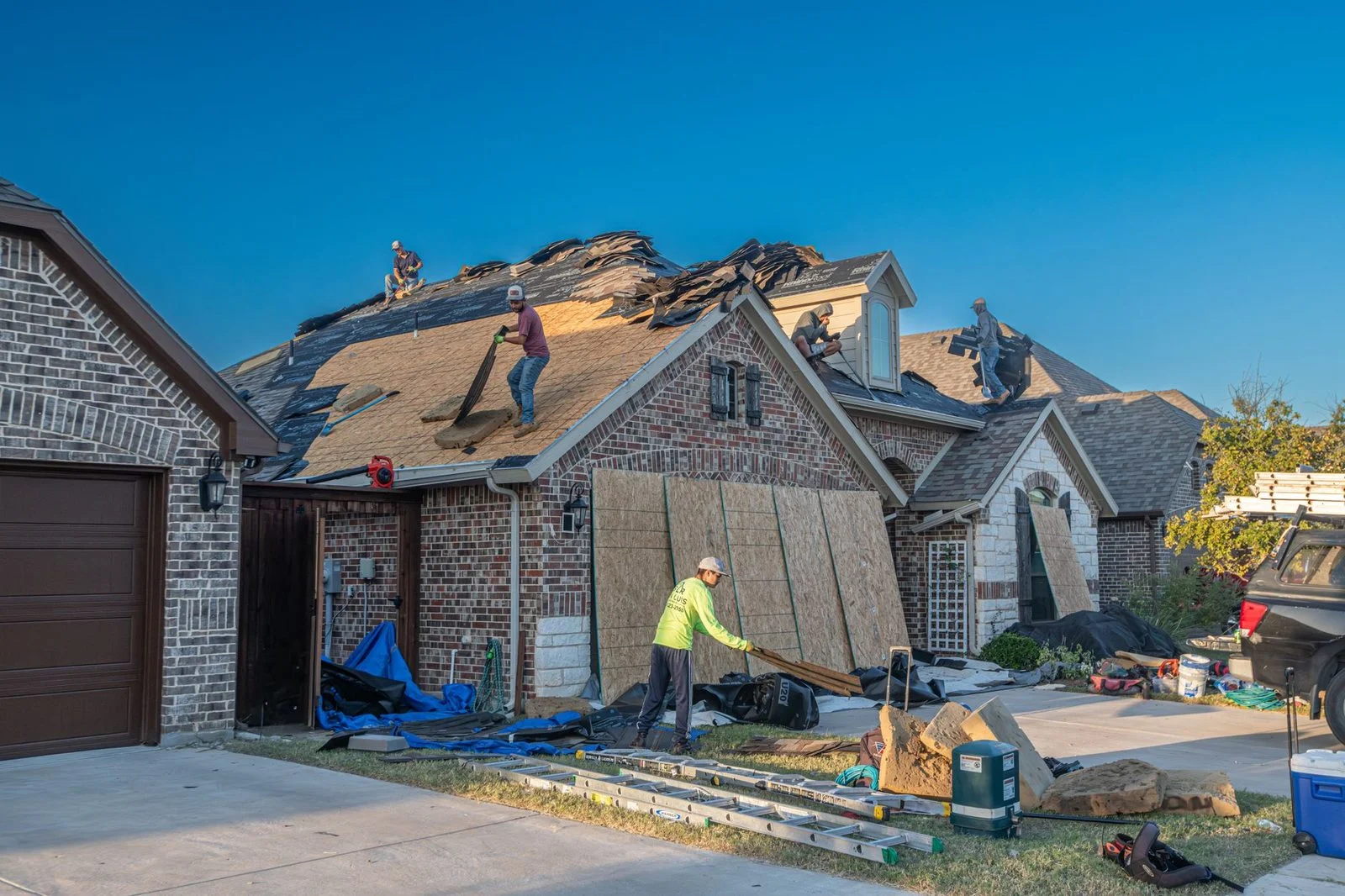
Tear-off and removal of the existing roof
Tear-off is the removal of the old roofing down to the deck. It takes off the shingles, clay or concrete tile, or metal panels. It also removes the old underlayment and flashing.
Removing every layer matters. Once the old system is gone, the installer can see the deck directly. Hidden damage, like soft boards or water trapped under old material, shows up only at this stage. Covering it over would hide the problem instead of fixing it.
Protecting the home during tear-off is part of the job. Falling debris can damage landscaping, gutters, and driveways. Crews should protect plants and the exterior, and the estimate should say how they’ll do it.
Ask that the estimate list the removal scope. Look for how many layers come off, whether debris hauling is included, and how the old materials leave the property. Seeing those lines in writing shows you exactly what’s being taken away.
Deck inspection and replacement of damaged boards
The roof deck is the base layer, usually plywood or OSB sheathing. Every other component rests on it. Once the old roof is off, the installer checks each board for softness, rot, and water stains.
Damaged boards are replaced with new decking. The number of boards depends on what’s found, so this work is itemized separately. Nobody knows the exact count until the deck is exposed.
Leaks often trace back to a deck that stayed wet for a long time. Water can run along a rafter or under a flashing and soften the wood before any stain shows inside. Finding that during a replacement is far easier than finding it later.
Ask how decking is handled in the estimate. A separate line for decking repair, with a note on how it’s priced, shows the plan for a key layer under the roof.
Underlayment, ice and water shield, and drip edge
Underlayment is a secondary water barrier spread over the deck beneath the finished roof. Ice and water shield is a self-adhering membrane placed where water is most likely to get under the roofing. Drip edge is a metal strip along the eaves and rakes that directs water away from the fascia and deck edge.
Ice and water shield usually goes at the eaves, in valleys, and around penetrations. Those spots take the most stress when wind-driven rain pushes water sideways and up under the roofing edge.
South Florida gets heavy rain and strong storms. A finished surface sheds most water, but wind can force it into seams and edges. Underlayment and membrane give the roof a second line of defense.
Drip edge does a quieter job. It guides water off the edge so it doesn’t soak the fascia and slowly rot the deck edge. Ask the estimate to name the underlayment product, the membrane locations, and the drip edge metal, so you know each piece is planned.
Flashing, vents, and roof penetrations
Flashing is the metal that seals joints and transitions on the roof. Step flashing runs where the roof meets a wall. Counter-flashing covers the top of that joint. Valley flashing guides water along the low point where two roof planes meet.
Penetrations are common leak points. Pipe boots seal the pipes that exit the roof. Vent collars, skylights, and chimney flashing each need their own sealing details. A small gap at any of these can let water into the attic, even when the shingles look fine.
Ventilation works alongside flashing. Ridge and attic vents manage heat and moisture under the roof. Trapped heat and humidity work against the rest of the system, from the deck up to the finished surface.
Check that the estimate names each penetration and its flashing. A line that just says “flashing” leaves too much open. Ask the installer to count the pipes, vents, and skylights so each one is included.
Roofing materials: shingle, tile, and metal options
A full replacement can use asphalt shingle, concrete or clay tile, or metal roofing as the finished surface. Each option changes the layers beneath it. Tile and metal systems use different underlayment, fastening, and flashing details than shingles.
Metal has outside evidence behind it in South Florida. The Insurance Institute for Business & Home Safety reported that metal roofing systems held up well in winds below 130 mph in its assessment of southwest Florida roofs after Hurricane Ian. That was one assessment after one storm, so it’s a useful data point, not a guarantee for every roof.
Wind and impact ratings matter too. Under Fla. Stat. § 553.842, “A product may not be advertised, sold, offered, provided, distributed, or marketed as hurricane, windstorm, or impact protection from wind-borne debris from a hurricane or windstorm unless it is approved pursuant to this section or s. 553.8425,” and “Any person who advertises, sells, offers, provides, distributes, or markets a product as hurricane, windstorm, or impact protection from wind-borne debris without such approval is subject to the Florida Deceptive and Unfair Trade Practices Act.” Roofing is one of the product categories the statute lists. Ask for the exact product name and its approval.
Write the finished surface, underlayment, and flashing as separate lines. That way each part can be read on its own, and any rating attaches to a named product.
Not sure what your next step is?
Talk it through with our team — the first consultation is free, confidential, and carries no obligation.
The itemized estimate, the process, and what to expect
A complete estimate itemizes every part of the job, from tear-off and decking through cleanup. So what does a full roof replacement include? It includes each of those lines, written out, with the material and labor for each one.
The typical sequence runs in order. Inspection comes first, then material delivery, tear-off, and deck repair. Next come the underlayment and membrane, the finished surface, and flashing and trim. Final cleanup includes a magnetic sweep to pick up stray nails.
Permit requirements for roofing projects can vary by city and county, and our team can walk you through the steps that apply to your project.
Duration depends on roof size, pitch, material, and weather. Steep pitches and heavy materials such as tile can change the pace of the work. Cost depends on size, material, pitch, number of layers, decking condition, and penetrations. The itemized estimate makes it easier to read exactly what’s included.
Repair or replacement: how to tell the difference
A targeted repair fits damage in one area. Full replacement usually makes sense when damage is spread across the roof. Common signs include widespread granule loss, curling or cracked materials, repeated leaks in several areas, and soft decking.
Repeated patching is a clue. A roof patched in one spot after another, with new leaks showing up elsewhere, often points toward replacement. A single flashing failure after a storm may be a simple repair. The pattern matters more than any one leak.
Timing matters after storm damage. Under Fla. Stat. § 627.70132, a claim or reopened claim for property loss is barred unless notice is given to the insurer under the policy terms within 1 year after the date of loss, and a supplemental claim must be noticed within 18 months after the date of loss; for storm claims, the date of loss is the date the hurricane made landfall or the weather event is verified by the National Oceanic and Atmospheric Administration. These time limits are paused during a servicemember’s deployment to a combat zone or combat support posting that materially affects the ability to file. Roof age also matters.
Our roof replacement guide covers the full process in more depth, and our roof repair information covers patching for a single problem area.
Talk with our team about your roof
Maybe you’re reading this because a roof leaked after the last storm. Maybe you’re handling a parent’s roof or a rental property’s roof from another city. Either way, the decision is in front of you, and you don’t have to sort out every layer alone.
Our team can review your roof’s age and condition, the scope a complete replacement would include, and what an itemized estimate would look like for your home. Our initial consultation is free, confidential, and without obligation.
When you’re ready to talk through the roof in question, you can reach our team here.
Frequently asked questions
Is a full roof replacement the same as a roof repair?
No. A repair fixes one problem area, while a full replacement renews every layer from the deck up.
Are permits part of a roof project?
Permit requirements vary by city and county, and our team can walk you through them.
How long does a full roof replacement take?
The time depends on roof size, pitch, material, and weather.
Is metal roofing a good choice in South Florida?
One IBHS assessment found metal roofing held up well in winds below 130 mph after Hurricane Ian.
What a full replacement covers
Tear-off of the existing roof
The old roofing material, underlayment, and flashing are removed so the project starts from a clean base.
Deck inspection and repair
The roof deck is checked for rot, soft spots, and damage, and any affected sections are repaired or replaced before new materials go down.
New underlayment and flashing
Fresh underlayment and flashing are installed around vents, valleys, chimneys, and roof edges to protect the structure from water.
New roofing material
Metal or tile roofing is installed to your chosen specification, with the ridge, edges, and penetrations finished to match.
Cleanup and final review
Debris is removed from the property, and the completed roof is reviewed with you before the project is closed out.
Repair or replace?
If your roof shows widespread wear, multiple leak points, or a deck that has been damaged over time, a single patch may not address the underlying problem. Ask for a full inspection of the deck and underlayment before deciding between a repair and a replacement.
Planning your project
Permits
Permit requirements vary by city and county across South Florida. Our team can walk you through what applies to your property.
Timeline
The length of a full replacement depends on roof size, pitch, material, and weather. Our team will give you a clear schedule during your consultation.
Material choice
Metal and tile roofing each suit different homes and budgets. We will discuss the options that fit your roof and your goals.
Coordinating with solar
If you plan to add solar panels, it can make sense to replace the roof first. We can plan both projects together.


