


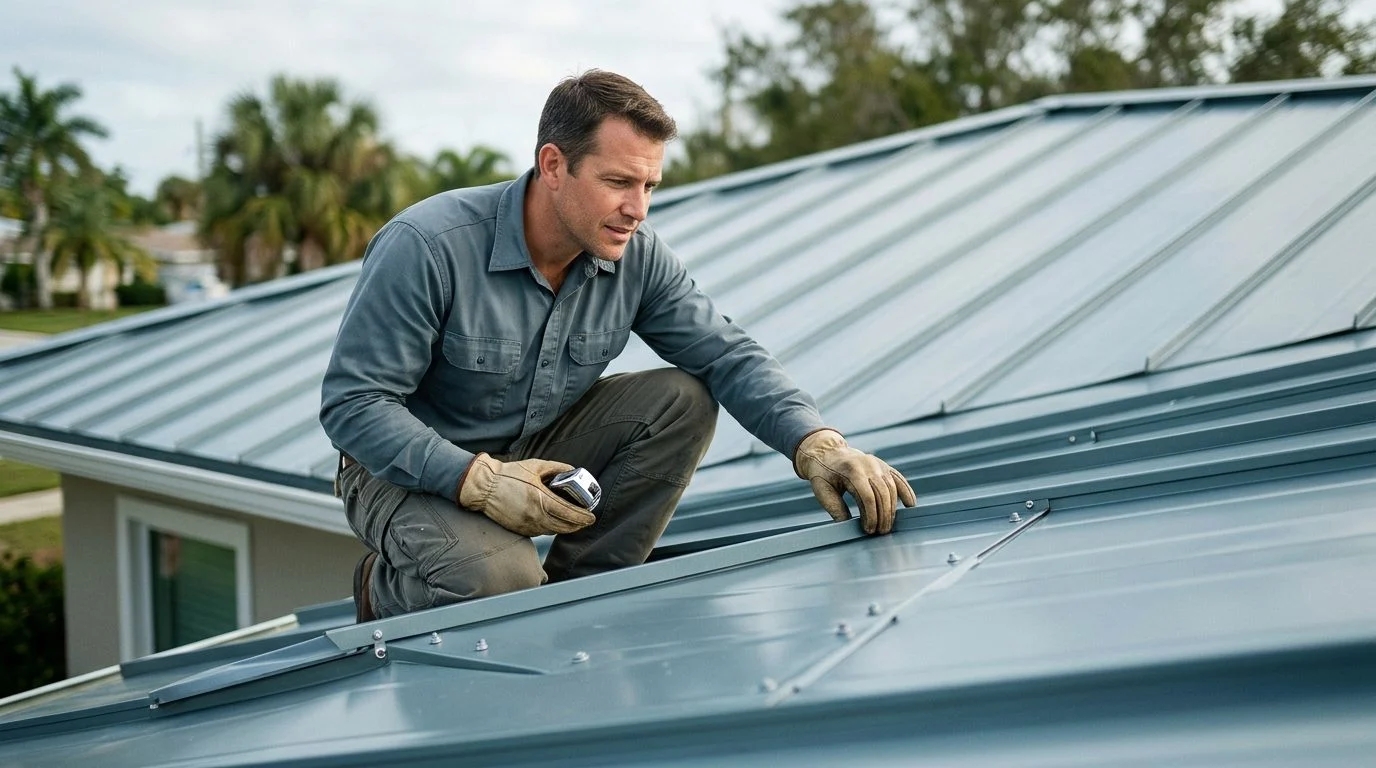
Roofing · South Florida
Thinking About Redoing Your Roof? Know the South Florida Rules First
Permits, building codes, and roof replacement options across Miami, Fort Lauderdale, West Palm Beach, Boca Raton, Naples, and Fort Myers.
By Jonathan Rodriguez · Published November 3, 2026
The Short Answer: Can You Redo Your Own Roof?
Yes, in many cases a homeowner may redo the roof on a home they own and live in. The work still has to follow permit rules, the Florida Building Code, insurance terms, and any HOA rules.
People who ask “are you allowed to redo your own roof?” usually face one of three situations. They may be dealing with a leak, storm damage, or an aging roof they’re responsible for. They may be planning the job for a parent or a tenant. Or they may want to know the rules before they buy materials.
The answer depends on the facts of your property and on your city or county. Four things decide it: the type of property, the permit, the building code, and your insurance policy. Each one is covered below.
If a leak or storm damage has you unsure what your roof needs, you don't have to sort out the permits and rules alone, and our team is glad to help. Talk it through with our team — the first consultation is free, confidential, and carries no obligation.
Who Can Legally Do Roof Work on Your Property?
Owner-occupied homes get the most room. Rentals and commercial buildings do not.
Florida’s owner-builder exemption applies when an owner acts as their own contractor on a one-family or two-family residence. The home must be for the owner’s own occupancy or use, and not offered for sale or lease. The owner must also provide direct, onsite supervision of all work not done by licensed contractors.
Two details matter here. If the home is sold or leased within 1 year after the work is finished, the law presumes the work was done for sale or lease. The owner-builder disclosure also warns that an owner-builder may be held liable for injuries to unlicensed workers on the property, and homeowner’s insurance may not cover those injuries.
Work done by someone else raises different questions. The owner-builder exemption is written for the owner doing the work. The permit requirement, however, applies to any person who repairs or alters a building.
If your home is in an HOA, the community’s declaration may limit your choices. Where a declaration offers options for materials, size, design, or location, the association cannot restrict you from choosing among them.
Permits and Inspections: What Your Local Building Department Requires
Florida law generally requires a permit before roof repair or replacement begins. It is unlawful for any person to repair or alter a building without first getting a permit from the enforcing agency and paying its fees.
There is one small-job exemption. A 2026 supplement to the Florida Building Code says a local government must exempt an owner of a single-family home, or the owner’s contractor, from the permit requirement for work valued under $7,500 on the owner’s property. A revision set out in a Florida Building Commission code supplement states that a local government that issues building permits shall exempt an owner of a single-family dwelling or the owner’s contractor from the requirement to obtain a building permit to perform any work valued at less than $7,500 on the owner’s property. That exemption does not apply to work on a property partially or entirely located in a flood hazard area, or to any electrical, plumbing, structural, mechanical, or gas work, and the owner or contractor must submit a written request to the local enforcement agency with documentation showing the nature and value of the work. The exemption does not cover flood hazard area work or electrical, plumbing, structural, mechanical, or gas work. A project also cannot be split up to avoid the requirement. 2026 Florida Building Code supplement
A full re-roof often costs more than that limit, so most roof jobs still need a permit.
Permit rules are set locally. Your city or county may set its own details.
Unpermitted work creates problems. The enforcing agency can revoke a permit if the work does not conform to the code. Contact ASP Superhome to discuss any open permit and the inspections needed to close it out.
Building Code, Wind Requirements, and the 25% Rule
The 25% rule is a state rule for some existing roofs.
This exception applies when the existing roof was built, repaired, or replaced to the 2007 Florida Building Code or a later edition. It limits the upgraded work to the portion being redone. It does not require the whole roof to meet current code.
Roof-to-wall connection requirements can apply to some roof replacements, depending on the conditions set out in the governing rules.
Code details also matter for the work itself. The Florida Building Commission’s analysis of changes to the residential code explains that the underlayment section now requires underlayment to lap over hips and ridges by at least 6 inches, except where ventilation openings are provided. It also revised fastening guidance for interlocking shingles. Flashing requirements now apply to all roof types and shapes. 9th Edition residential code analysis
How Your Home Insurance Policy Affects a DIY Roof
Roof age and roof work can affect both your premium and your claims. The Florida Department of Financial Services says roof discounts vary by insurer and depend on the roof’s age, condition, and type. Those discounts are typically limited to roofs under 10 years old. Florida Department of Financial Services
Wind mitigation can also lower premiums. The Florida Office of Insurance Regulation says homeowners may submit an official mitigation inspection form to an insurance agent to seek hurricane-wind mitigation discounts. Florida Office of Insurance Regulation
Deadlines matter after storm damage. A claim is barred unless notice reaches the insurer within 1 year after the date of loss. A supplemental claim is barred unless notice is given within 18 months.
For hurricanes, the date of loss is the date the storm made landfall, or the date the National Oceanic and Atmospheric Administration verified the event. The date you start repairs does not set that clock.
Keep permits, inspection records, material receipts, and dated photos of the roof before and during the work. These records help answer questions about what was done and when.
How Hard Is It to Redo Your Own Roof?
Redoing a roof is hard physical work and a technical job. Most of the difficulty sits in the details, not in the tear-off.
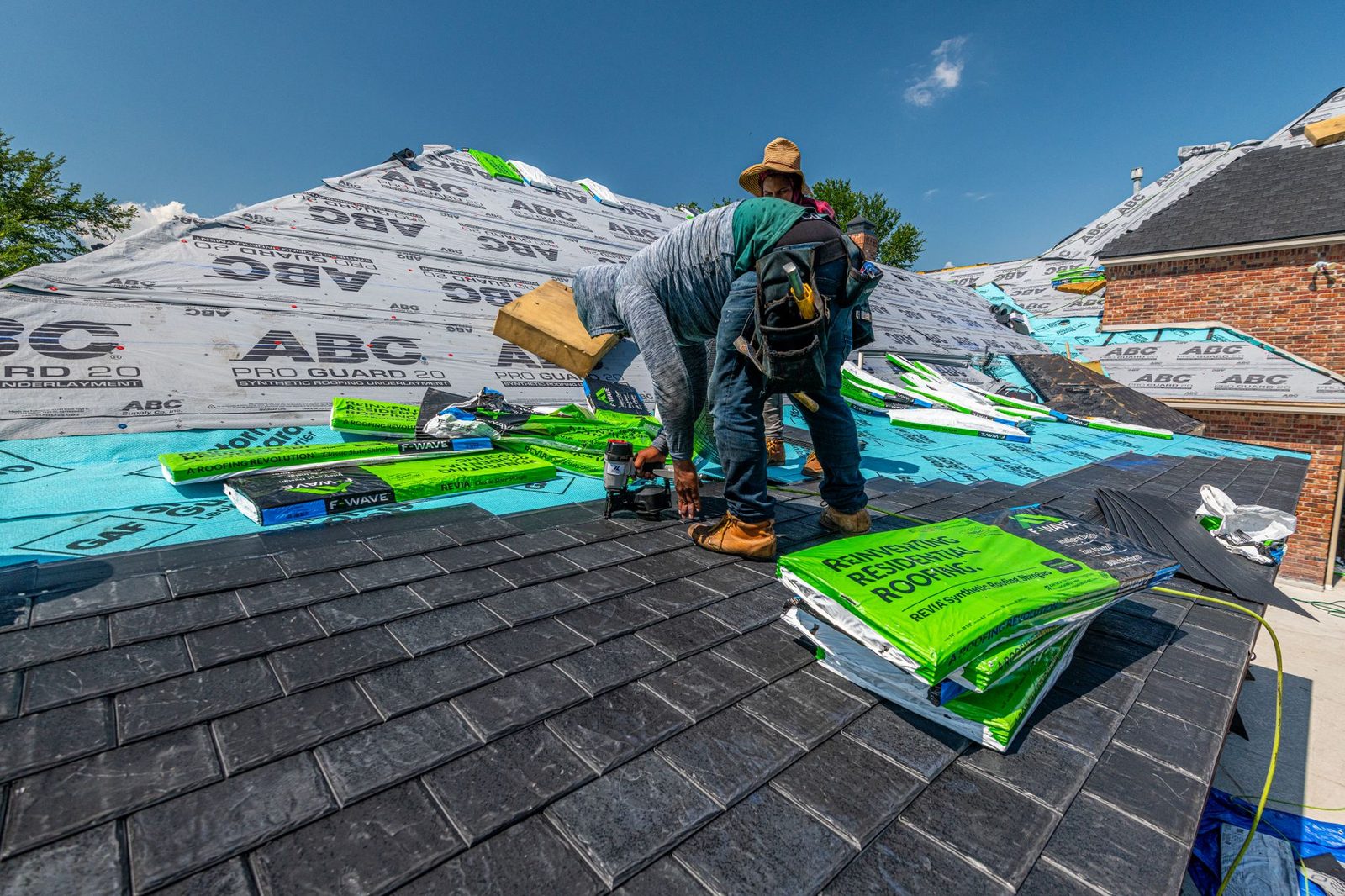
The physical demands are real. You’ll climb a ladder with bundles of shingles or heavy tile, work on a steep pitch, and handle South Florida heat and sudden storms. Tile roofs are especially heavy to carry and set.
The technical work is where leaks start. Underlayment must lap correctly. Flashing at valleys, chimneys, and vent pipes must shed water in the right order. Nails must go in at the right spacing and depth for the shingle type. Improper flashing, incorrect nailing, and poor underlayment choices are common causes of leaks.
Timing is hard to control. Weather windows and material deliveries can stretch a weekend project across several weeks. A rain day can stop work for days.
Safety deserves the most attention. A fall from a roof can cause serious injury, and most roof work is done alone on a ladder and then on a steep surface. The owner-builder warning about unlicensed workers and insurance applies to every person on your property.
Not sure what your next step is?
Talk it through with our team — the first consultation is free, confidential, and carries no obligation.
Deciding Your Next Step: Talk With Our Team About Your Roof
The practical next step is to talk through your roof’s condition, permit questions, and options with our team. You don’t have to settle the permit, code, and insurance questions on your own.
Our team works on impact windows and doors, metal and tile roofing, roof repair and replacement, and solar panels that may be planned along with the roof.
Is it legal to replace your own roof in Florida?
In many cases, yes, for an owner-occupied one- or two-family home. The work must still follow permit and building code rules.
Do I need a permit to replace my roof myself in Florida?
Usually, yes. Florida law requires a permit before most repair or replacement work begins.
Does homeowners insurance cover a roof I installed myself?
Coverage depends on your policy and on the cause of the damage. Keep records of the permit, materials, and work.
Can I do roof work on a parent’s or tenant’s home?
Different rules apply. The permit requirement still covers any person who repairs or alters the building.
Our first consultation is free, confidential, and carries no obligation to continue (Spanish: consulta inicial gratuita, confidencial y sin compromiso).
If a leak, storm damage, or an aging roof has you weighing your options, share the details with our team and request a free estimate through our contact page.
Check Before You Start
Most roof replacement and repair work in South Florida requires a permit and must meet current building code. Starting work without these can lead to delays and added costs. Talk with our team before you begin.
How ASP Superhome Can Help With Your Roof
Roof Replacement
Full roof replacement planned around your home, your materials, and local requirements.
Metal and Tile Roofing
Metal and tile roofing options suited to South Florida weather and long-term protection.
Solar Integration
Solar panels and battery backup can be considered during roof work, so the systems are planned together.
Roof Repair
Repairs for leaks, storm damage, and everyday wear, with clear guidance on what your roof needs.
Questions to Ask Before Your Roof Project
Is my home eligible for DIY roof work?
Rules depend on your property type, ownership, and local permit requirements. Our team can review your situation with you.
Do I need a permit?
Permits are required for most repair and replacement projects. Planning ahead keeps your timeline on track.
Which roofing material fits my home?
Metal, tile, and other options each have different installation needs, costs, and benefits for South Florida homes.
Should I combine roofing with other upgrades?
Impact windows, impact doors, solar, and kitchen remodeling can often be coordinated with roof work.


