


Roof Repair and Replacement | South Florida
Thinking About Fixing Your Own Roof? Start With a Clear Picture of the Job.
Some roof repairs are simple. Replacement, storm damage and tile or metal work often are not. Here is how to tell the difference before you climb the ladder.
By Jonathan Rodriguez · Published October 28, 2026
Can a homeowner repair their own roof in Florida? Sometimes, yes. Florida allows some roof work on your own home, but the limits depend on the type of repair, the roofing material, whether a permit applies, and what your insurer requires. This page explains where those limits sit and when a professional is the safer call.
The Short Answer: Can a Florida Homeowner Repair Their Own Roof?
A homeowner can do some roof work on their own home, but the rules look at the job itself, not only who owns the house. Every roof repair still has to follow the Florida Building Code, which governs the repair and alteration of buildings under Fla. Stat. § 553.73. Your options depend on the size of the job, the roofing material, and whether a permit is required. Simple repairs are very different from full replacement, and mistakes on either can be costly. The sections below walk through each limit in plain language.
If a leak or storm damage has you unsure what to do next, our team can talk it through with you in a free, confidential first consultation. Talk it through with our team — the first consultation is free, confidential, and carries no obligation.
Am I Allowed to Repair My Own Roof?
Yes for some work, but Florida’s owner exemption is narrower than most people expect. The shingle provision in § 489.103(7)(a)2 covers owners who act as their own contractor and personally provide direct, onsite supervision of all work not done by licensed contractors, when they repair or replace wood shakes or asphalt or fiberglass shingles on one-, two- or three-family homes used by the owner or the owner’s tenant, and natural causes damaged the property in a governor-declared emergency. The work also cannot be offered for sale within 1 year after completion.
To use the exemption, you must personally appear and sign the building permit application. You must also meet local permitting agency requirements. You cannot hand off direct supervision of the whole job to someone who isn’t licensed for that work. Outside that narrow exemption, normal licensing and permit rules apply, and the work still has to meet the Florida Building Code.
What Roof Repairs Can a Homeowner Safely Handle?
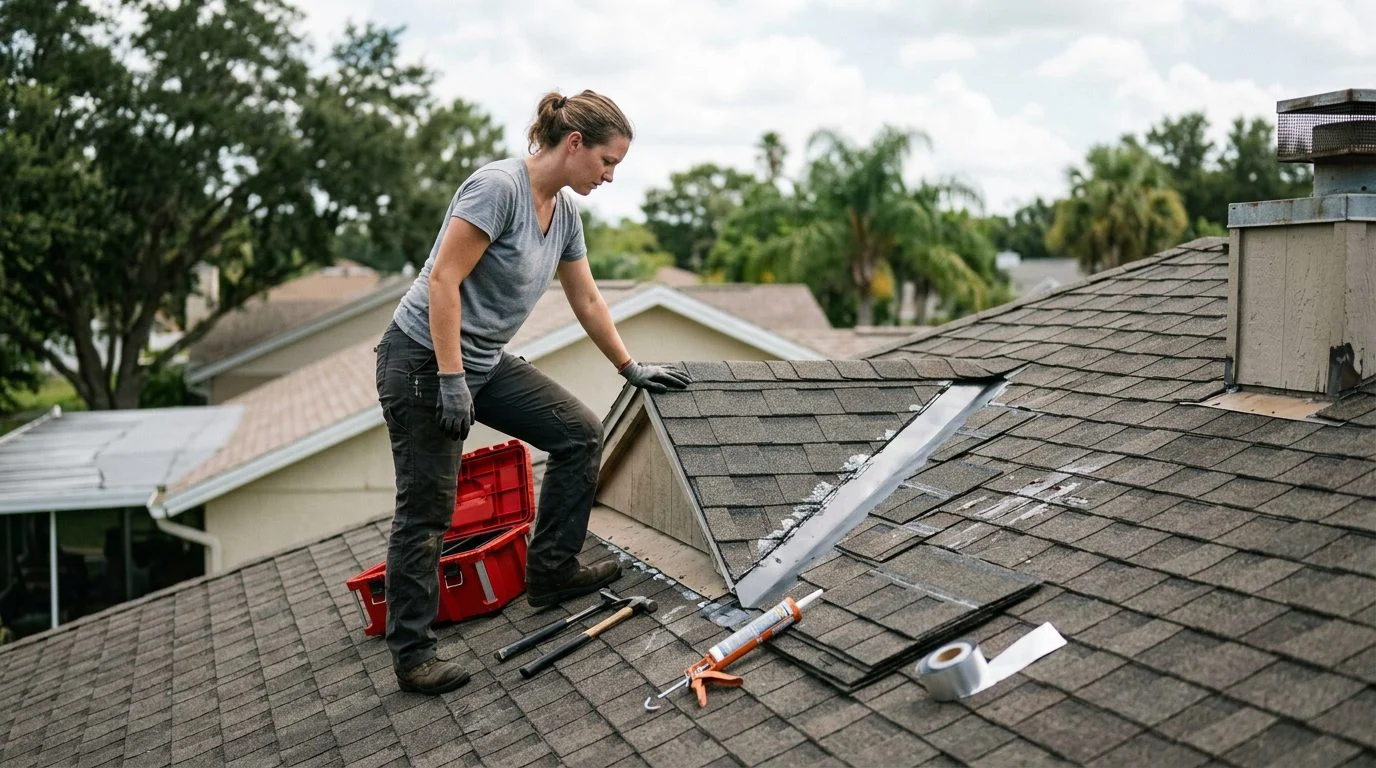
Small, low-risk repairs are the most manageable for a homeowner. Examples include resealing minor flashing or pipe boots, replacing a few damaged shingles on an asphalt roof, and clearing debris from valleys and gutters. Before you start, check the deck underneath. If the boards feel soft or wet, the problem is bigger than the shingles on top.
Tile and metal need more care. Tile can crack under foot traffic, and a misaligned tile stops shedding water the way it should. Metal panels depend on correct fastening and sealing. A loose seam can leak in ways you can’t see from the ground.
Stop and get help if you see widespread leaks, sagging decking, storm uplift on several areas, or loose roof-to-wall connections. Those signs point to structural problems, and a shingle swap won’t fix them.
Can You Legally Replace Your Own Roof in Florida?
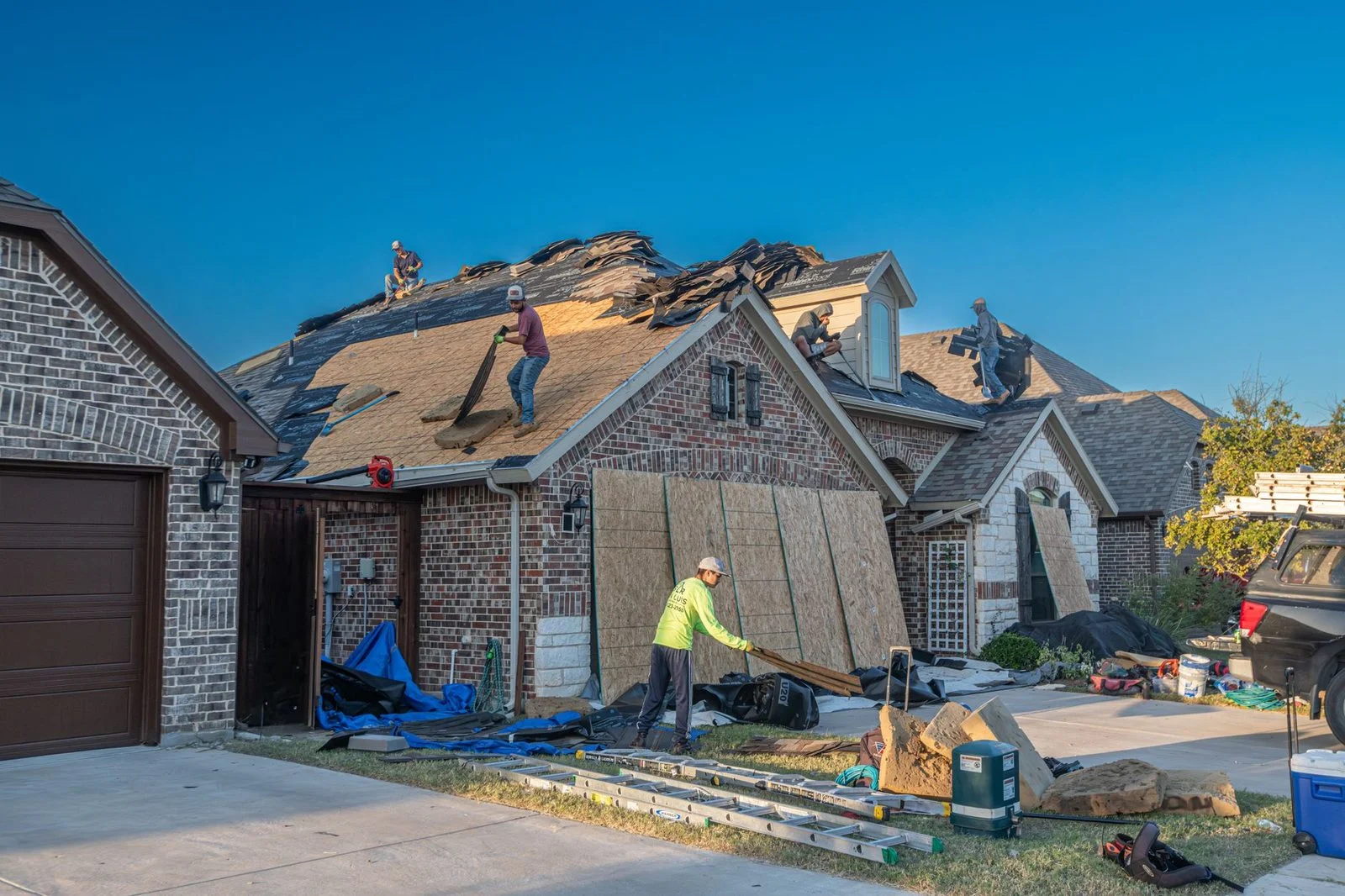
Only in narrow cases. The shingle exemption in Fla. Stat. § 489.103 is tied to emergency-declared storm damage, owner occupancy, and the no-resale limit described above. A general wish to replace an aging roof does not fall under it.
A full replacement also brings code duties.
If you hire help, owner rules still apply. If you act as your own owner-builder, any unlicensed person working on your home must work under your direct supervision and be your employee. You must also handle tax withholding and workers’ compensation for that worker. Adding solar panels to a roof project brings more electrical and structural planning.
Can a Handyman Do Roof Repairs in Florida?
A handyman can’t do licensed roofing work for others without the right license. That is a separate question from a small repair on your own home. Under Fla. Stat. § 489.13, a local building department may not issue a building permit to a contractor, or to anyone posing as one, who lacks a valid active certificate or registration in the right category. A local license alone is not enough. The state may also fine an unlicensed person found guilty of unlicensed contracting up to $10,000.
Contracts matter too. That can complicate any dispute over unfinished or faulty work.
When Is a Roofing Permit Required, and What Happens Without One?
A permit is the step to check before any roof work starts. In South Florida, the local city or county building department generally reviews the roofing plans and issues the permit, and our team can walk you through the permitting steps that may apply to your project. The local building department carries out its own review of submitted drawings, separate from our free initial consultation.
Owner-performed work has its own paperwork. Florida law provides that if anyone violates the requirements of the owner exemption for permitted work, the local permitting agency shall withhold final approval, revoke the permit, or pursue any action or remedy for unlicensed activity. That action can reach both the owner and anyone doing licensed work.
Charlotte County’s residential roof permit page lists permit documents, inspection timing, owner-builder restrictions, and a small-repair exemption. Local rules vary, so review them before you begin. For more on owner installation, see our roof installation guide.
Not sure what your next step is?
Talk it through with our team — the first consultation is free, confidential, and carries no obligation.
How Do Insurance, Warranties, and Resale Affect a DIY Roof?
Insurance deadlines can decide whether a claim gets paid, so act early. Under Fla. Stat. § 627.70132, a claim is barred unless notice reaches the insurer under the policy within 1 year after the date of loss, but that time limit is tolled during a deployment to a combat zone or combat support posting that materially affects a servicemember’s ability to file. A supplemental claim has an 18-month window. For hurricane claims, the date of loss is the date the hurricane made landfall.
Santa Rosa County’s claims guidance advises homeowners to promptly make only temporary repairs to prevent more hurricane roof damage, and to preserve receipts. It also notes that rain entering a hurricane-created roof opening generally depends on the policy. Keep receipts and photos in one place.
The Florida Office of Insurance Regulation states that homeowners coverage depends on the policy form and on covered or excluded perils. Unpermitted or poorly documented roof work can also raise questions for a buyer or lender at sale.
How Dangerous Is DIY Roofing, and When Should You Stop?
Falls are the biggest danger. A ladder slip or a steep pitch can cause a serious injury, and Florida heat adds strain fast. Keep clear of overhead electrical lines, and never work on a steep or high roof without fall protection.
Tile adds its own hazards. Broken tile leaves sharp edges and trip risks on the roof and on the ground below. Work slowly, and step only on areas you know are sound.
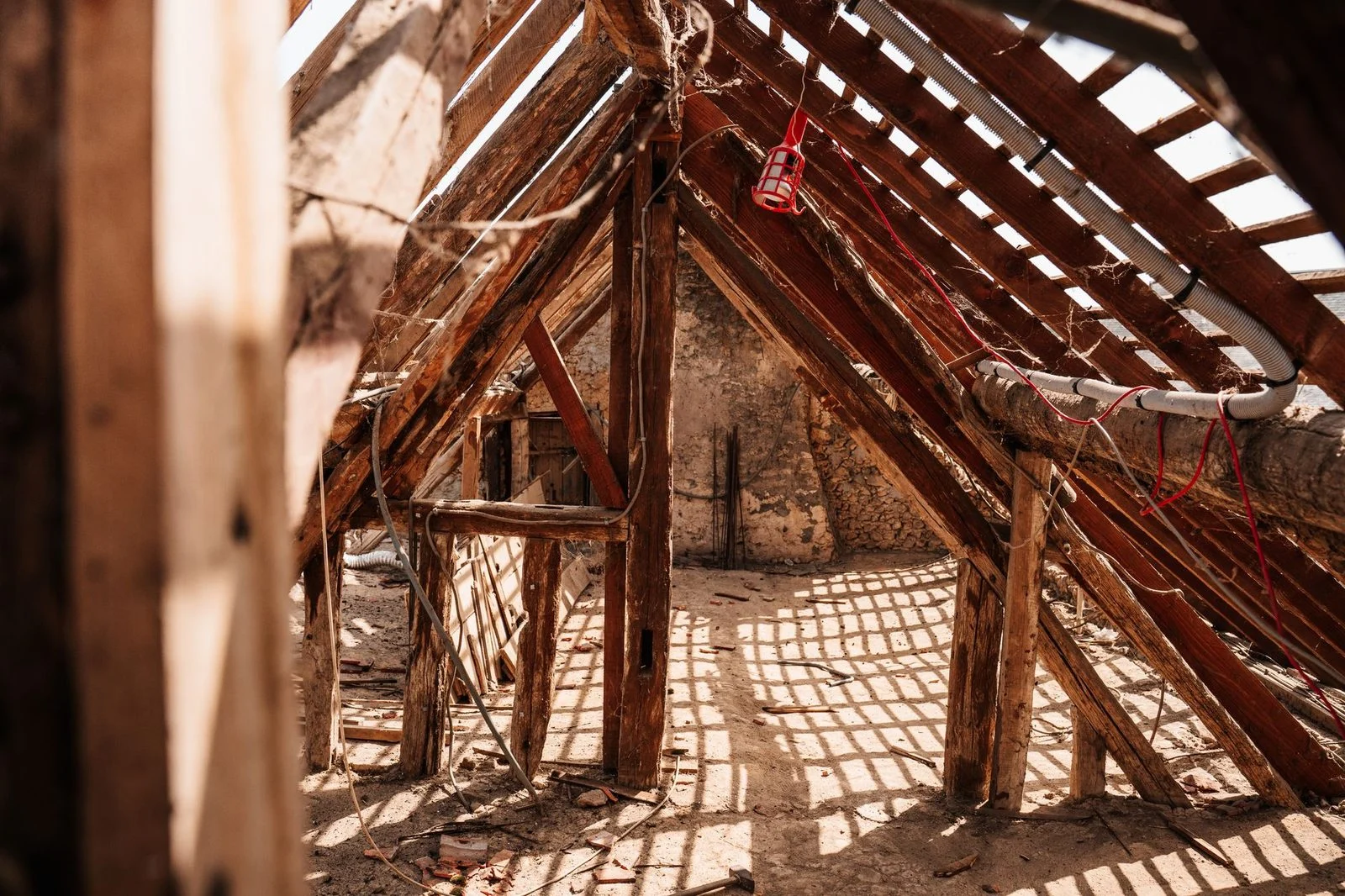
Storm damage hides problems. Winds can loosen flashing, expose nails, and weaken decking under the surface, so a roof can look fine from below and still leak. Stop working on the roof if you see visible sagging, water stains on a ceiling, leaks during rain, or any repair on a high or steep section you can’t safely reach.
Dealing With a Leak or Storm Damage? Start With a Free Consultation
If a leak showed up after a storm, you may be deciding fast. You might be checking on a parent, a tenant, or a home you can’t watch every day. You don’t have to work through every rule alone. Make temporary repairs, keep receipts, and photograph the damage first.
Then gather the details that matter most: your roof type, its age, and where the damage shows. Our roof replacement overview can help you see your options.
Quick Answers
Can a homeowner repair their own roof in Florida?
Yes. Replacement and storm-related work have stricter limits.
Do I need a permit to fix my roof in Florida?
Permit rules apply to many roof jobs. Check local requirements before you start.
How long do I have to file a hurricane roof claim?
Florida law generally requires notice to your insurer within 1 year after the date of loss, and your policy terms also apply.
A leak or storm damage can leave you unsure what to do next. ASP Superhome offers a free first consultation, which is confidential and comes with no obligation to continue. Share your roof type, its age, and where you see the damage. Our team can talk through the repair, replacement, or permit question with you on our contact page.
Why Homeowners Talk With Our Team First
Honest Scope Check
Our team can look at the damage and explain whether a repair is practical or whether the roof needs more work.
Built for South Florida Conditions
Wind, rain and salt air put real stress on roofs here. We focus on materials and methods that suit the local climate.
Clear, Written Estimates
You get a detailed look at the work, the materials and the next steps so you can make a decision with confidence.
Free First Consultation
Your first consultation is free, confidential and comes with no obligation to continue.
Warning: Not Every Roof Repair Is a Good DIY Project
Working on a roof can be dangerous, and a patch that looks fine can hide water damage underneath. Permit rules also vary by city and county, and storm-related work can involve insurance steps that depend on the details of your claim. Before you start, have the roof inspected.
Common Roof Projects We Handle
Roof Repair
Leaks, loose or damaged tiles, flashing problems and localized storm damage.
Roof Replacement
Full tear-off and new roofing when repairs will not restore the roof's condition.
Metal and Tile Roofing
Durable metal and tile systems designed to handle South Florida heat, humidity and wind.
Impact-Resistant Upgrades
Impact windows and doors, plus solar panels and battery backup, to strengthen the whole home.


