


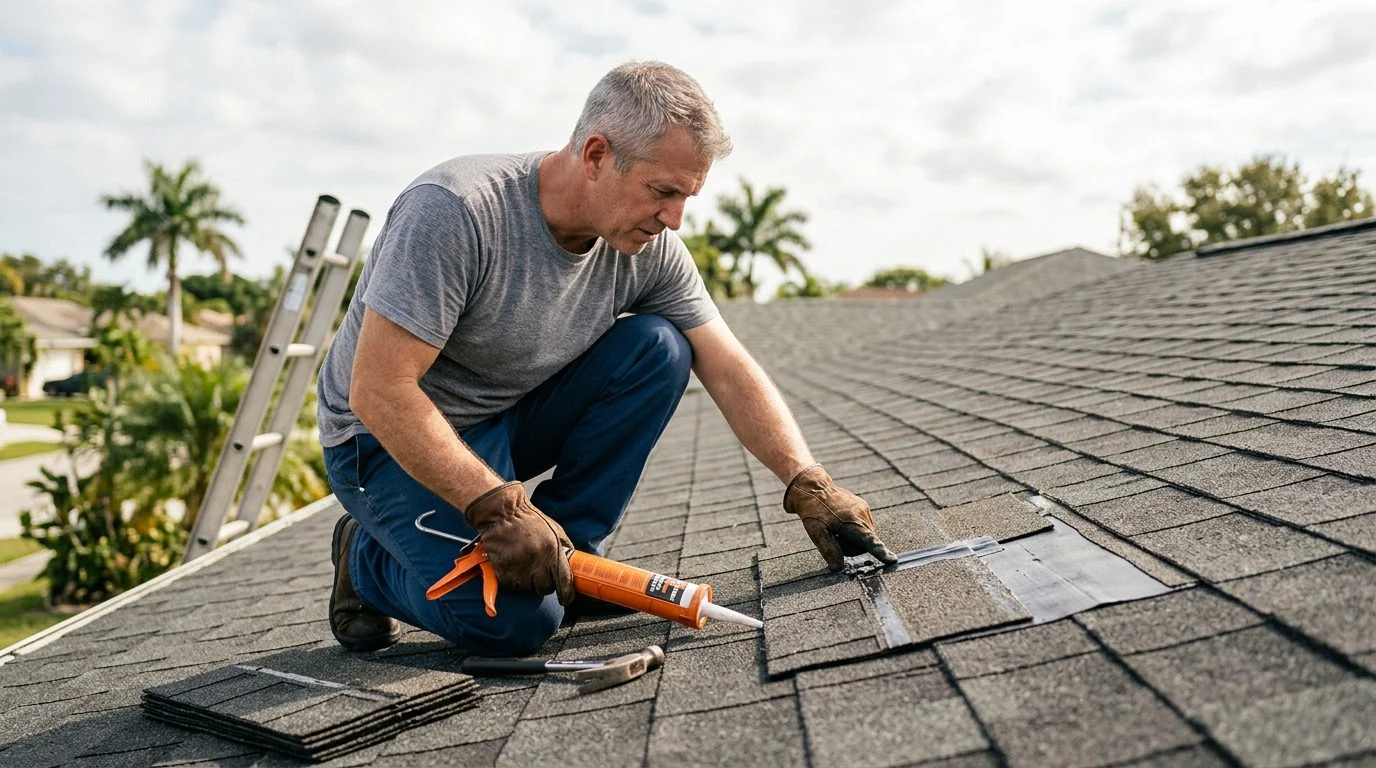
Roof Repair | South Florida
Who Should Fix Your Roof Leak in South Florida?
A leak can look small and still hide damage that spreads. Here is how to tell which fixes need a roofing team and how ASP Superhome can help you start with a free estimate.
By Jonathan Rodriguez · Published November 5, 2026
If you’re asking who should fix a leaking roof, the short answer is a roofing contractor who inspects the whole roof system. A leak often starts far from the stain you see indoors, so a patch on one spot can miss the real opening. This guide explains who handles what, how roof type changes the job, which questions to ask, and how Florida rules affect repairs and insurance. Many people searching for who can fix a leaking roof are standing under a stain, sometimes for a relative or a rental they don’t live in. For more detail, see our South Florida roof repair guide.
A roofing contractor who inspects the whole roof is usually the right choice
A roofing contractor is usually the right choice because the water entry point is often not directly above the stain. Water can run along a rafter or under underlayment before it drops onto a ceiling. A full inspection checks the attic, underlayment, flashing, fasteners, and the roof covering itself. A quick patch can stop the drip for a while and leave the real opening untouched. Good repair starts with tracing the path the water takes. Ask what the inspection covers before you agree to any work. A written list of what was checked also helps if you later file an insurance claim.
Finding water coming through a ceiling after a storm is stressful, especially when you're handling it for a parent or a rental you don't live in. Our team is here to help you take the next step. Talk it through with our team — the first consultation is free, confidential, and carries no obligation.
Roof type changes what a good repair looks like
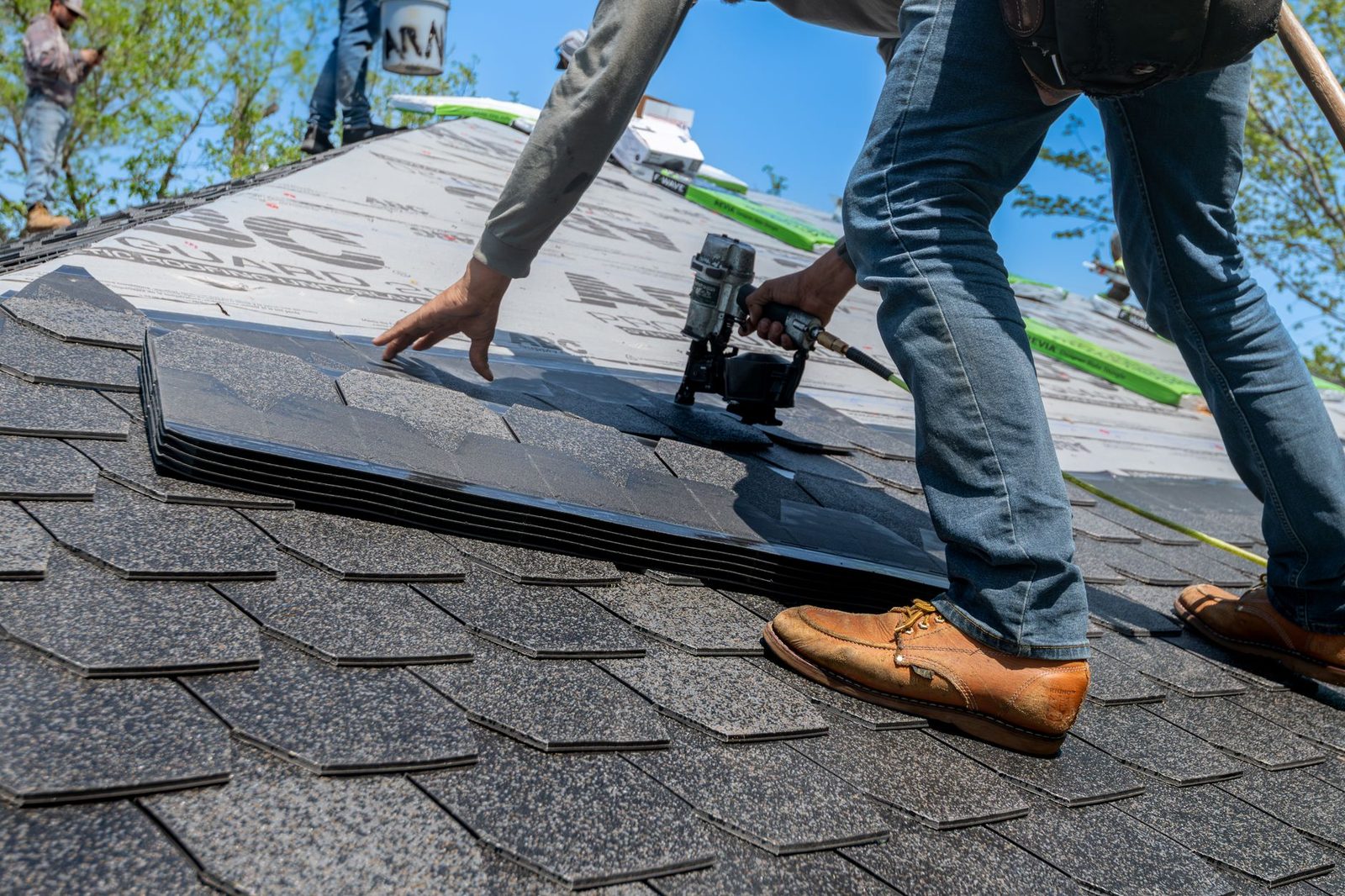
The roof type shapes where leaks start and how the fix is done. Tile roofs, both concrete and clay, rely on tiles laid over underlayment. A leak may come from a cracked or shifted tile, not the open field of tiles, so the crew must lift tiles and check what sits beneath them. Metal roofs more often leak at seams, fasteners, penetrations, and flashing. Florida’s building code reflects these weak points. The Florida Building Commission analysis says a new section requires metal panel flashing to follow the manufacturer’s installation instructions. The same analysis says underlayment must lap over hips and ridges at least 6 inches, except where ventilation openings are provided.
Roofer, plumber, or handyman: match the job to the source
A roofing contractor handles leaks that come through the roof covering, flashing, underlayment, or roof structure. If water follows a plumbing vent through the roof, the seal around that pipe still needs a roofing check. Leaks at vents and chimneys often involve both the pipe and the roof. A handyman can handle small, low-risk tasks. Several cracked tiles, failed flashing, or an open section of roof is a different job. That kind of work calls for a roofing assessment. Before work starts, ask who will be responsible for the roof surface once the job is finished. That answer tells you who stands behind the result.
The questions to ask before anyone fixes a roof leak
Before you agree to any repair, ask for an in-person inspection of the roof and the ceiling or attic area where water enters. Ask for a written scope that lists the materials and components to be repaired or replaced. Ask for proof of licensing and insurance. A contract to repair or replace the roof of a residential property must include a statement, in bold type of at least 14 points on the owner’s signature page, advising you to contact your insurance company to verify coverage before signing. A contractor also may not authorize insurance-claim repairs without a good faith itemized estimate (Fla. Stat. § 489.147). Finally, ask about the workmanship warranty and whether you’ll get dated photos of the damage and the finished work.
Repair or replacement turns on what the inspection finds
A localized leak often gets a targeted repair. Widespread damage, aging underlayment, or repeated leaks can point toward replacement. Cost rises with the number of tiles or panels affected, the roof’s pitch, access, and hidden damage found once the roof is opened. Florida’s windstorm rules also matter. In Miami, the city’s permit catalog says residential roof repair or replacement requires a permit, so ask who will pull it.
Protect the home and your insurance claim while you wait
Report the damage to your insurer on time, because Florida law sets firm notice deadlines. Under Fla. Stat. § 627.70132, a claim is barred unless notice reaches the insurer under the policy terms within 1 year after the date of loss. A supplemental claim is barred unless notice is given within 18 months. For hurricanes and other weather events, the date of loss is the landfall date or the date the event is verified by the National Oceanic and Atmospheric Administration. While you wait, take dated photos of stains and wet materials. Keep a simple log of when you noticed the leak and which storm came before it. Move valuables away from the drip, and set containers under active leaks. Coverage turns on the cause, the policy terms, and how promptly you reported the damage, so review the language with your insurer.
Not sure what your next step is?
Talk it through with our team — the first consultation is free, confidential, and carries no obligation.
Talk with our team about your roof leak
Our team can help you work out who should inspect a leak like this one. Water coming through a ceiling after a storm is stressful, especially when you’re managing it for someone else. ASP Superhome offers a free first consultation, which is confidential and has no obligation to continue (Spanish: consulta inicial gratuita, confidencial y sin compromiso).
Quick answers
Who should fix a leaking roof?
A roofing contractor who inspects the whole roof is usually the right choice. A handyman can handle only small, low-risk tasks.
Is a roof leak covered by insurance?
Coverage turns on the cause, the policy terms, and how quickly you report the damage.
Does a roof repair need a permit in Miami?
The City of Miami’s permit catalog says residential roof repair or replacement requires a permit.
When you’re ready, request a free estimate with our team and we’ll start by looking at where the water is getting in.
A full-roof inspection
A leak often starts somewhere other than where the water shows up.
Advice matched to your roof
Metal roofs, tile roofs, and flat or shingled systems each leak in different ways. The right repair depends on the material and how the roof was built.
Prompt attention
Water can keep moving through insulation, drywall, and framing. A quick inspection helps you decide on repairs before the damage grows.
Don't wait for the stain to grow
A ceiling stain, a damp smell, or bubbling paint can signal water that is still moving through the roof structure. Limit the mess with a bucket or tarp if it is safe to do so, and avoid climbing on a wet or steep roof yourself.
Who handles which part of a leak repair
Roofing contractor
The right choice for most leaks. A roofing contractor inspects the whole system, including flashing, penetrations, underlayment, and damaged or lifted tiles or panels.
Handyman
A handyman is not a substitute for a full roof inspection when water is entering the home.
Permits and code work
Some repairs and replacements require permits in South Florida.
Start with a free first consultation:
Related practice areas
- Metal Roof Reseal Cost in South Florida: What Changes It


