


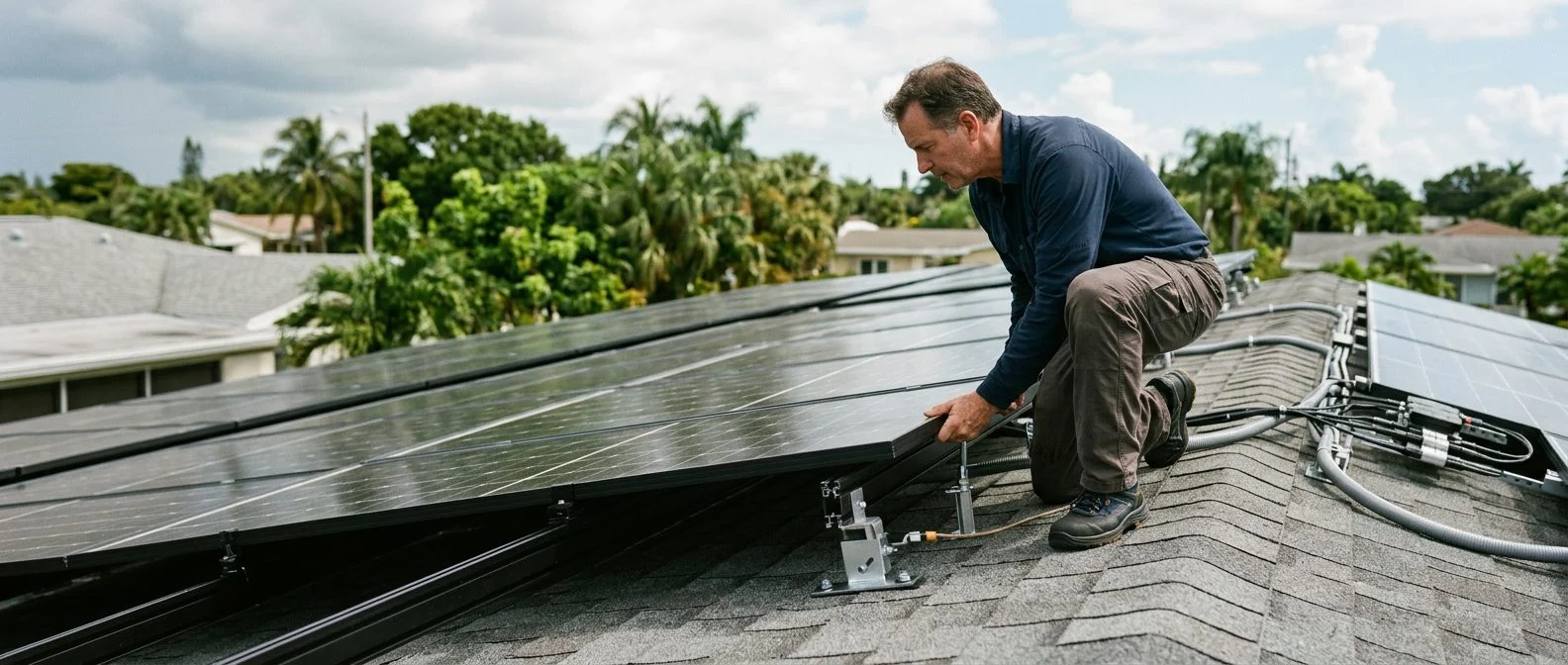
Solar Panels | South Florida
What Is the 33% Rule in Solar Panels?
A plain-English guide to the rule of thumb behind solar panel sizing, and what it means for your home in Miami, Fort Lauderdale, West Palm Beach, Naples and beyond.
Start with a conversation
Free
First consultation
Confidential
Your information stays private
No obligation
Decide on your own timeline
By Jonathan Rodriguez · Published November 7, 2026
The 33% rule in solar panels is a rule of thumb for pairing a solar array with an inverter. It lets the panels’ DC rating run about one-third above the inverter’s AC rating.
What is the 33% rule in solar panels?
The 33% rule is a sizing shortcut. It compares a solar array’s DC capacity with the inverter’s AC rating. Installers often describe it as allowing DC capacity up to about 33% above the inverter rating. That is a DC-to-AC ratio of roughly 1.33.
DC power is what the panels make. AC power is what your home uses. The inverter converts one into the other, so the two ratings are linked.
The rule is a design guideline. It is not one fixed legal limit that applies to every home. Florida’s net-metering rule measures size differently. For inverter-based systems, Fla. Admin. Code R. 25-6.065 multiplies installed DC capacity by .85 to find the gross power rating.
You may also see the 33% number next to fire-safety roof setbacks. Those are a different subject. Keep them separate when you read about roof layout.
If you're weighing solar for a home you own or just inherited, our team can talk through your roof, energy use, and battery goals with you. Talk it through with our team — the first consultation is free, confidential, and carries no obligation.
Why the ratio between panels and the inverter matters
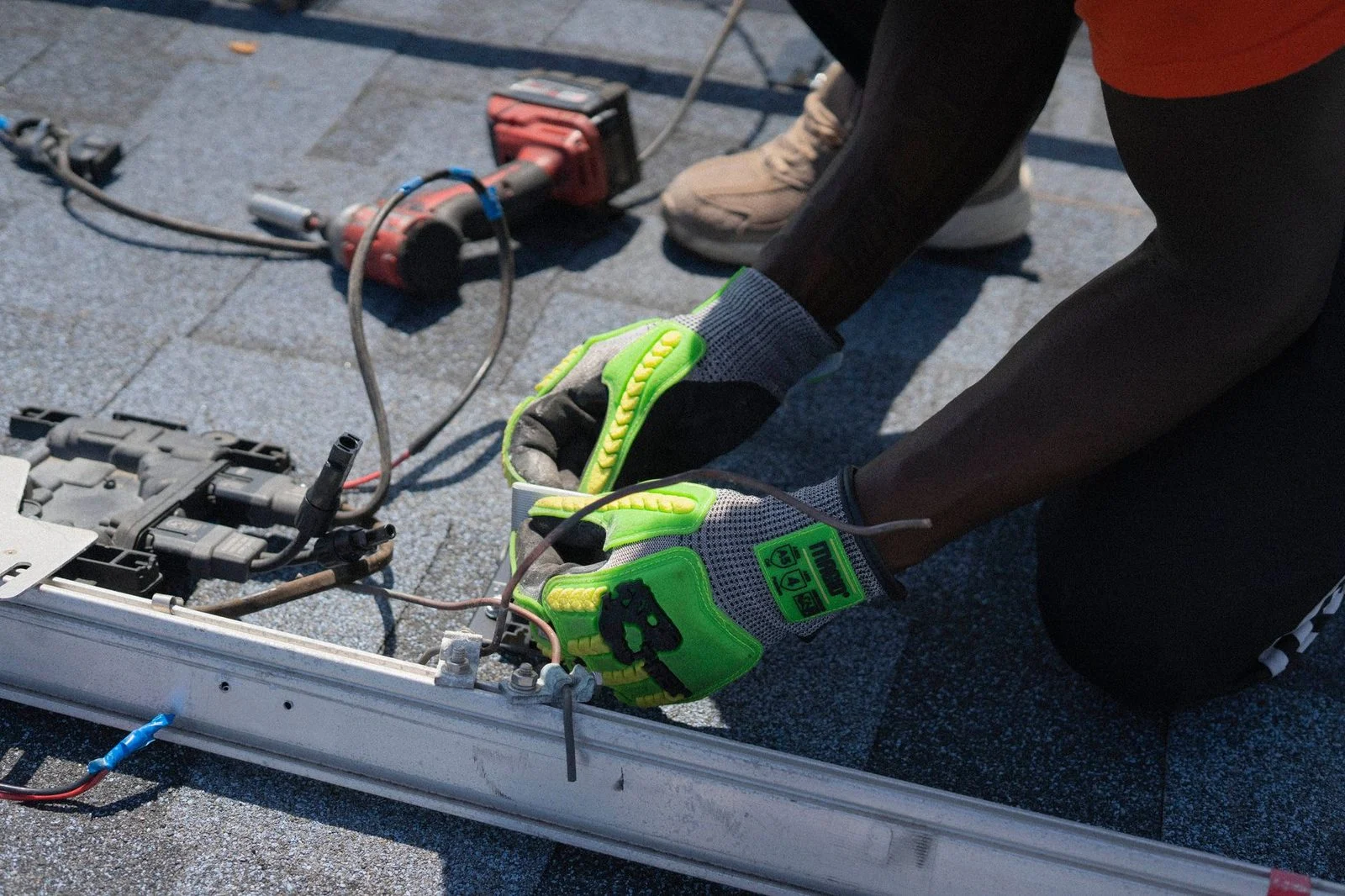
The ratio matters because an inverter has a maximum AC output, and panels rarely produce their full rating. Sunlight changes through the day and across seasons. A DC array somewhat larger than the inverter can run the inverter closer to its limit for more hours. That helps in the morning, late afternoon, and on cloudy days.
The trade-off is clipping. Clipping happens when the panels push more DC power than the inverter can pass through at peak. The extra energy at the top of the curve is lost. Push the ratio too high, and clipping losses grow.
The benefit varies with the equipment and the site. That is why the ratio should be a balanced design choice, not simply the largest array that fits on the roof. The U.S. Department of Energy’s Solar Energy Technologies Office covers solar panel technology and the basics of residential PV systems.
A worked example of the 33% rule
The panel count changes with the panel rating. Three examples:
- At 400 W per panel: 13.3 kW ÷ 0.40 kW = about 33 panels.
- At 450 W per panel: 13.3 kW ÷ 0.45 kW = about 30 panels.
- At 350 W per panel: 13.3 kW ÷ 0.35 kW = about 38 panels.
Swap in the rating printed on the panel you’re considering. Higher-wattage panels need fewer units to reach the same DC total.
The real design also turns on the specific panels, the inverter model, the roof layout, and the energy goals of the home. For Tier 3 systems, an interconnection study may lead to a further design review before installation; for Tiers 1 and 2, provided the equipment complies with paragraphs (4)(a) and (b), the utility shall not require further design review, testing, or additional equipment other than that provided for in subsection (6). The math gives a starting point, not a finished plan.
Is there a limit to the number of solar panels you can have?
The 33% rule limits oversizing against the inverter. It does not set a cap on how many panels a home may install.
Practical limits decide how many panels fit. Usable roof area comes first. Orientation and shading come next. Roof edge and ridge setbacks used for fire-safety access also reduce the space available. A home with heavy electricity use may be designed with a larger system. A small roof may fit fewer panels, no matter what the rule of thumb says.
Permits set the timeline. The City of Miami’s roofing permit guidance says permits are required for residential roof repair or replacement. Miami-Dade County’s roofing permit page lists forms, checklists, and e-permitting steps. Under Fla. Stat. § 553.79, local enforcement agencies must post permit requirements and application status on their websites.
Is it better to have more solar panels or a bigger battery?
Panels and batteries do different jobs. Panels make electricity during daylight. A battery stores some of that energy for later, such as after sunset or during an outage.
More panels raise daytime generation. More battery capacity raises how much stored energy is available in the evening. One does not replace the other. The right balance follows your daily usage pattern, your usable roof area, and the backup goals you set for the home. You can read more in our solar battery backup guide.
Oversizing panels under the 33% rule and adding battery capacity are separate choices. They can still be planned together, since the roof and the inverter affect both. The 2026 Florida Building Code also renamed its battery section from “Stationary Storage Battery Systems” to “Energy Storage Systems” (Florida Building Commission analysis).
How solar system cost scales for a larger home
Cost generally rises with system size. More panels, more inverter capacity, and more installation labor all add to the total.
Square footage is a weak guide on its own. Electricity use is the main input to sizing. Two homes of the same size can need very different systems if one runs its air conditioning far more than the other.
A battery adds its own cost layer. That cost scales with stored capacity, so a larger battery adds more to the price. For a detailed breakdown of pricing factors, see our solar panel cost guide on this site.
Not sure what your next step is?
Talk it through with our team — the first consultation is free, confidential, and carries no obligation.
Common drawbacks to weigh and a next step
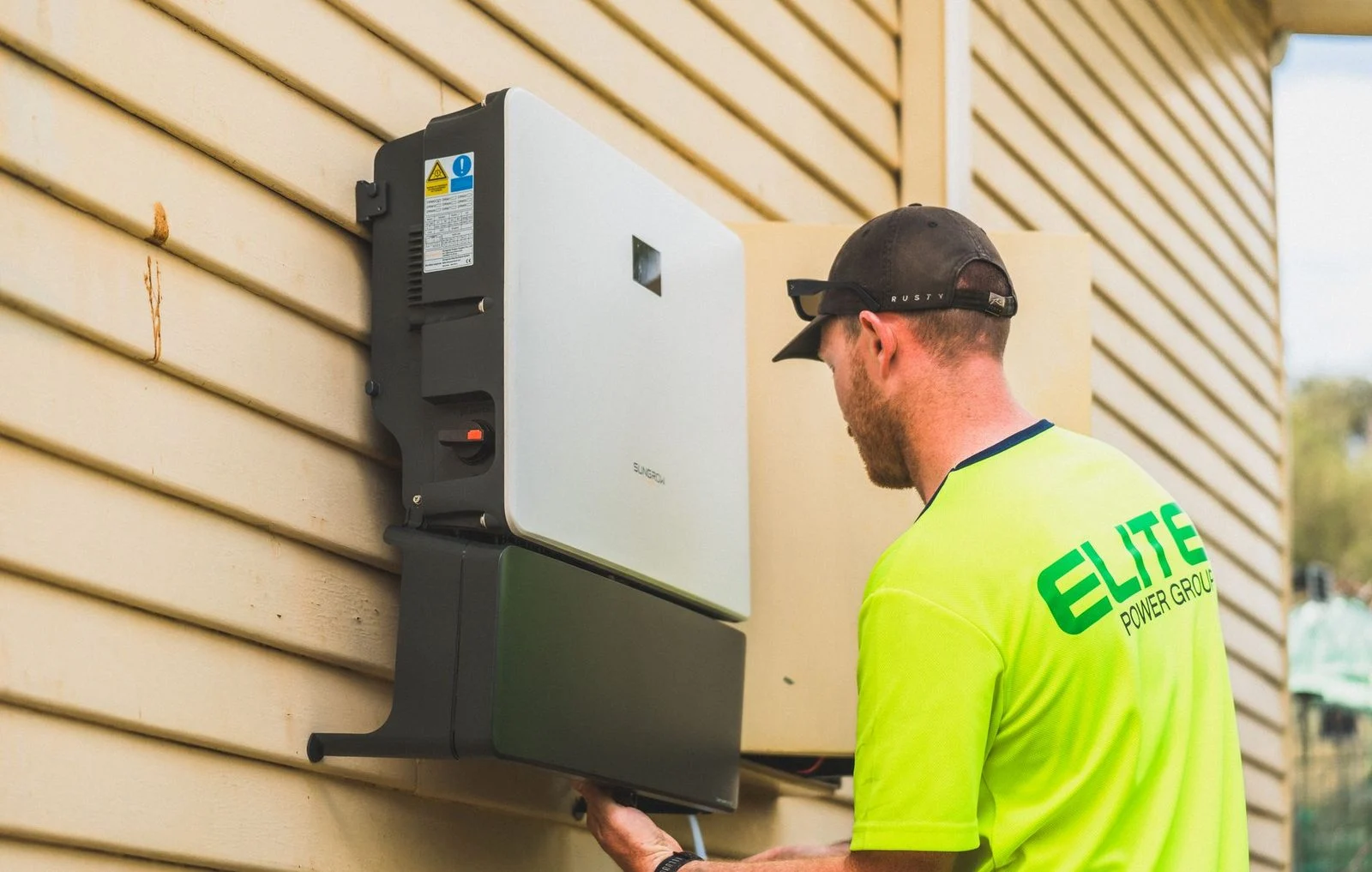
The common drawbacks are upfront investment, roof condition, output that changes with weather, and the time needed for permits and installation. A roof near the end of its life may need repair or replacement before panels go up. Tile and metal roofs each need their own mounting review.
Pushing the ratio too far adds clipping losses. Treat oversizing as a trade-off to review with the installer. Florida’s net-metering rule also shapes the math. Under Fla. Admin. Code R. 25-6.065, energy credits carry forward for not more than twelve months; at the end of each calendar year, the utility pays the customer for any unused energy credits at an average annual rate based on its COG-1, as-available energy tariff. Rule 25-6.065 also provides that, regardless of whether excess energy is delivered to the investor-owned utility’s electric grid, the applicable customer charge and applicable demand charge for the maximum measured demand during the billing period still apply to the customer.
Some readers look into this for a parent, a rental, or a home they inherited. You may be weighing a decision you did not plan for. You need clear facts before you decide.
Frequently asked questions
What is the 33% rule in solar panels?
It is a rule of thumb that lets DC panel capacity sit about one-third above the inverter’s AC rating.
Is the 33% rule a legal limit?
No. It is a design guideline, not one fixed legal limit for every home.
Is there a limit to how many solar panels I can have?
The 33% rule limits oversizing against the inverter. Roof area, shading, and setbacks usually decide how many panels fit.
Is a bigger battery better than more panels?
They do different jobs. Panels make power in daylight, and a battery stores energy for later use.
If you’re weighing solar for a home you own or just inherited, our team can walk through your roof, energy use, and battery goals with you. Your first consultation is free, confidential, and comes with no obligation to continue. Contact ASP Superhome to start that conversation.
How our team approaches solar sizing
Start with your energy use
We look at how your home actually uses electricity before discussing panel count or battery backup.
Review the system as a whole
Panel capacity, inverter rating and roof layout are reviewed together so the design fits your home.
Plain-language answers
We explain the reasoning behind each recommendation so you can weigh your options with confidence.
No pressure
Your first consultation is free, confidential and comes with no obligation to continue.
Important: the 33% rule is a guideline, not a legal limit
The 33% rule is a design rule of thumb. It does not set a fixed limit for every home, and the right system size depends on your roof, electrical equipment and energy needs. Ask for a site-specific review before you decide.
Key terms to understand
DC panel capacity
The total power rating of your solar panels, measured in direct current before conversion.
AC inverter rating
The output limit of the inverter that converts solar power into electricity your home can use.
Battery backup
Stored solar energy that can be planned alongside the panel system to support your home's power needs.
Roof and site layout
Orientation, shading and roof space shape how much of the design is practical for your property.


