


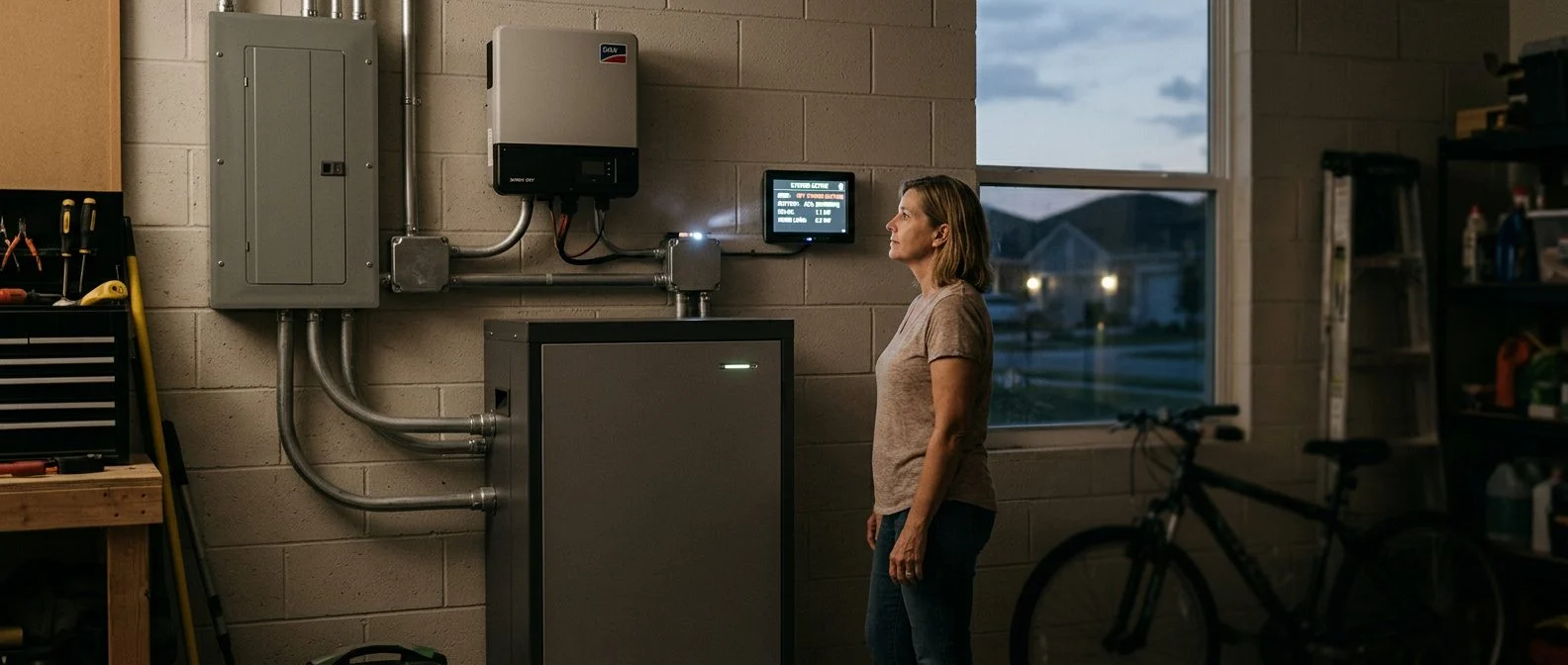
Solar Battery Backup | South Florida
Right-Size Your Battery for a 6.6 kW Solar System
Panel size is only one piece of the picture. Here is how to match storage to the way your household actually uses power.
By Jonathan Rodriguez · Published November 8, 2026
If you have a 6.6 kW solar system, or plan to add one, you probably want to know how big a battery to buy. The panel rating alone won’t answer that. Your battery size depends on how much power your home uses and how long you want backup to last.
Short answer: a 6.6 kW system does not set battery size by itself
A 6.6 kW system doesn’t set battery size on its own. Your home’s daily energy use and the loads you want during an outage set it. The 6.6 kW number describes how fast the panels can produce power in full sun. A battery’s size is measured in kilowatt-hours (kWh), the total energy it can store. Those two measurements answer different questions.
In sunlight, panels can run part of your home and charge a battery at the same time. Whether that covers your needs depends on how much you use. It also depends on whether the battery stores midday surplus for evening and overnight hours. For the broader picture, read our solar battery backup guide for South Florida.
If a recent outage has you wondering how much backup your family needs, our team can help you work out a battery size for your home and your budget. Talk it through with our team — the first consultation is free, confidential, and carries no obligation.
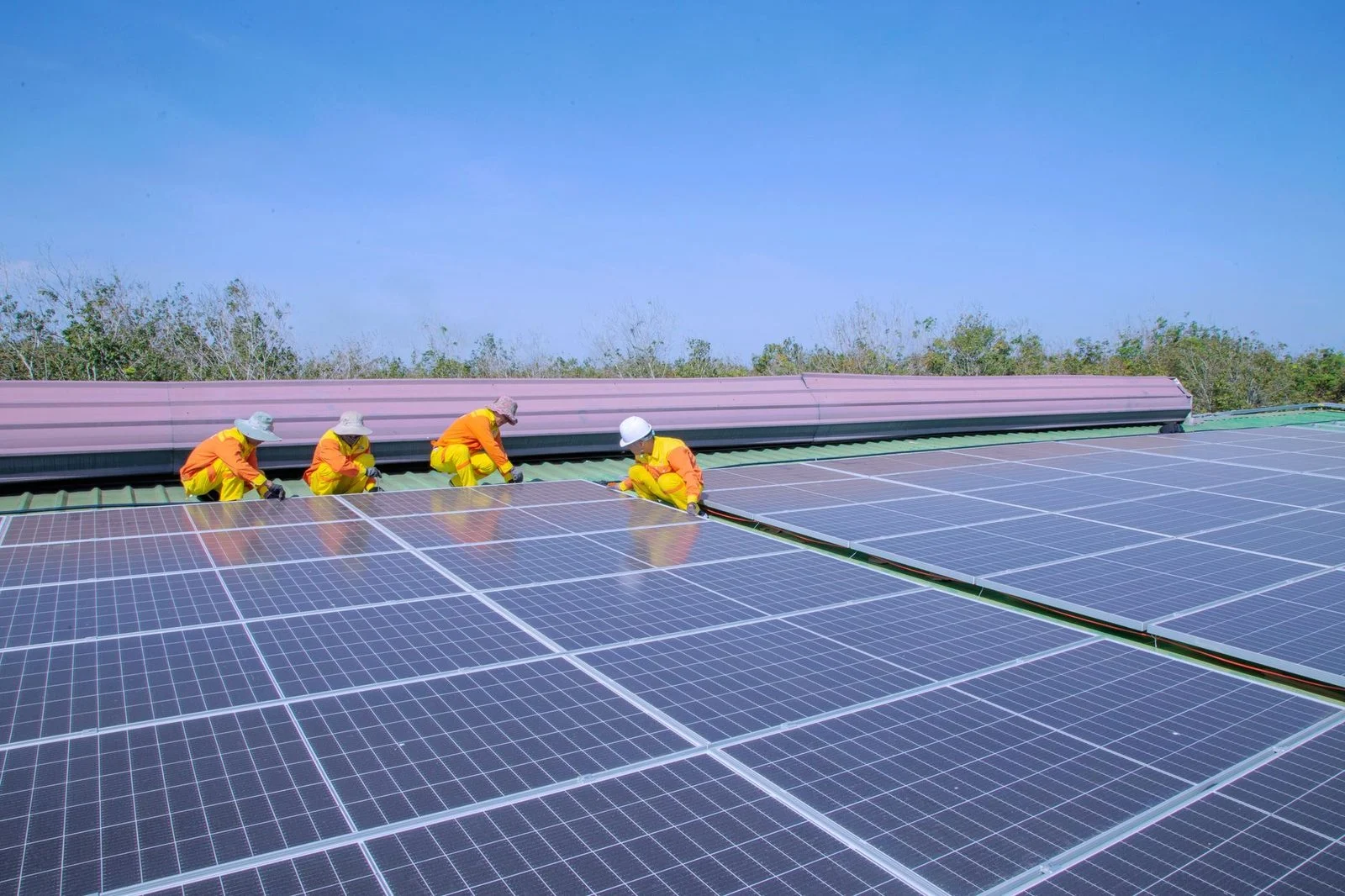
kW versus kWh: the two numbers that matter
Kilowatts (kW) measure power, the rate of electricity flow at any moment. Kilowatt-hours (kWh) measure energy, the total amount over time. Think of a water tank. Its capacity is like kWh. How fast water pours out is like kW.
A 6.6 kW array can produce more energy on a sunny afternoon than a small battery can hold. That gap is why sizing matters. A battery that is too small fills early, and the extra solar energy goes unused or flows to the grid.
Florida’s net metering rule gives one useful conversion. For inverter-based systems, the AC nameplate generating capacity is calculated by multiplying the total installed DC nameplate generating capacity by .85, as stated in Fla. Admin. Code R. 25-6.065. The Florida net metering rule 25-6.065 applies to investor-owned utilities, so check which utility serves your home.
Battery power (kW) and battery capacity (kWh) are separate specs. Both need to match your loads. The inverter and battery must also work together. Ask your installer to confirm that compatibility in writing.
Step 1: Decide why you are installing a battery
Your main goal sets the target size, so decide it first. Most homeowners have one of three goals in mind.
Backup during grid outages is a common reason in South Florida, where storm season brings outages. Size the battery around the circuits that must stay on. Those usually include the refrigerator, lights, medical equipment, fans or AC, and internet.
Self-consumption means storing midday solar for use in the evening. That shifts sizing toward covering evening and overnight use. Off-grid living needs the largest battery, because there is no grid to fall back on.
Write down your main reason before you look at battery specs. A battery built for whole-home backup costs more than one built for a refrigerator and a few lights.
Step 2: The factors that set storage size
Your daily kWh use and your essential loads drive most of the math. Start with your bill. Divide the monthly kWh by about 30 to get a rough daily figure.
Next, separate essential loads from whole-home loads. Essential loads are the circuits you need during an outage. Whole-home backup covers everything, and it takes a much larger battery.
To find your kWh target, multiply the essential load in kW by the hours of backup you want. A 1.5 kW load running for 10 hours needs 15 kWh.
Air conditioning is often the largest load in a South Florida home. It can dominate both daily use and backup sizing. An electric vehicle adds another large, flexible load. Decide whether the battery should charge the car, or whether charging waits for sunlight.
Finally, check usable capacity. A battery’s usable kWh is less than its nameplate kWh, because manufacturers limit how far a battery can be drained. Size the nameplate above your target so the usable energy still meets it.
Quick guide: battery size by household type
Match your home to a category, then do the math with your own bill. These categories are a starting point, not a size chart.
A small home or condo focused on essentials needs a modest battery. It covers refrigeration, lights, and a few outlets for a set number of hours.
An average family home with partial backup usually sizes the battery to the evening peak and critical circuits.
A home with central AC, pool equipment, or an EV needs a larger battery. It may also need a plan that decides which loads run during an outage.
Here is a worked example with illustrative numbers. A bill showing 900 kWh a month is about 30 kWh a day. Suppose the essential loads are 1.5 kW for 10 hours, which is 15 kWh. If the battery’s usable share is 90% of nameplate, divide 15 by 0.9. The target nameplate is about 16.7 kWh. Run the same steps with your own bill and loads.
The minimum viable battery approach
The minimum viable battery is the smallest size that covers your essential loads for the hours you need most. It is a starting point, not the biggest battery you can buy.
Use the same math as before. Multiply essential kW by hours, then divide by the usable share. That gives your nameplate kWh target.
A smaller battery costs less up front. It may cover critical loads, but it runs out sooner in a long outage. It also captures less of your midday surplus.
A larger battery gives more hours of coverage and more self-use. It costs more up front. Each choice carries a trade-off.
The Florida net metering rule 25-6.065 addresses net metering for investor-owned utilities.
The right balance depends on your priorities for backup and cost.
Not sure what your next step is?
Talk it through with our team — the first consultation is free, confidential, and carries no obligation.
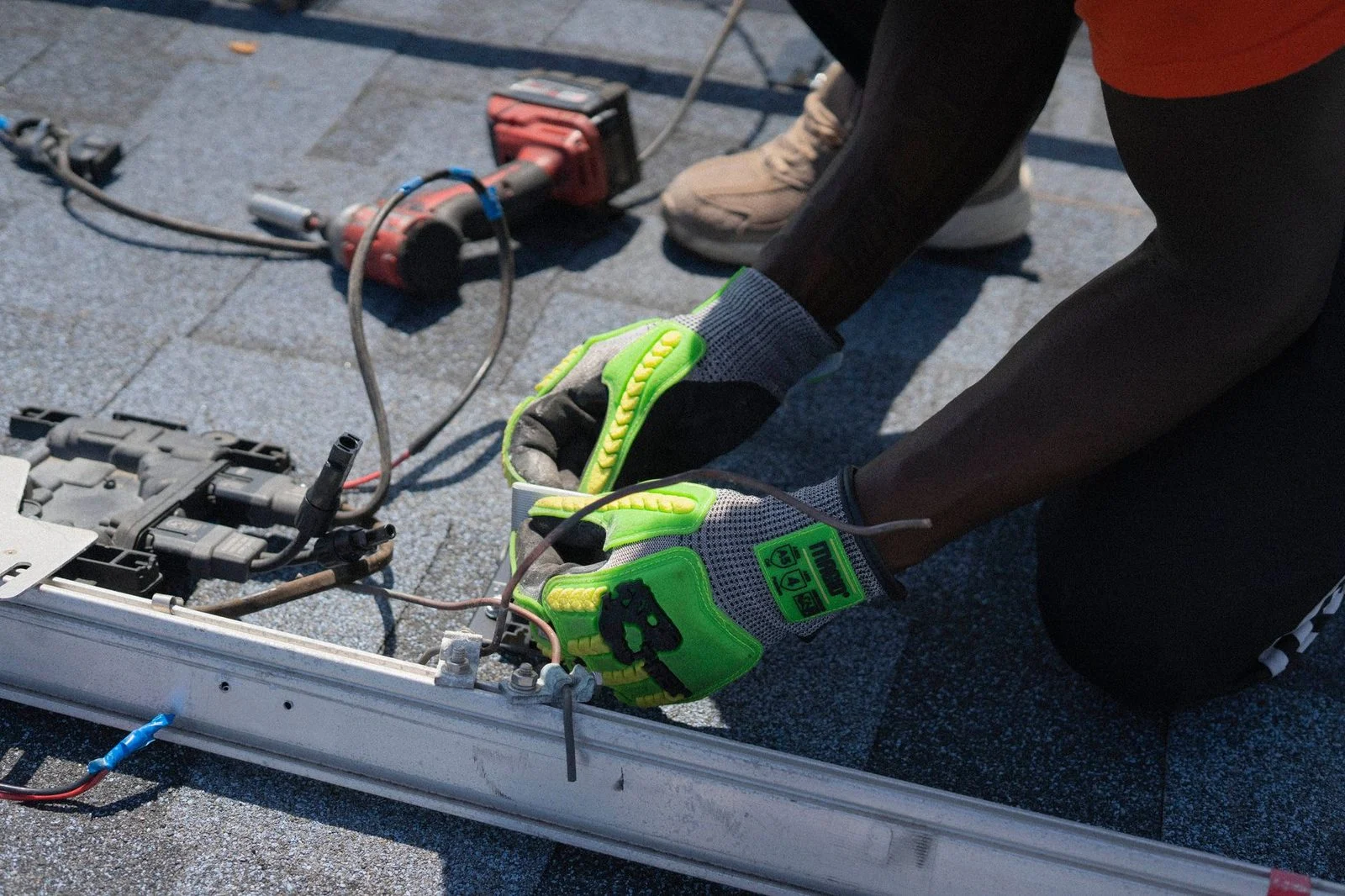
Installation questions to bring to the conversation
Bring these questions to your free consultation with our team. Ask whether the battery and inverter are compatible with your 6.6 kW array. Ask how backup will work, including whether critical loads sit on a separate panel.
Ask about placement and the permits your project needs. The Florida Statutes section 553.79 sets that rule.
Battery safety matters too. UL Solutions battery incident reporting is a resource on lithium-ion battery incident reporting. Your roof matters as well. Solar suitability can depend on factors such as climate, roof age, tree cover, size, shape, and slope. Ask about your tile roof specifically.
Quick answers
Is 6kW enough to run a house?
A 6.6 kW array can power much of a home during sunlight. Whether it covers the whole house depends on your daily use and your backup goal.
How many kWh battery do I need for a 6.6 kW system?
There is no single number. Size the battery from your daily kWh use and your backup hours, not from the panel rating.
Under Fla. Stat. § 553.79(1)(a), unless otherwise provided by law and after the effective date of the Florida Building Code, it is unlawful for any person, firm, corporation, or governmental entity to construct, erect, repair, demolish, alter, or modify any building within this state unless a permit therefor has first been obtained from the appropriate enforcing agency. Confirm the permit steps with our team.
Your first consultation is free, confidential, and comes with no obligation. If a recent outage has you asking how much backup your family needs, you don’t have to work out the math alone. Our team can review your bill, your loads, and your roof, then give you a free estimate for a battery sized to your home.
How We Approach Battery Sizing
Start with your usage
We review how your household uses electricity day to day, so the battery reflects real needs rather than a generic guess.
Plan around backup goals
Whether you want power for essentials during an outage or broader coverage, we talk through what matters most to you.
Fit the whole system
Your panels, inverter, and battery are planned together so the components work as one system for your home.
Clear answers, no pressure
Our team explains your options in plain language so you can decide with confidence.
Don't Size Storage From the Panel Rating Alone
A 6.6 kW array tells you how much the panels can produce in sunlight, not how much energy your home needs or how long you want backup to last. Start with your daily use and your backup goals.
Three Inputs That Shape Your Battery Size
Daily energy use
Your typical daily consumption, reviewed over a normal month, is the starting point for estimating how much storage makes sense.
Backup hours
How long you want key circuits to keep running during an outage determines how much usable capacity you need.
Critical loads
Refrigeration, medical equipment, lighting, and a few outlets often matter most. Listing them helps tailor the battery to your priorities.


