


Solar Battery Backup | South Florida
Plan Ahead So Your Home Stays Powered When the Next Storm Hits
Learn how solar battery backup can help keep essentials running during hurricane season, and how to prepare your home before the forecast turns.
By Jonathan Rodriguez · Published October 24, 2026
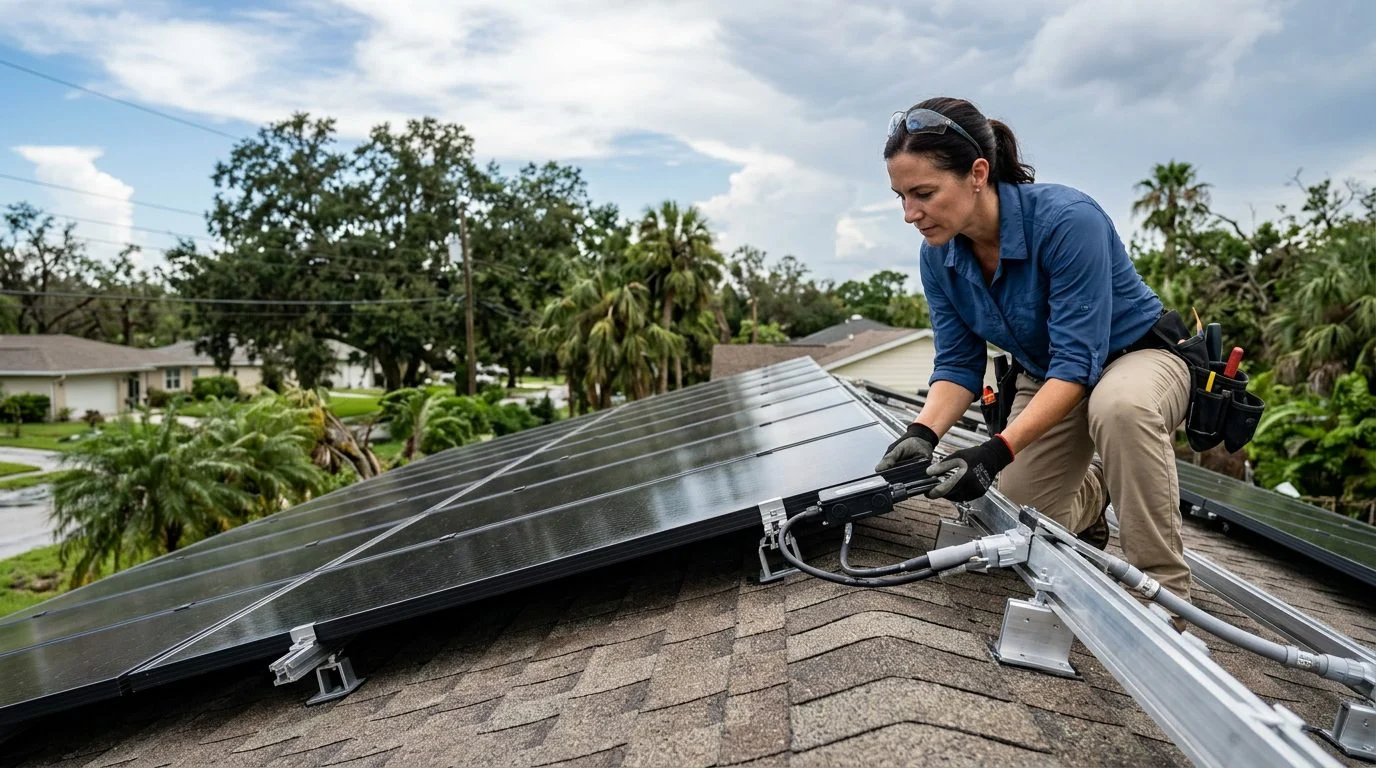
A solar battery backup system supplies stored power when the grid goes down. Before a storm, your job is to check the charge, set the reserve, choose the loads it powers, and confirm the panels and roof are sound. This guide covers solar battery backup hurricane preparation for South Florida homes.
Why Hurricane Season Changes How a Solar Battery Should Be Set Up
Storm season is when a solar battery backup system does its hardest work. You’ll rely on stored power most during these months.
Most owners set their battery for everyday savings. The panels charge the battery, and the home uses that stored energy in place of grid power.
Storm readiness is a different goal. It means keeping enough charge in reserve for an outage that may last longer than a typical evening. The two goals can pull against each other. A battery tuned for maximum savings may have little left when the lights go out.
So the questions change. You need to know what to check, what to set, and what to confirm before a storm is in the forecast. For the broader picture, read our South Florida solar battery backup guide.
If you're getting ready for a storm for your own home or a parent's, our team is glad to walk through your battery settings with you. Talk it through with our team — the first consultation is free, confidential, and carries no obligation.
How a Solar Battery Backup System Works During a Grid Outage
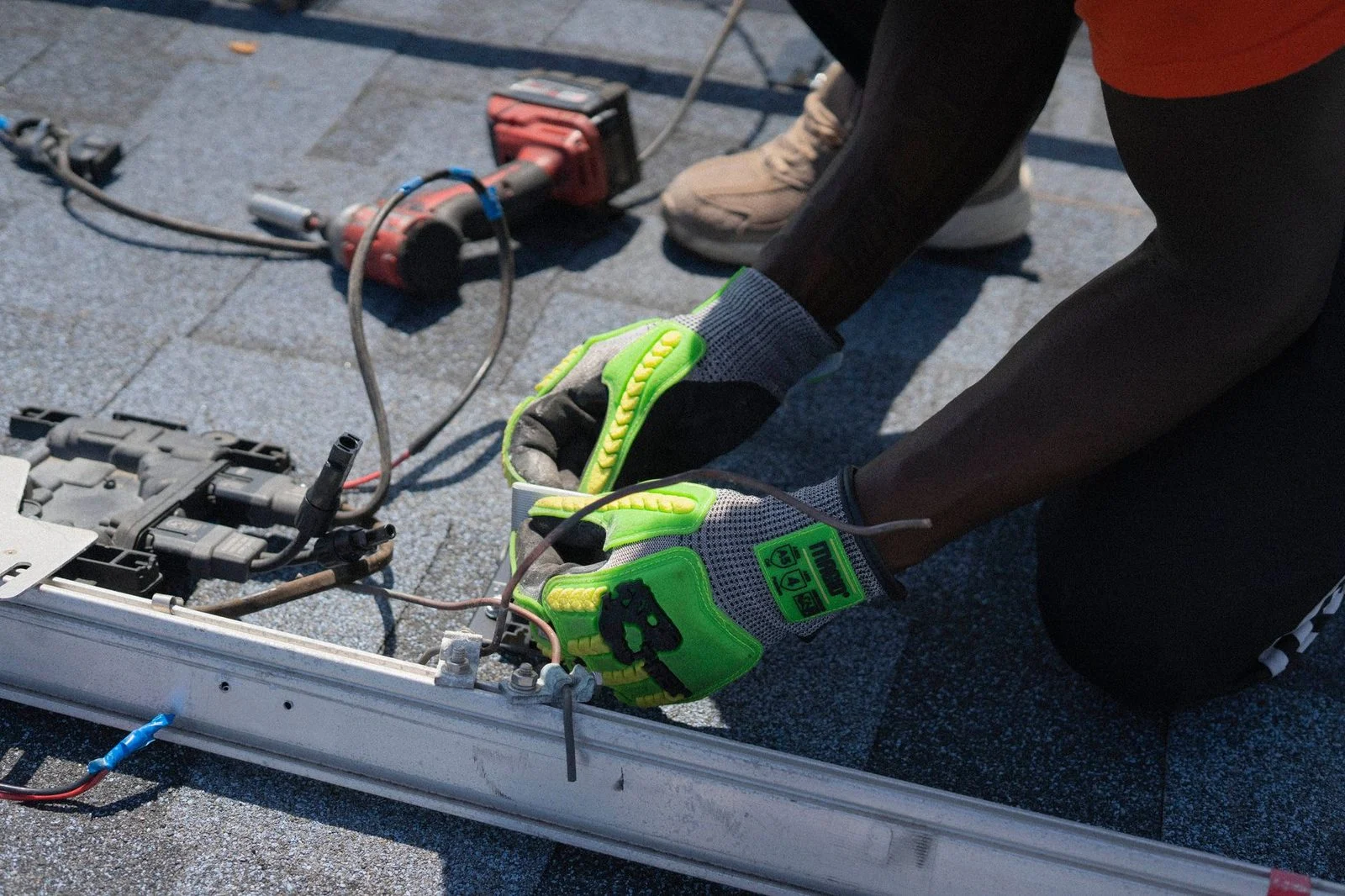
When grid power drops, the system disconnects the home from the utility. It then runs on stored battery energy. Solar panels add power during daylight hours.
The text of Fla. Admin. Code R. 25-6.065 states that this rule applies to all investor-owned utilities, except as otherwise stated in subsection (10). Under Fla. Admin. Code R. 25-6.065, customer-owned renewable generation, such as solar, must include a utility-interactive inverter, or other device certified pursuant to paragraph (4)(b), that automatically isolates the system from the grid when the grid loses power.
Actual behavior still depends on the equipment and how it was installed. Ask your installer to show you the outage mode on the display or app. Confirm which circuits the battery feeds.
Runtime depends on two things: battery capacity and the power your home draws. Central air conditioning drains a battery much faster than a refrigerator and a few lights.
A whole-home backup feeds most of the house. It costs more and empties faster. A critical-loads setup feeds only the circuits you choose. It costs less and stretches the same battery further. Each option has tradeoffs, so decide before the storm arrives.
For the basics of energy storage and battery backup, the U.S. Department of Energy’s Solar Energy Technologies Office is a useful reference.
Checking Your Battery Charge and Reserve Settings Before a Storm
Check the battery’s state of charge and your reserve setting as soon as a storm enters the forecast. Open the monitoring app or display and read the charge level.
Reserve means a set portion of charge the system holds back for outages. A low reserve in calm months leaves less stored power when a storm arrives. A higher reserve can lower the savings you see on a normal day. That’s the tradeoff.
During a storm watch, review the reserve and self-consumption settings. Self-consumption mode sends solar power to your home first. Storing more for outages may mean using less solar on site. Match the settings to your household’s needs, not to a sunny week.
Write down the current settings before you change anything. Settings changed for a storm can stay in place by mistake. A written record lets you restore them after the storm. A photo of the screen works too.
Deciding Which Loads Your Battery Should Power
List the loads you need most before a storm. Start with the refrigerator and freezer, a few lights, the internet router and modem, and phone charging.
Add any powered medical equipment in the home. Include well or sump pumps where you have them. Plan for these first.
Next, mark the heavy loads. Central air conditioning, electric water heaters, and electric ranges draw a lot of power. Any one of them can shorten runtime quickly. Keep them off the battery unless your system is sized for them.
Write the list on paper and post it near the electrical panel. A family member helping from another city can then see what is protected. Someone else can also take over the plan if you’re away.
Confirm the list against your installation. Critical-loads panel layouts vary, so check which circuits sit on the backup side. Moving even one circuit can change your runtime.
Inspecting the Solar Panels, Inverter, and Roof Before Peak Season
Check the panels, wiring, and inverter before storm season starts. Look for warning messages, error codes, unusual noises, or heat at the inverter. Any of these is a reason to call your installer.
Roof condition matters too. A roof with loose flashing, damaged shingles or tiles, or leaks can let water reach the solar array and its wiring. Fix those problems before a storm, not during one.
Roof work can also trigger code rules. For roof permit steps, Miami-Dade County’s roofing permits page describes the forms and application process.
Keep the warranty, installation papers, and installer contact details in one folder. You’ll want them quickly if a fault appears.
Storm-Ready Steps to Take Before, During, and After a Hurricane
Charge the battery, confirm outage mode, and write down your settings before the storm arrives. Check openings too. Miami-Dade County’s window and door guidance explains how to secure them before a storm.
Before the storm, confirm the battery is charged. Adjust the reserve if needed, record the settings, and check that the monitoring app works. Verify the outage mode is active.
During the storm, follow the installer’s and manufacturer’s operating guidance. Keep the inverter and battery dry and ventilated. Don’t tamper with equipment during high winds or flooding. UL Solutions’ lithium-ion battery incident reporting tracks reported incidents, including injuries, which is a reason to handle this equipment with care.
Under R. 25-6.065, a utility may open a manual disconnect switch to isolate the system pursuant to the conditions set forth in paragraph (6)(c). The utility must reconnect the system once the condition is fixed.
After the storm, inspect the panels, inverter, and battery for visible damage. Do this before you restore normal operation. Report any faults or error messages to your installer.
Keep this checklist short so it’s easy to follow under stress.
Not sure what your next step is?
Talk it through with our team — the first consultation is free, confidential, and carries no obligation.
Talking Through Your Home’s Storm Backup Plan With Our Team
If you’re setting this up for your own home or a parent’s, you don’t have to work through every setting alone. Maybe a storm just passed and the power went out. Maybe you’re planning ahead after a scare. Either way, the details can feel like a lot.
For local context, see our Miami solar battery backup page. Readers comparing setups can also review our time-of-use savings guide and our battery-without-solar guide.
Can a solar battery run central air during an outage?
Central air conditioning can drain a battery quickly. Check your capacity and load settings before a storm.
Does a solar battery work when the grid is down?
The text of Fla. Admin. Code R. 25-6.065 requires that customer-owned renewable generation incorporate a utility-interactive inverter, or another device certified under paragraph (4)(b), that automatically isolates the customer-owned generation equipment from the electric grid when the grid loses power. Stored battery energy can then run the loads you chose.
Should I check my roof before hurricane season?
Yes. Loose flashing, damaged tiles, or leaks can reach the solar array and wiring.
Our first consultation is free, confidential, and carries no obligation (consulta inicial gratuita, confidencial y sin compromiso). If you’d like help going through your storm settings, load list, and panel and roof condition, request a free estimate through our contact form.
Why Homeowners Plan Battery Backup Before Hurricane Season
Power for essentials
A battery paired with solar panels can help keep key circuits, such as refrigerators, lighting, and communication devices, running when the grid goes down.
Ready before the storm
Installing and testing a system during calm weather is far easier than scrambling when a storm is already on the way.
Sized to your household
Battery capacity and load settings can be matched to the appliances you rely on most, so your plan reflects how your home actually uses power.
Peace of mind for your family
Knowing your backup plan is in place can make a stressful hurricane season feel more manageable.
Check Your Load Settings Before a Storm
Central air conditioning can drain a battery quickly. Review your capacity and load settings ahead of hurricane season so you know which appliances your system can support for how long.
How to Prepare Your Home for Hurricane Season
1. Review your energy use
List the appliances you need most during an outage, from refrigerators and fans to medical equipment and phone chargers.
2. Check your system's capacity
Confirm how much stored energy your battery holds and how long it can support your essential loads.
3. Set your load priorities
Decide which circuits receive backup power first and which should wait, especially high-draw appliances like central air.
4. Test before the season begins
Schedule a system check early so any issues are found while there is time to fix them.
Get Ready for Hurricane Season With a Free, Confidential Consultation. No Obligation to Continue.
Related practice areas
- Are Solar Batteries Safe? A South Florida Guide


