


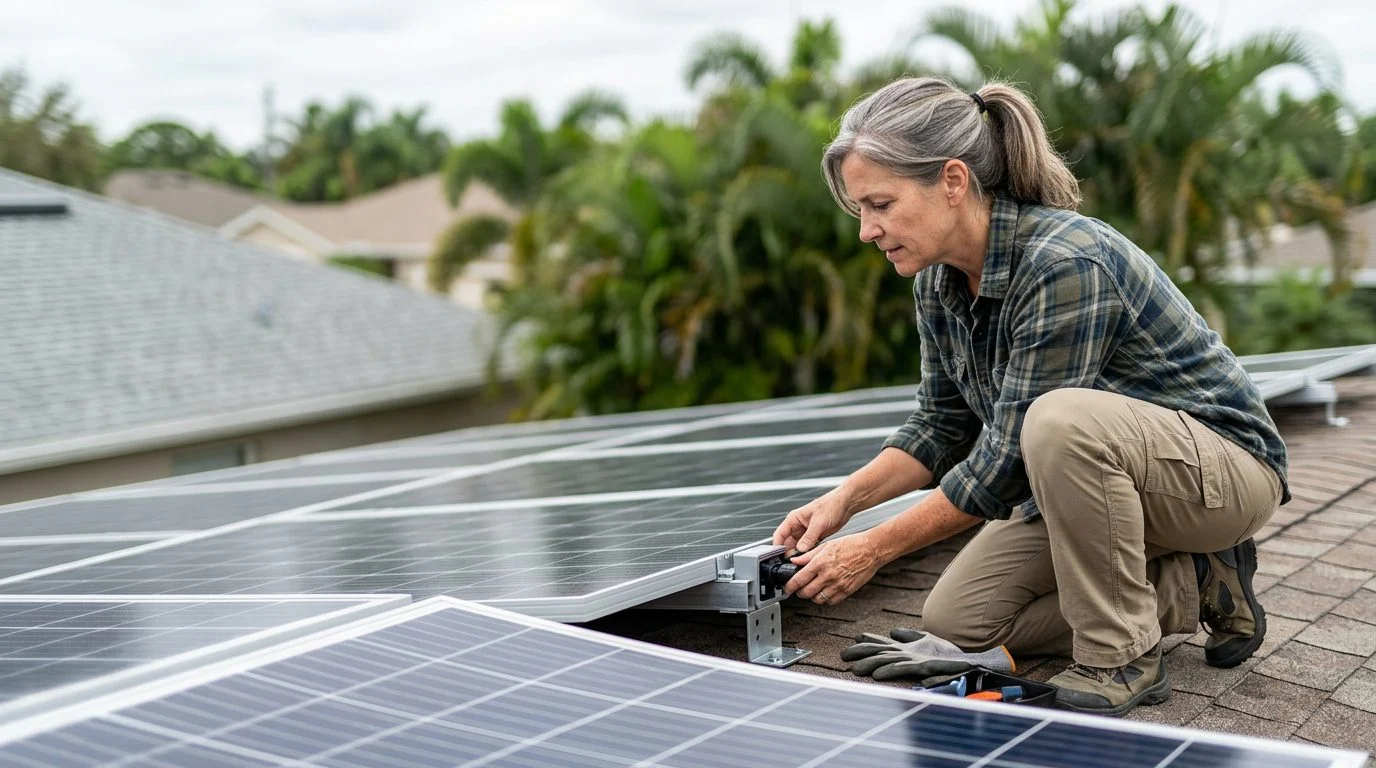
Solar Panels | South Florida
Thinking About Plug-In Solar? Start With a Clear Plan
Learn what a small plug-in setup can power, where its limits are, and when a full system makes more sense for your home.
Start With a Conversation
Free
First consultation
Confidential
Your details stay private
No obligation
Continue only if you choose
By Jonathan Rodriguez · Published November 8, 2026
Maybe you saw a small plug-in solar kit online. Or maybe the power went out and you started comparing backup options for your home.
Here is the straight answer on plug-in solar in Florida. Whether a kit is allowed depends on how it connects to your home and to your utility. A kit this small also powers only a few things, not the whole house.
What is plug-in solar, and how is it different from a rooftop system?
Plug-in solar is a small panel kit that connects to a standard household outlet. A rooftop system is a larger array wired into the home’s electrical panel and usually tied to the utility grid. The two differ in size, wiring, and purpose.
Plug-in kits are rated in watts. Their output suits small loads, such as a lamp, a router, or a fan. They are not built to run the whole house, and their output changes with the sun.
A rooftop system is sized around the home’s full electrical use. It takes more planning and paperwork. Battery backup is a third option that stores solar energy for outages and evening use. Our solar panel and solar battery backup services cover those choices in more detail.
The practical test is simple. Ask what you need to run during an outage. If the answer is a phone charger and a few lights, a small kit may be enough. If it includes a refrigerator, air conditioning, or medical equipment, a larger plan is usually needed.
If you're weighing backup power for a family member who depends on powered equipment, our team can talk through your options with you. Talk it through with our team — the first consultation is free, confidential, and carries no obligation.
Can you do plug-in solar in Florida right now?
Whether you can do it turns on how the kit connects and which utility serves the home. It does not turn on the word “plug-in” alone.
Florida’s law says promoting renewable energy is in the public interest, under Fla. Stat. § 366.91. The rule that governs utility connections is Fla. Admin. Code R. 25-6.065. Under Fla. Admin. Code R. 25-6.065, this rule governs all investor-owned utilities, except as otherwise stated in subsection (10).
Whether a small plug-in kit falls under that process depends on how it is wired and whether it feeds the utility’s system.
Legal status is also separate from safety. Florida law says solar energy systems manufactured or sold in the state must meet standards set by the Florida Solar Energy Center and display accepted results of approved performance tests, unless a licensed engineer certifies them under the Florida Building Code, per Fla. Stat. § 377.705. Meeting a standard is one question. Whether a unit suits your load is another.
Why do plug-in solar rules vary from state to state?
Rules vary because each state sets its own grid, utility, and electrical standards. Many of those rules were built around systems tied to the grid.
Two concerns sit at the center of these rules. The first is how a system connects to the grid. The second is electrical safety, including wiring, equipment ratings, and whether power can flow back into a circuit.
Florida’s rules for connecting customer-owned solar systems to the grid are set out in Fla. Admin. Code R. 25-6.065, which applies to all investor-owned utilities, except as otherwise stated in subsection (10).
Status can change. Rules get revised, and utility requirements can differ from one service area to another. The answer for one address may not match the answer for a neighboring one.
Will a 400W solar panel run a refrigerator?
Usually not around the clock. A single small panel is generally a supplement for small loads, not a steady fridge supply.
A 400-watt rating is the panel’s output under standard test conditions. Real output drops with clouds, haze, low sun, and a panel that doesn’t face the sun squarely. Watts measure how fast a panel makes power. A fridge’s daily use is measured in watt-hours, which is the total energy used over time.
A refrigerator doesn’t run nonstop. Its compressor cycles on and off. Startup can draw a surge higher than its normal running draw, and a panel has to handle that peak too.
Then there’s the dark. A panel makes no power at night, and a fridge keeps cycling after sunset. That gap has to come from a battery or the grid.
A small plug-in panel still helps. It can cut daytime draw on a circuit and keep a router or a light running in the afternoon. It just won’t carry a fridge alone through a full day and night.
Does plug-in solar lower a utility bill?
A small plug-in kit can only offset the power it produces during daylight, so savings stay limited to that share of your use.
Several factors shape the result: total usage, when you use power, and how much energy the system makes. Savings also depend on whether production lines up with your use. A small kit may not change the demand charge much.
So set expectations by system size and type, not by a generic promise. Any dollar estimate needs a look at your own bills and loads.
Where does plug-in solar fit next to battery backup and rooftop solar?
Plug-in solar fits small daytime loads, battery backup covers outages and evening use, and rooftop solar is sized for the whole home.
Battery size and the loads you choose decide how long a battery can carry power in an outage. A battery adds cost and needs its own sizing, so it’s a separate decision from a plug-in kit. Federal tax credit rules for home energy systems, including battery storage, are described on the IRS Residential Clean Energy Credit page, and the terms can change over time.
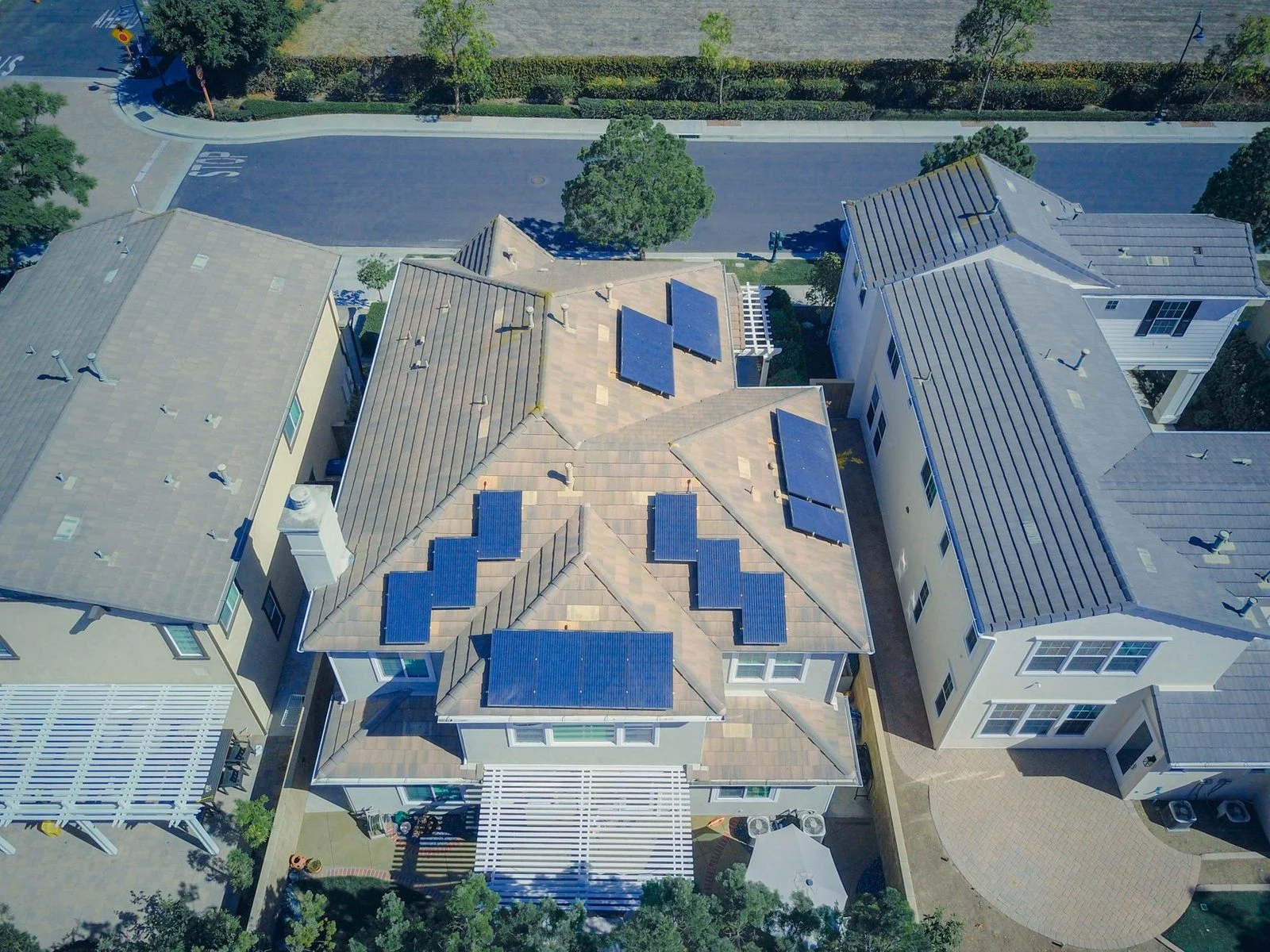
Rooftop suitability is a site question. The DOE homeowners guide to solar lists climate, roof age, tree cover, size, shape, and slope as factors, including for homes with tile roofs.
Metal roofs add a heat point. The EPA guidance on cool roofs notes that reflective, light- or cool-colored metal roofing can reduce solar heat transfer and air-conditioning energy use, including in warm climates.
Florida law also bars marketing a product as hurricane or impact protection unless it has the required approval, under Fla. Stat. § 553.842. That matters when you compare impact windows and impact doors.
Can a plug-in panel power a whole house?
Usually not. Plug-in kits suit small loads, and a whole home needs a system sized for its full use.
Does a solar battery keep the lights on during an outage?
A battery can carry the loads you choose during an outage. Its size sets how long it lasts, so plan the loads first.
Does plug-in solar help during a hurricane outage?
A small kit only produces power in daylight. Without storage, it won’t keep loads running through the night.
Not sure what your next step is?
Talk it through with our team — the first consultation is free, confidential, and carries no obligation.
Talk through your backup power options with our team
If you’re researching this during an outage, or for a parent who relies on powered medical equipment, you don’t have to sort out the options alone.
Our team can talk through whether a plug-in kit, battery backup, or a whole-home system fits your home and your loads. The first consultation is free, confidential, and comes with no obligation to continue. Reach out through our contact page.
What to Weigh Before You Decide
Map your daily loads
List the appliances and devices you want to run, and when you use them. This shows whether a small kit is enough or a larger system is needed.
Know the size limits
Plug-in kits suit modest, targeted loads. Whole-home power needs a system sized for your full household use.
Plan for backup power
If outage protection matters to you, consider how a solar battery would fit with your loads and how long it would need to run them.
Review the setup with a professional
Your home's roof, electrical service, and layout all affect what will work. A site review helps you compare options on your actual property.
Size Your Loads First
Do not buy a system based on the panel's rated output alone. Add up the wattage and daily run time of the devices you plan to power, then compare that total with what the setup can actually supply.
Good Questions to Ask
What will it power?
Identify the specific devices you want covered, not just the general goal of saving on electricity.
What happens in an outage?
Find out whether the setup can run during a blackout and which loads it can carry.
Can it grow with me?
Consider whether the system can be expanded with added panels or batteries later on.
How does it fit my roof?
Panel placement, roof condition, and available space all shape the layout and the result.


