


Metal Roofing | South Florida
Find the Metal Roofing System That Fits Your South Florida Home
Standing seam, exposed fastener, and metal tile-profile systems each suit different roofs. Here is how they compare.
Start With a Free Consultation
Free
First consultation
Confidential
Your information stays private
No obligation
Continue only if you choose
By Jonathan Rodriguez · Published October 27, 2026
If you’re asking what are the different types of metal roofing systems, start here. The main types are standing seam, exposed fastener, and metal shingle or tile-profile. Each one differs in panel shape and how the panel is attached. The metal itself is a separate choice. This guide explains the differences so you can weigh your options before you decide.
What a metal roofing system includes
A metal roofing system is more than the visible panels. It includes the panel profile, the fastening method, the underlayment, the flashing, and the trim at ridges and edges. Underlayment is a water-resistant layer beneath the metal. Flashing seals the joints around vents, walls, and valleys.
Two features do the most to tell one system type from another. The first is the panel profile, which is the shape of the panel. The second is the fastening method, which is how the panel attaches to the roof. Together, they decide how the roof looks and how it goes on.
Florida adds one more layer. State law does not let a product be marketed as hurricane or windstorm protection unless it has been approved through the statewide system. Our team can explain the testing and certification details for impact windows and doors and how they relate to your home. When you compare roofs, ask whether the specific product carries that approval. Our roof replacement page covers the full replacement process if you’re starting from an older roof.
If your roof is aging or storm-damaged and you're weighing metal options for a home you manage, our team can help you sort the choices before you decide. Talk it through with our team — the first consultation is free, confidential, and carries no obligation.
Standing seam metal roofing
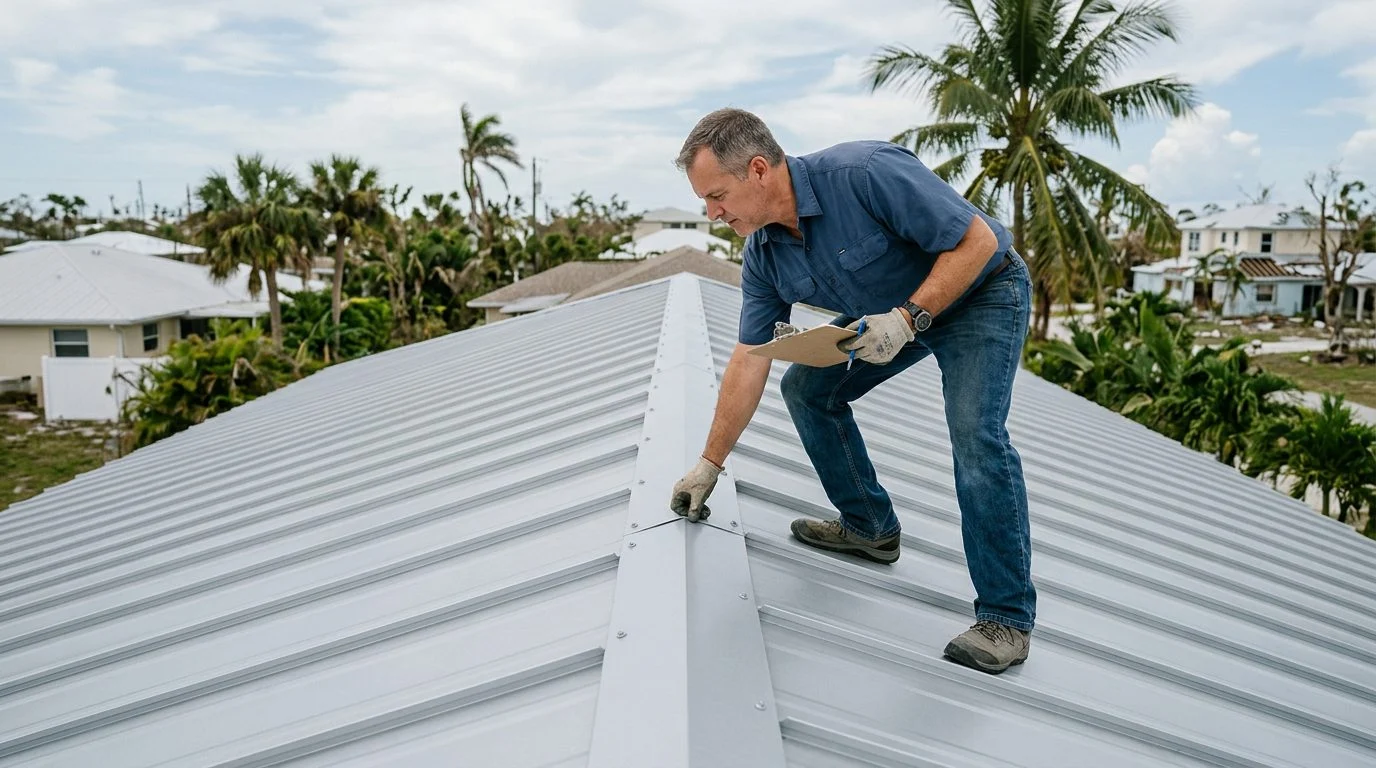
Standing seam metal roofing uses long panels with raised seams that lock together. The fasteners sit hidden under those seams instead of through the panel face. That is the main feature that sets this system apart.
Hidden fastening has two common appeals. The roof surface has fewer exposed screw holes. The finished look is clean and linear, and many owners choose it for that reason.
Standing seam panels are often used on lower-slope roofs and larger roof areas. Installers review panel gauge (metal thickness), seam height, and the clip system that holds each panel. Go over these design details with your installer before work starts.
Standing seam takes more labor than exposed-fastener work. For that reason, it is generally priced higher. Ask for the price to be broken down into panels, clips, and labor so you can see where the cost sits.
Exposed-fastener metal roofing
Exposed-fastener metal roofing uses panels such as corrugated, R-panel, and U-panel profiles. Screws pass through the panel face into the roof deck or into the metal supports beneath it, called purlins. The screws are visible on the roof.
Each screw typically has a sealing washer. Those washers are a maintenance point, so learn how they’re designed before you install. Knowing the washer type helps you ask the right questions about upkeep later.
Exposed-fastener panels are often the more economical choice for simple roof shapes. You’ll see them on utility and agricultural-style buildings, and on some residential homes too.
The trade-off is simple. These systems often cost less in material and labor. In exchange, you get more visible fasteners and more penetrations over the life of the roof. Each screw is a spot that needs care over time.
Metal shingles and metal tile-profile roofing
Metal shingles and tile-profile panels are made of metal but styled to look like asphalt shingles, wood shake, slate, or clay tile. They install in smaller interlocking units. This system suits homes where a traditional roof look matters, whether for design or community expectations.
Metal can also match a barrel-tile profile. Miami-Dade County Product Control documents a Florida-approved metal roofing panel that can be made in that profile.
If you’re comparing a metal tile-profile look with real clay or concrete tile, review the tile side too. Our clay tile life expectancy guide covers that side. The exact look, profile, and weight depend on the product, so confirm them against that product’s literature.
Metal materials: steel, aluminum, copper, and zinc
Steel is a common choice for residential metal roofs, and aluminum is another. The metal is separate from the system type. The same panel profile can be made in different metals and finishes.
Steel is usually coated with galvanized zinc or an aluminum-zinc alloy. Color and added protection often come from factory finishes. The Metal Construction Association guide describes factory coil coating and a typical two-coat paint system for finished steel and aluminum panels.
Aluminum is lightweight and naturally corrosion-resistant. That’s why it often comes up for coastal properties where salt air is a concern.
Copper and zinc are premium options. They develop distinctive patinas over time. Owners usually choose them for specific architectural looks, and they’re priced accordingly.
Salt air is a factor to raise with your installer when you compare coatings and metals. Florida storms add another angle. The IBHS assessment of Hurricane Ian examines how roof coverings performed in Southwest Florida during the storm.

How to compare metal roofing options and take the next step
To compare metal roofing options, start with the facts of the home. Look at these points:
- Roof pitch and shape
- The look you want
- The home’s structure and existing deck
- Budget over the years you plan to keep the roof
- Metal and coating choices, especially near the coast
- Association rules on exterior appearance, if any
- Product approval documentation
Florida law also covers owners in homeowners associations. Homeowners in community associations should review their association’s rules before installing hurricane protection or a replacement roof system. The board may still require the existing building scheme for external appearance.
The right system depends on the facts of the specific home. A general guide can’t settle that choice on its own.
What are the different types of metal roofing systems?
The three main types are standing seam, exposed fastener, and metal shingle or tile-profile. They differ mainly in panel shape and how the panels are fastened.
Do metal roofing products need state approval in Florida?
Yes, in the sense that a product can’t be marketed as windstorm protection unless it’s approved under Florida’s statewide system. Approval status is worth checking before you choose.
Is steel or aluminum better for a metal roof near the coast?
Neither metal is right for every home. Aluminum is naturally corrosion-resistant, while steel depends on its coating, so raise salt air with your installer.
If your roof is aging, took storm damage, or you’re deciding for a home you don’t live in, the options can feel like a lot to weigh alone. Our first consultation is free, confidential, and carries no obligation to continue (consulta inicial gratuita, confidencial y sin compromiso). You can reach our team through the contact page to talk through which metal system fits your roof.
The Three Main Metal Roofing Types
Standing Seam
Raised seams join long, continuous panels, which hides the fasteners. This clean, low-profile look is popular on modern and coastal homes, and it suits roofs that need a sleek finish.
Exposed Fastener
Screws are visible on the panel face and sit through the panel into the roof deck. This system is often more budget-friendly and works well for barns, workshops, and many residential roofs with simpler lines.
Metal Shingle and Tile Profile
Metal panels are shaped to resemble shingles or tile. This option gives you the traditional look of tile or wood with the durability and lighter weight of metal.
What to Weigh When Choosing a System
Roof Pitch and Shape
Low-slope and steep roofs can call for different panel profiles and seam designs.
Wind and Storm Ratings
South Florida homes face strong winds, so review product approvals and installation methods before you decide.
Look and Style
Panel profiles and finishes can match your home's architecture, from clean modern lines to classic tile appearance.
Maintenance Needs
Each system has different upkeep requirements, so consider how much attention you want to give your roof over time.
Tip: Match the System to Your Home
The best metal roofing system depends on your roof's pitch, your home's style, and how exposed it is to wind and rain. Have a professional look at your roof before you choose a panel profile.


