


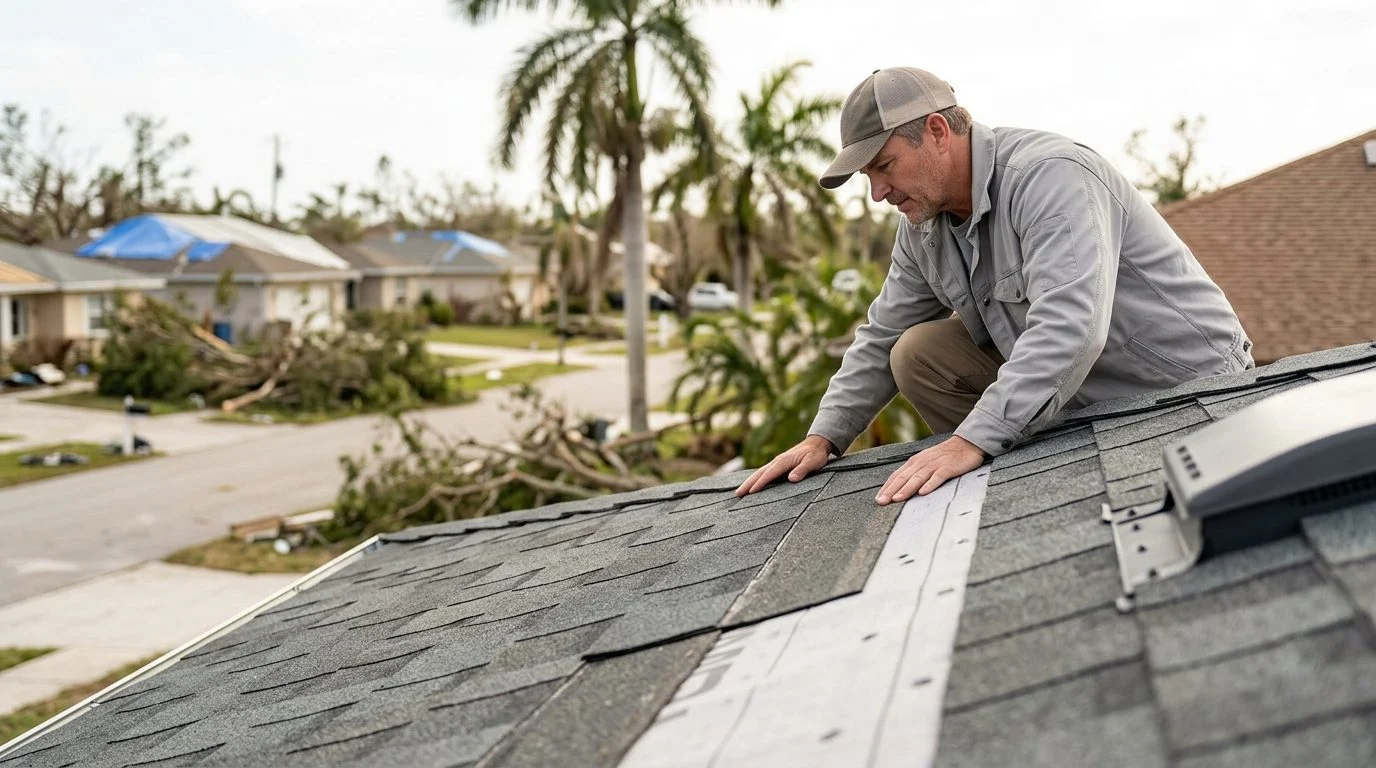
Roof Replacement | Fort Lauderdale, FL
After the Storm, Protect Your Roof and Your Home
Clear, practical steps for South Florida homeowners: stay safe, document the damage, and protect the home before you decide between roof repair and roof replacement.
By Jonathan Rodriguez · Published October 17, 2026
After a storm, many Fort Lauderdale, FL homeowners ask whether they need roof replacement or only roof repair. Start with safety, then document the damage and protect the home. That order keeps you safe and keeps your options open. This guide walks through each step for South Florida homeowners.
What to Do First After a Storm Damages Your Roof
Your first priority is safety, before any inspection or repair. Stay off a damaged roof. Keep away from sagging ceilings, exposed wiring, and standing water near electrical panels. Keep children and pets out of affected rooms too.
From the ground, look for missing or lifted shingles or tiles. Check for dented or bent metal panels. Look for debris in gutters. Granules in downspouts can also signal shingle wear.
Storm damage often shows up in more than one place. Check every side of the house, not only the side facing the street.
A leak deserves quick action, even when the outside looks fine. Water can run along framing and show up in a ceiling far from where it entered. Stains, peeling paint, or a musty smell can point to water inside the walls.
Our roof replacement guide covers the wider process from start to finish.
If storm damage, a leak, or an aging roof has you stuck between repair and replacement, our team is ready to walk through your options with you. Talk it through with our team — the first consultation is free, confidential, and carries no obligation.
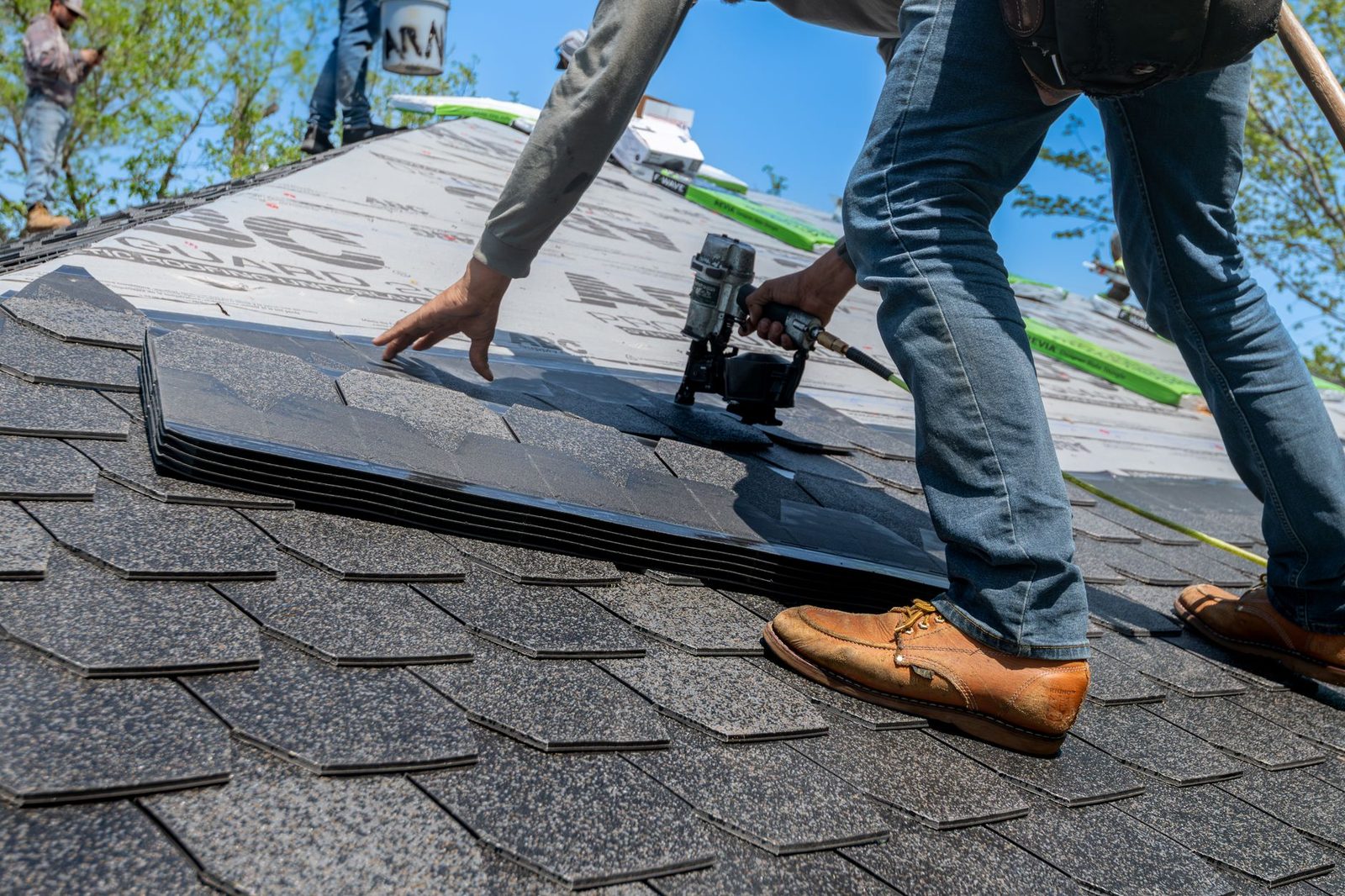
How to Document Roof and Interior Damage Before Any Work Begins
Document the damage before anyone starts repairs. Clear, dated records help when you file a claim.
Take photos and video of the roof from the ground. Shoot each side of the house. Then photograph every affected ceiling, wall, and floor inside.
Note the date and time of each photo. Keep damaged pieces, such as loose tiles or fragments, until your insurer has reviewed them. Save any weather alerts or local news reports for the storm date.
List each affected room and any personal property that was damaged. Photograph those items too. Keep receipts for emergency repairs and temporary protection.
Timing matters as much as proof. Under Fla. Stat. § 627.70132, a claim is barred unless notice reaches the insurer within 1 year after the date of loss, under the policy’s terms. A supplemental claim has an 18-month window. For a hurricane or windstorm, the date of loss is the landfall date, or the date the National Oceanic and Atmospheric Administration verifies the event.
Temporary Protection to Limit Further Water Damage
Temporary protection reduces further water damage while a permanent plan is made.
Cover an opening with a tarp to keep rain out. Move furniture, rugs, and electronics away from any leak. Place buckets under drips and empty them often.
Do not climb a steep or wet roof, and do not try roof work alone. A slip can cause a serious injury, and a wet surface makes footing unreliable.
Keep a simple log. Write down each temporary step, the date and time, and what it cost. Keep the receipts with your claim documents.
A tarp is a short-term fix. It is not a permanent roof, so do not treat it as the end of the job.
Filing a Homeowner Insurance Claim After Roof Damage
Your insurer and your policy decide what gets paid on a claim.
Read your policy’s wind and hurricane terms, and find the deductible that applies. Then notify your insurer promptly after the storm.
An insurer typically sends an adjuster to inspect the damage. Your photos, notes, and receipts support that review.
If your policy pays replacement cost, Fla. Stat. § 627.7011 says the insurer must first pay at least the actual cash value of the loss, less the deductible. It then pays the remaining amounts needed for repairs as work is done and expenses are incurred.
The same statute deems a dwelling policy to include law and ordinance coverage, limited to 25 percent of the dwelling limit. That applies unless the policyholder rejects it in writing. It covers code-related costs inside a claim.
Ask about wind-mitigation discounts too. The wind-mitigation discount rules explain how an official inspection form goes to an insurance agent.
Keep copies of all letters, estimates, and invoices in one folder.
When Repair Makes Sense and When Roof Replacement Is the Better Choice
Repair or replacement depends on the facts of your roof. Look at four things: the roof’s age, how far the damage spreads, the condition of the decking under the covering, and how many leaks or repairs the roof has already had.
Compare repair costs with replacement costs over the roof’s remaining life. A cheap patch on an aging roof can cost more over time when leaks keep returning.
Code upgrades matter too.
Permits are required.
Permit steps differ by city. In nearby Miami, the City of Miami permit catalog says roof repair and replacement need a permit, and the first review cycle may take up to 14 business days. Miami-Dade County’s roofing permit guidance also asks for forms, checklists, and certain hurricane-mitigation documents.
Wind-zone rules can also apply.
Metal Roofing or Tile Roofing for a Fort Lauderdale Home
Metal and tile can both serve a South Florida home. They differ in weight, upkeep, and how they handle wind.
Tile is heavy. The roof structure and pitch must carry that weight, so the framing matters before you pick a material. Metal panels are lighter. Both need proper fastening and secure edges to perform well in wind.
Maintenance differs too. Tile pieces can crack or shift after impact. Metal needs periodic checks of fasteners, seams, and coatings.
South Florida storms offer one clear data point. The IBHS Hurricane Ian assessment reported that metal roofing systems held up well in winds below 130 mph in Southwest Florida. That finding covers one storm, so weigh it alongside your roof’s own details.
Local code and roof structure can shape the choice as much as looks do. Start with what your home can carry and what your permit requires.
Not sure what your next step is?
Talk it through with our team — the first consultation is free, confidential, and carries no obligation.
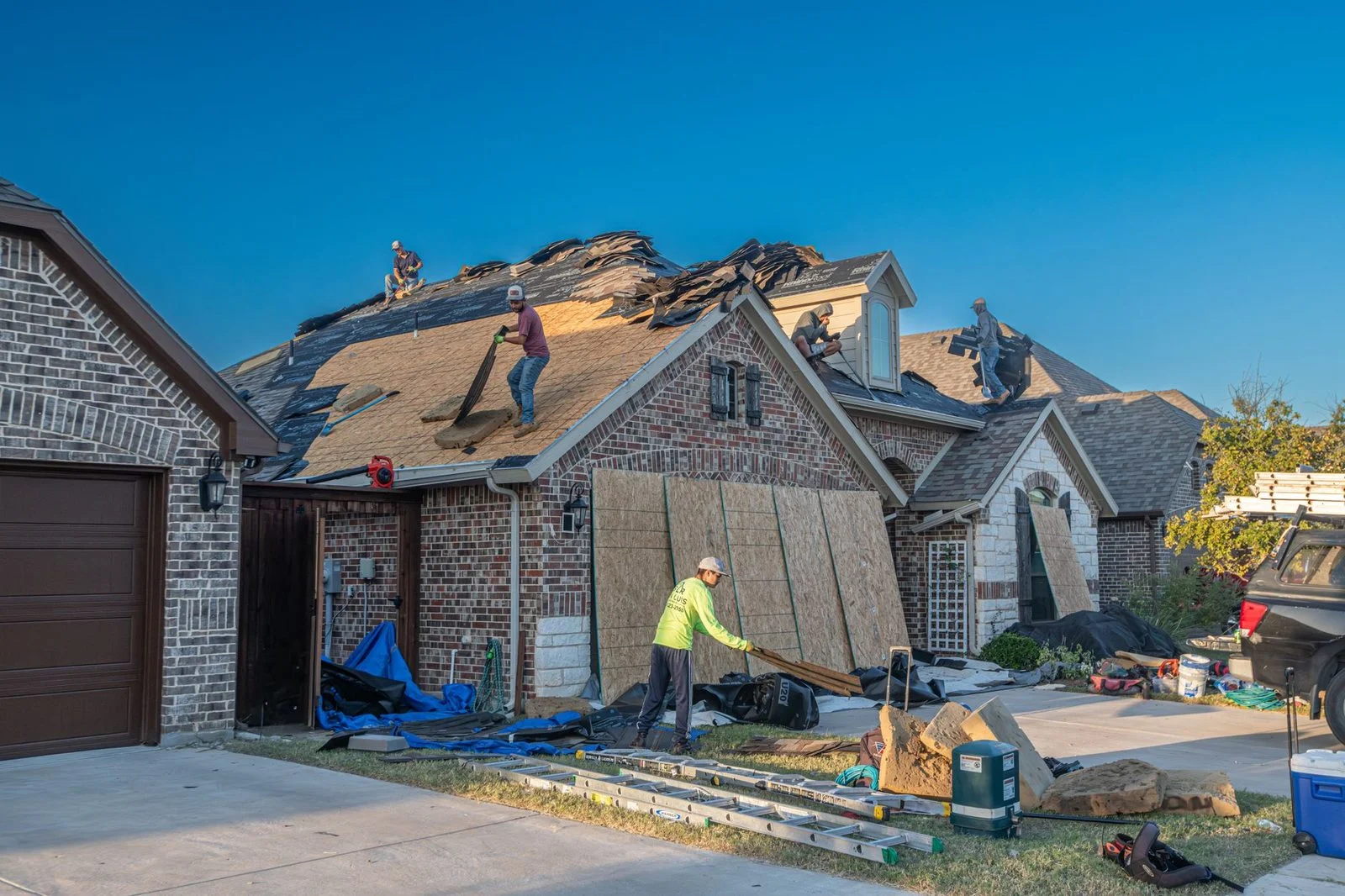
Talk With ASP Superhome About Your Fort Lauderdale Roof
If storm damage, a leak, or an aging roof has you weighing repair against replacement, ASP Superhome can help you sort out those options.
The first consultation is free, confidential, and comes with no obligation to continue (consulta inicial gratuita, confidencial y sin compromiso).
Do I need a permit to repair or replace a roof in Fort Lauderdale?
Florida law requires a permit before building repairs or replacement. The enforcing agency issues that permit.
Is metal or tile roofing better for South Florida storms?
The IBHS Hurricane Ian assessment found metal roofing systems held up well in winds below 130 mph in Southwest Florida. Tile suits many homes too, so the right choice depends on your roof structure.
What is the 25 percent rule for roofs in Florida?
The Florida Building Code reroofing rule, commonly discussed as a one-fourth threshold, requires that when more than one-fourth of a roof is repaired or replaced within 12 months, the entire roof must meet current code, unless the roof was built to the 2007 Florida Building Code or later (Fla. Stat. § 553.844(5)). Law and ordinance coverage, addressed under Fla. Stat. § 627.7011, depends on the terms and limits of the policy.
If your roof took storm damage or started leaking, request a free estimate and talk through whether repair or replacement fits your home.
Safety Comes First
Do not climb onto a damaged roof or enter rooms with sagging ceilings, exposed wiring, or standing water near electrical panels. Wait until the area is safe before you inspect or repair anything.
Your Post-Storm Checklist
1. Stay Safe
Keep clear of damaged areas and electrical hazards. Make safety your first step, before any inspection.
2. Document the Damage
Take clear photos and video of the roof, ceilings, walls, windows, and doors. Note the date and what you observed.
3. Protect the Home
Limit further water intrusion with temporary measures where it is safe to do so. Keep damaged materials for review.
4. Get a Professional Assessment
A roof assessment helps you understand whether the damage calls for roof repair or roof replacement, and which materials fit your home.
Why Homeowners Start with ASP Superhome
Free First Consultation
Our initial consultation is free, confidential, and comes with no obligation to continue.
Storm-Ready Solutions
We offer impact windows, impact doors, metal roofing, and tile roofing built for South Florida weather.
Options for Your Home
From roof repair to full roof replacement, our team helps you weigh the choices that fit your home and budget.
Complete Home Services
Solar panels, solar battery backup, and kitchen remodeling are also available, so one trusted team can support your home.


