


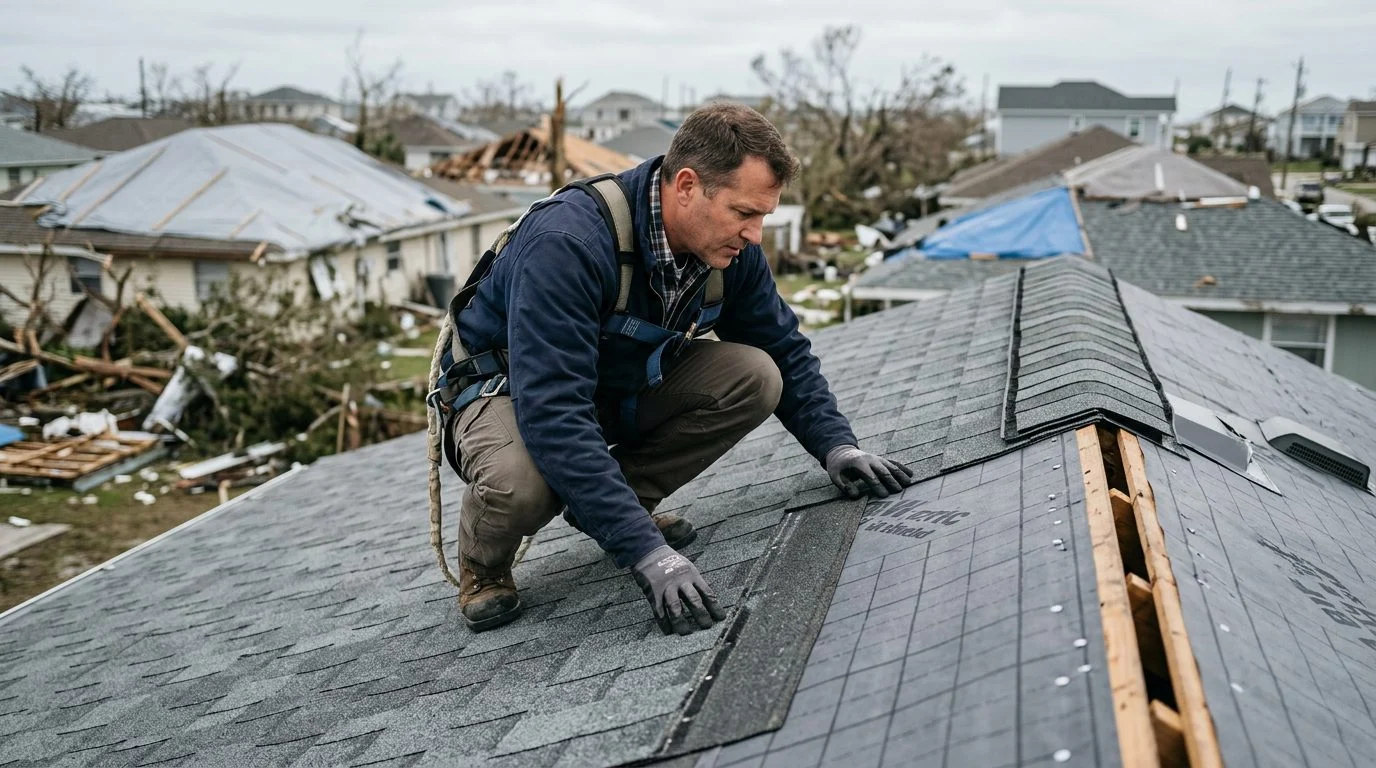
Roof Repair & Replacement | South Florida
How Do I Know My Roof Needs Replacement After a Hurricane?
Storm damage isn't always obvious from the ground. Learn the warning signs that point to a full replacement, and when to schedule a roof-level assessment.
By Jonathan Rodriguez · Published October 28, 2026
A roof more often needs replacement after a hurricane when damage is widespread, the decking underneath is hurt, or leaks keep returning after repairs. A few missing tiles or one lifted section often points toward repair instead. You can start checking your roof safely today, and a roof-level look gives you the final answer.
Why Hurricane Roof Damage Is Hard to Judge on Your Own
Hurricane damage is hard to judge from the yard because much of it is small and scattered. The storm has passed, but your home may still be disrupted. Power may be out, water may be coming through a ceiling, and insurance paperwork may be piling up. The roof is one of several urgent decisions in front of you.
Wind often causes small changes that are easy to miss. A shingle lifts at one corner. A tile slips half an inch out of line. A strip of flashing bends back. Each one looks minor. Together, they can show a path for water into the home.
This guide helps you recognize those signs and organize what you see. It gives you a clear record to share with anyone helping you decide next steps. For the wider choice between repair and replacement, read our roof replacement guide.
If the storm left you unsure about your roof, reach out to ASP Superhome and let our team talk through what you're seeing, whether you're handling this yourself or for a family member. Talk it through with our team — the first consultation is free, confidential, and carries no obligation.
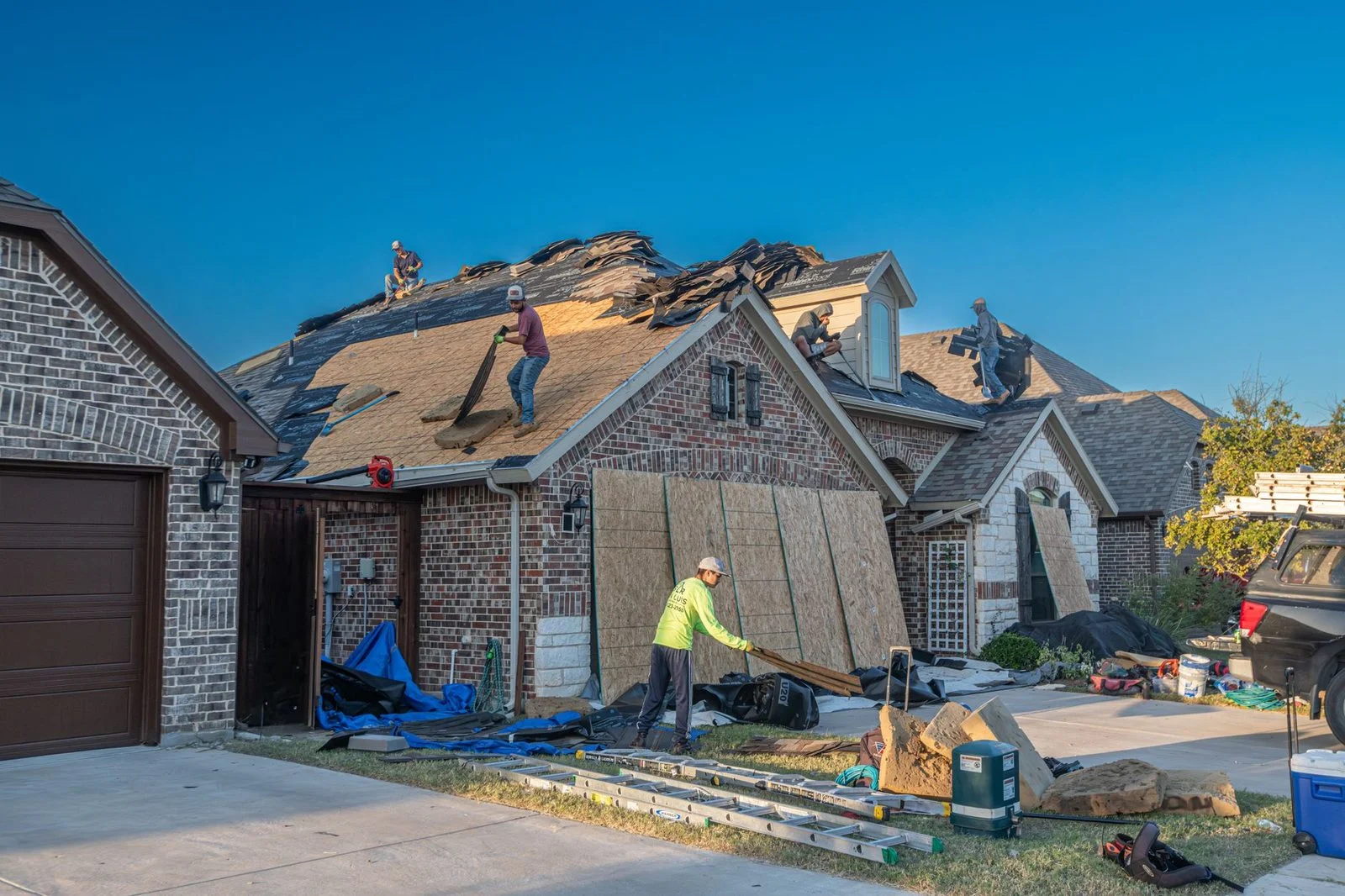
Stay Safe First: Do Not Walk a Storm-Damaged Roof
Stay off a storm-damaged roof, because loose tiles, lifted panels, and soft decking can give way under your weight. Wind and flying debris weaken the parts that hold a roof down. A fall from a roof can cause serious injury.
Check the roof from the ground instead. Use binoculars or a phone’s zoom lens. Look at all four sides of the home, working around the full outside edge.
Keep clear of downed power lines and standing water near the walls. If you smell gas or see a line down, move away and contact the proper utility.
Limit more damage inside when it is safe. Place buckets under active drips. Move rugs, furniture, and electronics away from wet spots. Photograph each area before you move anything, so the record shows where things were. When it is safe to do so, contact our team about temporary roof protection.
Document What You Can Safely See
Take dated photos and video from the ground and from inside, then keep a simple written log. Good records help whether you repair, replace, or file an insurance claim.
Shoot wide photos of each roof side first. Then take close-ups of any lifted, missing, or displaced material. Record a short video walking the outside perimeter, since video shows condition and location together.
Photograph ceilings, walls, and corners that show stains, bubbling, or sagging. Note where water entered.
Keep a dated log of what you saw and what you did to protect the home. Save receipts for buckets, tarps, and other temporary protection.
Timing matters. Under Fla. Stat. § 627.70132, a claim or reopened claim (but not a supplemental claim) under a property insurance policy generally must be reported to your insurer within one year after the date of loss, in accordance with the policy’s terms. A supplemental claim for added damage from the same peril generally has an 18-month window. For hurricanes, the date of loss is the date the hurricane made landfall. Report early and follow your policy’s notice terms.
Signs of Storm Damage on Shingle Roofs
On shingle roofs, look for lifted or creased tabs, bare patches, and granules piling up in gutters. Also check for nail heads pushing up through the surface.
Lifted or creased shingles no longer lie flat. Wind can break the seal that holds them down, so a tab may flap or stand up at the edge.
Bare patches show where granules have been stripped away. Look in gutters and downspouts for loose granules. A heavy layer in the gutter can signal wear on the surface.
Lifted fasteners and nail heads pushing up can loosen the surface. Dents, tears, and punctures from branches or flying objects also count as impact damage.
Roof age matters for the next step.
Signs of Storm Damage on Tile and Metal Roofs
On tile and metal roofs, look for missing or cracked tiles, lifted or displaced metal panels, and damaged flashing or edge metal. These parts often show the first water-entry points.
Tile roofs often show damage along ridges and edges. Look for missing, slipped, or cracked tiles, and for tiles that have shifted out of line.
Metal roofs show lifted or bent panels and seams that have separated. Check for impact marks and punctures from fallen branches.
Flashing, edge metal, and gutters deserve close attention. Damage there can let water in even when the main roof surface looks intact.
Metal roofing has a strong track record in wind. The IBHS Hurricane Ian roof findings reported that metal roofing systems held up well in winds below 130 mph in Southwest Florida.
If part of your home has a flat roof, note ponding water, membrane tears, and displaced edge trim separately from the rest of the roof.
Repair or Broader Replacement: How the Findings Are Weighed
Isolated damage, such as a few missing tiles or one lifted section, is commonly considered for repair. Widespread damage points toward a broader replacement evaluation.
Widespread lifting, several damaged areas, damage to the decking, and leaks that come back after repair are the findings that lead to a broader evaluation. Each one matters because it shows the problem may reach beyond the surface.
The right path depends on the facts of each roof. Age, condition, and the extent of the damage all matter.
Temporary protection buys time. A tarp or sealant can slow water entry, but it does not settle the long-term question. Treat it as a bridge, not a final fix.
Permits are part of the process in South Florida. The City of Miami permit catalog says the City requires permits for residential roof repair or replacement. Permit review timing can vary depending on the local building department. The Miami-Dade County roofing permits page lists forms, checklists, and contractor e-permitting. For a side-by-side look at the two paths, see our repair versus replacement guide.
Not sure what your next step is?
Talk it through with our team — the first consultation is free, confidential, and carries no obligation.
Organizing Your Records for an Insurance Claim
Keep complete records whatever happens with a claim. Your policy terms and the damage you can show both shape how a claim is reviewed.
Gather these items in one folder:
- Dated photos and video of the roof and the interior
- Your dated log of what you saw and did
- Receipts for buckets, tarps, and other temporary protection
- Any written assessment from our team
- Notes on the roof’s age and its condition before the storm
Contracts need care too. Before you sign, contact your insurer to confirm coverage, deductibles, and policy terms.
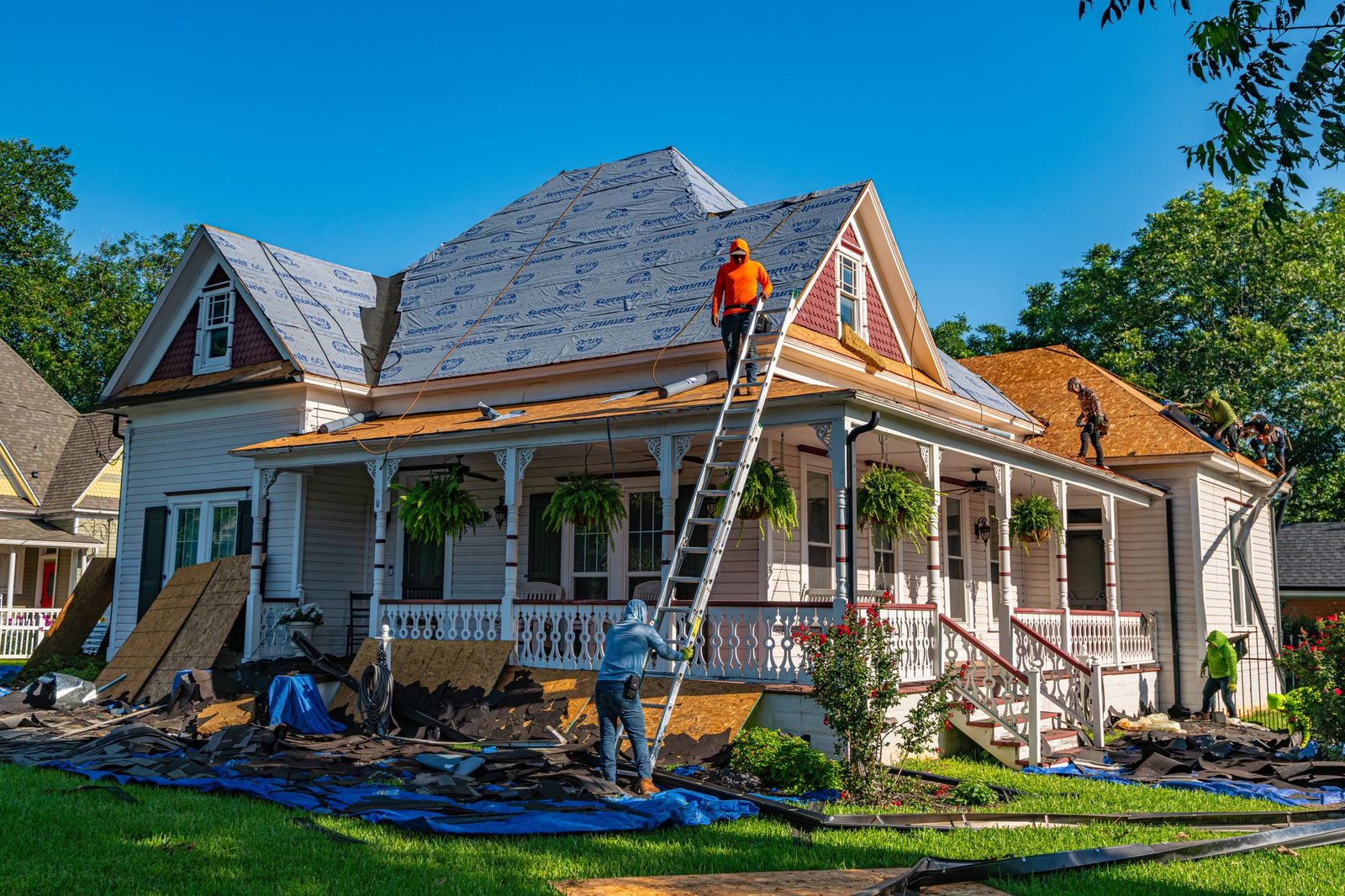
Get a Roof-Level Assessment for Your Home
A roof-level assessment confirms which signs are present and what they mean for repair or replacement. Photos from the ground can raise the right questions, but a close look answers them.
You may be managing this for a parent, a relative, or a rental property. The decision can feel urgent and heavy when you are far from the roof. You don’t have to sort it out alone.
ASP Superhome serves homeowners across South Florida, including Miami, Fort Lauderdale, West Palm Beach, Kendall, Naples, Fort Myers, and Boca Raton. Our team handles roof repair, roof replacement, and metal and tile roofing.
Common Questions
How do I know my roof needs replacement after a hurricane?
Widespread lifting, damaged decking, or leaks that return after repair point toward a broader replacement evaluation. A roof-level assessment confirms those findings.
How long do I have to report hurricane roof damage in Florida?
Under Fla. Stat. § 627.70132, a claim or reopened claim (but not a supplemental claim) under a property insurance policy generally must be reported within one year after the date of loss, in accordance with the policy’s terms. For hurricanes, the date of loss is the date the hurricane made landfall.
Can I check my roof for storm damage safely?
Yes, start from the ground and from inside. Loose tiles and soft decking make walking on a damaged roof risky.
Our free, confidential initial consultation comes with no obligation to continue. Contact ASP Superhome to talk through what you’ve found, and we’ll walk through your next steps with you.
Signs Your Roof May Need Replacement, Not Just Repair
Widespread lifting or missing shingles or tiles
Damage across several slopes, rather than a few isolated spots, often suggests the roof system has been compromised.
Damaged roof decking
Soft, sagging, or water-stained decking means the structure beneath the covering has been affected and needs closer inspection.
Leaks that return after repair
If water keeps getting in even after patching, the problem may extend beyond a single failed area.
Interior water staining across multiple rooms
Stains or moisture in several ceilings or walls can indicate water entry at more than one point.
Don't Wait to Protect Your Home
Water that gets past a damaged roof can lead to further damage inside your home. Limit additional exposure where it is safe to do so, and keep records of the damage you observe.
What Happens During a Roof-Level Assessment
1. Visual inspection
A team member examines shingles, tiles, flashing, vents, and edges to identify lifting, cracks, and displacement.
2. Decking and structure check
The underlying decking is reviewed for softness, moisture, and fastener issues that a surface view can miss.
3. Repair versus replacement
Findings are compared to determine whether targeted repairs will restore the roof or whether a broader replacement makes more sense.
4. Clear next steps
You receive a plain-language explanation of what was found and what options are available for your home.


