


Solar & Roofing | South Florida
Do I Need a New Roof Before Going Solar?
Your roof has to carry solar panels for decades. Learn how its age and condition affect your plan, and what to check before installation.
By Jonathan Rodriguez · Published October 27, 2026
Short Answer: When a New Roof Should Come Before Solar
Do I need a new roof before solar panels in Florida? Often, yes, if your roof is nearing the end of its useful life. The panels must come off for roof work, so replacing an aging roof first avoids paying to remove and reset a new system later.
Whether your roof needs work first depends on the facts of your home. This guide is for homeowners with an older roof, visible wear, or a plan to add solar within the next few years. A roof in good shape with many years left may not need work before the panels go up.
This question is common, and you can plan the order of work in advance. It’s far easier to decide before the installer arrives than after.
If you're weighing a roof repair against replacement before going solar, and the decision has landed on you, our team is glad to review the roof with you. Talk it through with our team — the first consultation is free, confidential, and carries no obligation.
Roof Age and Remaining Life: Why Timing Decides the Order
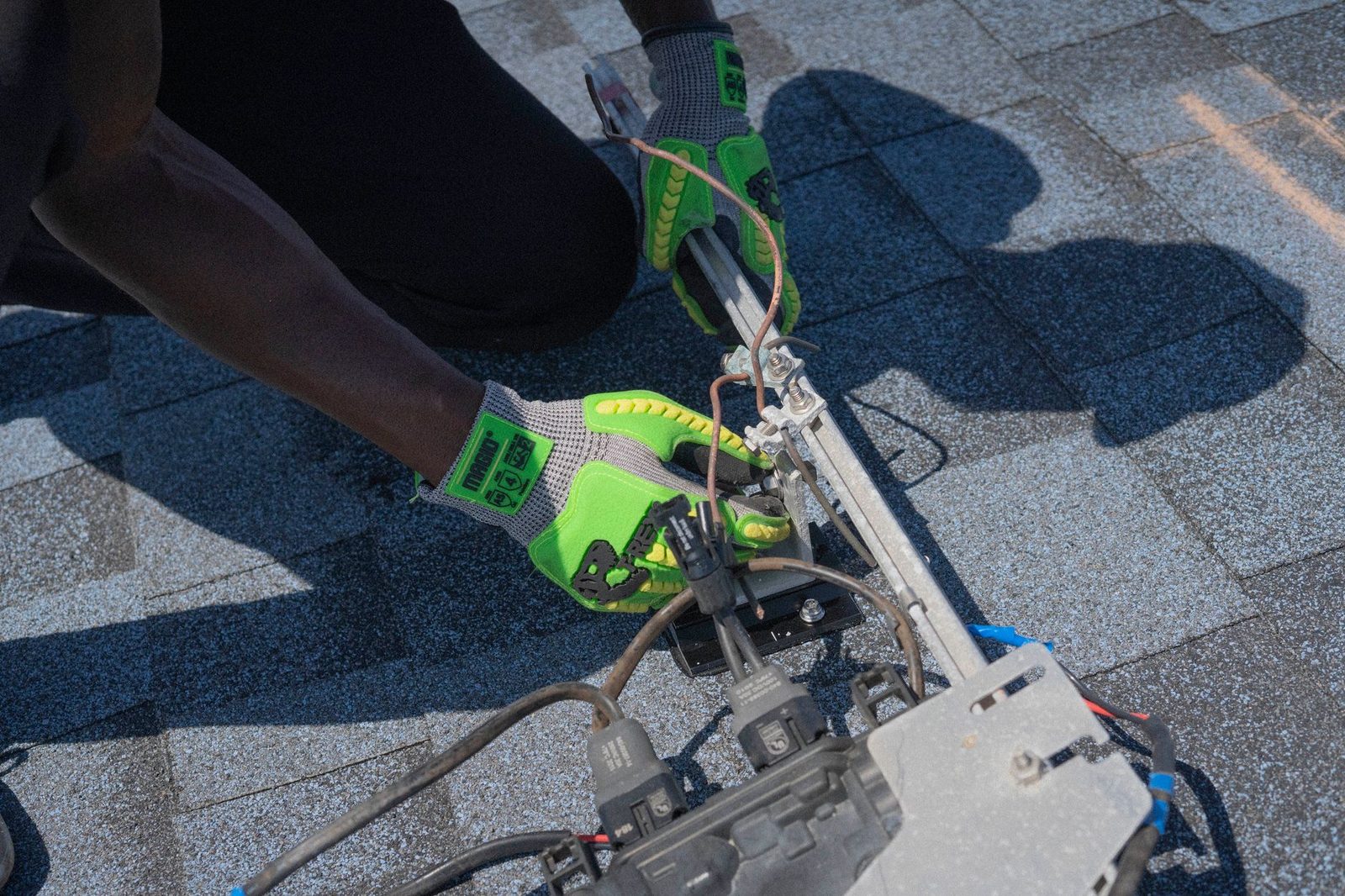
Timing matters because roof work under an array means taking the array apart first. Roof-mounted solar generally requires panel removal and reinstallation for roof repair or replacement, according to the Lauderdale-by-the-Sea solar permit guidance. That same guidance notes that mounts create roof penetrations that can affect warranties and maintenance.
Your roof’s remaining useful life is the key number. Watch for these warning signs:
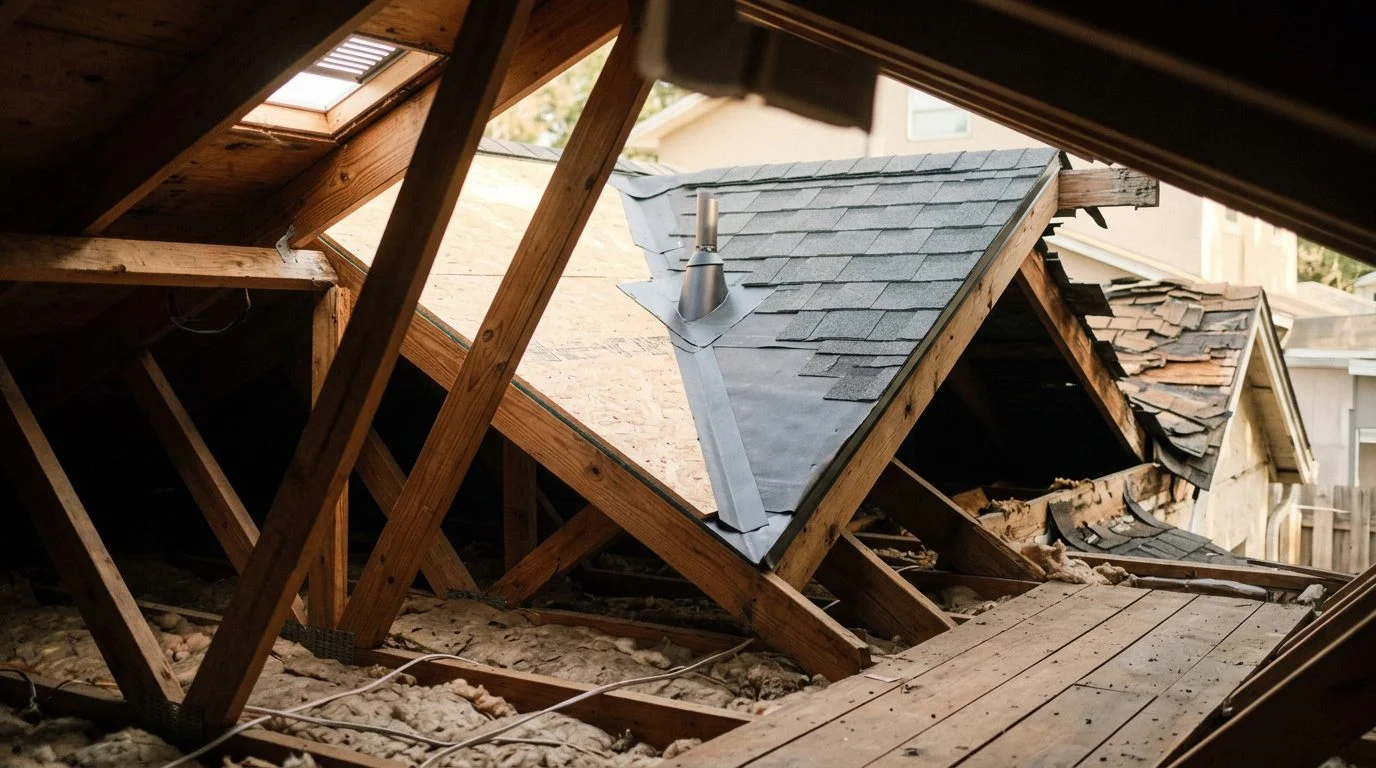
- Curling, cracked, or missing shingles or tiles
- Granules piling up in gutters or on the ground
- Leaks, stains, or damp spots in the attic
- Damaged flashing around vents and chimneys
- Sagging or soft decking
Insurance adds another check. Our team can inspect your roof and discuss its condition and remaining service life during a free consultation.
Ask for a written inspection that records age, condition, and remaining life before you pick the sequence.
Shingle, Tile, and Metal: How Roof Material Changes Solar Mounting
Each roof material changes how panels attach and how hard the reset is. Knowing your material early keeps the plan on track.
Asphalt shingle. Mounts usually attach through the shingles into the roof framing. The installer checks shingle condition and decking before mounting, because a weak deck can’t hold new attachments.
Clay and concrete tile. Tile must be lifted and reset around each mount, which makes removal and reinstallation more labor-intensive. The NRCA roofing materials guidance states that tile is durable and used in Florida, and that structural load capacity must be verified when tile replaces another roof covering.
Metal panels. Mounting depends on the metal profile and seam type. Florida-approved metal panels can be made in a barrel-tile profile, which Miami-Dade County Product Control evaluated for Florida Building Code compliance, including High Velocity Hurricane Zone provisions. Approved panels still need a mounting method matched to their profile.
Plan the material and the solar layout together, so the roof isn’t disturbed twice. ASP Superhome offers metal roofing, tile roofing, and roof replacement, so material choice and solar layout can be reviewed in one plan.
Permits, Inspections, and Sequencing the Work
Roof work in Florida needs a permit. Fla. Stat. § 553.79 makes it unlawful to repair, alter, or demolish a building without first getting a permit from the enforcing agency, unless the law provides otherwise. Solar work has its own local permit, as the Lauderdale-by-the-Sea guidance shows.
Local steps vary.
You have two main paths:
- Replace the roof first, then install panels on the new roof.
- Install panels now, then replace the roof later with a planned removal and reset.
Path two means paying for a second removal and reset. Path one avoids that, but it moves the solar start date back. Either way, coordinate both permits so the work follows one schedule instead of two projects with gaps between them.
Repair or Replace? The 25% Rule and the Cost Question
Repair or replace is a decision made from the roof’s age, its condition, and a written estimate. It isn’t one number.
The 25% rule is a Florida Building Code rule, not a price test.
Cost turns on size, pitch, material, number of layers, and any decking repairs. That’s why a written estimate for your specific roof is the reliable basis for comparing options. Federal help has also changed. The residential clean energy credit under IRC § 25D does not apply to expenditures made after December 31, 2025, so don’t count on it in your math.
When you compare estimates, check the tear-off scope, underlayment, flashing, warranty terms, permit fees, and whether detach-and-reset for the panels is included.
How ASP Superhome Coordinates Roof and Solar Work
Our team follows five steps, so you know what comes next.
- Consultation and roof review. We check age, condition, material, and the planned solar layout.
- Written recommendation. You get our advice: replace first, repair, or proceed with solar and plan a later roof replacement.
- Estimate and permit scope. The estimate includes detach-and-reset if the roof will be replaced under existing panels.
- Scheduling. Roof and solar work are set in order during planning.
- Final inspection and documentation. We record the finished roof and system.
Each phase runs for a length set by project size and permit review. The written estimate confirms the schedule.
Not sure what your next step is?
Talk it through with our team — the first consultation is free, confidential, and carries no obligation.
Why Homeowners Work With ASP Superhome
ASP Superhome handles the full home, so roof and solar decisions can sit in one plan.
- One team for the whole home: impact windows, impact doors, metal and tile roofing, roof replacement, roof repair, solar panels, solar battery backup, and kitchen remodeling.
- Coordinated planning: our team reviews roof and solar work together, so the roof isn’t disturbed twice.
- South Florida focus: we serve homeowners in Miami, Fort Lauderdale, West Palm Beach, Kendall, Naples, Fort Myers, and Boca Raton.
- Contract protections: Florida law requires certain notices in roof repair and replacement contracts. A roof repair or replacement contract that does not include the notice the statute requires about prohibited inducements can be voided by the residential property owner within 10 days of signing, under Fla. Stat. § 489.147.
- Start with a conversation: our free first consultation is confidential and carries no obligation to continue.
Frequently Asked Questions
Do solar panels need to be on the roof?
Most residential systems are mounted on the roof. That makes the roof’s condition and remaining life central to the installation.
What happens if a roof is replaced without a permit in Florida?
Florida law makes it unlawful to repair or alter a building without a permit first. Unpermitted roof work breaks that rule.
What does Florida law say about roofing under the Florida Building Code?
Fla. Stat. § 553.844 addresses how the Florida Building Code applies when an existing roofing system or roof section is repaired, replaced, or recovered. If an existing roofing system or roof section was built, repaired, or replaced in compliance with the 2007 Florida Building Code or a later edition, and 25 percent or more of it is repaired, replaced, or recovered, only the repaired, replaced, or recovered portion must be built to the Florida Building Code in effect.
Is $30,000 too much for a roof?
One figure can’t settle that. A written estimate for your specific roof, with its size, material, and layers, is the reliable basis for comparison.
Can I add solar panels without replacing my whole roof?
Yes, if the existing roof has enough remaining life and structural strength to support the mounts. A roof inspection confirms both.
If you’re weighing a roof repair against replacement before going solar, and the decision has landed on you, our team is glad to review your roof with you. You can reach out through our contact page to begin.
Why the Roof Comes First
Panels Share the Roof's Lifespan
Solar panels are typically mounted for many years. A roof near the end of its life may need work before the system goes on.
Permits Keep the Project on Track
Planning the roof and solar work together helps avoid delays.
Plan the Sequence
Doing roof work before solar installation can prevent removing and reinstalling panels later.
A Clear Look at Your Options
We review your roof's condition and discuss whether repair, replacement, or a different mounting plan fits your home.
Check Before You Commit
If your roof shows leaks, soft spots, or heavy wear, have it inspected before adding solar panels. Addressing roof issues first can protect both your roof and your investment.
Questions to Ask About Your Roof
How old is my roof?
Age alone does not decide the answer, but it helps show how much service life remains under the panels.
Is the roof sound?
Look for damaged shingles or tiles, sagging areas, and signs of water intrusion, such as stains in the attic.
Is the roof structure adequate?
Panels add weight. A structural review confirms the framing can support the system.
What about a battery backup?
If you plan to add solar battery backup, consider the full system layout and how it connects to your home's electrical setup.


