


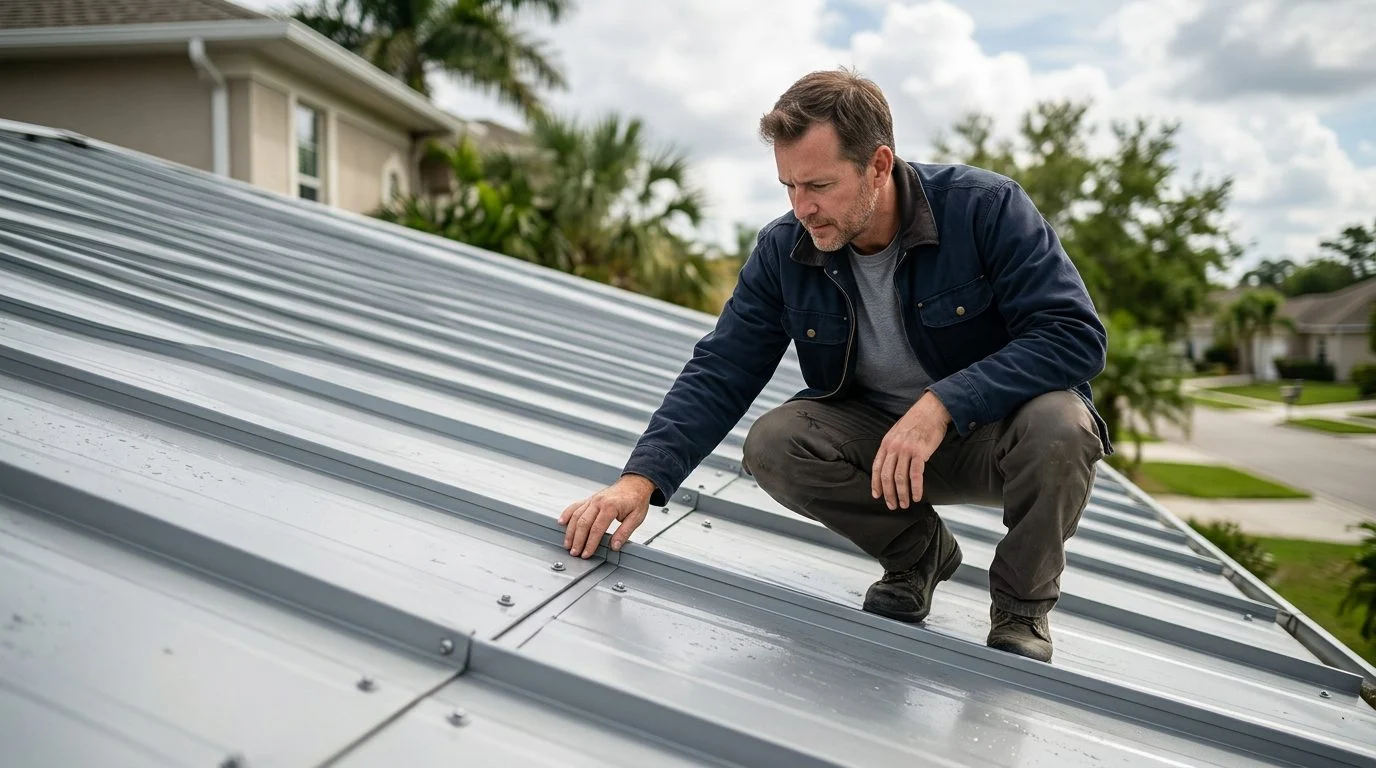
Metal Roofing | South Florida
Understand Your Metal Roof Warranty Before You Need It
A plain-language guide to what Florida metal roof warranties typically cover, what they often exclude, and how to protect your coverage.
By Jonathan Rodriguez · Published November 3, 2026
Short Answer: Manufacturer Warranties and Installation Warranties Are Not the Same
A metal roof warranty in Florida is usually more than one document. The manufacturer’s warranty covers the metal panels and their finish. A separate installation, or workmanship, warranty covers how the crew put the roof on. Each one answers different failures.
The installer’s work matters to your warranty, not just to how the roof looks. Manufacturers publish installation requirements for their products. Those rules cover how panels are fastened, how they overlap, and how flashing is sealed. If a crew departs from them, the manufacturer may refuse a claim under its written terms.
Many homeowners assume one warranty protects the whole roof. That assumption causes problems later. A leak caused by a flashing error may fall under the installer’s warranty, not the factory’s. A faded finish usually falls under the manufacturer. Knowing the difference before you sign saves time when something goes wrong.
This page covers three things: what a metal roof warranty typically covers, what it typically leaves out, and what to request in writing before work begins.
If you hold a metal roof proposal or a warranty packet you haven't checked against the installation, our team can review those papers with you. Talk it through with our team — the first consultation is free, confidential, and carries no obligation.
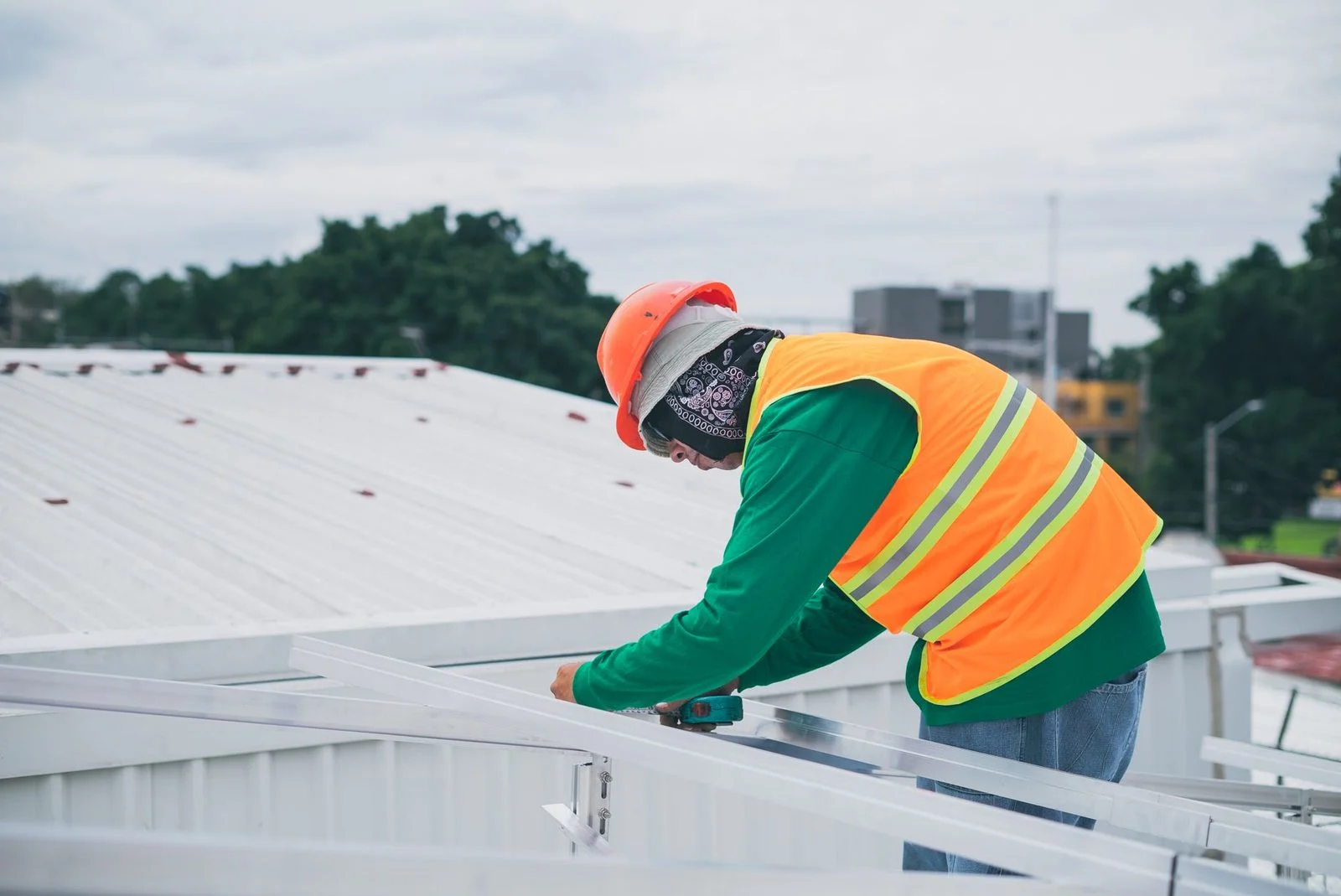
The Three Warranty Layers on a Metal Roof
A metal roof usually carries three layers of protection. Each layer comes from a different party and answers a different kind of failure.
Material and finish. The manufacturer warrants the metal panel and its coating or paint. This layer addresses defects in the metal and premature finish breakdown, under the conditions in the manufacturer’s written terms. It does not cover how the panels were installed.
Fasteners and components. Screws, clips, trim, and accessories may carry their own terms from the manufacturer or supplier. Check which parts the warranty names. A panel warranty does not automatically cover every piece that holds the roof together.
Workmanship (installation). The installer warrants its own labor. This layer covers errors in fastening, sealing, flashing, and lapping the panels. The factory does not issue it, so the contractor’s written terms control it.
These layers often start on different dates. They may also transfer differently if you sell the home, and their claim processes can differ. Do not assume one document covers everything.
What a Metal Roof Warranty Typically Covers
A metal roof warranty typically covers defects in materials, premature finish failure, and installation defects that cause leaks, as the written terms define them.
The cause of a leak decides which warranty responds. A leak from a panel defect may fall under the manufacturer. A leak from poor flashing around a vent or valley usually points to the installer’s workmanship layer.
South Florida conditions matter. Homes here face wind-driven rain, salt air near the coast, and strong sun. Manufacturers tie coverage to the conditions in their terms, so ask how those conditions are defined.
Storm performance is a fair question. A IBHS Hurricane Ian assessment of Southwest Florida buildings found that metal roofing systems held up well in winds below 130 mph. That finding describes one storm. It does not replace the product’s own rating.
Wind ratings need checking on the specific product. Miami-Dade County’s Miami-Dade product approval notices say approval procedures apply to roofing systems, including non-structural metal roofing systems. Palm Beach County’s Palm Beach product approval page says metal roofing is subject to Florida’s statewide product-approval system. Confirm the approval number and product designation for your roof.
What a Metal Roof Warranty Typically Does Not Cover
Many warranties exclude storm damage, hail, and falling debris. The exclusions section decides which events count and which do not.
Other common exclusions involve people and changes. Damage from foot traffic, poor maintenance, and alterations made by someone else often falls outside coverage. So do repairs made with unapproved parts.
Some installation choices can void the whole warranty. Unauthorized repairs and mixed incompatible products can do it. So can installation that departs from the manufacturer’s published specifications. Under some terms, that means the entire warranty is lost, not just one repair.
Cosmetic changes need attention too. A color shift or small surface mark that does not affect how the roof works may fall outside coverage, depending on the written terms. Read the exclusions and the definitions side by side.
Exclusions often sit in fine print near the end. Ask the installer to walk through them with you, and get the answers in writing.
Installation Shortcuts That Can Void Coverage
The main workmanship risk comes from shortcuts that conflict with manufacturer requirements. Common examples include the wrong fastener type or spacing, skipped or undersized underlayment, weak panel overlaps, and inadequate flashing at penetrations and valleys. Mixed metals can also trigger galvanic reaction.
Florida building rules now set specific checks. Under the 2026 code changes, flashing on metal roof panels must comply with the code chapter and the manufacturer’s installation instructions. Underlayment must lap over hips and ridges a minimum of 6 inches, except where ventilation openings are provided. These points come from the Florida Building Commission 2026 analysis of changes. That document summarizes changes; it is not the code text itself.
Near the coast, fasteners and connectors within 3,000 feet of a saltwater coastline must meet the corrosion rules in Section 1711. Those rules cover stainless steel, enhanced galvanizing, and standard galvanizing, according to the same analysis.
These defects are often hidden once the roof is finished. Flashing and fasteners sit under panels and trim. That is why the warranty depends on records of the work as it was done, not on how the roof looks on the day you walk outside.
What to Ask For in Writing Before the Installation Starts
Get these items in writing before work starts: the manufacturer’s warranty with its version or date, the product and color designation, and the installer’s workmanship warranty with its start date and length.
Also request any fastener or accessory warranties. Ask which conditions must be met to keep each warranty valid. Include required maintenance and any inspection steps.
Ask whether the warranty transfers if you sell the home. Ask whether manufacturer registration is required and by what deadline. Confirm that date in writing.
Permits matter too. Ask who pulls the permit and get the permit number in writing.
For roof work, code requirements can apply only to the portion you replace. This applies when the existing system was built, repaired, or replaced under the 2007 code or a later edition.
Verbal assurances do not replace written terms. Keep copies of every warranty document with the home’s records.
Not sure what your next step is?
Talk it through with our team — the first consultation is free, confidential, and carries no obligation.
What to Expect During Your Project
A clear installation record lets you check the work against the manufacturer’s specifications later. Ask for dated photos of the underlayment, fastening, flashing, and penetrations as the crew completes each stage.
Ask for a written list of materials used, with product names, colors, and fastener types. This helps match the installed system to the warranty terms when a question comes up.
Ask ASP Superhome to show you what installation records it keeps for metal roofing projects. Also ask how you can get copies for your files.
Be cautious with any promise of warranty approval or a specific warranty length. Those terms belong in your signed contract and the manufacturer’s documents, not in a sales conversation.
Documentation does not guarantee that a claim will be approved. It gives you a record that ties the installed roof to its written requirements. Store that record in a digital folder and on paper.
Talk Through Your Warranty Documents With ASP Superhome
If you hold a metal roof proposal or a warranty packet you haven’t compared against the installation, now is a good time to review it. Bring the manufacturer warranty, the installer’s workmanship terms, and any permit information to your first conversation. Our team will go through coverage and exclusions with you, step by step.
The first consultation is free, confidential, and without obligation (consulta inicial gratuita, confidencial y sin compromiso). To start, request a free estimate through our contact page.
Does a metal roof warranty cover the finish?
The manufacturer’s material and finish warranty usually addresses finish failure under its written conditions. Check the conditions in your own documents.
What is the difference between a manufacturer and a workmanship warranty?
The manufacturer covers the panels and finish. The installer covers how the roof was put on.
Does a metal roof warranty cover hurricane damage?
Many warranties exclude storm damage. Check the exclusions and the product’s wind rating in writing.
Do I need a permit to replace a metal roof in Florida?
Florida law generally requires a permit before repairing or replacing a building, unless the law provides otherwise.
Two Layers of Metal Roof Coverage
Manufacturer Warranty
Typically addresses the metal panels and their finish under the manufacturer's written conditions, such as fade, chalking, or finish failure.
Installation Warranty
Typically addresses how the roof was installed, including fastening, flashing, and seams, and is provided by the installer.
Written Terms Control
Coverage depends on the exact language in your documents. Review the conditions, limitations, and exclusions carefully.
Keep Your Records
Warranty terms often depend on maintenance, documentation, and the installation details. Keep your contract, invoices, product information, and any inspection reports together in one place.
Common Exclusions to Review
Storm and Impact Damage
Many warranties do not cover damage from hurricanes, hail, falling debris, or other severe weather events. Check whether separate insurance applies.
Improper Maintenance
Warranties may exclude problems caused by neglect, debris buildup, or unapproved repairs or alterations to the roof system.
Unauthorized Work
Work by non-approved contractors, or changes made without following the manufacturer's requirements, can affect coverage.
Normal Wear and Cosmetic Changes
Some warranties exclude minor surface changes that do not affect performance, as well as ordinary aging not tied to a defect.


